The Greek islands, chosen for you
Six islands, each with the one thing it does better than the others, what the ferry costs, and the two everybody books that most people should not.
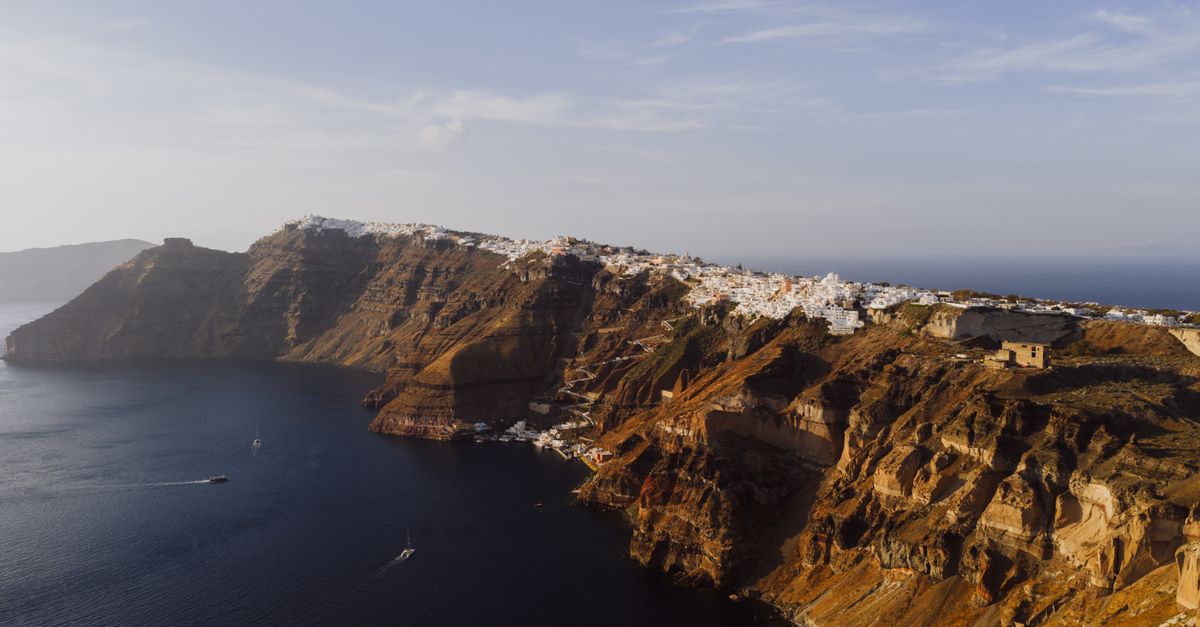
Photo · Mihai Vlasceanu · Pexels
There are about two hundred inhabited Greek islands and roughly six answers to this question, depending on what you actually want.
The short version: Naxos for most people. Best beaches in the Cyclades, a town that exists in February, mountain villages behind it, and prices well under the famous two.
Below, each island gets the one thing it does better than the others, and the two that everyone books get an honest verdict.
Euro. Convert any figure on this page into your own currency at today's published rate.
Open the currency converter →The thing we cannot show you
Greece has Athens and Thessaloniki in our catalogue and no islands at all, so this guide carries no island room shelves. We would rather say that than show you a list from the wrong place.
Athens is where nearly every version of this trip starts, whether for the Piraeus ferry or the connecting flight, and our Athens areas guide covers the port transfer, which is the part that goes wrong.
The six
1. Naxos, the answer for most people
The best beaches in the Cyclades, on a long west coast that runs from family-shallow at Agios Prokopios to genuinely wild at Alyko.
What separates it: it is a working island. Naxos grows its own food, has a town that functions out of season, and has a mountain interior with villages, marble quarries and hiking in it. You can have a beach week or a walking week and it is the same island.
Prices are well below Santorini and Mykonos and the ferry from Piraeus is straightforward.
The catch: the wind. Naxos gets the meltemi in July and August like everywhere in the Cyclades, and the west coast beaches are exposed.
2. Crete, if you have a fortnight
Not really an island, a small country. Four hours end to end by road, three mountain ranges, Minoan palaces, a gorge you can walk down, and a food culture that stands on its own.
Crete alone has 154 Blue Flag beaches, which is more than most European countries manage nationally, and Greece holds about fifteen per cent of the world's total according to the programme's 2026 awards.
The catch: it needs a hire car and a fortnight. A week in Crete is a week in one corner of Crete, which is fine if you accept it and disappointing if you planned to see the island.
3. Milos, for the landscape
Sarakiniko is a moonscape of white volcanic rock running into very blue water, and there is nothing else like it in the Mediterranean.
Milos has about seventy beaches for an island you can drive across in forty minutes, several reachable only by boat, and the fishing villages with the painted boat garages, the syrmata, are the prettiest thing in the Cyclades.
The catch: it has been discovered. Milos in August is now busy, and the good rooms book months out. Go in June or late September.
4. Paros, for the balance
The compromise island, in the good sense: real town life in Parikia and Naousa, good beaches, excellent food, a functioning nightlife that is not Mykonos, and ferry connections to almost everywhere in the Cyclades.
It is the best base for island-hopping because everything connects through it.
The catch: it is nobody's favourite. Paros does everything well and nothing uniquely, which is exactly why it suits a mixed group.
5. Rhodes, for the shoulder season
The furthest south of the big islands, which means the season runs longer at both ends. Rhodes in late October is still warm when the Cyclades have gone cold and windy.
The medieval old town in Rhodes Town is the largest inhabited one in Europe and is genuinely remarkable at seven in the morning before the cruise passengers land.
The catch: the package-holiday coast on the east side is exactly what it sounds like. Stay in the old town or the west.
6. Ikaria, the one nobody lists
Almost no beaches worth photographing, no famous sight, an airport with two flights, and an interior of stone villages where the shops open at ten in the evening because the island genuinely runs on its own clock.
It is one of the strangest and most rewarding places in Greece and it is the opposite of a holiday island.
The catch: everything above is also the catch. Do not take a first trip here, and do not take anyone who wants a sun lounger.
The famous two, honestly
Santorini is a view and a two-night trip, not a beach island, and it is best outside July and August. We have answered the "is it worth it" question properly.
Mykonos has genuinely good beaches, the best town on this list to walk at night, and the highest prices in the Aegean. The comparison between the two is here.
Neither is a bad island. Both are specialised trips sold as general ones, and that is the mismatch that produces disappointed visitors.
The ferry maths, which decides the itinerary
Island-to-island legs run roughly 15 to 60 euro on a conventional ferry and 40 to 100 on a high-speed catamaran, with the popular Piraeus routes starting around 40 to 60 euro conventional and 60 to 90 fast, checked September 2026.
And the real cost is the day, not the fare. Checkout at eleven, port an hour before, the crossing, the queue off the boat, check-in at three.
So: one island a week, or two at a stretch. Three islands in seven nights is two ferry days and five half-days. A week on Naxos with a day boat to Koufonisia beats it comfortably, and our seven-day Greece route is built on that logic.
When to go
The second half of September is the best fortnight of the Greek year: the sea at its warmest, crowds thinning, rates falling, ferries still on summer schedules. Our September guide has the detail.
Early June is the other window, warm and open with a cool sea.
Avoid the second half of October, when the smaller islands start shutting, and be aware that Orthodox Easter, which falls on 2 May in 2027, is the biggest domestic travel weekend of the Greek year. The Greek calendar has the rest.
Checked 21 Aug 2026.
Everything we check for Greece →Short tourist stays only. Checked 21 Aug 2026; rules change without notice and the government page is the source of truth.
Check your own passport →Before you book
The Greek calendar decides the month, which matters more than the island does.
Santorini or Mykonos settles the famous two, the seven-day route puts the mainland and one island together, and Croatia or Greece is the comparison if you have not committed to the country.
The best of hub collects the rest and the Greece country page has the practical layer.
Ferry fare ranges and Blue Flag counts checked September 2026 against Greek ferry operator pricing and the Blue Flag programme's published 2026 awards. Timetables and fares change by season and operator, and island opening seasons move year to year.