Is Santorini worth visiting? Two nights, and not in August
Yes, for two nights, outside July and August, staying somewhere other than Oia. What the cruise levy says about the crowds, and what the beaches are like.
Photo · K · Pexels
Yes, and with three conditions attached. Two nights, not July or August, and do not stay in Oia.
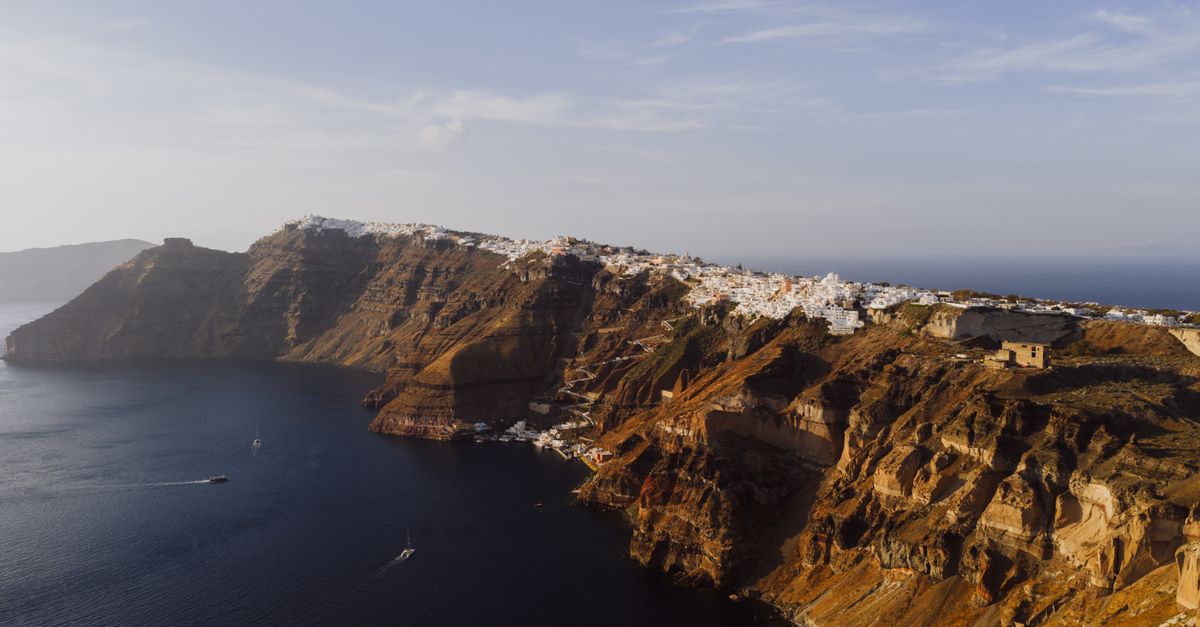
Get those three right and Santorini is one of the more extraordinary places in Europe: a drowned volcano with a town balanced on the rim of it, and a light in the late afternoon that explains why every photograph of it looks the same.
Get them wrong and it is an expensive queue.
Euro. Convert any figure on this page into your own currency at today's published rate.
Open the currency converter →What it actually is, and what it is not
It is a geological event you can walk around. The caldera is the flooded crater of an eruption that took out the middle of the island, and the villages sit on a cliff 300 metres above the water. That is the entire product and it is enough.
It is not a beach island. This is the misunderstanding that ruins the most trips. Santorini's beaches are volcanic: dark, narrow, mostly backed by a road, with the sea dropping off quickly. Perissa and Kamari are perfectly pleasant for an afternoon and nobody would choose the island for them.
It is not big. About 18km end to end. Two full days covers the caldera villages, the archaeological site at Akrotiri and a beach afternoon without rushing.
If what you want is sand and swimming, Naxos, Milos or Crete are all better and cheaper, and our Santorini and Mykonos comparison sets out which of the two famous ones suits which trip.
The crowd question, answered with a number
The Greek state has priced its own overtourism problem, and the price tells you exactly which islands it considers worst.
Cruise passengers landing at Santorini or Mykonos pay 20 euro per person from 1 June to 30 September, 12 euro in April, May and October, and 4 euro from November to March. At every other Greek port the same charge is 3 euro in the shoulder and 1 euro in winter, as reported when the levy took effect.
Most people reading this will arrive by ferry or plane and never pay it. It is still the clearest available signal, because it is a government charging five to twenty times more at two ports than at the rest of the country.
The practical version. The ships are alongside roughly 8am to 6pm. Fira's cable car queue, the Oia lanes and the caldera path are all a different proposition before nine in the morning and after seven in the evening. Plan the day around that and half the crowd problem disappears for free.
Where to stay, which decides the trip
Imerovigli. It sits between Fira and Oia on the highest part of the rim, it has the same view as both, it is a fifteen-minute walk from Fira on the caldera path, and it is materially quieter and cheaper than Oia.
Fira if you want somewhere to eat and drink within walking distance and do not mind the bus traffic.
Oia only if the specific room with the specific terrace is the point of the trip and the budget allows it. It is the most beautiful village and the most crowded one, and between five and nine in the evening it is close to impassable.
Not Perissa or Kamari on a two-night trip. They are on the wrong side of the island, which means a bus every time you want the view you came for.
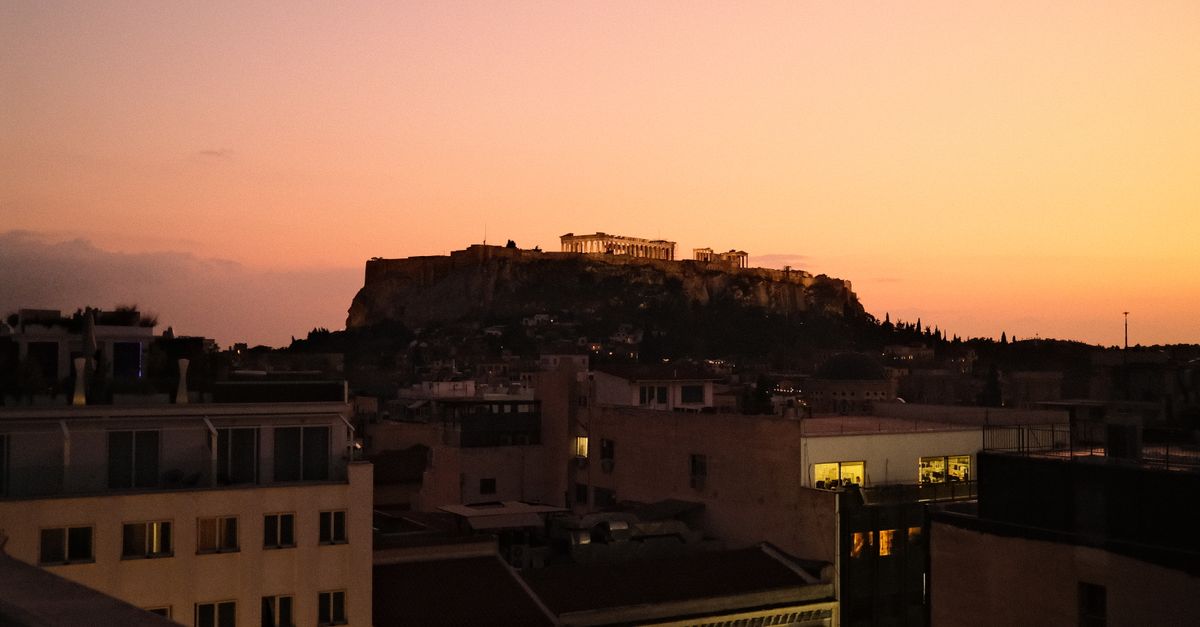
The honest note on shelves: Santorini is not a city in our catalogue, so there are no room cards for it in this guide. What we can show you is Athens, which nearly every version of this trip passes through, and our Athens areas guide covers the port and airport transfers.
The two days
Day one: the rim. Walk the caldera path from Fira to Imerovigli in the morning, which is the best hour of the day and one of the great short walks in Greece. Afternoon in Fira, and the archaeological museum, which almost nobody visits and which holds the finds from Akrotiri.
Day two: the rest of the island. Akrotiri, the Bronze Age town buried by the eruption and excavated under a roof, which is genuinely remarkable and is the single most under-visited thing on Santorini. Then Pyrgos, the inland village almost nobody goes to, for lunch and a view of the whole island. Beach in the late afternoon if you want one.
If you have a third day: the boat into the caldera, to the volcanic islets and the hot springs. It is touristy and the geology is worth it.
Three things to skip
Skip the Oia sunset. Several thousand people funnel onto a castle ruin and a set of steps, arrive two hours early to hold a place, applaud, and leave down a lane built for donkeys. The sun sets on the whole western rim. Watch it from Imerovigli or from a terrace in Fira and get the identical sun without the crush.
Skip the donkeys. The steps from Fira down to the old port are still worked by animals carrying passengers up a 588-step climb in summer heat. Take the cable car, or walk down and cable-car up.
Skip the cable car between 4pm and 6pm, when the tender boats are running and the queue is at its worst.
When to go
Late September is the best fortnight. The sea is at its warmest of the year, the crowds are thinning, rates have started to fall, and the ferries are still on summer timetables. Our September guide explains why that is true across the whole Mediterranean.
Early June is the second-best, warm and open with the sea still cool.
Avoid the second half of October, when the smaller operators start closing, and avoid July and August unless the dates are fixed for you.
Checked 21 Aug 2026.
Everything we check for Greece →Entry rules depend on your passport rather than on the island.
Short tourist stays only. Checked 21 Aug 2026; rules change without notice and the government page is the source of truth.
Check your own passport →Before you book
Santorini or Mykonos is the comparison if you have not chosen yet, and the Greek calendar is the guide that decides the month.
The seven-day Greece route puts the mainland and one island together, which is the better shape for a first trip than two islands.
The first trips hub collects the rest and the Greece country page has the practical layer.
Levy rates and seasonal patterns checked September 2026 against reporting on the Greek cruise levy and the Greek national tourism organisation. Ferry timetables and opening seasons change year to year, so confirm the shoulder weeks before booking.