Greece in 7 days: Athens plus two islands, in the right order
A 7 day Greece itinerary that routes by ferry time, not by fame. Athens, Naxos, Santorini, and why the 2026 cruise cap works in your favour.
Photo · Efrem Efre · Pexels
Seven days in Greece is three places, not four. Athens for two nights, Naxos for two, Santorini for three, moving outward by ferry and flying home from the end rather than sailing back.
The reason for that specific order is arithmetic rather than taste, and it is the part most seven-day Greece itineraries get wrong: they send you to the famous island first, then double back through water you have already crossed.
Euro. Convert any figure on this page into your own currency at today's published rate.
Open the currency converter →The routing rule: never cross the same sea twice
Ferry times from Piraeus, the Athens port, checked September 2026:
| Route | Fast ferry | From |
|---|---|---|
| Piraeus to Paros | 2 hr 40 min – 3 hr 45 min | €51 |
| Piraeus to Naxos | from 3 hr 15 min | €52.50 |
| Piraeus to Santorini | 4 hr 50 min – 5 hr 30 min | €46.50 |
| Naxos to Santorini | 1 hr 5 min – 2 hr 45 min | €31.50 |
| Paros to Santorini | 1 hr 30 min upward | €13 |
Now compare two ways of spending the same week.
The common version: Athens, ferry to Santorini (5 hours), ferry to Mykonos (2 to 3 hours), ferry back to Athens (5 hours). Twelve to thirteen hours at sea, and two of those crossings are the long one.
The version on this page: Athens, ferry to Naxos (3 hr 15), ferry to Santorini (1 to 2 hr 45), fly back to Athens (45 minutes). Under five hours of travel, and you have gained the better part of a day.
Fly the last leg. Santorini to Athens is about 45 minutes against at least four and a half hours by sea. It is the single highest-value booking decision in a Greek week, and the route sells out in summer, so book it when you book the ferries.
The 2026 change that works in your favour
Santorini has spent a decade as the shorthand for overtourism, and 2026 is the year that started to shift, for a reason that has nothing to do with you.
Greece capped Santorini at 8,000 cruise passengers a day. The cap came in for 2025 and was tightened for 2026: the calculation now assumes every ship arrives 100 per cent full rather than 80. Scheduled cruise arrivals for 2026 fell 18.27 per cent, from 728 ships to 595.
There is also a landing fee on cruise passengers: €20 a head in June to September, €12 in April, May and October, and €4 from November to March.
None of this applies to you if you arrive by ferry or by plane. Air and sea arrivals for overnight visitors are uncapped and the levy is a cruise charge. So the practical effect for an independent traveller is straightforward: fewer day-trippers in Oia between ten and six, at no cost to you.
Days 1 and 2: Athens
Two nights, three if you can spare it, and the mistake is treating Athens as an airport with ruins attached.
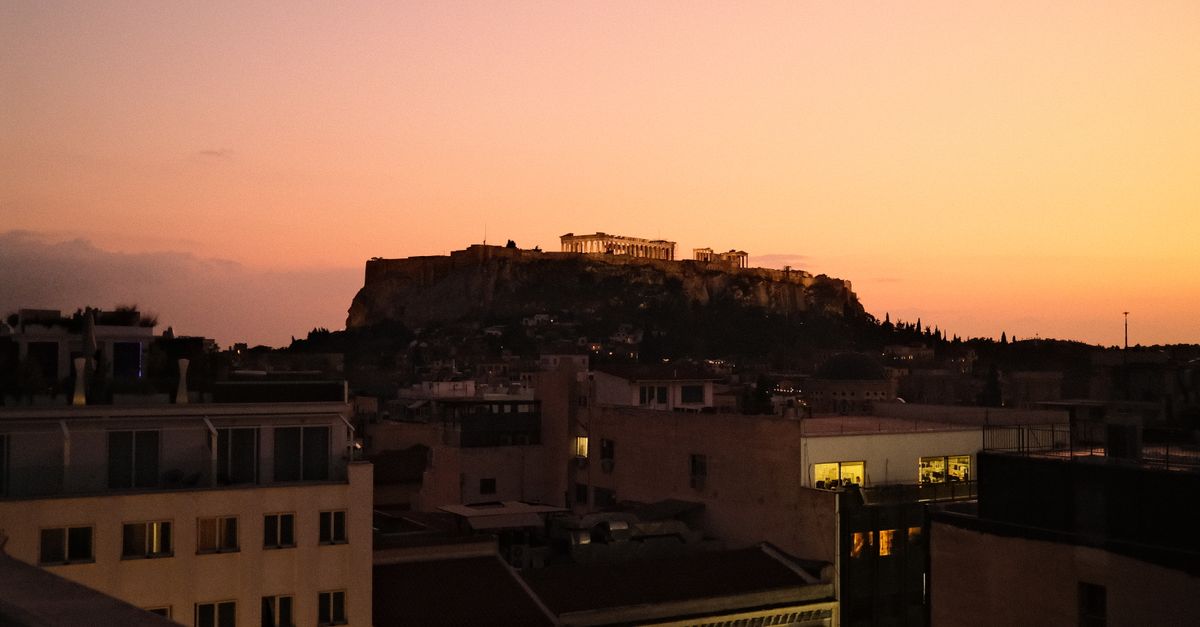
Day 1: land, drop bags, and walk. The Acropolis at the 8am opening is the single best decision of the trip, so it belongs on day 2 rather than day 1, but the evening walk along Dionysiou Areopagitou, the pedestrian avenue that curves under the rock, is the right way to arrive. Dinner in Koukaki or Pangrati.
Day 2: Acropolis at opening, then the Acropolis Museum while the heat builds, then the Ancient Agora in the late afternoon when the light is good and the coaches have gone. The Acropolis runs a daily visitor cap and timed entry, and summer slots go days to a couple of weeks ahead, so this is booked before you leave home on the official ticketing site rather than through a reseller.
In a heatwave the Acropolis closes in the middle of the day, and the decision is made and announced that morning. The 8am slot is the one the heat cannot take from you.
Where to stay in Athens has the neighbourhoods and the Greek accommodation fee, which is charged per room rather than per person and is unusually gentle on families.
Days 3 and 4: Naxos
The morning fast ferry from Piraeus, three and a quarter hours.
Naxos is the largest of the Cyclades and the one that does not depend on tourism, which is why it feels different from the moment you land. It has a working agricultural interior, mountain villages, a Venetian castle in the old town, and the best long sandy beaches in the island group.
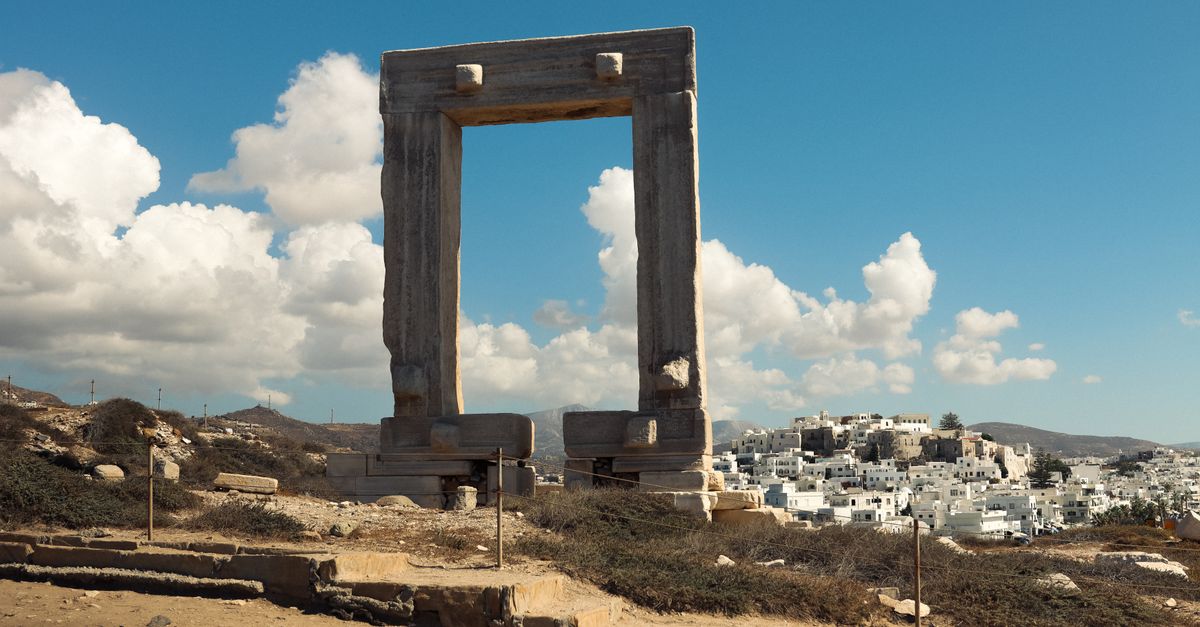
Day 3: arrive, walk up through the Kastro in Naxos Town, and be at the Portara, the freestanding marble doorway on the islet by the harbour, for sunset. It is the one unmissable thing on the island and it is free and five minutes from the port.
Day 4: the beaches on the west coast, or hire a car and cross the interior to Halki and Apiranthos, which are the villages people mean when they say they want the real Greece and cannot say where it is.
Naxos is markedly cheaper than Santorini for food and rooms, which is the second reason it belongs in this week.
Days 5 to 7: Santorini
The hop from Naxos is between an hour and two and three quarters depending on the boat.
Day 5: arrive, and do nothing in the afternoon except find a caldera view.
Day 6: the caldera walk from Fira to Oia along the cliff path, which is about ten kilometres and three to four hours, best started early. Or the boat to the volcano and the hot springs. In the evening, Oia for the sunset, in the knowledge that everyone else is also there.
Day 7: the archaeological site at Akrotiri, which is a Bronze Age town buried by the eruption and is the most underrated thing on the island by a wide margin, then the flight to Athens.
On the sunset, honestly: Oia at sunset is genuinely crowded and it is also genuinely worth doing once. Imerovigli halfway along the caldera has close to the same view with a fraction of the people, and the walk between the two is better than either endpoint.
What this page cannot show you: neither Naxos nor Santorini is in our catalogue, so there is no live room shelf or bookable-activity shelf for the islands here. The Athens shelves above are real rooms and real tours for your dates. For the islands we have given you the routing and the timings instead of a shelf pointing somewhere else.
Short tourist stays only. Checked 21 Aug 2026; rules change without notice and the government page is the source of truth.
Check your own passport →Checked 21 Aug 2026.
Everything we check for Greece →The weather rule nobody plans around
The meltemi is a strong northerly that blows across the Aegean in July and August. It is not a storm and it does not usually spoil a beach day. What it does is cancel ferries, sometimes at a few hours' notice, and the small fast craft go first.
Build one buffer day into any August itinerary that depends on a boat, or move the trip. The best time to visit Greece has the month table and the heat closures.
What to skip
Mykonos, in a seven day trip that also includes Santorini. They are the two most expensive and most crowded islands in Greece and they are more alike than their reputations suggest. Pick one. If it is Mykonos you want, swap it for Santorini rather than adding it.
The ferry back to Athens. Covered above. Fly.
A hire car in Athens. The metro reaches the airport, the port and the Acropolis, and central parking is close to impossible.
Four islands in seven days. You will see harbours.
Oia sunset as the only reason to go to Santorini. Akrotiri, the caldera walk and the wine country are all better and none of them is on the standard list.
Before you book
The best time to visit Greece is the piece of this decision that changes the most, including the heat closures and the wind. Where to stay in Athens has the neighbourhoods, and Turkey in 10 days is the obvious next trip across the Aegean, which Yasmine also writes. Where to stay in Istanbul covers the other end of that flight, and the best places to travel in 2027 argues for the Ionian islands over the Cyclades if crowds are your main worry.
The Athens city guide and the Greece country guide carry the practicalities, and there is more in the itineraries hub. When you are ready, Athens rooms are here and the bookable half is here.
Ferry times, fares and the cruise cap checked September 2026. Greek ferry timetables are seasonal and are published by the operators rather than centrally, so check a live schedule such as the national tourism organisation's own travel pages against any itinerary, including this one.