Athens
Five thousand years of city under a rock you can see from everywhere. Scruffy, loud, and much better fun than the ruins suggest.
Athens in eight slides
Wikipedia · 3 Sep 2026


Things to do in Athens
Where to stay in Athens
Athens in a day, two days, three
Landmarks in Athens

The Acropolis of Athens is an ancient citadel located on a rocky outcrop above the city of Athens, Greece, and contains the remains of several ancient buildings of great architectural and historical significance, the most famous being the Parthenon. The word Acropolis is from Greek ἄκρον (akron) 'highest point, extremity' and πόλις (polis) 'city'.
Wikipedia · CC BY-SA 4.0 · 28 Aug 2026
Giles Laurent · CC BY-SA 4.0

The Acropolis Museum is an archaeological museum focused on the findings of the archaeological site of the Acropolis of Athens. The museum was built to house every artifact found on the rock and on the surrounding slopes, from the Greek Bronze Age to Roman and Byzantine Greece. The Acropolis Museum also lies over the ruins of part of Roman and early Byzantine Athens.
Wikipedia · CC BY-SA 4.0 · 13 Aug 2026
Acropolis Museum · Public domain

The Ancient Agora of Athens is an ancient Greek agora. It is located to the northwest of the Acropolis, and bounded on the south by the hill of the Areopagus and on the west by the hill known as the Agoraios Kolonos, also called Market Hill. The Agora's initial use was for a commercial, assembly, or residential gathering place.
Wikipedia · CC BY-SA 4.0 · 18 Jul 2026
Chabe01 · CC BY-SA 4.0

Mount Lycabettus, also known as Lycabettos, Lykabettos or Lykavittos, is a Cretaceous limestone hill in the Greek capital Athens. At 277 meters (908 feet) above sea level, its summit is the highest point in Central Athens and pine trees cover its base. The name also refers to the residential neighbourhood immediately below the east of the hill.
Wikipedia · CC BY-SA 4.0 · 28 Jul 2026
Apaleutos25 · CC BY-SA 4.0

The Temple of Olympian Zeus, also known as the Olympieion or Columns of the Olympian Zeus, is a colossal temple in the centre of Athens, now in ruins. It was dedicated to "Olympian" Zeus, a name originating from his position as head of the Olympian gods.
Wikipedia · CC BY-SA 4.0 · 30 Jun 2026
Jean-Pierre Dalbéra from Paris, France · CC BY 2.0

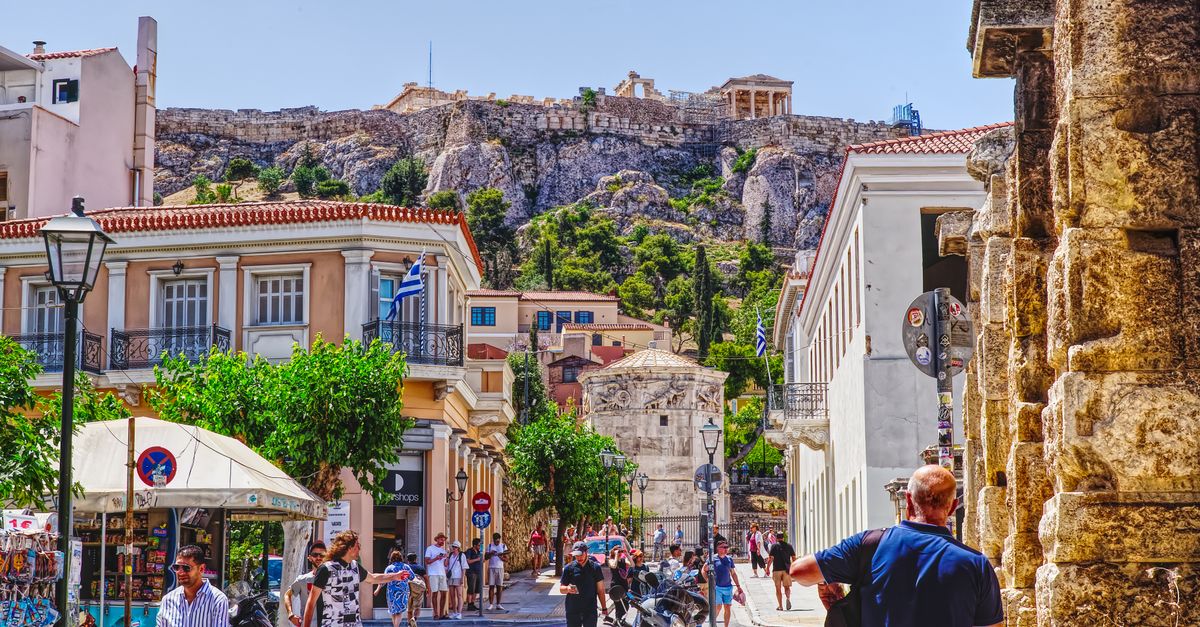
Pláka is the old historical neighborhood of Athens, clustered around the northern and eastern slopes of the Acropolis, and incorporating labyrinthine streets and neoclassical architecture. Plaka is built on top of the residential areas of the ancient town of Athens. It is known as the "Neighborhood of the Gods" due to its proximity to the Acropolis and its many archaeological sites.
Wikipedia · CC BY-SA 4.0 · 9 Feb 2026
Joanbanjo · CC BY-SA 3.0
The Acropolis of Athens is an ancient citadel located on a rocky outcrop above the city of Athens, Greece, and contains the remains of several ancient buildings of great architectural and historical significance, the most famous being the Parthenon. The word Acropolis is from Greek ἄκρον (akron) 'highest point, extremity' and πόλις (polis) 'city'.
Wikipedia · CC BY-SA 4.0 · 28 Aug 2026
Giles Laurent · CC BY-SA 4.0
The Acropolis Museum is an archaeological museum focused on the findings of the archaeological site of the Acropolis of Athens. The museum was built to house every artifact found on the rock and on the surrounding slopes, from the Greek Bronze Age to Roman and Byzantine Greece. The Acropolis Museum also lies over the ruins of part of Roman and early Byzantine Athens.
Wikipedia · CC BY-SA 4.0 · 13 Aug 2026
Acropolis Museum · Public domain
The Ancient Agora of Athens is an ancient Greek agora. It is located to the northwest of the Acropolis, and bounded on the south by the hill of the Areopagus and on the west by the hill known as the Agoraios Kolonos, also called Market Hill. The Agora's initial use was for a commercial, assembly, or residential gathering place.
Wikipedia · CC BY-SA 4.0 · 18 Jul 2026
Chabe01 · CC BY-SA 4.0
Mount Lycabettus, also known as Lycabettos, Lykabettos or Lykavittos, is a Cretaceous limestone hill in the Greek capital Athens. At 277 meters (908 feet) above sea level, its summit is the highest point in Central Athens and pine trees cover its base. The name also refers to the residential neighbourhood immediately below the east of the hill.
Wikipedia · CC BY-SA 4.0 · 28 Jul 2026
Apaleutos25 · CC BY-SA 4.0
The Temple of Olympian Zeus, also known as the Olympieion or Columns of the Olympian Zeus, is a colossal temple in the centre of Athens, now in ruins. It was dedicated to "Olympian" Zeus, a name originating from his position as head of the Olympian gods.
Wikipedia · CC BY-SA 4.0 · 30 Jun 2026
Jean-Pierre Dalbéra from Paris, France · CC BY 2.0
Pláka is the old historical neighborhood of Athens, clustered around the northern and eastern slopes of the Acropolis, and incorporating labyrinthine streets and neoclassical architecture. Plaka is built on top of the residential areas of the ancient town of Athens. It is known as the "Neighborhood of the Gods" due to its proximity to the Acropolis and its many archaeological sites.
Wikipedia · CC BY-SA 4.0 · 9 Feb 2026
Joanbanjo · CC BY-SA 3.0
From the airport
When to go to Athens: Apr or May or Sep or Oct
Guides about Athens
Three days in Athens with the 2026 ticket rules: a €30 Acropolis on a 20,000 daily cap, a 15 minute grace period, and the state combo ticket that ended.
Yasmine Belkacem · 2 Sep 2026
Istanbul is the bigger city by a distance and Athens is the better base. Six rounds with a winner each, what each costs, and why the pairing rarely works.
Yasmine Belkacem · 2 Sep 2026
Athens has islands 40 minutes away and a temple at sunset nobody books. Six trips ranked, the ferry timing that decides them, and one to skip.
Yasmine Belkacem · 2 Sep 2026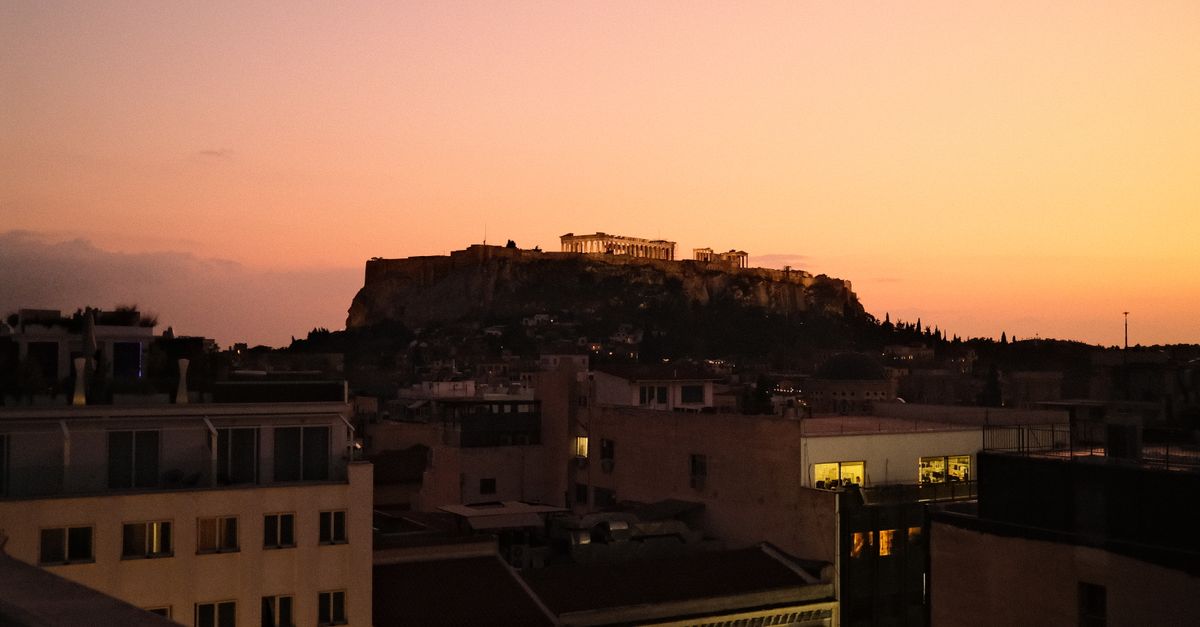
Koukaki for value, Monastiraki for connections, Plaka for the postcard. Plus the Greek accommodation fee, charged per room rather than per person.
Yasmine Belkacem · 2 Sep 2026