The best places to travel in 2027, and why each one specifically
Most 2027 lists are guesswork. These eight are chosen because something specific changes next year, plus four destinations getting measurably harder to visit.
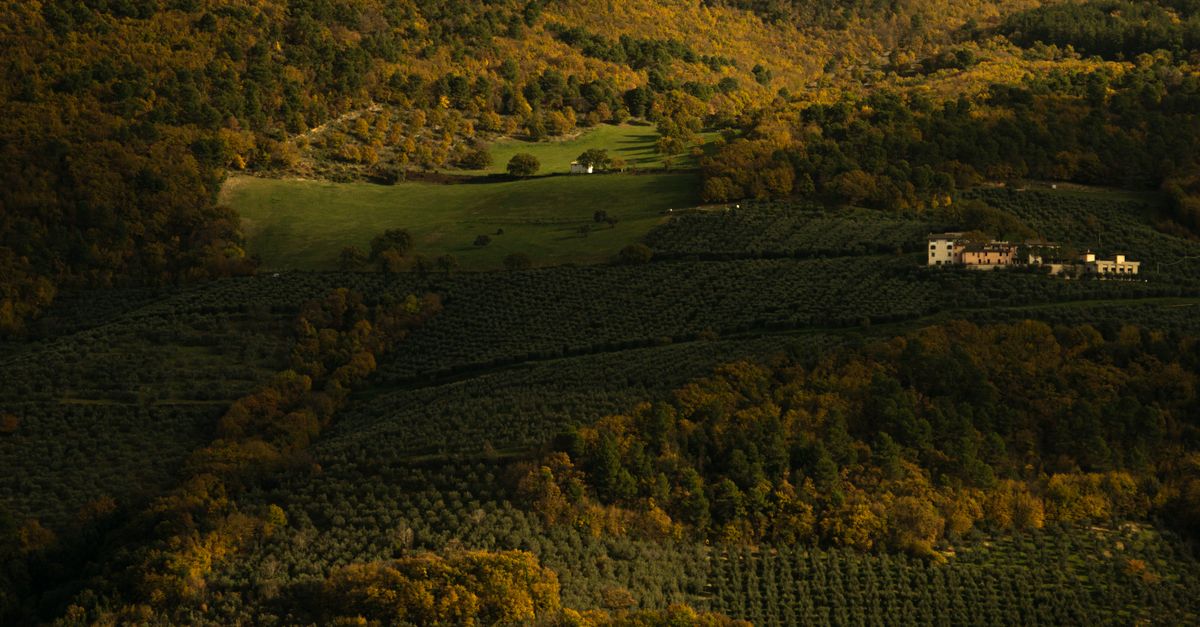
Photo · Dmitrii Eremin · Pexels
Most "best places to travel next year" lists are written from photographs.
This one has a rule: every entry is here because something specific changes in 2027, or because a fact we can check makes it a better bet than it was. A new route, a closing window, a season that suits, or a crowd that has moved on.
At the end there is the more useful half: the four places getting measurably harder and more expensive to visit, which is the genuine travel trend of the moment and the one nobody puts on a list.
The eight
1. Albania
Why 2027 specifically: new direct routes from European hubs are opening and tourism investment is landing, which is moving Albania from niche to mainstream inside about two years.
The coastline south of Vlorë is close to what Croatia's was before Croatia became busy, the mountains behind it are genuinely wild, and prices are the lowest in Europe by a clear margin. Tirana is changing month to month, which is in our underrated cities list for that reason.
The honest note: this is the last comfortable year, not the last good one. Albania in 2029 will still be worth going to and it will not be this cheap or this quiet.
2. Secondary Japan: Kanazawa, Takayama, the Fuji lakes
Why 2027 specifically: because the famous cities no longer have a quiet season and the arithmetic has changed.
Japan's own arrival figures show 2026 running between 3.15 and 3.69 million visitors a month, so the busiest month was only about 17% busier than the quietest. The seasonal trough people plan around has flattened out. Travelling earlier no longer works; travelling sideways does.
Kanazawa has the best surviving samurai and geisha districts in Japan and one of its three great gardens. Takayama has the old merchant streets everyone imagines Kyoto has. Both are on the rail network and neither is full. The fourteen-day route is built around exactly this move.
The honest note: neither Kanazawa nor Takayama is in our catalogue, so we cannot show you rooms there yet. They are on the list we are asking for.
3. Northern Vietnam
Why 2027 specifically: nothing changes, and that is the point. October and November in Hanoi, Sapa and Ha Long are among the best travel weeks anywhere and they remain substantially cheaper than the equivalent in Japan or Europe.
The honest note, and it is the important one: those same weeks are the worst of the year in central Vietnam, where Hue, Da Nang and Hoi An take their heaviest rain and their typhoons together and Hoi An floods. Build a northern trip, not a country-wide one. The full regional breakdown is here.
4. Georgia
Why 2027 specifically: because the thing that makes it exceptional is a policy that could change. Citizens of the EU, the UK, Canada, Australia, New Zealand, Japan, South Korea and Israel can stay a full year with no visa at all, which is a longer legal stay than most dedicated nomad visas grant.
Add an eight-thousand-year wine tradition, the rtveli harvest from early September to about mid-October, mountains, and a food culture that is underrated even by the people who rate it. Our nomad cities list has the long-stay version.
The honest note: the region's politics are not settled, and that is a real consideration rather than a footnote.
5. The Ionian islands, Greece
Why 2027 specifically: because the reason the Aegean gets difficult in summer does not apply here.
The meltemi, the northerly that blows hardest in July and August, reaches 7 to 8 on the Beaufort scale and cancels ferries across the Cyclades. Corfu, Kefalonia and Lefkada are on the other side of the country and are barely affected. Same country, same season, none of the disruption. The Greek argument in full.
The honest note: Corfu has its own crowds in August. Kefalonia and Lefkada are the quieter answers.
6. Morocco, in April or October
Why 2027 specifically: the two months when the imperial cities, the Sahara and the Atlas are all workable at once, and that window is narrower than most itineraries assume.
Summer inland regularly passes 40 degrees and the desert becomes genuinely unwise. April and October are the whole answer, and the country changes character completely depending which of its four climates you are in.
The honest note: Ramadan is expected to run from about 8 February to 9 March 2027, which changes what is open rather than whether to go, and Marrakech is not yet in our catalogue.
7. Costa Rica
Why 2027 specifically: it has been the sustainability case study for years and it is now the destination that adventure-focused planning consistently lands on, with rainforest lodges, volcanoes, surf and wildlife inside a small and genuinely well-run country.
The honest note: it is not cheap, and it is the one entry on this list we have not yet written a full guide for.
8. Thessaloniki
Why 2027 specifically: because it is the answer to Greece's summer problem and nobody has noticed yet.
Greece's second city has the best food in the country, a Roman and Byzantine layer, a real student nightlife, and it is open all year while the islands are not. Our underrated cities page makes the longer case.
The four getting harder
This is the actual 2027 trend and it belongs on any honest list.
Venice. The day-tripper access fee ran on 60 selected days between 3 April and 26 July 2026, at €5 booked four days ahead and €10 inside that, between 8.30am and 4pm. The calendar is reissued annually and is expanding. The Italian detail is here.
Bali. The IDR 150,000 tourist levy went from an honour system that about a third of visitors paid to spot-checks at Tanah Lot, Uluwatu, Besakih, Tegallalang, the ports and around Nusa Penida during 2026. The Balinese detail is here.
Kyoto. The accommodation tax moved to five bands on 1 March 2026 with a top rate of ¥10,000 per person per night, the highest in Japan. Kyoto or Osaka shows what that is worth in practice.
Athens. The Acropolis runs a daily visitor cap and timed entry, and during heatwaves the Culture Ministry has closed it for the middle of the day at a few hours' notice, with no published temperature threshold.
The pattern is the same everywhere: charges and caps are replacing free access at the places that need managing. Budget for entry costs that did not exist three years ago, and book the timed things earlier than you think.
How to find the next one yourself
The rule that produced most of this list, and it keeps working:
Look one city inland, or one country east, from wherever everybody is going.
And the leading indicator: a destination usually becomes busy within about two years of getting cheap direct flights from a major hub. New route announcements are a better signal than any trend list, this one included.
What to skip in 2027
Travelling in the shoulder season to avoid crowds. It no longer buys what it used to, and the Japanese arrivals data is the clearest evidence. Move sideways, not earlier.
Booking Venice as a day trip on a fee day. It doubles the price and the evening is free and better.
Any 2027 list, including this one, as a reason to go somewhere. The reasons above are the useful part; the names are not.
Albania in a rush. It is having a moment and it is still a country with developing infrastructure. Two weeks, not five days.
Before you book
Underrated European cities is the non-time-sensitive version of this page, and it explains the one-city-inland rule in more detail. For timing, where to travel in January, October and December cover the months, and the when to go hub has every country guide we have published. If a long stay rather than a trip is what you are planning, the best digital nomad cities for 2027 ranks by legal route first. More in the best of hub.
Written September 2026 and due a refresh each quarter, because the access charges above are the fastest-moving part of it. Route and trend signals cross-checked against Japan's arrival statistics and the UN tourism barometer.