Underrated European cities, by the size of the gap
Underrated is a lazy word, so we defined it: cities where the gap between how good they are and how many people go is widest. Eight of them, and one misjudged.
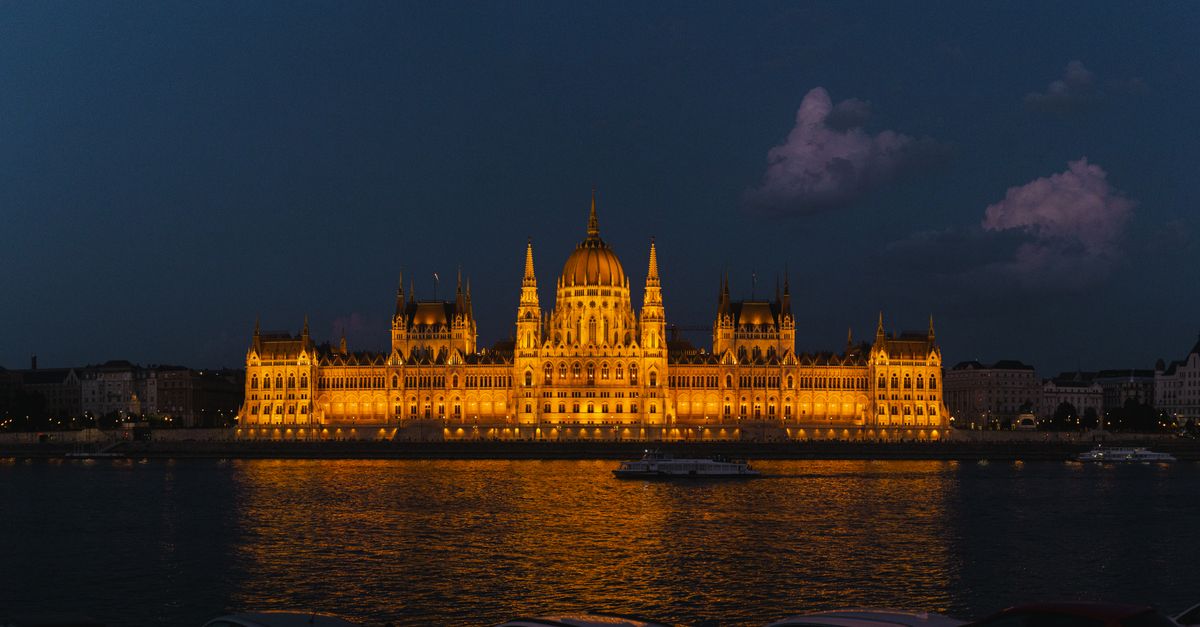
Photo · Mauricio Krupka Buendia · Pexels
"Underrated" is one of the laziest words in travel writing, so here is what it means on this page.
The gap between how good a city is and how many people go. Not obscurity, and not difficulty: every city below has an airport, hotels, and enough English to get by. What they have in common is that the crowd went somewhere else.
There is also a rule that produces most of the list, and it is worth more than the list itself: look one city inland, or one country east, from wherever everybody is going.
The eight
1. Thessaloniki, Greece
The biggest gap on this page. Greece's second city has the best food in the country by a distance, a Roman and Byzantine layer that much of Athens cannot match, a genuine student population that gives it a proper nightlife rather than a tourist one, and a seafront promenade that people actually walk in the evening.
It receives a fraction of Athens' visitors and it is open all year, which the islands emphatically are not. The Greek seasonal picture is here, and Thessaloniki is the answer to most of the problems in it.
Go for: the food, and the fact that nobody is holding a phone up in front of you. Three days.
2. Turin, Italy
Milan gets the flights and Turin gets the arcades. Fifteen kilometres of covered walkway, the second-best Egyptian museum in the world after Cairo, the birthplace of Italian cinema and of vermouth, the Alps visible at the end of the streets, and a café culture built around bicerin that predates most of what Italy is famous for.
Go for: the museums and the aperitivo. Three days, or two with a day in the Langhe.
3. Gdańsk, Poland
Kraków is superb and it is full. Gdańsk has a reconstructed Hanseatic waterfront that is one of the most striking street scenes in northern Europe, the shipyard where Solidarity started and the excellent museum that explains it, amber, and a beach at Sopot twenty minutes up the coast.
Go for: the waterfront and the twentieth-century history, which is told better here than almost anywhere. Two to three days.
4. Ljubljana, Slovenia
Small enough to walk across in twenty minutes and good enough that you will do it repeatedly. A car-free centre, a river with bridges by one architect, a castle on a hill, a market, and Lake Bled an hour away.
Vienna and Venice are both a few hours off and Ljubljana costs a third of either.
Go for: the ease of it. Two days, and it works as a stop rather than a destination.
5. Riga, Latvia
The largest collection of art nouveau architecture in Europe, and the sentence is not marketing: an entire district of it, some of the most inventive buildings on the continent, and almost nobody looking up at them.
Add a covered market in five Zeppelin hangars, a serious food scene and a Baltic beach at Jūrmala.
Go for: the buildings on Alberta iela, which are worth the flight on their own. Three days.
6. Genoa, Italy
Everybody goes to the Cinque Terre and passes through Genoa to get there, which is precisely backwards. Genoa has the largest medieval old town in Europe, a maze of caruggi so dense the sun does not reach the bottom, the palaces of the Rolli on the UNESCO list, and it invented pesto and focaccia.
It is also on the same rail line, so you can do the Cinque Terre as a day trip and sleep somewhere with a city in it.
Go for: the old town, and the focaccia at nine in the morning, which is how it is eaten here. Two days.
7. Sarajevo, Bosnia and Herzegovina
A city where an Ottoman bazaar, an Austro-Hungarian boulevard, a Yugoslav apartment block and a mosque, a synagogue, an Orthodox and a Catholic church sit within a few hundred metres. There is no other European city that layers like this.
It is also, unavoidably and importantly, a city that survived a siege within living memory, and it tells that story with more directness and less sentiment than you expect.
Go for: the layers, the coffee ritual, and the mountains that start at the edge of town. Three days.
8. Tirana, Albania
The one that will not stay on this list. Albania is moving from niche to mainstream and Tirana is where it is happening fastest: a capital that has painted itself in primary colours, a serious café culture, communist-era bunkers turned into museums, and prices that are the lowest in Europe by a clear margin.
It is also the gateway to a coastline that is genuinely as good as Croatia's was before Croatia got busy.
Go for: the food and the fact that it is changing month to month. Two days, then the coast or the mountains. Our 2027 list has more on why the timing matters here specifically.
And one that is not underrated, just misjudged
Naples, Italy
Naples has a reputation that is roughly thirty years out of date and it is the reason people treat one of the great cities of Europe as a train change on the way to the Amalfi coast.
It has the best pizza in the world, which is not a matter of opinion so much as of documented origin, the best archaeological museum in the world for Roman material because everything from Pompeii is in it, an underground city, and a historic centre that is loud, dense, alive and completely unlike the polished version of Italy further north.
It is also the gateway to Pompeii, Herculaneum, Vesuvius and the coast.
Go for: the museum and the pizza, in that order, and stay three nights rather than one.
The rule, restated
Every city above sits one step off the main route, and that is not a coincidence.
Turin is one city inland from Milan. Genoa is one stop before the Cinque Terre. Thessaloniki is one country's second city. Gdańsk is Kraków's northern equivalent. Riga is Tallinn without the cruise ships.
Apply the rule yourself and it keeps working, which is more useful than any list: take wherever you were going to go, and look at what is an hour or two short of it.
When to go
The same answer as anywhere in Europe, late spring and early autumn, with one difference that matters.
These cities remain pleasant in July and August, because the thing that makes summer unbearable in Rome, Athens and Barcelona is the crowd as much as the heat, and these do not have one. Where to travel in October makes the same argument at continental scale, and the best time to visit Italy explains the fortnight in August when the famous places are simultaneously fullest and most closed.
What to skip
Adding one of these to a fortnight that already has four cities in it. They reward two or three nights, not an afternoon.
Ljubljana as a destination rather than a stop. It is wonderful and it is small, and two days is honest.
Naples in one night on the way to Sorrento. The commonest mistake in southern Italy.
Any city on a list like this once it has been on lists like this for five years. Porto, Lisbon and Kraków were all on these lists a decade ago and are now among the busiest cities in Europe. Tirana is next.
Assuming cheaper means worse. Riga's art nouveau district is better than anything in the cities charging four times as much for a room.
Before you book
The best places to travel in 2027 is the forward-looking version of this page, built on what actually changes next year. Prague or Budapest covers the two central European capitals that are emphatically not underrated, and makes the case for putting Vienna between them. Where to travel in October and the when to go hub handle the timing.
City guides for the places above: Thessaloniki, Turin, Gdańsk, Ljubljana, Riga, Genoa, Sarajevo, Tirana and Naples. More in the best of hub. Ready to look at rooms? Naples stays are here, and the things to do shelf has the bookable half, including Pompeii.
Written September 2026. Nothing on this page is a price claim, because the point of it is which cities are worth the flight rather than what a room costs there. Two useful cross-checks are the European Commission's own tourism statistics and UNESCO's list, which between them explain why several of these are better known to specialists than to visitors.