Santorini or Mykonos, and the honest answer
One is a view, the other is a town. Six rounds with a winner each, what the cruise levy tells you about crowds, and the sunset we would skip.
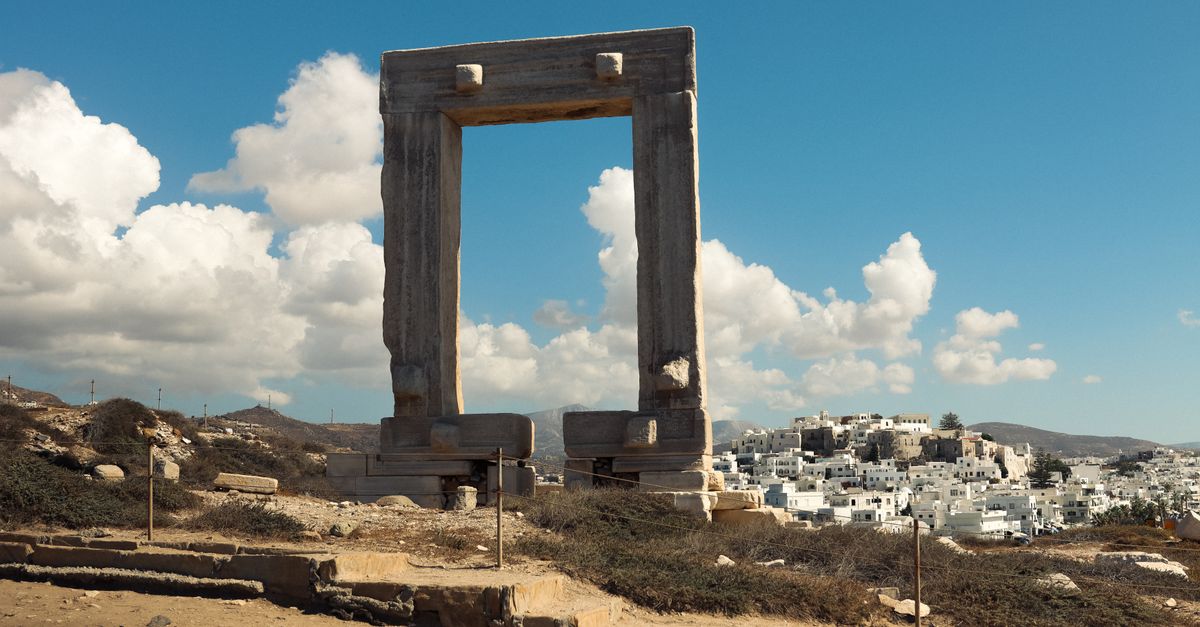
Photo · K · Pexels
Santorini is a view. Mykonos is a town. Almost everything else follows from that.
Go to Santorini if the caldera is the point, if you will spend the money on a terrace facing it, and if you accept that the beaches are an afterthought. Go to Mykonos if you want to walk somewhere at night, swim off decent sand, and eat well, and if the bill does not decide the trip.
If you are choosing on beaches, it is Mykonos. If you are choosing on one photograph you have already seen, it is Santorini, and you should read the sunset section before you book it.
Euro. Convert any figure on this page into your own currency at today's published rate.
Open the currency converter →First, the thing we cannot show you
Neither island is a city in our catalogue. Greece has Athens and Thessaloniki, so there are no Santorini or Mykonos room shelves in this guide, and we would rather say that plainly than show you a list from the wrong place.
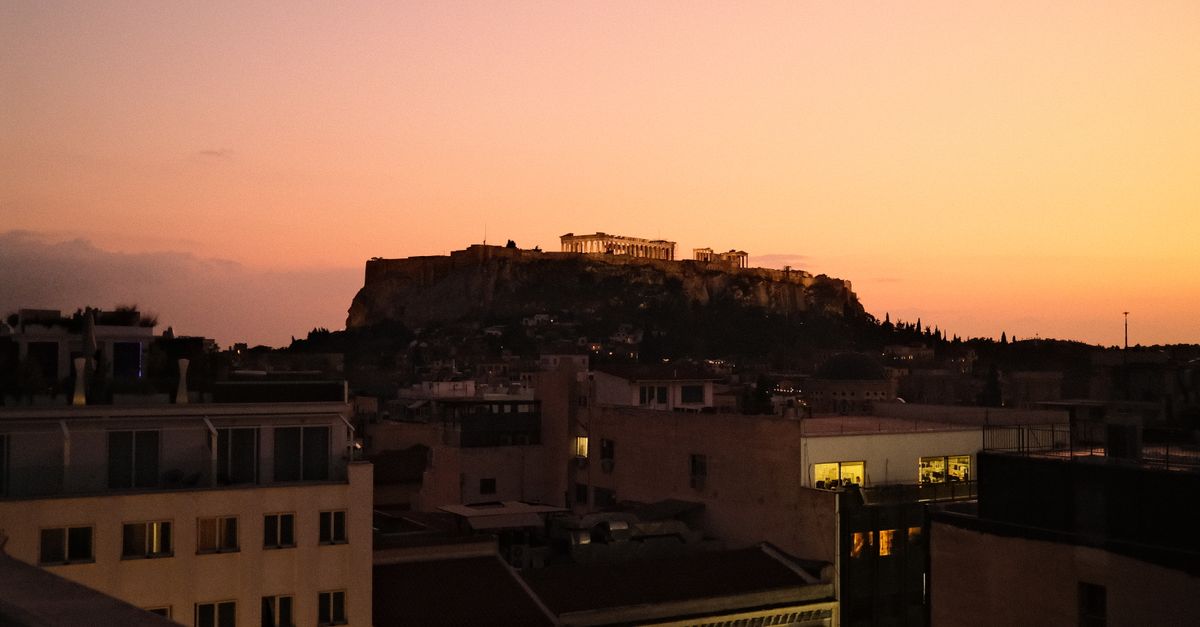
What we can show you is Athens, which almost every version of this trip passes through, either for the Piraeus ferry or for the connecting flight. Our Athens areas guide has the neighbourhoods and the port transfer, and the seven-day Greece route sequences the mainland with the islands.
The six rounds
Round 1: the look. Santorini.
There is no argument here. A flooded volcanic caldera with white villages strung along a 300m cliff is one of the genuinely unusual landscapes in Europe, and Mykonos, which is a pretty Cycladic island, is not competing.
Fira and Oia sit on the rim; Imerovigli, between them, has the same view and a fraction of the crowd, and is where we would stay.
Winner: Santorini, decisively.
Round 2: beaches. Mykonos, and it is not close.
Santorini's beaches are volcanic: dark sand and shingle, narrow, backed by a road, with the sea dropping away quickly. Perissa and Kamari are perfectly fine places to spend an afternoon and nobody would fly to Greece for them.
Mykonos has a real south coast. Agios Sostis in the north for quiet, Platis Gialos and Ornos for family swimming, Paradise and Super Paradise for the other thing. Sandy, sheltered, and the reason the island fills.
Winner: Mykonos, decisively.
Round 3: the town at night. Mykonos.
Mykonos Town is a genuine Cycladic maze, deliberately built to confuse pirates and now confusing everyone else, and it is a pleasure to be lost in after dark when the day-trippers have gone.
Santorini's villages are strung along a cliff road. Fira has bars and Oia has restaurants and neither has a town you can wander in the same way, because the geometry does not allow it.
Winner: Mykonos.
Round 4: cost. Santorini, narrowly, and it depends what you buy.
Mykonos is the more expensive island across the board: rooms, restaurants, beach club sunbeds and taxis are all higher, and the beach clubs in particular run on a minimum-spend model that catches people out.
The exception is the caldera view, which is the single most expensive thing in the Cyclades. There are only so many terraces facing west across the volcano, the supply cannot grow, and the price behaves accordingly. A cave room in Oia in August will beat anything on Mykonos.
So: if you want a view, Santorini is the expensive one. If you want a holiday, Mykonos is.
Winner: Santorini, on the everyday spend.
Round 5: crowds, and here is a number nobody quotes
Both islands are at the sharp end of Greece's overtourism problem, and the government has put a price on it that tells you exactly which two islands it thinks are worst.
Since July 2025 Greece charges a cruise-passenger levy that is higher at Santorini and Mykonos than anywhere else in the country. Stepping ashore at those two costs 20 euro per person from 1 June to 30 September, 12 euro in April, May and October, and 4 euro from November to March. At every other Greek port the same charge is 3 euro in the shoulder and 1 euro in winter. The measure and its rates were reported when it took effect.
Most readers of this guide will arrive by ferry or plane and never pay it. It is still the most useful crowding signal available, because it is the Greek state pricing these two islands at five to twenty times the rest of the country.
Practical version: the cruise ships are in port roughly 8am to 6pm. Both islands are materially better before nine in the morning and after seven in the evening, and that is truer on Santorini, where the cliff road is a single lane of traffic.
Winner: nobody. Both are crowded, and Santorini is worse per square metre.
Round 6: getting there. Mykonos, slightly.
Both have airports with summer connections from across Europe. By sea from Piraeus, Mykonos is the closer of the two, at roughly two and a half to three hours on a fast ferry against four to five for Santorini, and the conventional boats take considerably longer on both routes.
Santorini's port is the complication. Athinios sits at the bottom of the cliff and the road up is a switchback that a full ferry arrival fills completely. Add an hour to any Santorini ferry day that you would not add on Mykonos.
Winner: Mykonos.
Choose Santorini if
- The caldera is genuinely why you are going, and you will pay for a room facing it rather than photograph it from a wall.
- You are going for three or four nights and want one extraordinary thing rather than a week of swimming.
- You are travelling outside July and August, when the cliff road is manageable.
Choose Mykonos if
- You want beaches. This is the whole answer.
- You want a town to eat and drink in after dark.
- You are travelling as a group and the nightlife is part of the plan.
- You are combining it with Paros, Naxos or Delos, which are all easier from Mykonos than from Santorini.
Doing both, and the arithmetic that stops people
The fast ferry between them runs in roughly two to three hours in season, depending on the boat and the stops.
But the transfer is not the ferry, it is the day. Checkout at eleven, port an hour before departure, the crossing, the queue off the boat, and check-in at three. Every island change costs you most of a usable day, and on Santorini it costs more than that because of the port road.
So the honest maths on a week: two nights on each island is not four days of island, it is three days and one day of ferry. Five nights split three and two works. Anything under five nights should be one island.
Better still, put the mainland in it. Athens and one island beats two islands for a first trip, and the Greek calendar explains why the second half of September is the fortnight to aim at.
The one to skip
The Oia sunset. It is the most-recommended thing on either island and it is a crush: several thousand people funnelled onto a castle ruin and a set of steps, arriving two hours early to hold a spot, applauding, and then all leaving at once down a lane built for donkeys.
The sun sets on the whole western rim. Watch it from Imerovigli, from a terrace in Fira, or from a boat in the caldera, and you get the identical sun without the queue. If you must do Oia, be there for sunrise instead, which is over the other side and almost empty.
Also skip the cable car in Fira between about 4pm and 6pm, when the tender boats are running, and skip any beach club that quotes a minimum spend before it quotes a price.
The practical layer
Checked 21 Aug 2026.
Everything we check for Greece →Entry paperwork for Greece depends on the passport you hold rather than on which island you pick, so here is the shape of it for the five we check.
Short tourist stays only. Checked 21 Aug 2026; rules change without notice and the government page is the source of truth.
Check your own passport →Before you book
The Greek calendar is the guide that actually decides this trip, because the month matters more than the island does. The seven-day route puts the mainland and one island together, and September explains why that is the month with the warmest sea in the year.
The best of hub collects the comparisons and the Greece country page has the rest of the practical layer.
Levy rates and ferry durations checked September 2026 against reporting on the Greek cruise levy and the Greek national tourism organisation. Ferry timetables change by season and by operator, and the meltemi cancels sailings in summer, so confirm on the day.