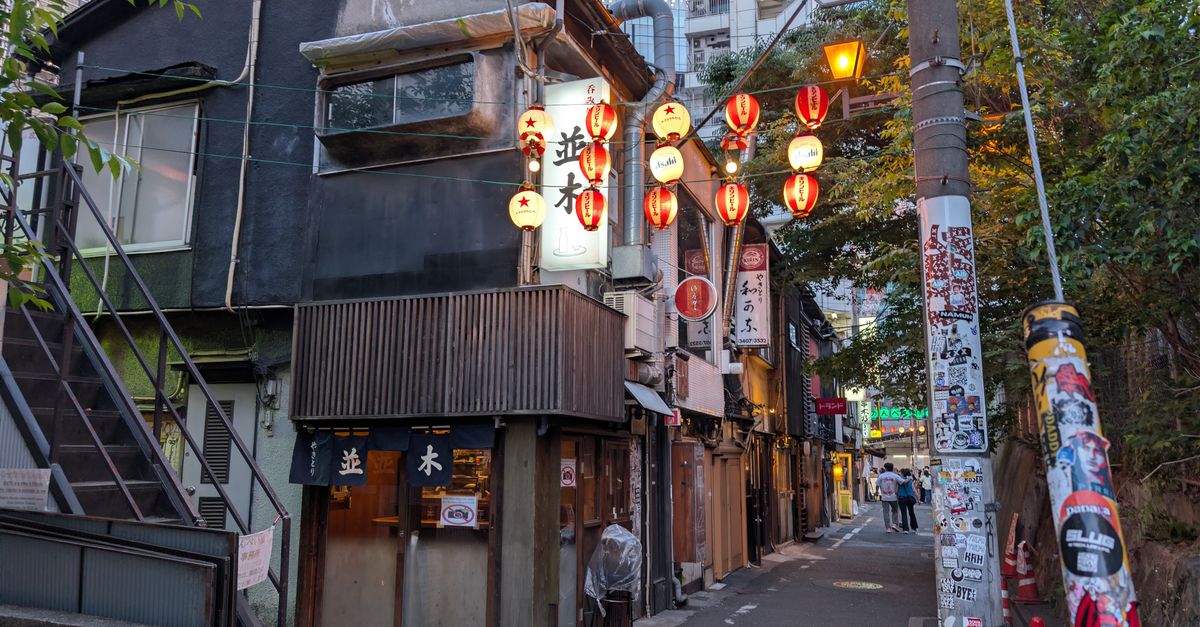
Tokyo with kids, what actually works
Tokyo with children from about four. What holds their attention, the ticket lotteries that need booking weeks out, and the zoo fact most guides get wrong.
Photo · Abby Chung · Pexels
Tokyo works with children from about four, and it works better than its reputation suggests. It is safe, it is spotless, the food is quick, and for a small child the trains are not transport, they are the attraction.
It is also cheap for families in a way nobody publishes. Children up to sixth grade are free at Ueno Zoo. Under-6s ride the trains free and 6 to 11 year olds pay half. The Ghibli Museum charges ¥100 for a four-year-old.
One thing to fix before you plan anything, because it is in almost every guide currently ranking for this question. There are no pandas at Ueno Zoo.
Japanese yen. Convert any figure on this page into your own currency at today's published rate.
Open the currency converter →The panda thing, because it matters to your day
Xiao Xiao and Lei Lei, the twin giant pandas born at Ueno, had their final public viewing on 25 January 2026 and flew to China on 27 January. It was the first time in around half a century that Japan has had no pandas at all, and thousands of people queued for three and a half hours to say goodbye.
Ueno Zoo is still worth your morning. It is just not worth it for the reason every listicle gives, and a child who has been promised a panda is a child you will be managing for an hour.
What it is, per the zoo's own admission page: ¥600 for adults, ¥200 for junior high students, ¥300 for over-65s, and free for everyone up to sixth grade. Open 9.30am to 5pm with admission closing an hour before, closed Mondays. And free for everyone on three days a year: 20 March, 4 May and 1 October.
A family of two adults and two primary-school children pays ¥1,200 for a large city zoo with polar bears, gorillas, a petting corner and a monorail. That is the best-value morning in Tokyo and it is worth saying so plainly.
What actually works, by age
Trains, for anyone under about eight. Not a joke and not a filler. The Yamanote line, the Yurikamome driverless line along the bay with its front window, and the Odakyu Romancecar with the seats behind the driver: these are rides, and they cost a fraction of a theme park. Sit at the front of the Yurikamome and you will buy yourself forty minutes of complete silence.
teamLab Planets at Toyosu. Barefoot, partly through shallow water, seven rooms on a fixed route. It is ¥3,800 on weekdays and ¥4,200 at weekends, and children aged 0 to 3 are free. It is the single most reliable hit on this list for ages four to twelve, and it is worth knowing that it is scheduled to close at the end of 2027, so this is not a "we will go next time" attraction.
Practical: bring shorts or roll-up trousers, because you will be in water to the knee. There are lockers, and phones survive fine.
The Ghibli Museum in Mitaka, if you can get a ticket. The pricing is genuinely lovely: ¥1,000 for 19 and over, ¥700 for 13 to 18, ¥400 for 7 to 12, ¥100 for 4 to 6, and free for 3 and under, straight from the museum's own ticket page.
The booking is the hard part. Tickets go on sale through Lawson Ticket at 10am Japan time on the 10th of each month, for the following month only, first come rather than a lottery, and popular slots go in minutes. There are no door sales and resale is prohibited. Work out what 10am in Tokyo is where you live and set an alarm.
Inside, the Catbus is for elementary-school children and under, which is a rule that delights the right kids and disappoints the eleven-year-old who has just outgrown it. Warn them in advance.
Ueno Park as a whole, not just the zoo. The National Museum of Nature and Science has a full blue whale outside and dinosaurs inside, there are rowing boats on Shinobazu Pond, and the whole thing is walkable from one station.
Department store rooftops. Almost every large Japanese department store has a free rooftop with a playground, a small shrine and somewhere to sit, and almost no visitor knows. Matsuya in Ginza, Seibu in Ikebukuro, Takashimaya in Shinjuku. This is the wet-afternoon answer.
Tokyo Disneyland and DisneySea, with a warning about the price structure. A 1-Day Passport is ¥7,900 to ¥10,900 for adults, ¥6,600 to ¥9,000 for 12 to 17 year olds, and ¥4,700 to ¥5,600 for 4 to 11 year olds, with under-3s free. Pricing is date-based, so a weekday outside Japanese school holidays sits at the bottom of every band and a Saturday sits at the top. The parks sell separate single-park tickets, so pick one. Assuming you can do both is a common and expensive mistake.
The logistics that decide whether the day works
Rush hour is not difficult, it is impossible. Between roughly 7.30am and 9am the carriages reach a density where a pram cannot board, and station staff are physically pushing people in. Plan to be moving before seven or after half past nine. The evening peak is busy but far more manageable.
Lifts exist almost everywhere and are hidden. Nearly every station has one. It is very often at one specific end of a very long platform, and the signage assumes you already know. Use a maps app that shows station exits, and pick your carriage before you board rather than after.
Coin lockers are the unsung hero. They are everywhere, they take IC cards, and dumping a bag for ¥400 changes the shape of a day with children more than any other ¥400 you will spend.
Nursing and changing rooms are in every department store, most large stations and every shopping mall, and they are excellent: private cubicles, changing tables, and hot water dispensers for formula. Convenience stores generally do not have them, despite having everything else.
Eating, which Tokyo makes easy
Tokyo is the least stressful major city we know of for feeding children. Every department store basement is a food hall with a hundred options and no commitment. Conveyor-belt sushi is a game as much as a meal, and the touchscreen ordering means nobody has to talk to anyone. Family restaurant chains have picture menus, high chairs and children's sets as standard.
Two notes. Convenience store food is genuinely good, and the onigiri that everyone still describes as ¥100 now runs ¥120 to ¥250, with premium fillings near ¥300. And eating while walking is mildly frowned upon in most of the city, so buy, stop, sit, eat, which is a better rhythm with children anyway.
Where to stay with kids
The rule for Tokyo generally is to be a short flat walk from a Yamanote line station. With children it becomes the whole decision, because the difference between a five-minute walk and a fifteen-minute walk is the difference between going back to the hotel at two in the afternoon and not being able to.
Shinjuku for the most rail options and the Odakyu services out towards Fuji and Hakone. Ueno for the budget, the park and the zoo on your doorstep. Tokyo Station or Nihonbashi for the simplest transfers if you are moving on by Shinkansen. Rooms in Japan are small, so a family of four usually needs either a Japanese-style room with futons on tatami, which sleeps four comfortably and which children love, or two connecting rooms.
The one-day and the three-day versions
One day, ages four to eight. Ueno Zoo at opening, rowing boats on Shinobazu Pond, lunch in a department store basement, then the Yurikamome out to the bay in the afternoon with the front seats claimed. Home before the evening peak.
Three days. Day one as above. Day two teamLab Planets in the morning, Toyosu and the bay in the afternoon. Day three the Ghibli Museum if you got a ticket, or a day trip if you did not: Kamakura is under an hour, has a giant bronze Buddha and a tram that runs along the sea, and the pass costs ¥1,640 for adults and ¥430 for children.
What to skip with kids
Shibuya Crossing as a destination. It is a road junction. Adults find it thrilling because of what it represents. A six-year-old finds it a road junction with too many people, held by the hand, at knee height in a crowd.
Tsukiji outer market with a pram. The lanes are narrow, the surface is wet, and the motorised carts have right of way and use it. Go without the pram or go without the children.
Both Disney parks. One is a full day and a good one. Two is two of your days and roughly ¥40,000 for a family of four, in the city with the most distinctive things to do on earth.
Any plan with more than one ticketed attraction in a day. teamLab in the morning and the Skytree in the afternoon looks fine on paper and ends in a tantrum, and not necessarily the child's.
The 7.30am start. Tempting, because Tokyo rewards early starts. It collides exactly with the one hour of the day the network cannot take a family.
Visa-free · 90 days, on all five passports we check.
Short tourist stays only. Checked 21 Aug 2026; rules change without notice and the government page is the source of truth.
Check your own passport →Checked 21 Aug 2026.
Everything we check for Japan →Before you book
The Tokyo where-to-stay guide has the full area breakdown and the transport card detail, and it is the piece of this that most affects a family day. Five days in Tokyo is the adult version of this route, with the booking windows you will need for Shibuya Sky either way, and day trips from Tokyo covers Kamakura, Hakone and the passes each one needs. The Tokyo city guide has the districts and the Japan country guide the practicalities. If Tokyo is one part of a longer trip, seven days in Japan joins it to Kyoto. The rest of the family guides work the same way, and Rome with kids is the European sibling to this one. When to go matters: Tokyo in August with children is hard work. Ready to look at rooms? Tokyo stays are here, and the things to do shelf has what is bookable.
Ticket prices, age bands and opening hours checked September 2026 against the venues' own pages. The pandas left Ueno on 27 January 2026, which a great many family guides have not caught up with, and teamLab Planets is scheduled to close at the end of 2027. Here is how we research and re-check guides.