Japan in 7 days, one honest route
Seven days is six nights and about five and a half usable days. The route that fits, what the trains really cost, and the two things to cut.
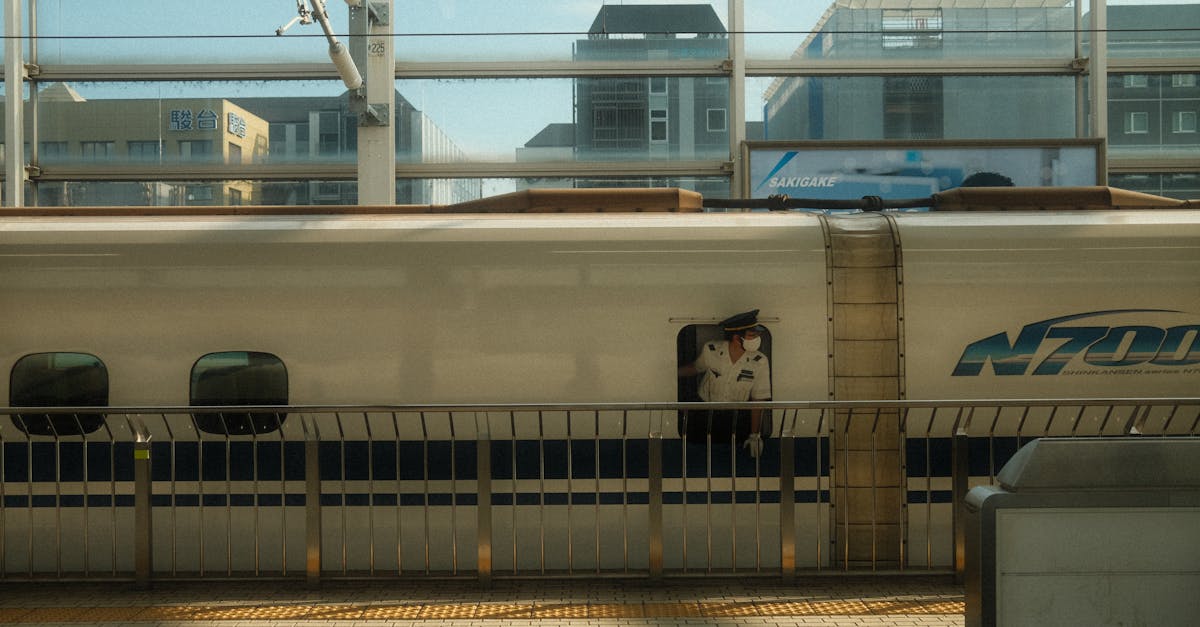
Photo · Reinaldo Simoes · Pexels
Seven days in Japan is really six nights, and two of those days are half-days spent in airports. That leaves about five and a half usable days — which is enough for two cities done properly, and not enough for the five-city route most itineraries sell you. The honest answer is Tokyo for three nights, Kyoto for three, with one 2h15 train in between.
Everything below is built on that. If you would rather see the reasoning first, skip to why not Osaka too.
The route
| Days | Where | The point |
|---|---|---|
| 1 | Arrive Tokyo | Land, get to the hotel, eat something, sleep |
| 2–3 | Tokyo | Two full days, one neighbourhood at a time |
| 4 | Tokyo → Kyoto | Morning train, afternoon in Kyoto |
| 5–6 | Kyoto | Two full days, one of them starting at dawn |
| 7 | Depart | Kansai if you booked it properly, Tokyo if not |
One hotel change in seven days. Every other version of this itinerary costs you half a day per extra city, and you only have eleven half-days to spend.
Day 1 — arrival, and doing almost nothing
Whatever time you land, this day is not a sightseeing day. Get to the hotel, drop the bags, and go and eat within a few streets of where you are sleeping.
If you are coming from Australia, the Sydney overnight to Haneda gets in at 05:55, which is nine hours before a standard 3pm check-in. Every hotel will store your bags from early morning — email ahead, leave the case, and go and have breakfast rather than sitting in a lobby. Melbourne, Brisbane, Perth, Adelaide and the Gold Coast all arrive into Narita instead, which is an hour further out.
Get a Suica or PASMO at the airport and tap through everything from here on. Our Tokyo where-to-stay guide covers which neighbourhood suits which kind of trip, and why the station exit matters more than the district name.
Days 2 and 3 — Tokyo, two neighbourhoods a day
The mistake in Tokyo is treating it as a list of sights. It is a set of neighbourhoods that happen to have sights in them, and the pleasure is in the walking between.
Day 2, the east. Start early at Sensō-ji in Asakusa — before nine it is a temple, after ten it is a queue. Walk the backstreets north and west of it, then take the Ginza line to Ueno for the museums or the market lanes under the tracks at Ameyoko. Late afternoon, cross to Yanaka: a low, quiet, unbombed grid of old houses, cats and a cemetery that is genuinely lovely to walk. Eat somewhere small near Nippori.
Day 3, the west. Shibuya and Shinjuku, but not at midday. Go to Meiji-jingū first thing, when the gravel is empty, then Harajuku and the Omotesandō architecture walk south. Give the afternoon to Shimokitazawa or Nakameguro depending on whether you want second-hand shops or a canal. Come back for the evening — Shinjuku's Omoide Yokochō and Golden Gai are small, smoky and better after dark, and the top of the Metropolitan Government Building is free and has a better view than the towers that charge.
The swap: if it rains, teamLab or the Edo-Tokyo Museum absorb a whole afternoon without you noticing.
Day 4 — the train, and the first afternoon in Kyoto
Take a mid-morning Shinkansen rather than a dawn one. You lose nothing and you arrive in Kyoto with the afternoon intact.
The train costs more than most guides admit. Tokyo to Kyoto is 2h15 on the Nozomi at ¥14,170 (about A$123) for a reserved seat, or 2h40 on the Hikari at ¥13,850. Both are fine. Sit on the right-hand side heading west and you get Fuji at about the fifty-minute mark, cloud permitting.
Before you board, measure your suitcase. On the Tokaido line — the one you are taking — a bag whose length plus width plus height exceeds 160cm, wheels and handle included, needs a free oversized-baggage reservation made in advance. Without one it is ¥1,000 at the gate and staff move your case to storage. Over 250cm and it is refused. This is the least glamorous fact in this guide and the one most likely to actually affect your day.
Arrive, drop bags, and spend the afternoon in Higashiyama while the light is low — the lanes below Kiyomizu-dera are the postcard, and they empty out noticeably after four.
Days 5 and 6 — Kyoto, starting before the buses
Kyoto rewards early starts more than any city in Japan, because its most famous places are small and its crowds are enormous.
Day 5, the dawn one. Fushimi Inari at or before seven. The gates are the same at seven as at eleven; at seven they are yours. Walk up as far as the first viewpoint and then decide — most people turn back there and are right to. Come down, eat near Inari station, then take the JR two stops to Tōfuku-ji or head into the centre for Nishiki market and the streets around Pontochō.
Day 6, the west. Arashiyama early for the bamboo, then the far less busy Ōkōchi Sansō garden next to it, which almost everyone walks straight past. Afternoon back in the centre: Nijō castle, or Ginkaku-ji and the Philosopher's Path if you would rather walk than look at things.
The one warning about Kyoto: it is a bus city, not a train city, and the buses in tourist season are slow and full. Where a walk is thirty minutes, walk it.
Day 7 — going home
If you booked the open-jaw, Kansai airport is 75–90 minutes from Kyoto and you have a real morning. If you are flying from Tokyo, you are on a train by about nine and it is not a day.
Either way, if you are moving a suitcase, send it ahead by takkyubin rather than dragging it — a normal checked bag runs ¥2,930–3,320 (about A$26–29) between Kyoto and Tokyo, next day. Keep one night's things in a day bag.
If you have one more day
Add it to Kyoto, not to a third city, and use it for Nara — 45 minutes and ¥720 on the JR Miyakoji rapid, and honestly a half-day rather than a full one. Tōdai-ji and the deer take three or four hours and you are back in Kyoto for dinner.
From Tokyo, the equivalent is Kamakura: an hour each way, ¥920, temples, a Great Buddha and a beach. It is the best day trip from Tokyo and it is not close.
The two things to cut
Cut the night in Osaka. Every Golden Route itinerary tacks one on. Osaka is 29 minutes and ¥580 from Kyoto — for that half hour you are paying with a checkout, a check-in, luggage on a commuter train, a new neighbourhood to learn and roughly half a usable day, out of five and a half. Keep the Kyoto room, go over at four, eat your way through Dōtonbori and be back by eleven. You get the Osaka most people actually want and you keep the day. The Osaka city guide has where to point yourself.
Cut Hakone as a day trip. It is about ninety minutes from Shinjuku each way, and the loop — ropeway, Ōwakudani, the lake — is another five or six hours on top. Worse, the point of Hakone is the ryokan you sleep in, which you are not doing. Either give it a night or leave it for next time. Same verdict on Kanazawa from Kyoto: there is no direct train, it is 2h11 each way with a change at Tsuruga, and it deserves two nights or nothing.
Do not buy the rail pass
This is the most common expensive mistake on a seven-day trip, and it is recommended by nearly every guide ranking for this itinerary — one of them calls it "totally worth it" for exactly the route below its own numbers disprove.
The seven-day ordinary Japan Rail Pass is ¥50,000 (about A$436), going to ¥53,000 through overseas agents from 1 October 2026. Here is what a Tokyo–Kyoto week actually uses:
| Journey | Fare |
|---|---|
| Tokyo → Kyoto, reserved Hikari | ¥13,850 |
| Kyoto → Nara return | ¥1,440 |
| Kyoto → Osaka return | ¥1,160 |
| Total | ¥16,450 |
Against ¥50,000. You would be roughly ¥33,000 (A$288) down — and if you return to Tokyo rather than flying out of Kansai, still about ¥22,000 down. Japan Guide keeps the current pass rules and prices, and the arithmetic is not close.
It gets worse than the headline. The pass excludes the Nozomi, so you take the slower Hikari or pay a ¥4,960 supplement. It excludes the Tokyo Metro and Toei subway, which is where nearly all your Tokyo travel actually happens. And it excludes the Kintetsu line to Nara and the Odakyu line to Hakone. Break-even is somewhere around a Tokyo–Hiroshima return, which does not belong in a seven-day trip.
Buy point-to-point tickets and use an IC card. It is cheaper, faster and less restrictive.
What the week costs
Per person, on the ground, excluding international flights. Converted at ¥114.76 to the Australian dollar — the rate on 1 September 2026, and worth knowing that the Australian dollar hit a forty-year high against the yen in February 2026.
| Doing it cheaply | Comfortable mid-range | |
|---|---|---|
| 6 nights' accommodation | ¥24,000 | ¥78,000 |
| Food, 7 days | ¥21,000 | ¥42,000 |
| Tokyo → Kyoto Shinkansen | ¥13,320 | ¥13,850 |
| Local transport | ¥7,000 | ¥10,000 |
| Entry fees | ¥6,000 | ¥12,000 |
| Departure tax | ¥3,000 | ¥3,000 |
| Accommodation tax | ¥1,200 | ¥1,800 |
| Total | ≈¥75,500 (A$658) | ≈¥160,650 (A$1,400) |
A realistic planning number for a comfortable week is ¥170,000–200,000, or A$1,480–1,740, once airport transfers and a day trip go in.
Two taxes to know about. The departure tax tripled to ¥3,000 on 1 July 2026 and is collected inside your airfare. And Kyoto replaced its accommodation tax with a five-band system on 1 March 2026 — ¥400 a person per night on a room between ¥6,000 and ¥20,000, but ¥1,000 from ¥20,000, and ¥10,000 a night at the very top. Tokyo is still on ¥100–200 until it moves to a flat 3% on 1 April 2027.
When to go
Best: mid-May to mid-June, after Golden Week and before the rains — warm, dry, quiet and cheaper. Or late October to late November, which is the most stable weather of the year and the autumn colour.
Avoid, firmly:
- Golden Week, 29 April to 5 May 2027. Friday 30 April is the only working
day in the run, so a single day of leave buys Japanese workers seven off and the entire country travels at once.
- Obon, roughly 7–16 August 2027, with peak heat and humidity on top.
- New Year, about 29 December to 3 January — the biggest closure window of
the year, when restaurants and some attractions simply shut. The worst possible week for a first visit.
Cherry blossom is late March to early April, and the 2027 peak is currently forecast at 28 March to 5 April — a forecast, not a fact, and a tree holds full bloom for three to seven days before one windy afternoon ends it. Hotels for that window book six to twelve months out. Our when-to-go guides go into the month-by-month detail, and the Japan country guide has the practicalities across the whole trip.
Before you book
Read the Tokyo and Kyoto city guides for what is actually in each neighbourhood, then decide where to sleep — Tokyo and Kyoto both have their own guide, and in Kyoto in particular the wrong side of the city costs you an hour a day on a bus. If you want to compare rooms now, Tokyo stays are here and Kyoto's are here, and our other itineraries cover the trips that need longer than a week.
Fares, taxes and pass prices checked September 2026 — here is how we research and re-check guides.