Where to stay in Tokyo, decided properly
Which Tokyo neighbourhood suits your trip, what each one actually costs a night, and the station detail that matters more than the district name.
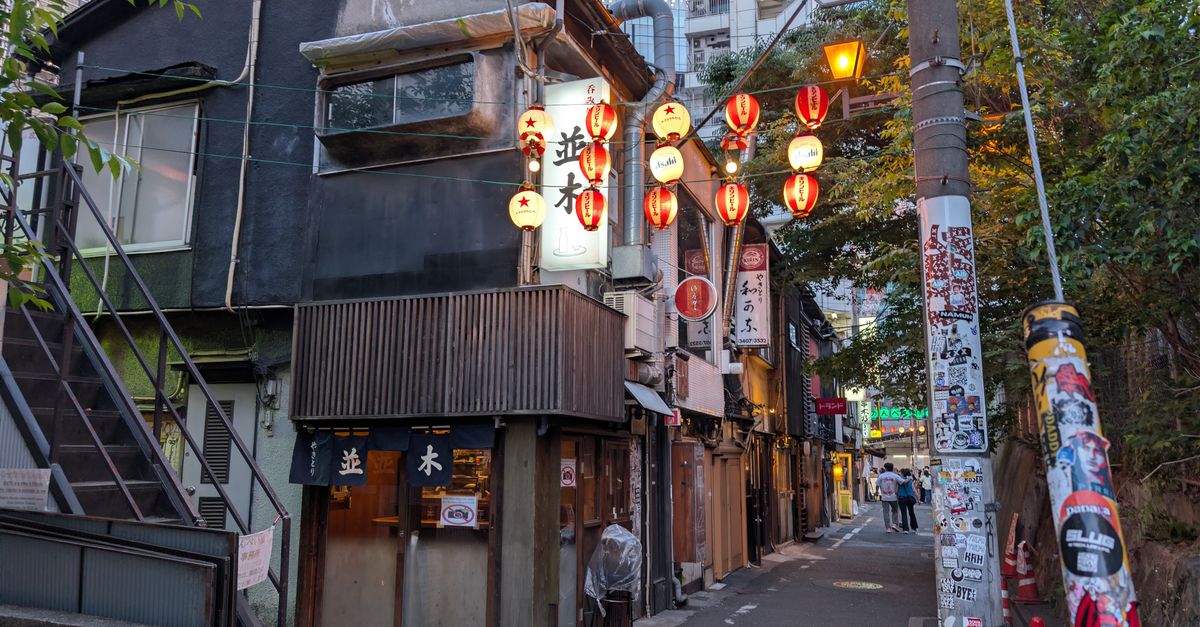
Photo · Luiz M - Channel YT Viajei Amei · Pexels
Stay within a few minutes' walk of a Yamanote line station and the rest is detail. That loop connects almost everything a first visit to Tokyo wants, runs every two to four minutes, and turns a 40-minute cross-city slog into a twelve-minute ride you never have to think about. For most first trips that means Shinjuku or Shibuya for energy, Tokyo Station or Nihonbashi for the simplest transfers, and Ueno or Asakusa if the budget matters more than the postcode.
Here is the short version before the long one.
- First visit, want everything nearby: Shinjuku. Most lines, most food, most noise.
- First visit, want it calmer: Nihonbashi. Tokyo Station on foot, a fraction of the price.
- Families: Ueno or Asakusa, in an apartment-hotel with a real second bedroom.
- Budget: Asakusa. Lowest ceiling of any central area, and a direct train from both airports.
- Second or third visit: Yanaka, Ebisu or Shimokitazawa — with the caveats below.
- Short stopover: Nihonbashi or Asakusa. One seat from Haneda and Narita.
The one thing that beats choosing a neighbourhood
Pick the station exit, not the suburb.
Everybody recommends Shinjuku because it is the best-connected place in Tokyo. That is true of the station and often false of the hotel. Shinjuku station holds the Guinness record as the world's busiest — 2,704,703 passengers a day — with twelve lines, five operators and more than 200 exits, each operator behind its own ticket gates. A hotel advertised as "five minutes from Shinjuku station" can be a twenty-minute indoor walk from the platform you actually need, and you will make that walk twice a day with luggage.
The same trap catches two other areas people book on reputation. Akasaka station is on the Chiyoda line and nothing else — the connections everyone means are at Akasaka-mitsuke, several minutes away. And in Yanaka, Nippori is on the Yamanote while Sendagi, a few hundred metres up the hill, is Chiyoda-only.
What Tokyo actually costs
No other guide to this question publishes prices, which is strange, because it is the second thing everyone wants to know.
Tokyo's average daily rate was ¥33,168 — about A$290 — in May 2026, up 12.8% year on year. That average is dragged upward by the luxury end. What you will actually pay in each area, for a clean mid-range double:
| Area | Nightly band | On the Yamanote? | The catch |
|---|---|---|---|
| Ueno | ¥12,000–22,000 (A$105–192) | Yes | Hotels can feel dated |
| Asakusa | ¥14,000–25,000 (A$122–219) | No | 30 min to Shinjuku |
| Nihonbashi | ¥17,000–30,000 (A$149–262) | No (Tokyo Stn on foot) | Office district after dark |
| Shinjuku | ¥18,000–30,000 (A$157–262) | Yes | Noise, and the station |
| Shibuya | ¥20,000–35,000 (A$175–306) | Yes | Building site until 2034 |
| Ginza | ¥22,000–40,000 (A$192–350) | No | Empties in the evening |
| Marunouchi | ¥37,000+ (A$325+) | Yes | Six hotels, all upscale |
Rates checked September 2026 against market data and current listings; converted at ¥114.4 to the Australian dollar, the rate on 1 September 2026. The yen is the reason a Tokyo trip feels affordable right now — the Australian dollar reached ¥110.79 in February 2026, a level it had not touched since 1986, and a record 1.06 million Australians went to Japan across 2025.
There is also an accommodation tax, charged per person per night on the room rate before meals and consumption tax: nothing under ¥10,000, ¥100 up to ¥14,999, ¥200 above that. Trivial today. It stops being trivial on 1 April 2027, when Tokyo switches to a flat 3% with no cap and extends it to hostels and short-stay rentals — a ¥40,000 room goes from ¥200 a person to ¥1,200. The Tokyo Metropolitan Government publishes the current bands. Budget an extra ¥3,000 per person for the departure tax too, tripled from ¥1,000 on 1 July 2026 and bundled into your airfare.
Shinjuku — the default, and it earns it
Twelve lines, five operators, and the single best set of onward options in the city: the Odakyu towards Hakone and the Fuji lakes, the Chūō west, the Yamanote in both directions. If you want one base for a week of scattered days, this is the rational choice. It is also where Tokyo stays awake — the eating and drinking runs to 2am on the Kabukicho side, which is either the point or the problem.
Three honest caveats. The station is genuinely hard, not charmingly hard. Kabukicho is loud until the early hours, so read the hotel's exact position rather than its district. And Shinjuku police logged 91 reports of tout-led bar scams in the first half of 2026, worth around ¥99 million, with overseas visitors heavily represented. The rule is simple and it works: never follow someone who approaches you on the street to a bar.
Shibuya — atmosphere, at a price, through scaffolding
Nine lines, the Yamanote, and the most fun of any major base if you are here for shopping, music and being out late. It prices above Shinjuku for the privilege.
The thing to know before you book: Shibuya station is in the middle of a redevelopment that runs to 2034, with demolition around the east exit continuing through November 2026. Corridors close, entrances move, escalators sit out of service. It is navigable, it is just tiring with a suitcase. Also worth knowing that the Saikyō and Shōnan–Shinjuku platforms sit a long walk south of the Yamanote ones — same station name, different building, in effect.
Tokyo Station, Nihonbashi and Ginza — the central three
Marunouchi, the district wrapped around Tokyo Station, has six hotels. Not six worth recommending — six. The price band is not a choice you make, it is the entire inventory. Stay here if the Shinkansen is central to your trip and budget is not.
Nihonbashi is the pick nobody makes and probably should. It is a walk from the same Tokyo Station, has around 144 properties instead of six, and prices like a normal neighbourhood. The trade is that it is an office district and behaves like one after 8pm — you will go elsewhere to eat.
Ginza is calmer than its reputation, genuinely central, and good if your trip is built around restaurants and shopping. Two catches: no JR line actually runs through it, so the Yamanote is a walk away at Yūrakuchō or Shimbashi, and the boutiques shut around 8pm and take the street life with them.
Asakusa and Ueno — where the value is
Asakusa has the tightest, lowest price band of any central area, and no luxury tier to distort it. You get temple-district texture, an old-Tokyo grid that is pleasant to walk, and the best airport access in this guide. You give up about 30 minutes each way to Shinjuku and Shibuya, and the neighbourhood gets very busy with day-trippers between 10am and 4pm before emptying at dusk.
One trap: the Tsukuba Express has its own "Asakusa station" about 600 metres from the Metro and Toei one, and the transfer is at street level. Check which one your hotel means.
Ueno is the budget pick with a Yamanote station attached, plus Shinkansen platforms, the museum cluster and the fastest train to Narita. Hotels skew older and plainer than Asakusa's, and it has less charm — but it is hard to argue with the connectivity for the money.
Both are strong for families, because this is where the apartment-hotels are: the chains built for four to eight guests with a kitchen and a second room, which is otherwise a genuinely hard thing to find in Tokyo.
The airport question, which decides more than people expect
This is where a lot of published advice is simply out of date.
From Narita, the Narita Express serves Tokyo, Shinagawa, Shibuya and Shinjuku. It does not serve Ikebukuro — those trains stopped on 12 March 2022 — and it has never served Ueno, despite what several current guides say. Expect ¥3,070 to Tokyo Station and about 53 minutes; the foreign-passport round-trip ticket is ¥5,200, up from ¥5,000 in March 2026. JR East publishes the timetable and stops. If you are heading for Ueno or Yanaka, the Keisei Skyliner is faster and cheaper at ¥2,470 and about 36 minutes to Nippori.
From Haneda, Keikyu reaches Shinagawa in 11–14 minutes for about ¥330, and the monorail reaches Hamamatsuchō in 13 minutes for ¥520.
And the fact worth planning around: Keikyu trains run through onto the Toei Asakusa line, and the Keisei Access Express does the same from Narita. That makes Asakusa and Nihonbashi the only two areas here with a one-seat ride from both airports — roughly 32–45 minutes and ¥610 from Haneda, no transfer, no stairs with a suitcase. If you are landing tired or leaving early, that is worth more than a fashionable postcode.
Australians should note that Sydney is the only city with direct Haneda flights; Melbourne, Brisbane, Perth, Adelaide, Cairns and the Gold Coast all arrive at Narita, which is three times further out. And if you are on the overnight Sydney service, you land at 05:55 and check-in is 3pm. Every hotel here will store bags from early morning — email ahead, then go and eat breakfast somewhere rather than sitting in a lobby for nine hours.
Getting around once you are there
Get a Suica or PASMO and tap. Unregistered cards went back on general sale in March 2025 after the chip shortage, and both airports sell tourist versions with no deposit. iPhone users can add Welcome Suica Mobile, which lasts 180 days rather than the physical card's 28 and tops up through Apple Pay, so foreign cards work. Android generally cannot — most non-Japanese handsets lack the FeliCa chip, so get a plastic card and top it up with cash at any convenience store.
Skip the rail passes for a Tokyo-only trip. The Japan Rail Pass is for long-distance travel and you cannot recover ¥50,000 on ¥200 city hops. The Tokyo Subway Ticket (¥1,000 for 24 hours, up from ¥800 in March 2026) only pays off at five or six subway rides a day, and it excludes JR — which means it excludes the Yamanote line you were told to stay next to.
One more thing that should shape where you sleep: the trains stop. The last Yamanote is around 00:44 and the first is about 04:30, with no night services at any point in the week. A taxi home is ¥2,000–4,000 with the late surcharge. If you plan on late nights, stay where you will be having them.
Where not to stay, and why
Roppongi, for most people. It has two lines, no JR, and an inventory that jumps from budget to luxury with almost nothing between. Stay here for the Ritz-Carlton or the art museums by all means, but not for convenience — it is less connected than its reputation suggests, and the nightlife strip has a long and well-documented history of drink-spiking and rip-off bars.
Ebisu, Naka-Meguro, Shimokitazawa and Yanaka on a first trip. They are lovely and we would happily stay in any of them on a third visit. But Ebisu's stock is mostly serviced apartments, Naka-Meguro and Shimokitazawa have almost no hotels at all, and Yanaka has perhaps five — book late and you simply will not find a room. Shimokitazawa also has no JR and no subway, only two private lines, and you must exit and re-enter the ticket gates to change between them.
A short-stay rental, to save money. This one has changed recently enough that most advice online is wrong. In June 2026 Japan's tourism agency moved to let local governments cut the permitted operating period to zero days a year in designated residential zones. Shinjuku, Nerima and Bunkyō already restrict rentals to weekends and holidays, Chūō bans weekdays, parts of Ōta ban them outright, and of Tokyo's 23 wards only Kita and Edogawa have no extra restrictions. Shinjuku ward complaints went from 70 in 2021 to 924 in 2025, so this is tightening rather than loosening. The saving is real; the downside is asymmetric — no early bag storage, no takkyubin handoff, and cancellation risk that is now regulatory rather than commercial. If you book one anyway, check its notification number and have a backup.
Tokyo Disney, if the park is two days of a seven-day trip. It is in Urayasu, in Chiba, not Tokyo — and Maihama sits on the Keiyō line, whose platform is a several-hundred-metre walk from Tokyo Station's main concourse. Families book it for the park and then commute the wrong way all week.
So: where?
If this is your first visit and you want one answer, Shinjuku — and put real effort into which side of the station your hotel is on. If you would rather sleep somewhere calm and still be central, Nihonbashi. If the budget is the point, Asakusa, and enjoy the direct train from the airport while everyone else changes at Shinagawa.
Then read when to go before you lock the dates in — Tokyo in the first week of April is a different city, at a different price, from Tokyo in February. The Tokyo city guide has the neighbourhoods mapped with what is actually in them, the Japan country guide covers the practicalities across the whole trip, and our itinerary guides turn this into days. If you are ready to compare rooms, every Tokyo stay we can source is here, and things to do is worth a look for the few experiences that genuinely sell out.
Prices and services checked September 2026. We date every number because Tokyo's move fast — here is how we research and re-check guides, and how to tell us when something has changed.