Day trips from Tokyo, and the pass that decides each one
Six day trips from Tokyo, the regional pass each one needs, the validity rule that quietly burns a whole day, and why older pass comparisons are stale.
Photo · Maheshwaran Shanmugam · Pexels
Every good day trip from Tokyo is really a decision about which regional pass to buy, because almost none of them run on JR. Odakyu takes you to Hakone and Kamakura. Tobu takes you to Nikko. Fujikyu takes you to the lakes. Each company sells its own pass, each pass has a trap, and one of those traps costs you an entire day.
There is also a reason to distrust older comparisons this year. JR East raised its fares on 14 March 2026, the first proper rise in nearly four decades, and it abolished the discounted fare zones that applied across the Tokyo metropolitan area. The baseline every pass is compared against moved. Any "is the pass worth it" table written before March is doing sums with the wrong numbers.
Japanese yen. Convert any figure on this page into your own currency at today's published rate.
Open the currency converter →The passes, side by side
| Trip | Pass | Adult | Child | Valid |
|---|---|---|---|---|
| Kamakura and Enoshima | Enoshima-Kamakura Freepass, from Shinjuku | ¥1,640 | ¥430 | 1 day |
| Hakone | Hakone Freepass, from Shinjuku | ¥7,100 | ¥1,600 | 2 days |
| Hakone | Hakone Freepass, 3 days from Shinjuku | ¥7,500 | ¥1,850 | 3 days |
| Nikko | NIKKO PASS World Heritage Area | ¥3,000 | ¥1,500 | 2 days |
| Nikko, wider | NIKKO PASS All Area | ¥8,000 | ¥4,000 | 4 days |
Checked September 2026 against the operators' own pages. Limited express surcharges are not included in any of them, which catches people on both the Odakyu Romancecar and the Tobu Spacia.
1. Kamakura, the one that works on a short trip
Under an hour from Shinjuku, and the only day trip on this page you can decide on at breakfast.
The Enoshima-Kamakura Freepass is ¥1,640 for adults and ¥430 for children from Shinjuku, and it covers the round trip to Fujisawa plus unlimited use of the Enoden, the single-track coastal tram that runs between the sea and people's back gardens. That tram is half the reason to go.
Kamakura was Japan's capital for a century and a half and it still has the temples to prove it. The Great Buddha at Kōtoku-in is the postcard, Hasedera has the view and the hydrangea path, and Hōkoku-ji is the bamboo grove that Kyoto's gets the credit for, with a tenth of the people in it.
The move: go anticlockwise. Take the Enoden out to Hase first, do the Buddha and Hasedera while everyone else is still queuing at Kamakura station, then work back into town for Tsurugaoka Hachimangū and Komachi-dōri in the afternoon.
2. Hakone, for the scenery and the water
Two hours from Shinjuku on the Odakyu, and the pass is the trip. The Hakone Freepass covers eight modes of transport: the Odakyu line, the Hakone Tozan mountain railway with its switchbacks, the cable car, the ropeway over the sulphur vents at Ōwakudani, the pirate ship on Lake Ashi, and three bus networks.
The standard loop is a circle, and you should do it anticlockwise as well: train to Gōra, cable car and ropeway over the top, boat across the lake, bus back. Going the other way puts you on the ropeway at its busiest.
Two honest notes. Ōwakudani closes at short notice when volcanic gas levels rise, and it does so several times a year, so have the Hakone Open-Air Museum as your fallback rather than your disappointment. And the pass does not cover the Romancecar surcharge, which is roughly the price of a nice lunch each way. The ordinary express is free with the pass, takes half an hour longer and is perfectly comfortable.
Hakone is also the one day trip where staying the night genuinely changes it, because the onsen are better at nine in the evening than at three in the afternoon.
3. Nikko, the full commitment
About two hours from Asakusa on the Tobu line, which is four hours of a day on trains before you have seen anything.
The NIKKO PASS World Heritage Area is ¥3,000 for adults and ¥1,500 for children, valid two days, and covers one round trip between Asakusa and Shimo-Imaichi plus the Tobu buses inside the World Heritage area. Tobu's own page is explicit that a limited express ticket must be bought separately, and without the limited express the journey is considerably longer.
What you get for it is Tōshōgū, which is the most decorated building in Japan and looks nothing like anywhere else in the country, plus Rinnō-ji and Futarasan and the red Shinkyō bridge.
The All Area pass at ¥8,000 exists for Lake Chūzenji and the Kegon Falls, and on a single day it is usually a mistake: the bus up the switchback to the lake takes the best part of an hour each way and the day does not hold it.
Do Nikko on a clear day in autumn if you can choose, and leave Asakusa before eight if you cannot.
4. Kawaguchiko, for the mountain you cannot see from the mountain
Roughly two hours by highway bus from Shinjuku, at around ¥2,000 to ¥2,200 each way, and the bus is better than the train because it is direct.
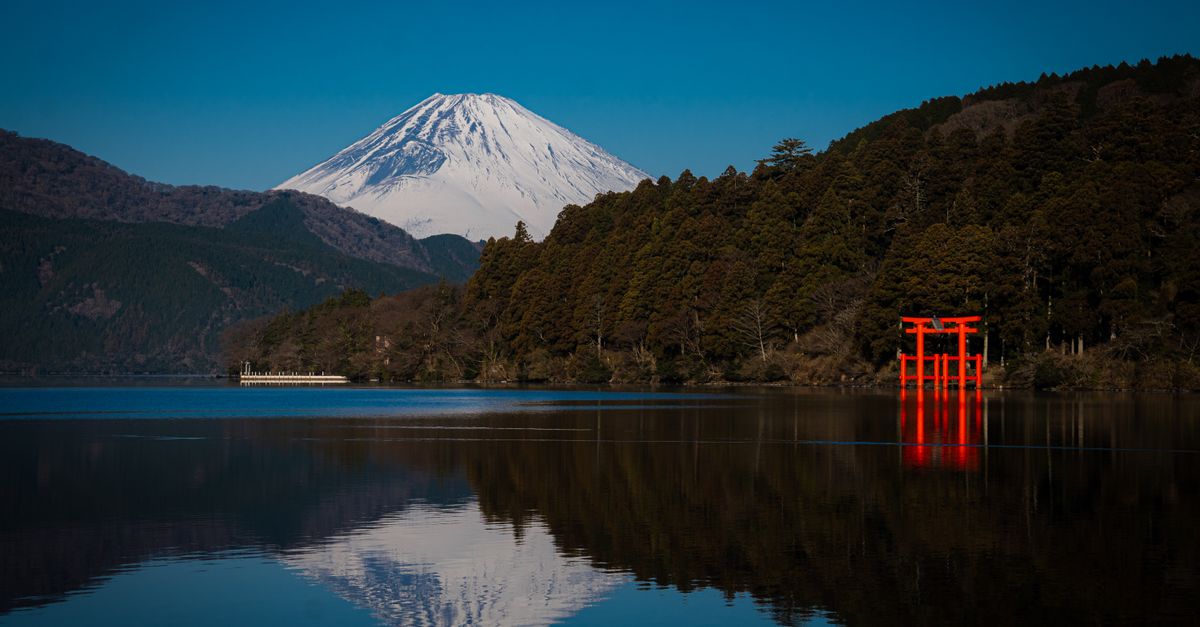
Here is the thing that trips people up. You cannot see Mount Fuji from Mount Fuji. The Fifth Station puts you on its flank at 2,300 metres, where the view is whatever cloud is passing. The mountain is the subject, and the places to see it from are the Fuji Five Lakes and Hakone.
At Kawaguchiko, the Red Line sightseeing bus day pass is about ¥1,500 and links the north shore, Oishi Park, the ropeway and the boat pier. A realistic day, buses and ropeway and lunch included, runs ¥8,000 to ¥12,000 a head.
Season matters more than time of day. Fuji is far more reliably visible from late autumn through early spring, when the air is dry, than in the summer haze. The people who come in July and see nothing are not unlucky, they are early.
And if you were thinking of climbing: there is now a ¥4,000 climbing fee on all four routes, a daily cap on climbers, and the Fifth Station buses want booking. The season is short and the climb is an overnight, not a day trip.
5. Yokohama, the easy half day
Half an hour from Shibuya on the Tōkyū line and, unusually for this list, no special pass at all: it is inside the normal IC card area, so you just tap.
Yokohama is the anti-Tokyo. Wide harbour, room to breathe, the best Chinatown in Japan, the Cup Noodles Museum, and the Sankeien garden. It is the day trip for an afternoon when the weather has ruined a bigger plan, and it is the one you can do with a hangover.
6. Kawagoe, "Little Edo", one hour
Thirty to fifty minutes from Ikebukuro or Shinjuku on the Tōbu Tōjō or Seibu lines. Kawagoe kept its kurazukuri clay-walled merchant warehouses, so it looks like the Edo-period town Tokyo stopped being, and the whole thing is one long walkable street plus a bell tower and a sweet-potato obsession.
It is the shortest real day trip here. Two thirds of a day, back for dinner in Tokyo.
What to skip
Fuji day tours that bundle the Fifth Station, Oshino Hakkai and an outlet mall. That is six hours on a coach, forty minutes at each stop, and an outlet mall.
Fuji-Q Highland as a day trip. It is a genuinely excellent theme park with some of the most frightening roller coasters in the world, and it is two hours each way. It works as an overnight at Kawaguchiko. It does not work as an afternoon.
Nikko in a single winter day. Short daylight, mountain roads, and the Chūzenji bus in snow. Nikko in December is beautiful and it needs two days.
Enoshima on a summer weekend. The island is small, the causeway is a queue, and the Enoden runs at capacity. Go on a weekday or go in the shoulder season.
Any day trip on your first full day. Jet lag plus a two-hour train is how people end up asleep on a lake cruise. Give Tokyo the first two days.
The fares underneath it all
Tokyo's own network changed this year in ways worth knowing before you compare anything. The 14 March 2026 JR East revision raised fares by about 7.1% on average, moved the Yamanote line's minimum fare from ¥150 to ¥160, and abolished the discounted fare zones that had applied across greater Tokyo, which is why the rise felt larger in the city than the headline percentage. IC card fares are now set slightly below paper-ticket fares, so tapping is both easier and marginally cheaper.
None of that changes which pass to buy. It changes what the pass is being compared against, which is why the comparison is worth doing again this year.
Visa-free · 90 days, on all five passports we check.
Short tourist stays only. Checked 21 Aug 2026; rules change without notice and the government page is the source of truth.
Check your own passport →Checked 21 Aug 2026.
Everything we check for Japan →Before you book
None of these towns are in our catalogue as separate destinations, so the rooms above are Tokyo rooms, which for a day trip is the right answer anyway. The Tokyo where-to-stay guide explains why a Yamanote line address is worth paying for, and it matters double here: Shinjuku and Asakusa are the two departure points on this page. Five days in Tokyo is the city itself, with the booking windows for Shibuya Sky and the Ghibli Museum, and Tokyo with kids rebuilds all of it around a shorter attention span. The Tokyo city guide has the districts and the Japan country guide the practicalities. If Tokyo is one half of a bigger trip, the seven-day and fourteen-day routes join it to Kyoto, and three days in Kyoto picks up the other end. When to go decides whether you see Fuji at all. Ready to look at rooms? Tokyo stays are here, and the things to do shelf has the bookable day tours.
Pass prices and validity rules checked September 2026 against Odakyu and Tobu. The JR East fare revision of 14 March 2026 changed the pay-as-you-go baseline these passes compete with, so older comparisons are arithmetically out of date rather than merely old. Here is how we research and re-check guides.