Morocco in 10 days, and the drive nobody costs into it
Marrakech, the Sahara and Fez in 10 days. The trains that work, the desert drive that eats two days, and the nightly tax collected in cash.
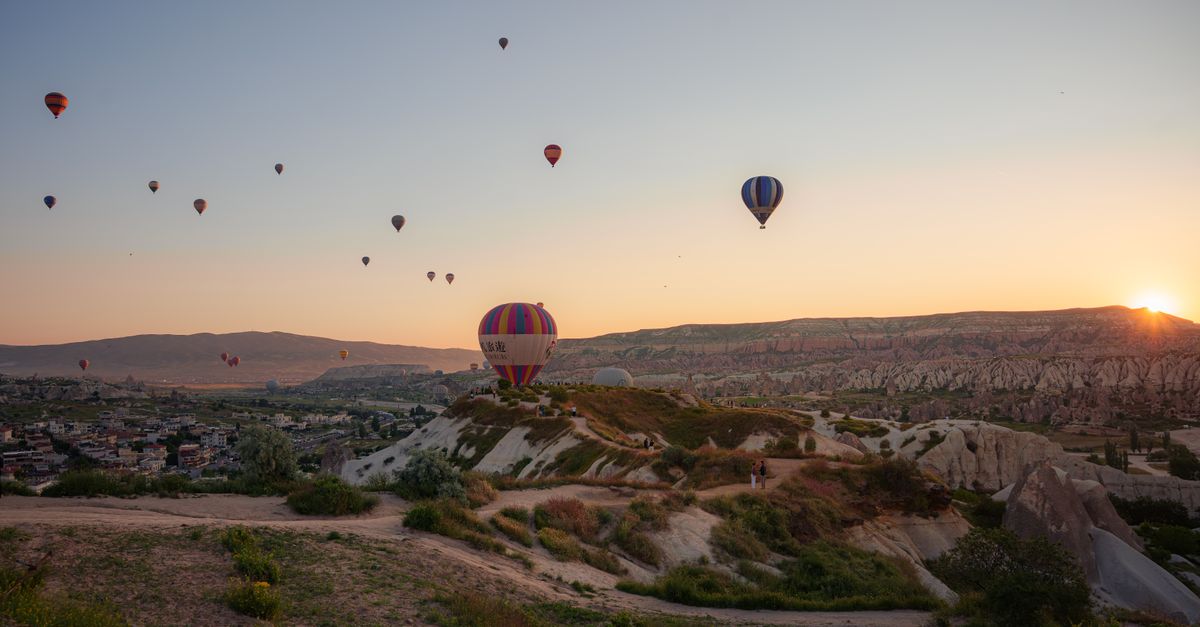
Photo · Sergey Pesterev · Pexels
Ten days in Morocco is really seven days plus the desert, and that is the sentence most itineraries leave out. Merzouga has no railway and sits nine to ten hours by road from Marrakech, over the High Atlas. Once you accept that, the rest of the route arranges itself.
Marrakech three nights, the Sahara two, Fez three, Chefchaouen or Casablanca two. Train wherever a train exists, and a vehicle only for the stretch where there is no alternative.
Moroccan dirham. Convert any figure on this page into your own currency at today's published rate.
Open the currency converter →The desert is the constraint, so plan around it first
Morocco's rail network is excellent and it goes nowhere near the dunes. The ONCF lines run up the Atlantic corridor and inland to Fez and Marrakech; the Sahara is south-east of all of them across a mountain range.
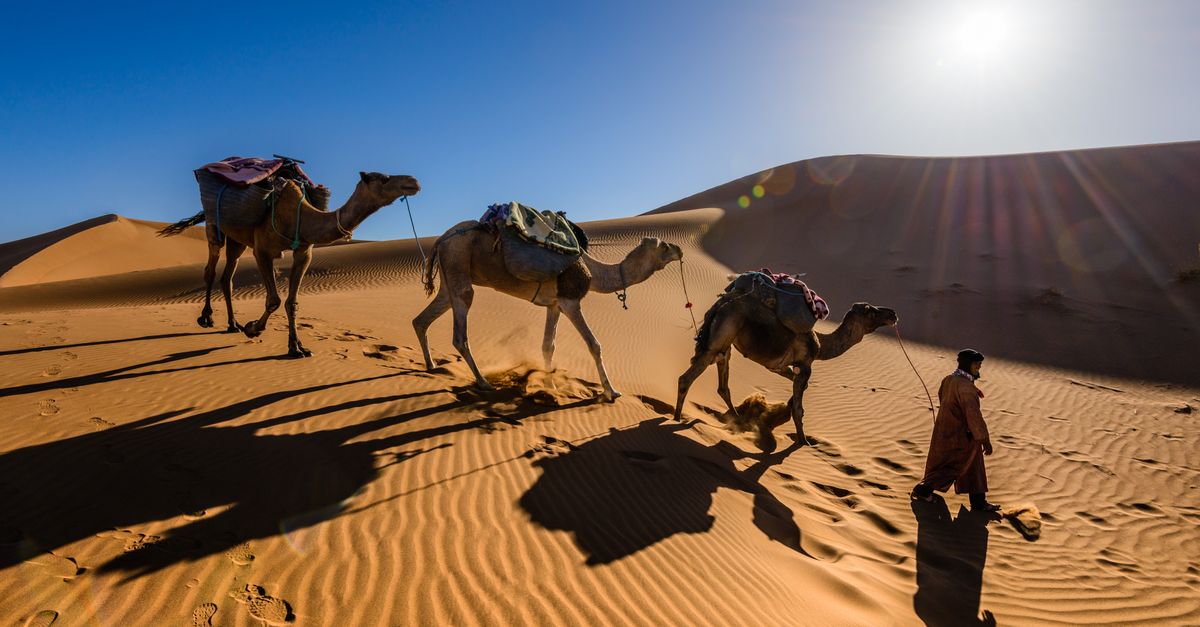
So the desert is a road trip, and it is a long one. The standard structure is a two or three day organised trip that leaves Marrakech, crosses the Tizi n'Tichka pass, stops at Aït Benhaddou and the Dades or Todra gorges, sleeps in a desert camp near Merzouga, and either returns to Marrakech or continues north to Fez.
Take the version that ends in Fez. It costs the same days and it saves you retracing the whole drive, which is the single most common way people waste forty-eight hours of a Moroccan fortnight.
Days 1 to 3: Marrakech
Day 1 is arrival and the medina. Get lost on purpose in the souks north of Jemaa el-Fnaa, and be back in the square at dusk when the food stalls go up.
Day 2 is the set pieces, early: the Bahia Palace, the Saadian Tombs, the Ben Youssef Madrasa. Then the Jardin Majorelle in the new town, which sells timed tickets and sells out, so it is booked ahead.
Day 3 is either the Atlas foothills and the Ourika valley, or a slow day in the Mellah and the tanneries with a hammam in the afternoon. If your desert trip leaves at dawn on day 4, the slow day is the right call.
Days 4 and 5: across the Atlas to the Sahara
Two long driving days with genuinely good things in between them, which is what makes this bearable rather than a transfer.
Day 4: the Tizi n'Tichka pass over the High Atlas, Aït Benhaddou, the fortified earthen village that has stood in for half of cinema's ancient world, then Ouarzazate and east along the Valley of a Thousand Kasbahs to the Dades or Todra gorge for the night.
Day 5: on to Merzouga, into the Erg Chebbi dunes by late afternoon, and a night in a desert camp. The camps range from basic to genuinely luxurious and the price gap between them is large; the sky is the same from both.
Day 6 drives north to Fez, which is another long day, and it is the reason the end-in-Fez version is worth choosing.
Days 6 to 8: Fez
Fez is the harder city and the more rewarding one. Fes el-Bali, the old medina, is one of the largest car-free urban areas in the world and it is genuinely disorienting in a way Marrakech is not.
Day 7: the Chouara tanneries, the Al-Attarine and Bou Inania madrasas, and the gates. Take a guide for the first half-day, honestly, and then walk it yourself once you have the shape of it.
Day 8: Meknes and Volubilis as a day trip, which is 45 minutes by train to Meknes and a short drive on to the Roman site. Volubilis is the best archaeology in Morocco and it is on almost nobody's ten-day plan.
Days 9 and 10: Chefchaouen, or the coast
Chefchaouen is four hours by road north of Fez, blue, small, and exactly as photogenic as advertised. It is also a detour with no railway, and two nights there means most of a day driving each way.
The alternative is the train north: Fez to Tangier or down to Casablanca and Rabat, all on the ONCF network, all comfortable, none of them costing you a driving day.
Our call: if you did the desert, take the train and skip Chefchaouen. Two long road days is enough for one trip. If you skipped the desert, Chefchaouen is the right way to spend the days you saved.
The trains, and the fare that moves
Morocco's railways are the best-value thing in the country and the pricing has a lever in it that most visitors never pull.
- Al Boraq, Africa's only high-speed line, runs **Tangier to Casablanca in
about 2 hours 10** at up to 320 km/h, calling at Kenitra and Rabat Agdal.
- Connections at Kenitra reach Meknes and Fez; connections at Casablanca
reach Marrakech.
- Fares rise as the train fills. Casablanca to Marrakech in first class is
roughly 190 MAD booked a fortnight out and about 280 MAD on the day, checked September 2026.
- Tickets open up to 90 days ahead on most main routes.
Book the long legs early. ONCF sells directly and the saving is real money on a ten-day trip with four or five train journeys in it.
The tax collected in cash
Morocco charges a municipal taxe de séjour, per person per night, banded by the category of the property:
| Category | Per person, per night |
|---|---|
| Luxury | 15 MAD |
| Five-star and top-category riads | 11 MAD |
| Four-star and second-category riads | 8 MAD |
| Three-star | 5 MAD |
| Two-star / one-star | 4 MAD / 2 MAD |
It is almost never included in the price you were quoted, and it is usually collected in cash at check-out. On a ten-night trip for two in four-star properties that is 160 dirhams that nobody warned you about.
Where the sources disagree: several report a wider band of roughly 10 to 40 MAD per person per night depending on city and classification, which does not match the schedule above. We are publishing the banded version because it is the more specific of the two and it matches what most riads actually charge, and flagging that the upper end is contested rather than pretending it is settled. Carry small dirham notes and expect a charge in this range.
Visa-free · 90 days, on all five passports we check.
Short tourist stays only. Checked 21 Aug 2026; rules change without notice and the government page is the source of truth.
Check your own passport →Checked 21 Aug 2026.
Everything we check for Morocco →Ramadan, plainly
In 2027 Ramadan is expected to run from about 8 February to 8 March, with Eid al-Fitr around 9 March, both subject to the crescent sighting the evening before, so the dates can move by a day.
Travelling in Ramadan is not a mistake, it is a different trip. Daytime restaurant service thins outside tourist areas, some sites shorten their hours, and the streets after sunset are the best they are all year. If you go, go for the evenings. If you want ordinary opening hours, avoid the month. The best time to visit Morocco has the rest of the calendar, including the interior summer that is the genuine reason to avoid July and August.
What to skip
A one-night Sahara trip. It does not exist at that distance. Two nights minimum, and three if you can.
Driving back the way you came. Take the desert trip that finishes in Fez.
Chefchaouen and the desert in the same ten days, unless you enjoy vehicles.
Hiring a car for the whole trip. The trains cover the cities better and cheaper than you can drive them, and Moroccan city driving is a specialist skill. Hire, or take a driver, only for the desert stretch.
A tannery "guide" who attaches himself to you at the gate. Agree a price and a scope before you follow anyone, or arrange the guide through your riad.
Before you book
The best time to visit Morocco has the month table and the heat. Spain in 10 days is the obvious pairing across the strait from Tangier, and Turkey in 10 days is the other Yasmine route with a long interior drive in it. Where to stay in Istanbul and where to stay in Athens cover the region's two gateway cities.
The Marrakech city guide, the Fez city guide and the Morocco country guide carry the practicalities, and there is more in the itineraries hub. When you are ready, Marrakech rooms are here and the bookable half is here.
Fares, tax bands and Ramadan dates checked September 2026. Rail fares move with demand and the accommodation tax is set municipally rather than nationally, so Morocco's national tourism office and your own property are better sources for the exact figure than any guide, this one included. Here is how we research and re-check guides.