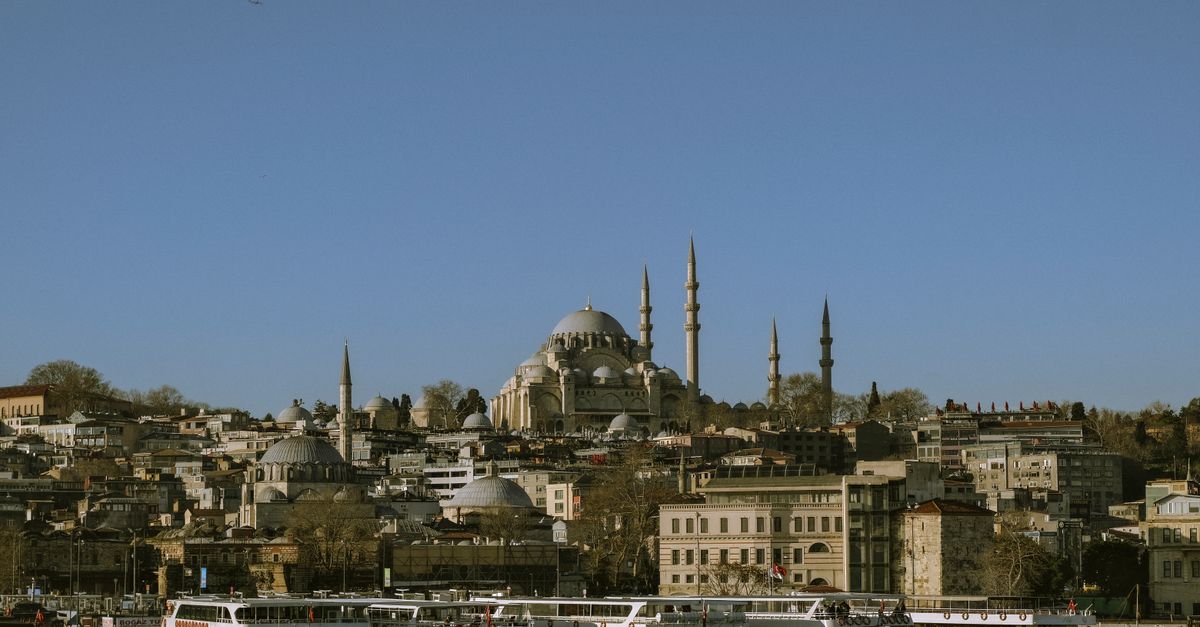
Where to stay in Istanbul, both sides of the water
Sultanahmet is not the trap everyone claims for a short trip. Which Istanbul area suits your stay, the new airport metro, and where there is no rail.
Photo · Crab Lens · Pexels
Stay in Sultanahmet for two to four nights, Karaköy or Galata for five or more, and Kadıköy on the Asian side only if you are flying into Sabiha Gökçen or you have been here before. Avoid Taksim, which is a transport interchange being sold as a neighbourhood, and think hard before booking Balat or Ortaköy, which have no rail of any kind.
Two things have changed recently enough that no guide ranking for this question has caught up with either.
The airport metro is finally finished
The M11 was completed on 20 June 2026, when the last section opened between Arnavutköy and Halkalı — the airport publishes the connections. It now runs the full 69 kilometres from the airport to Gayrettepe and on to Halkalı, and it is the single biggest change to how you arrive in Istanbul in a decade.
What it means in practice depends entirely on where you booked:
| Destination | Route | Time |
|---|---|---|
| Gayrettepe | M11 direct | ~30 min |
| Taksim, Şişli, Beyoğlu | M11 + M2, one change | 45–50 min |
| Sultanahmet | M11 + M2 + Marmaray, two changes | 75–95 min |
That bottom row is the honest one. Three separate systems and two changes with a suitcase is not a good arrival, and it is the strongest practical argument against Sultanahmet. The Havaist bus to Taksim is about 470 lira and 90 minutes; a taxi to Sultanahmet runs roughly 1,900 to 2,500 lira, around A$55 to A$72, including tolls.
Sources disagree on whether a direct Havaist service to Sultanahmet currently runs, so do not plan around one.
The other change: the tax is temporarily halved
Istanbul's accommodation tax was cut from 2% to 1% for 1 May to 31 December 2026, and reverts to 2% on 1 January 2027. It is charged on the room rate before VAT, appears as a separate line on your bill rather than inside the quoted rate, and sits alongside 10% VAT on accommodation.
Small money on one night, real money on a longer stay — and it is the kind of thing that makes a January 2027 trip quietly more expensive than a December 2026 one.
A note on currency
We quote Istanbul in euros, and that is a deliberate call rather than laziness. Turkey's own state museums now price in euros for foreign visitors — Hagia Sophia is €25 and Chora €20 — and hotels aimed at international guests behave the same way. Lira figures date within a quarter here; where we give them, they carry the date they were checked. Converted at roughly A$1 = €0.62 and A$1 = 34.32 lira, both as at 1 September 2026.
The areas
Bands below are indicative positioning for a mid-range double rather than quoted rates — Istanbul moves too fast for a hard number to survive a season, and no reliable per-district source exists. Citywide, budget runs €40–70, mid-range boutique €80–150, and luxury from €350.
Sultanahmet, €90–160. The historic cluster: Hagia Sophia, the Blue Mosque, Topkapı, the Basilica Cistern and the Hippodrome all within a few minutes of each other. Served by the T1 tram only — no metro at all — which is a single line carrying 320,000 people a day and standing-room by mid-afternoon. It empties commercially after about eight in the evening.
Karaköy, €100–180. Our pick for most trips. The tram, a ferry pier and the Tünel funicular are all in the same place, the restaurants are real, and Sultanahmet is four tram stops away. It has become a design-and-nightlife district, so it is neither quiet nor cheap any more.
Beyoğlu and Galata, €90–170. The best-connected central area — M2 at Şişhane and Taksim, the funicular, the tram below at Karaköy. Excellent food and bars. Galata is a hill, and the noise is real.
Beşiktaş, €80–150. Local life, a major ferry pier, and genuinely good eating. The thing to know: there is no metro station in Beşiktaş itself — the nearest is a real walk or a bus away, so this is a ferry-led base. Match days bring football crowds.
Kadıköy, €60–120. The best food and bar scene in the city and the cheapest of these areas, on the Asian side. See the verdict below.
Şişli and Nişantaşı, €80–160. Strong on metro, weak on sights. You will commute to everything historic. Fine for shopping or business.
Fatih more widely, €50–100. The value option, conservative and authentic. Much of it is dry, and the interior has no rail.
Balat, €60–120, and Ortaköy, €90–170. Both are having a social-media moment and neither has any rail at all — no metro, no tram, no Marmaray. Every movement is a bus or a taxi in Istanbul traffic. This is the most under-reported fact in Istanbul accommodation advice. Beautiful for an afternoon; a mistake as a base.
Crossing the water, and whether the Asian side is a trap
The Marmaray tunnel runs under the Bosphorus and gets you from Sirkeci to Üsküdar in about four minutes, which is the fastest Europe-to-Asia crossing there is. It runs roughly 06:00 to midnight, and straight through Friday and Saturday nights.
But Kadıköy is not on the Marmaray. You take the M4 and change at Ayrılık Çeşmesi. Door to door that is 35 to 45 minutes with two changes.
The ferries are the nicer way across — Beşiktaş to Kadıköy is about 20 minutes for around 59 lira — and they are one of the genuine pleasures of the city. The catch is the timetable: the last sailing from Eminönü is far earlier than the last one back the other way, somewhere around nine in the evening. Miss it and you are on the Marmaray, which stops around midnight on weeknights.
So: is Kadıköy a trap? Mildly, on a short trip, and here is the arithmetic rather than the vibe. On three days you will cross five or six times. At 40 minutes a crossing that is roughly four hours of your holiday in transit to save money you were not going to notice. Stay European side and give Kadıköy one long afternoon and evening.
Unless you are flying Sabiha Gökçen — and then it flips completely. The M4 runs from that airport directly into Kadıköy in about 52 minutes with no changes, while Sabiha to Sultanahmet is 75 minutes and a water crossing. Book a cheap Sabiha flight and a Sultanahmet hotel and you have bought yourself two awkward transfers.
What the metro does not reach
Worth stating plainly, because the map flatters the network. Sultanahmet, Topkapı, the Blue Mosque, the Basilica Cistern and the Grand Bazaar have no metro station. The M2 touches the historic peninsula only at Vezneciler and Yenikapı. Everything else down there is the T1 tram or your feet.
The sights that should shape your booking
Hagia Sophia has a nuance almost every guide gets wrong. Foreign visitors pay €25, and that ticket buys the upper gallery and its Byzantine mosaics only. The ground-floor prayer hall remains free to everyone, always, regardless of nationality or faith. So you can walk in for nothing, and you pay for the mosaics. It is open 09:00 to 19:30, closes to tourists five times a day for prayer, and shuts for a long stretch on Friday around midday. The Museum Pass is not valid here.
Elsewhere, checked in August 2026: Topkapı 2,750 lira (about A$80), Basilica Cistern 1,950 lira by day and 3,000 in the evening, Dolmabahçe 2,000 lira, Chora €20, and the Blue Mosque free. The Ministry of Culture's museum service is the place to check before you go, because these move through the year.
Skip the Museum Pass unless you are a museum person. It runs five consecutive days from first entry, and it excludes Hagia Sophia, the Basilica Cistern and Dolmabahçe — the three paid sights most visitors actually want. It only pays for itself at four or more covered state museums. We found two irreconcilable prices quoted for it and could not verify either, which is another reason to check the official site rather than a blog.
Sultanahmet: the backlash has over-corrected
Almost every guide now warns you off Sultanahmet. On a short trip they are wrong, and it is worth saying why.
The criticisms are fair as far as they go. It empties after eight. The restaurants are tourist-grade. It is tram-only, on the busiest stretch of a single line. And the airport transfer is the worst of any central district.
But the evening dead-zone is a cost you only pay after the sights have closed anyway. Hagia Sophia shuts to tourists at 19:30 and Topkapı and the Cistern keep similar hours — you would be out eating in Karaköy or Beyoğlu regardless, which is four tram stops or a twenty-minute walk. Meanwhile nowhere else in Istanbul puts you inside the monument cluster. And because the Blue Mosque is free and Hagia Sophia's prayer floor is free, staying there lets you make repeated short visits — which is exactly how you dodge both the queues and the Friday closure.
Verdict: for two to four nights or a stopover, Sultanahmet is right. For five nights or more, the critics are. Karaköy is the honest split — inside the tram network, ferry and funicular at the door, and somewhere to eat at night.
Taksim, by contrast, is genuinely over-recommended. It is on the M2 and the funicular and the airport bus stops there, which is most of why it gets suggested. But you are nowhere near the historic peninsula, İstiklal is a crowded retail street, and the hotel stock skews to business chains. Galata or Karaköy, fifteen minutes downhill, gives you better food and better character.
If Istanbul is your stopover
Worth knowing if you are flying to Europe: Turkish Airlines offers a free stopover hotel on long layovers, and Australia sits on its extended list — reportedly two nights in a four-star in economy, three nights in a five-star in business, on layovers over 20 hours, applied for at least 72 hours ahead. There is a separate free transit-hotel product for shorter layovers. We could not verify the current terms against the airline directly, so check the programme with them before counting on it.
If that applies to you, book yourself into Beyoğlu or Şişli rather than Sultanahmet — they are one change from the airport on the new metro.
So, where?
Sultanahmet for a first short trip, and accept the airport transfer. Karaköy for anything longer, or if you want dinner within walking distance. Beyoğlu or Galata for nightlife and the best connections. Kadıköy if you are flying Sabiha Gökçen or staying a week.
The Istanbul city guide covers what is in each district, the Turkey country guide handles the wider trip, and when to go is worth reading — spring and autumn are the two windows here. If Istanbul is a stopover, Dubai is the other one worth breaking a Europe trip in, and Rome is often the far end. See our other where-to-stay guides, what is worth booking ahead, or every Istanbul stay we can source.
Fares, taxes and entry prices checked September 2026. Turkish fares rose twice this year and the accommodation tax reverts in January, so this is a page worth re-checking before you book — here is how we research and re-check guides.