The best time to visit Morocco, and the four countries inside it
March to May and September to November for the cities. Why July is brutal inland and perfect on the coast, and what Ramadan actually changes.
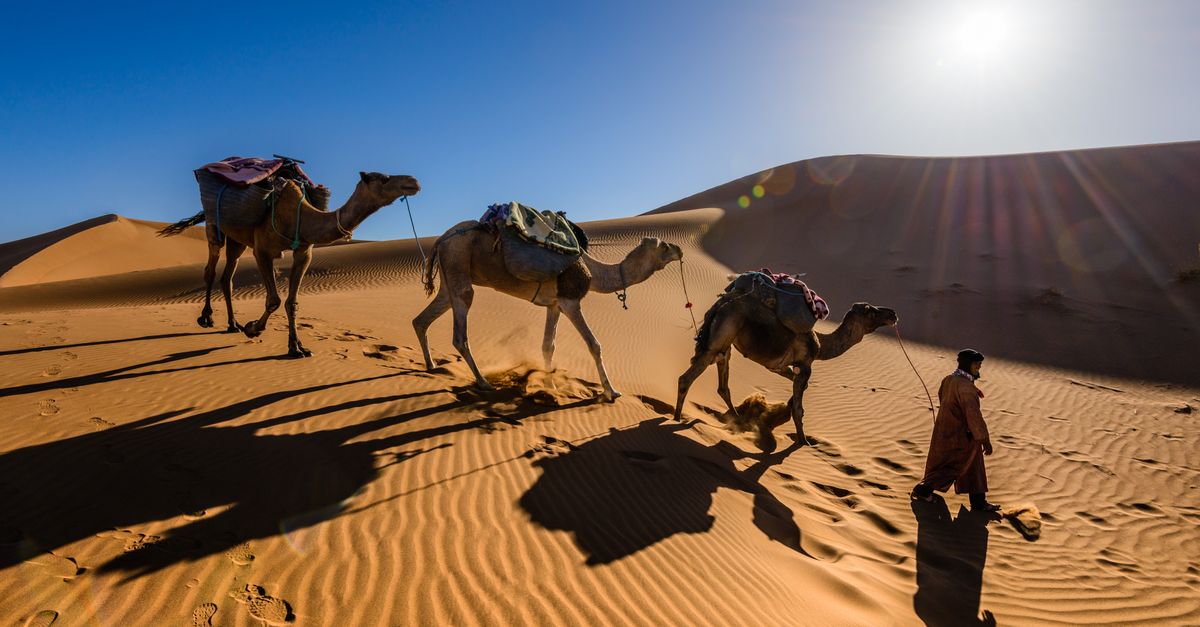
Photo · Sergey Pesterev · Pexels
April or October. Those are the two months when the imperial cities, the Sahara and the Atlas passes are all workable at once, which is what a Morocco trip usually needs.
But "best time to visit Morocco" is the wrong question if you have already decided where you are going, because Morocco contains four climates and they disagree with each other completely. The month that makes Marrakech unbearable is the month that makes Essaouira perfect.
Moroccan dirham. Convert any figure on this page into your own currency at today's published rate.
Open the currency converter →The four Moroccos
| Where | Best | Avoid | Why |
|---|---|---|---|
| Imperial cities Marrakech, Fez, Meknes | Mar–May, Sep–Nov | Jul–Aug | Medinas hold heat past 40°C |
| Atlantic coast Essaouira, Agadir, Taghazout | Jun–Sep | Winter storms | Ocean breeze keeps it in the twenties |
| High Atlas | Apr–Jun, Sep–Oct | Jan–Mar at altitude | Snow, passes, real mountaineering |
| Sahara | Oct–Apr | May–Sep | Daytime heat becomes a safety issue |
Read the first two rows against each other and you have the single most useful fact about Moroccan timing. July and August are the worst months inland and the best months on the coast. Marrakech in July is a medina at over 40 degrees that does not cool down at night. Essaouira in July is in the twenties with a strong Atlantic wind.
So a July trip to Morocco is not a bad idea. A July trip to Marrakech is.
Season by season
Spring, March to May
The best season for most trips. Daytime highs in the cities sit around 22 to 30 degrees, the countryside is green, the Atlas is spectacular with snow still on the high peaks, and the Sahara is still comfortable.
April is the pick. Late March and May are both excellent. May starts to get warm inland and by the end of it the desert is closing out.
Summer, June to August
Inland it regularly tops 40 degrees, and the thing to understand about a medina is that it is designed to hold shade and it also holds heat. Marrakech and Fez do not cool down much overnight in August.
The practical plan, if your dates are fixed, is the coast. Essaouira, Agadir and Taghazout stay in the twenties all summer. Or the mountains: the High Atlas villages are considerably cooler and this is the best trekking season, with the passes open and the snow gone.
The Sahara is out. Not uncomfortable: genuinely unwise.
Autumn, September to November
The other good window, and October is the best single month of the Moroccan year. The heat breaks, Marrakech drops back to the low thirties by late September and the mid-twenties in October, the Sahara reopens, and the light is at its best.
November is cooler and quieter and still very good, with a rising chance of rain in the north and on the coast.
Winter, December to February
Underrated, and the packing catches people out.
Days in the cities are pleasant, often 18 to 20 degrees and sunny, which is excellent for walking a medina. Nights are cold. Marrakech sits at altitude on the edge of the desert and can drop toward 5 degrees or lower, and riads are built to stay cool rather than warm. Ask about heating before you book.
The Sahara is at its best for daytime comfort and its coldest at night, with desert camps getting close to freezing. Take a proper layer.
The High Atlas is a winter mountain range. There is snow at altitude and Toubkal, at 4,167 metres, is a crampons-and-ice-axe proposition in winter rather than a walk. There is also skiing at Oukaïmeden, which surprises people.
Ramadan, and what it actually changes
Ramadan 2027 is expected to run from about 8 February to about 9 March, with Eid al-Fitr around 10 March. Morocco fixes the dates by local moon sighting through the Ministry of Endowments and Islamic Affairs, so they move by a day either way and are only confirmed shortly before they begin.
What changes for a traveller, honestly:
Many restaurants outside tourist areas close during daylight hours. Tourist hotels and restaurants in Marrakech, Fez and the coastal resorts operate normally, and you can eat perfectly well. In a small town you may not find lunch.
Hours shift everywhere. Shops, museums and offices open late, close early or break in the afternoon. Confirm opening times on the day rather than from a guidebook.
Days are quiet and evenings are extraordinary. After sunset the medinas come alive in a way they do not at any other time of year, and being invited to break the fast with people is a common and genuinely moving experience.
The harder week is around Eid al-Fitr, when intercity buses and trains fill with people travelling home and much of the country closes for several days.
Go if the dates suit you, be considerate about eating and drinking in public during the day, and expect a different country rather than a diminished one.
The month table
| Month | Cities | Coast | Sahara | Verdict |
|---|---|---|---|---|
| Jan | Mild days, cold nights | Cool, stormy | Good, freezing nights | Quiet and cheap |
| Feb | Mild days, cold nights | Cool | Good | Ramadan in 2027 |
| Mar | Very good | Improving | Very good | Excellent |
| Apr | Best | Pleasant | Best | The month |
| May | Warm | Pleasant | Closing out | Very good |
| Jun | Hot | Very good | No | Coast and Atlas |
| Jul | Over 40°C | Best | No | Coast only |
| Aug | Over 40°C | Best | No | Coast only |
| Sep | Easing late | Very good | Reopening | Good from mid-month |
| Oct | Best | Good | Best | The month |
| Nov | Very good | Cooling, wetter | Very good | Excellent and quiet |
| Dec | Mild days, cold nights | Cool, stormy | Good | Quiet, festive in the riads |
A catalogue note, stated plainly: the shelf above is Fez, because Marrakech is not in our catalogue. That is a real gap, since Marrakech is where most Morocco trips start and end. Fez, Casablanca and Tangier are the Moroccan destinations we can show you rooms in, and the timing on this page applies to Marrakech exactly the same way.
What to skip
Marrakech in July or August. The single clearest "do not" on this page.
The Sahara between May and September. The dunes reach temperatures where an overnight camp stops being romantic and starts being a health question.
Assuming Morocco is warm in winter because it is in Africa. Days yes, nights no, and most riads are built to shed heat.
Booking a riad without asking about heating for a December, January or February trip.
Planning intercity travel in the week of Eid. Buses and trains fill with people going home, and it is the one week the network genuinely struggles.
Toubkal in winter without mountaineering kit. It is a serious mountain under snow, not a long walk.
Visa-free · 90 days, on all five passports we check.
Short tourist stays only. Checked 21 Aug 2026; rules change without notice and the government page is the source of truth.
Check your own passport →Checked 21 Aug 2026.
Everything we check for Morocco →Before you book
The Fez city guide and the Morocco country guide have the practicalities. For the same season on the other side of the Mediterranean, the best time to visit Greece has its own heat problem and a wind that cancels ferries, and the best time to visit Italy covers the fortnight Italy shuts. Yasmine's other guides in the region are where to stay in Istanbul and where to stay in Dubai, both of which have their own version of the summer-heat problem. The when to go hub covers everywhere else, and the month pages show what April looks like across the catalogue. Ready to look at rooms? Fez stays are here, and the things to do shelf has the bookable half.
Seasons, temperatures and the Ramadan window checked September 2026. Morocco's national tourist office publishes regional guidance, and the public holiday calendar tracks the moving Islamic dates. Ramadan and Eid are confirmed by local moon sighting shortly before they begin, so treat the 2027 dates above as expected rather than fixed. Here is how we research and re-check guides.