What to wear in Europe in summer, and the three things deciding it
Heat that no longer matches the old averages, cobbles that eat shoes, and church dress codes. The list that follows from those three, and what to leave at home.
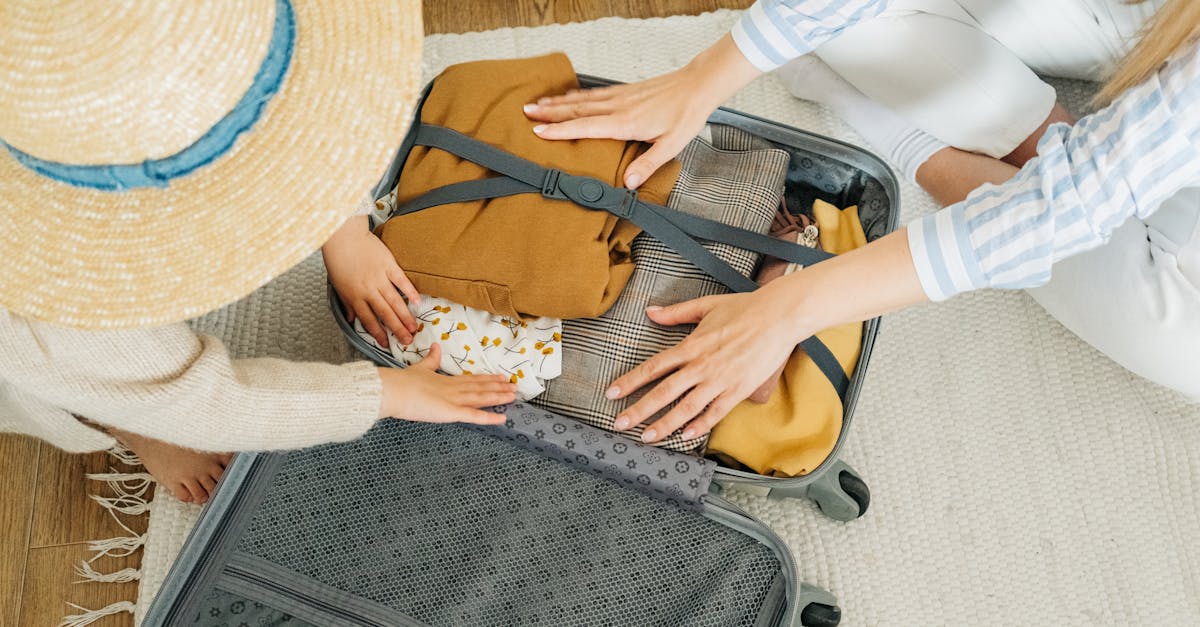
Photo · Ivan S · Pexels
Most packing lists for a European summer are outfit boards. This one starts from the three things that actually decide what you should be carrying.
The heat, which no longer resembles the old averages. The surfaces, which are harder on shoes than anywhere you are used to. And the dress codes, which are enforced at the door of the buildings you came to see.
Everything on the list below follows from one of those three.
Constraint one: the heat has changed
Recent European summers have pushed well past 40 degrees in Rome, Athens, Seville and the Po valley, and the practical consequences are real rather than rhetorical.
Greece has closed the Acropolis for the middle of the day during heatwaves, repeatedly, and the Culture Ministry has never published a temperature threshold: it is decided that morning. The Greek detail is here.
Italy's own rhythm is the answer: out early, indoors or under trees from one until five, out again in the evening. The Italian version explains the fortnight in August when half the country is shut as well.
What that means for the bag. You need clothes that work at nine in the morning and at nine at night, and you need less than you think for the four hours in between, because you should not be out in them.
Light colours, loose cuts, natural fibres. Linen and cotton breathe; the technical synthetics that work brilliantly for hiking hold odour in city heat. Wide-leg trousers are cooler than shorts in direct sun and get you into more buildings.
Constraint two: the surfaces
This is the one that ruins trips, and it is specific to European old towns.
Rome is paved with sanpietrini, small square basalt setts with gaps between them. They are uneven, they are hard, and they punish thin soles.
Lisbon is paved with calçada portuguesa, polished limestone in patterns. It is beautiful and it is genuinely slippery, particularly on a hill in the rain, and Lisbon is nothing but hills. Its two funiculars have also not run since September 2025, so you are walking.
Greece's marble is worn smooth by two and a half thousand years of feet, and the Acropolis rock itself is polished and steep.
So: two pairs of shoes, and neither is new.
One pair of closed, cushioned, broken-in walking shoes. One pair of sandals with a real sole rather than a flat piece of rubber. That is the entire footwear decision, and it is the most important one on this page: people routinely walk fifteen to twenty kilometres a day on these trips.
Nothing new. A blister on day two shapes the whole fortnight.
Constraint three: the dress codes
Most Catholic and Orthodox churches expect shoulders and knees covered, for everyone, and the major ones enforce it at the door.
St Peter's in Rome turns people away daily. So do Milan's Duomo, many Orthodox churches in Greece, and mosques anywhere you might visit one.
The single highest-value item in a European summer bag is a large light scarf. It covers shoulders in a basilica, covers a head where that is expected, works as a sun cover on a beach, doubles as a plane blanket and folds to nothing. Take one, in a colour that goes with everything, and it will solve more problems than any other thing you pack.
For anyone in shorts, the same logic applies: long, light trousers or a sarong that covers the knee. This is not a women's rule, and men in shorts are turned away from St Peter's with exactly the same politeness.
The list
Clothes, for seven days
- 5 to 6 light tops, mostly natural fibre, mostly light colours
- 2 pairs of long, loose trousers, at least one that covers the knee properly
- 1 pair of shorts or a skirt
- 1 dress or one smarter shirt, for a dinner that turns out to matter
- 1 light long-sleeved layer for evenings and over-air-conditioned trains
- 1 large light scarf, the item above
- Swimwear, if the coast is anywhere in the plan
- Underwear and socks for 7 days
Feet
- 1 pair broken-in closed walking shoes
- 1 pair sandals with a proper sole
- Nothing else. A third pair is almost never worn
The heat kit
- A refillable water bottle. Rome has around 2,500 free street fountains, the nasoni, and most European cities have public water
- A hat with a brim that actually shades your face
- High-factor sunscreen, bought at home, because it costs noticeably more at a pharmacy next to a cathedral
- Electrolyte tablets, which sound excessive until day three in Seville
The practical layer
- A plug adapter. Continental Europe is type C or F at 230V; the UK and Ireland are type G. Check the country you are going to
- A power bank, because a phone doing maps, tickets and translation in heat dies by four
- A cross-body bag that closes, worn in front on public transport
- A paper copy of the important bookings
What to skip
The linen suit. It creases in the case, creases more on you, and needs pressing you will not do.
New shoes. Said twice on purpose.
Flip-flops as walking shoes. They are beach shoes and the surfaces above will teach you that in about forty minutes.
Fourteen days of clothes for fourteen days. See above.
Dressing to blend in. The advice about looking European is mostly nonsense and it makes people pack badly. Nobody in Rome is fooled, nobody cares, and the practical difference between locals and visitors is that locals are not walking twenty kilometres carrying a day bag.
Heels for cobbles. They go into the gaps between the setts. This is not a style judgement, it is a geometry one.
Buying "travel clothing" for a city trip. Zip-off trousers and technical shirts are for trails. Your normal loose summer clothes are better in a city and you already own them.
The one that depends on the month
If you are travelling in September or October rather than July or August, the whole list gets easier: add the long-sleeved layer, keep everything else, and enjoy the fact that the heat is workable and the crowds have gone. Where to travel in October makes the case that it is the best month in the travel year, and the packing is one more reason.
Northern Europe in summer is a different list again. Edinburgh, Copenhagen and the Baltic can be fifteen degrees and raining in July, so a genuine waterproof goes in and the sun hat comes out.
Before you pack
The month decides more than the wardrobe. The best time to visit Italy covers the August closures, Greece covers the heat closures and the wind, and Morocco covers a summer that works on the coast and not inland. For where to go rather than what to wear, underrated European cities and the best places to travel in 2027 are the lists, and where to travel in January is the opposite season. Plugs, water and driving side are all in the essentials pages, country by country, and the converter handles the money. More in the packing hub.
Written September 2026. Dress-code requirements are set by each building and the Vatican publishes its own, while heat guidance across the continent comes from the European Environment Agency. Recent summers have run hotter than the long-run averages most packing advice was written against, which is why this list starts with the heat rather than the outfits.