Tokyo for first-timers, starting with the transport card
The rail pass is wrong for Tokyo, the subway pass misses the Yamanote, and the Suica is only sold in two places. What to fix before anything else.
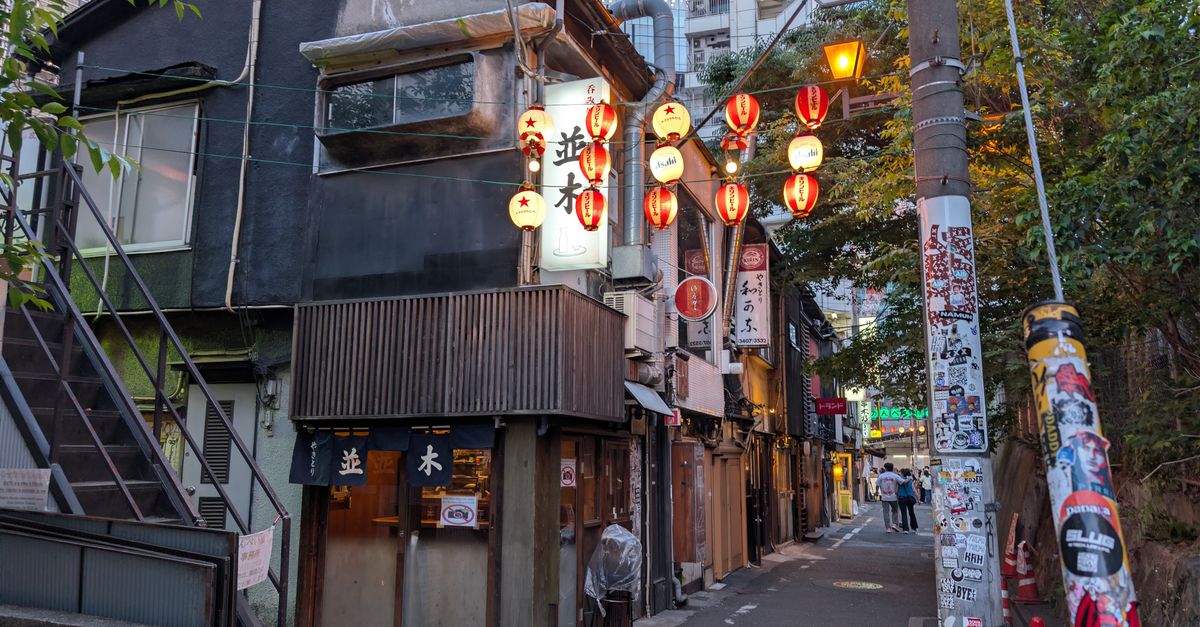
Photo · Iban Lopez Luna · Pexels
Before you plan a single day in Tokyo, sort out the transport. It is the decision that costs the most to get wrong and almost every first-timer gets it wrong in the same three ways.
Do not buy a Japan Rail Pass for a Tokyo trip. The seven-day pass is 50,000 yen and it does not cover the Tokyo subway at all. It only starts paying for itself with three or more long-distance Shinkansen legs, and a straightforward Tokyo to Kyoto return does not get you there.
Get a Suica or a Pasmo. It works on everything: JR, the two subway operators, the private lines, the buses, and the vending machines and convenience stores as a wallet.
The rest of this guide is the same principle applied to everything else.
Japanese yen. Convert any figure on this page into your own currency at today's published rate.
Open the currency converter →The transport card, properly
Where to actually get one
The tourist Welcome Suica is sold at the JR East Travel Service Centers at Haneda and Narita, and as of early 2026 that is where to plan on getting it, checked September 2026 against JR East's own page for the card. The chip shortage that made these cards hard to find a couple of years ago has been resolved.
The better option if you have an iPhone or an Apple Watch: add a Suica to the wallet before you fly, top it up with a card, and walk straight out of the airport past the queue. This is the single most useful piece of Tokyo advice that older guides do not carry.
The pass that is usually wrong
The Tokyo Subway Ticket costs 1,000 yen for 24 hours, 1,500 for 48 and 2,000 for 72, with children aged 6 to 11 at exactly half and under-6s free, checked September 2026.
Here is the catch, and it is the whole thing: it covers Tokyo Metro and Toei subway lines and it does not cover JR, which means it does not cover the Yamanote line, the loop that connects Tokyo, Shinjuku, Shibuya, Harajuku, Ueno and Ikebukuro and that visitors use more than any other line in the city.
The arithmetic. A single metro journey is a few hundred yen. The 24-hour ticket at 1,000 yen breaks even at roughly four or five subway journeys in a day. That is achievable, and it means the pass is worth it on a heavy museum day in the centre and a waste on any day that uses the Yamanote loop, which is most days.
Our call: buy the Suica, and buy a subway ticket only for a specific day you know will be subway-heavy. The saving on the pass is smaller than the cost of being locked out of the loop line.
The five things to fix before you go
- Cash. Japan is far more card-friendly than it was, and it is still a
country where a good small restaurant is cash only. Carry some. The reliable foreign-card ATMs are in 7-Eleven and at the post office.
- A pocket wifi or an eSIM. Navigating Tokyo without live transit
directions is genuinely hard, because the station exits matter as much as the stations. Shinjuku has more than two hundred exits.
- Luggage forwarding. Takkyubin moves a suitcase between hotels overnight
for a few thousand yen and it is the reason experienced travellers in Japan are not dragging bags through Tokyo Station. Use it for any city change.
- A restaurant or two, booked. The good small places seat eight people and
take reservations weeks out. Everything else can be improvised.
- Your entry paperwork, which depends on your passport rather than on
Japan.
Visa-free · 90 days, on all five passports we check.
Short tourist stays only. Checked 21 Aug 2026; rules change without notice and the government page is the source of truth.
Check your own passport →How to plan the days, which is the other big mistake
Plan by district, not by attraction. Tokyo is not a city with a centre, it is about a dozen centres joined by rail, and a day that crosses it three times gives two hours to the trains.
A workable shape for a first four days:
- Day one: the east. Asakusa, Senso-ji at seven in the morning before the
gate fills, Ueno park and its museums, then Yanaka's backstreets in the afternoon. Everything here is walkable from the next thing.
- Day two: the west. Shinjuku, Shibuya, Harajuku and Omotesando, which are
four stops on one line and all completely different.
- Day three: the middle and the water. The Imperial Palace east gardens,
Ginza, then Tsukiji outer market in the morning if you want the food stalls, or Toyosu if you want the actual auction.
- Day four: pick one thing and go deep. Shimokitazawa for second-hand,
Kagurazaka for eating, Nakameguro for the canal, or a day trip.
Our five-day route does this properly and how many days you need argues the case for four rather than three.
Where to stay, in one paragraph
Shinjuku or Tokyo Station for a first visit. Both put you on multiple lines including the Yamanote, which halves your daily travel time and is worth more than any amenity in the room.
Shibuya is fun and noisy, Asakusa is cheaper and further out, Ginza is comfortable and quiet in the evening in a way that surprises people. Our Tokyo areas guide has the trade-offs and the walk times to the nearest useful station, which is the number that matters.
Three things to skip
Shibuya Crossing as a destination. It is a pedestrian crossing. Look at it from the Starbucks window or the Shibuya Sky deck for ten minutes on your way to something else, and do not build an evening around it.
The Tsukiji tuna auction. It moved to Toyosu in 2018 and the thing people queue at Tsukiji for no longer happens there. The Tsukiji outer market is still excellent and is a food street rather than an auction. If you want the auction, it is Toyosu, it is early, and it is behind glass.
A day trip on your first full day. Jet lag plus a two-hour train is how people lose a day to Kamakura and remember none of it. Put day trips on day three or later, and read the day trips guide for which ones are worth the train.
The etiquette that actually matters
Most of the lists you have read are longer than they need to be. Four things carry almost all of it:
- Do not eat while walking, and do not eat or take calls on trains.
- Queue where the paint says to queue, on platforms and at bus stops. The
markings are not decorative.
- Carry your rubbish. There are almost no public bins and this catches
everyone out on day one.
- Take shoes off where there is a step up and a rack. The floor level tells
you.
Tattoos are worth one sentence: many onsen still refuse them, some now allow cover-up patches, and private kashikiri baths are the reliable answer.
Checked 21 Aug 2026.
Everything we check for Japan →Before you book
The Japanese calendar decides the month, and our November guide makes the case for the last week of it. What Japan costs has the budget and first time in Japan covers the country beyond this city.
If Tokyo is one stop rather than the trip, the seven-day route and the fourteen-day one show where it sits.
The first trips hub collects the rest and the Japan country page has the practical layer.
Pass prices, card availability and coverage checked September 2026 against JR East's Welcome Suica information and Tokyo Metro's ticket pages. Fares and pass prices change; the operator's own page is the source of truth on the day you travel. Here is how we research and re-check guides.