South Korea in 10 days, and the entry rule that expires this December
Seoul, Jeonju and Busan in 10 days on the KTX. Plus the K-ETA waiver that ends on 31 December 2026 and the rail pass that rarely pays.
Photo · Line Knipst · Pexels
Ten days in South Korea works without a single internal flight, because the KTX does the whole route. Seoul four nights, Jeonju one, Busan three, Seoul two. Longest leg about two and a quarter hours.
Before any of that, one date. Korea's K-ETA waiver expires on 31 December 2026, and almost nothing published about visiting Korea says so.
South Korean won. Convert any figure on this page into your own currency at today's published rate.
Open the currency converter →The entry rule, and the date on it
Korea normally requires a K-ETA, an electronic travel authorisation, from nationals of its visa-exempt countries. It suspended that requirement to encourage tourism, and the Ministry of Justice has extended the suspension to 31 December 2026, covering the 67 visa-exempt countries and regions.
Two consequences worth planning around.
If you are travelling in 2026 on a visa-exempt passport, you probably need nothing. Check yours, because the exemption tracks the visa-exemption list rather than being universal.
If you are booking now for 2027, do not assume the waiver holds. It has been extended twice. It may be extended again. It is a temporary measure with a published end date, and a guide that tells you Korea needs no paperwork without naming that date is telling you something with a shelf life.
One useful wrinkle: you may still apply for a K-ETA voluntarily even while exempt, and if you do, you are excused from filling in the paper arrival card on the plane. That is a small trade, a form at home against a form at 30,000 feet, and for a family it is worth doing.
Short tourist stays only. Checked 21 Aug 2026; rules change without notice and the government page is the source of truth.
Check your own passport →Days 1 to 4: Seoul
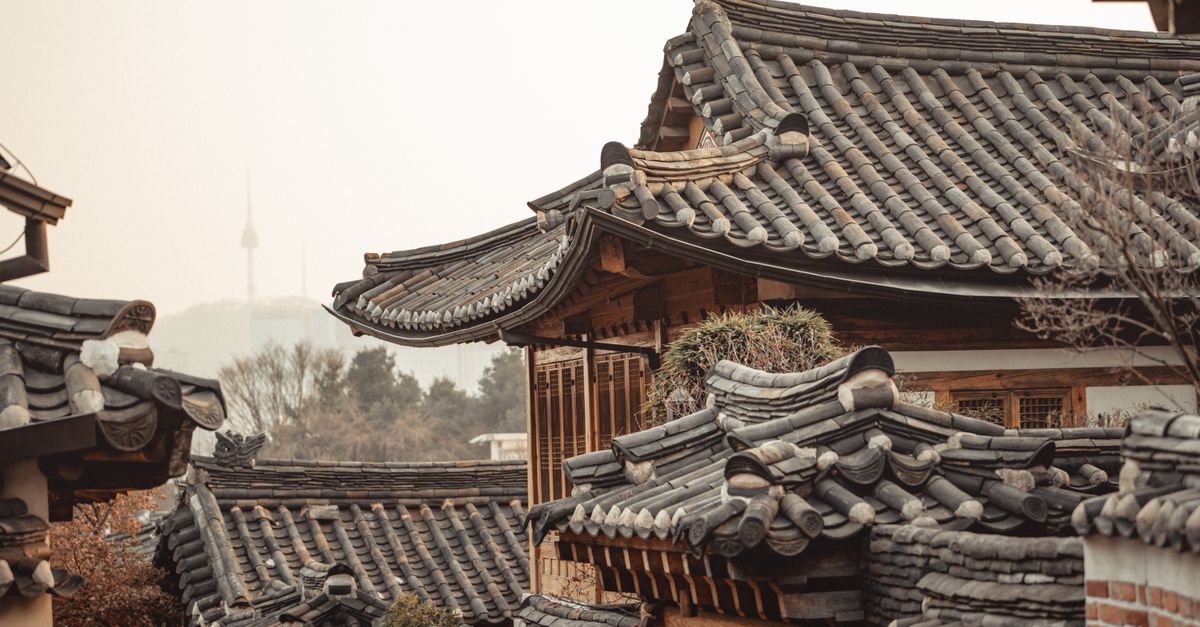
Day 1: land, take the AREX train in from Incheon, and do nothing ambitious. Walk Bukchon Hanok Village in the late afternoon and eat in Ikseon-dong, which is the alley district next to it and is better than the guidebook version of the same idea.
Day 2: the palaces. Gyeongbokgung at opening, then the National Folk Museum, then Changdeokgung and its Secret Garden in the afternoon, which is a separate timed ticket and is the better of the two palaces. Renting hanbok makes palace entry free, which is why half the courtyard is wearing it.
Day 3: the modern city. Hongdae for the student energy, Yeonnam-dong for the food, the Gyeongui Line Forest Park that connects them, and Seongsu-dong across the river in the evening, which is Seoul's warehouse district turned coffee and design quarter.
Day 4: either the DMZ, which has to be booked as a tour and takes a full day, or Bukhansan national park, which starts inside the city limits and is the best urban hiking in Asia. Both are excellent. Neither leaves room for the other.
Day 5: Jeonju
About an hour and three quarters south by KTX, and the stop most ten-day itineraries skip in favour of a fourth Seoul day.
Jeonju has the largest hanok village in Korea, over eight hundred traditional houses in a single quarter, and unlike Bukchon it is a place people still live and trade in rather than a preserved street. It is also where bibimbap comes from, and the town treats that with the seriousness a French town treats its cheese.
One night is right. Arrive late morning, walk the village in the afternoon when the day-trippers from Seoul have gone, eat properly, and take the morning train on.
Days 6 to 8: Busan
Another hour and a half or so south.
Day 6: Gamcheon Culture Village, the hillside of painted houses, in the morning, then Jagalchi, the fish market, and the seafood streets behind it.
Day 7: the coast. Haeundae and Gwangalli beaches, the Haedong Yonggungsa temple on the rocks north of the city, which is one of very few Korean temples built on the sea rather than in the mountains, and the Igidae coastal path, which is the best walk in the city.
Day 8: Gyeongju as a day trip, about an hour by KTX plus a bus, which puts the Silla royal tombs, Bulguksa temple and the Seokguram grotto inside a long day. Or a slow Busan day, which the city rewards.
What we cannot show you: Gyeongju is not in our catalogue, so there is no live room shelf for it here. That is genuinely a loss, because Gyeongju is the strongest case in Korea for staying two nights somewhere small. As a day trip from Busan it works, and the shelves on this page are Seoul, Jeonju and Busan, which are real rooms for your dates.
Days 9 and 10: back to Seoul
Two and a quarter hours north on the KTX.
Use these two days for what four days did not fit: the Leeum or the National Museum of Korea, a market you missed, Namsan at dusk, and being somewhere the airport train reaches in under an hour on your last morning.
If you would rather add Jeju, this is where it goes, and it costs you the Seoul return. Jeju is a volcanic island an hour's flight from either Seoul or Busan, it is the domestic holiday destination, and it needs three nights to be worth the flights. Our call: not in ten days that already include Busan. Jeju belongs in a two-week trip.
The rail pass, and whether it pays
Do the arithmetic before you buy.
| Cost | |
|---|---|
| Seoul to Busan, standard class, one way | ₩59,800 |
| The same journey both ways | about ₩119,600 |
| Korail Pass, two-day flexible | roughly the same |
On the route above, individual tickets win, because the trip is one long return plus two short legs. The pass starts to pay when you are covering three or four cities in a week, or making an unplanned detour, and its real value is flexibility rather than saving.
For everything inside the cities, get a T-money card at any convenience store. It works on Seoul's metro and buses, on Busan's, and in most convenience stores, and it removes every ticket-machine decision from the trip. Korea's official tourism organisation publishes the current fare rules.
Checked 21 Aug 2026.
Everything we check for South Korea →What to skip
Assuming the K-ETA waiver applies to your dates. The whole first section.
An internal flight. The KTX reaches everything on this route faster than flying once you count airport time.
Jeju, in ten days that include Busan. Two islands' worth of coastline and four flight segments for three nights.
The DMZ and Bukhansan on the same day. Both are full days.
Buying a Korail Pass by default. Run the sum above against your actual legs.
Myeongdong as a shopping plan. It is the tourist retail district and the same brands are cheaper and calmer in Hongdae, Seongsu or any department store basement.
Before you book
Korea pairs naturally with Japan, and Rina writes both desks. Japan in 14 days and Japan in 7 days are the routes on the other side of the strait, first time in Japan covers the practical layer that mostly transfers, and the best time to visit Japan covers a climate Korea largely shares. Where to stay in Tokyo is the comparison for Seoul's neighbourhood sprawl, and the best digital nomad cities for 2027 has where Seoul sits for a longer stay.
The Seoul city guide, the Busan city guide and the South Korea country guide carry the practicalities, and there is more in the itineraries hub. When you are ready, Seoul rooms are here and the bookable half is here.
Fares and entry rules checked September 2026. The K-ETA suspension has a published expiry of 31 December 2026 and Korea's own K-ETA portal is the only place to check whether it has been extended again. Here is how we research and re-check guides.