Three days in Lisbon, hills included
Lisbon's two hill lifts have not run since September 2025. Three days routed uphill first and downhill after, with the fares and what to skip.
Photo · Emre Bilgiç · Pexels
Lisbon is built on hills, and the two lifts that used to solve them are out of service. That single fact reorders a three-day itinerary more than any opinion about which pastel de nata is best, and almost nothing currently ranking for this question mentions it.
So the route below climbs once per day, early, and spends the rest of each day coming down. Three days: the old town and the castle hill, Belém, then the western hills. Sintra is not in it, and that is deliberate.
Euro. Convert any figure on this page into your own currency at today's published rate.
Open the currency converter →The hill situation, plainly
The Glória and the Bica funiculars have not carried passengers since 3 September 2025, when a derailment on the Glória killed sixteen people. Carris presented redesign proposals on 31 August 2026. No reopening date has been set.
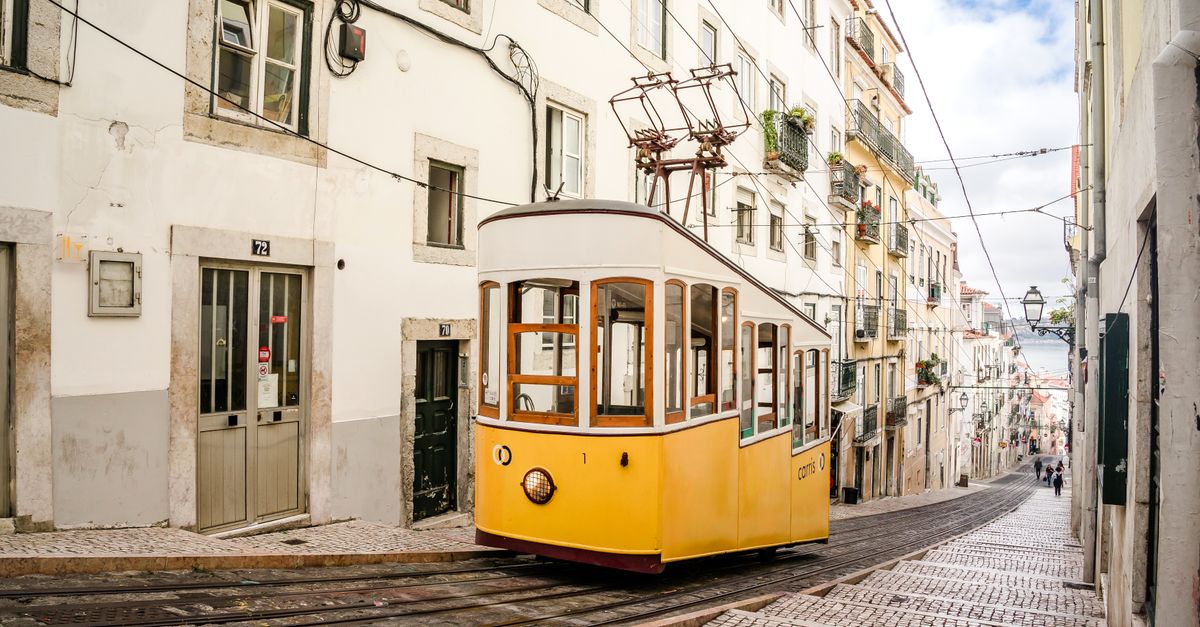
That matters because the Glória is the lift every older Lisbon itinerary uses to get you from Restauradores up to Bairro Alto, and the Bica is the one in the photograph. Both routes are now a walk or a taxi. It is not a brutal walk. It is just a walk you did not plan for, at the end of a day, uphill.
Day one: Baixa, Chiado, Alfama, and the castle before the crowds
Start at the top and walk down. Take a taxi or the 737 bus up to the Castelo de São Jorge for opening at nine. From March to October the castle runs 9am to 9pm with last admission at 8.30pm, and November to February 9am to 6pm. It closes only five days a year.
On the price: Portuguese sources list adult entry at €15 and several English booking sites at €17, and the castle's own page loads its prices inside a widget we could not read, so we are not going to pick one. What is not in dispute is that children up to 12 are free, and that the castle sells through its own channels rather than resellers.
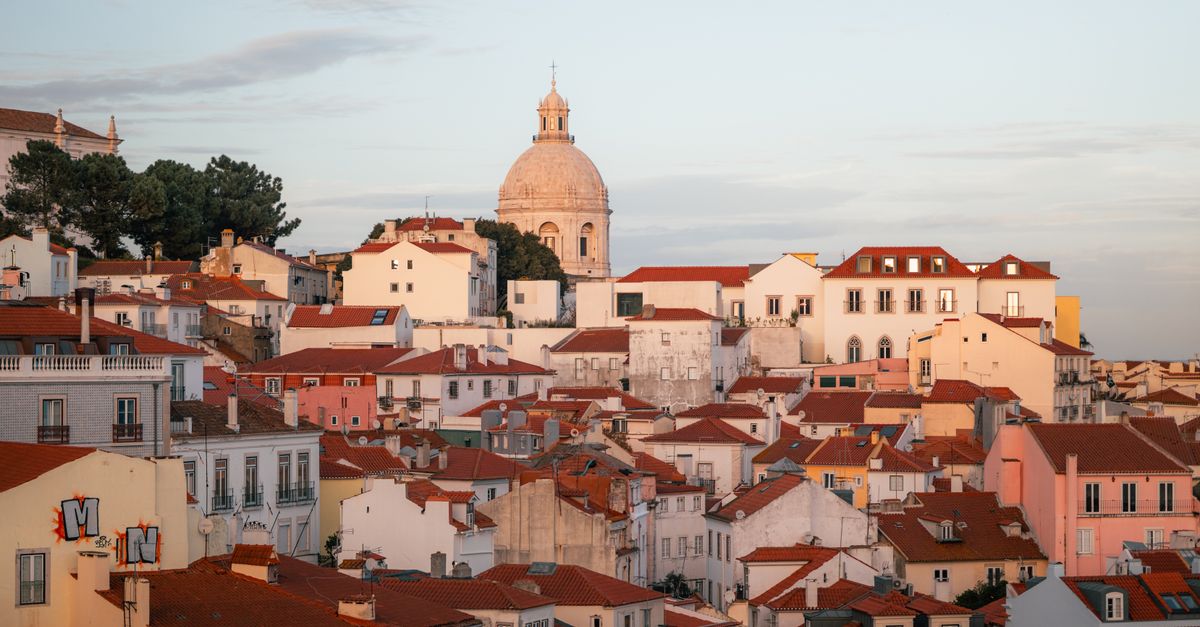
From the castle, walk downhill through Alfama. This is the correct direction and everybody does it backwards. You will pass Miradouro de Santa Luzia and Portas do Sol in the first ten minutes, which are the two viewpoints in every Lisbon photograph, and you will arrive at them having already done the climb.
Lunch in Baixa, then Chiado in the afternoon: Livraria Bertrand, the Carmo ruins, the top of the Santa Justa lift through the free walkway. Finish at the Time Out Market in Cais do Sodré, which is free to walk into, has more than forty stalls and mains in the €8 to €18 range.
The honest note on Time Out Market: it is very good and it is not a discovery. Go at 6pm and you will get a seat. Go at 8pm and you will stand holding a tray looking for one, which is a poor way to eat food this good.
Day two: Belém, and the two tickets that are not the same
Belém is six kilometres west. Tram 15E from Praça da Figueira takes about half an hour and is usually full, or take the Cascais-line train from Cais do Sodré, which takes eight minutes to Belém station and which almost nobody suggests.
The Jerónimos Monastery is €12 for adults, €6 for over-65s and students, and free for children under 12, who still need a ticket issued at the desk. It is free on the first Sunday of the month, which is also when the queue is at its worst.
The distinction that catches people: the church of Santa Maria de Belém, which is inside the monastery complex, is free to enter. The €12 buys the cloisters. Both are worth it, but a family short on time and money can see the church for nothing and walk on.
The Torre de Belém is €8 for adults and €4 for 13 to 24 year olds and over-65s. It is small, the internal staircase is a single-file spiral controlled by a traffic light, and the queue routinely runs longer than the visit. If the line is past the bridge, look at it from the outside and go to the Padrão dos Descobrimentos instead, which has a lift and a better view.
Then the thing you came for. Pastéis de Belém has been making them since 1837 and the queue you can see from the street is the takeaway queue. There is a large sit-down room inside with table service and usually no wait at all, which is the single most useful sentence in this section.
Afternoon: MAAT for the architecture and the riverside walk back, or the Coach Museum, which sounds dull and is one of the best small museums in Europe.
Day three: the western hills, and the trams that are not the 28
Start at Príncipe Real, uphill again and worth it, for the market gardens and the shops in the old palaces. Walk down through Bairro Alto, which is dead before six in the evening and is much better seen empty, to Miradouro de São Pedro de Alcântara.
Then tram 28, on your terms.
Tram 28 is a sightseeing ride that happens to be public transport, and the advice everyone gives you is "go early". More usefully: board at Martim Moniz, which is the start of the route, because that is where the seats are. Boarding halfway means standing, and standing on the 28 in July is the reason people write that it is overrated.
Before nine or after seven are the windows. If you have missed both, take tram 12 instead. It is the shortest route in the city, it loops the same castle-side streets on the same style of car, and there is no queue for it. Tram 24 is the other one worth knowing: Chiado up through Príncipe Real to Campolide, on classic cars, with almost no first-time visitors on board.
Finish at LX Factory under the bridge in Alcântara for dinner, or at Estrela if you would rather a garden and a basilica than a converted printworks.
The fare table, and the card that is probably not worth it
| What | Price |
|---|---|
| Navegante / Viva Viagem card | €0.50 |
| Metro or bus single on the card | €1.90 |
| Santa Justa lift on the card | €1.80 |
| Santa Justa lift as a standalone ticket | €6.00 |
| Lisboa Card, 24 hours | €31 adult, €21 child |
| Lisboa Card, 48 hours | €51 adult, €28 child |
| Lisboa Card, 72 hours | €62 adult, €35 child |
Checked September 2026.
Now the arithmetic on the Lisboa Card, because nobody publishes it. Over the three days above, the paid sights are roughly the castle at €15, Jerónimos at €12 and the Torre de Belém at €8, so €35. Three days of transport on a Navegante card, riding it hard, is around €20. That is €55 against a €62 card.
So the card loses on this itinerary, narrowly, and it wins the moment you add the Sintra or Cascais train, which it covers, or a fourth and fifth paid site. It is a good product bought for the right trip and a mild waste of money bought as a default. Note also that its published inclusion list still advertises the Glória and Bica funiculars, which have not run in a year.
Getting in from the airport
The metro red line starts inside the terminal. A single is €1.90 plus €0.50 for the card, so €2.40 all in, running 06:30 to 01:00. Saldanha is five to ten minutes direct. Baixa-Chiado is 20 to 25 minutes with a change to the green line at Alameda, and that change has stairs, which matters with a case.
A taxi is €10 to €18 and Uber or Bolt €8 to €18. The metro publishes its own map and times, and the AeroBus that half the internet still recommends was scrapped in 2022.
What to skip
The Elevador de Santa Justa queue. Covered above. Walk in the top for free.
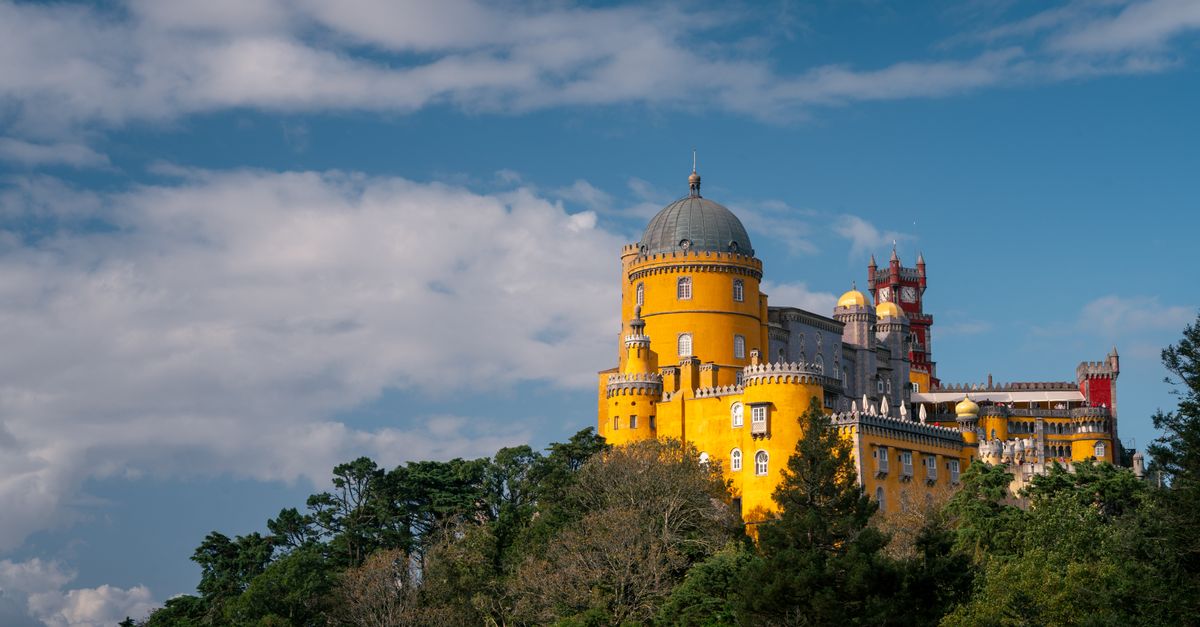
Sintra squeezed into day three. It is the commonest mistake in Lisbon planning and it ruins two days rather than improving one. Day trips from Lisbon has the honest version, and the honest version is that Sintra is a full day or it is nothing.
Any tuk-tuk tour of Alfama. They cost more than a taxi, they cannot enter half the lanes that make Alfama worth seeing, and the commentary is improvised.
Fado dinner shows with a set menu. The music is a genuine art form and the tourist-menu version is neither good fado nor good dinner. Eat first, then find a small room in Alfama or Mouraria with a cover charge and a minimum spend.
The paperwork
Short tourist stays only. Checked 21 Aug 2026; rules change without notice and the government page is the source of truth.
Check your own passport →Checked 21 Aug 2026.
Everything we check for Portugal →Before you book
Where you sleep in Lisbon is a decision about gradient, not just neighbourhood, and it matters more now than it did two years ago. The Lisbon where-to-stay guide has the areas, the €4 tourist tax and the honest read on Alfama with a suitcase. The Lisbon city guide covers what is in each district and the Portugal country guide the practicalities. Give yourself a fourth day and day trips from Lisbon tells you which one to spend it on. If Lisbon is the start of a longer route, ten days in Portugal runs it north, and the Porto where-to-stay guide picks up the other end. More routes like this one are in the itineraries hub. Ready to look at rooms? Lisbon stays are here, and the things to do shelf has the bookable half.
Fares, ticket prices and opening hours checked September 2026. The funiculars remain closed and the São Jorge adult fare is quoted at two different figures by different sellers, so both are flagged above rather than smoothed over. Here is how we research and re-check guides.