Where to stay in Porto, and why not the riverfront
Ribeira looks like the answer and mostly is not. The Porto neighbourhoods worth booking, what each costs a night, and the funicular that fixes the hill.
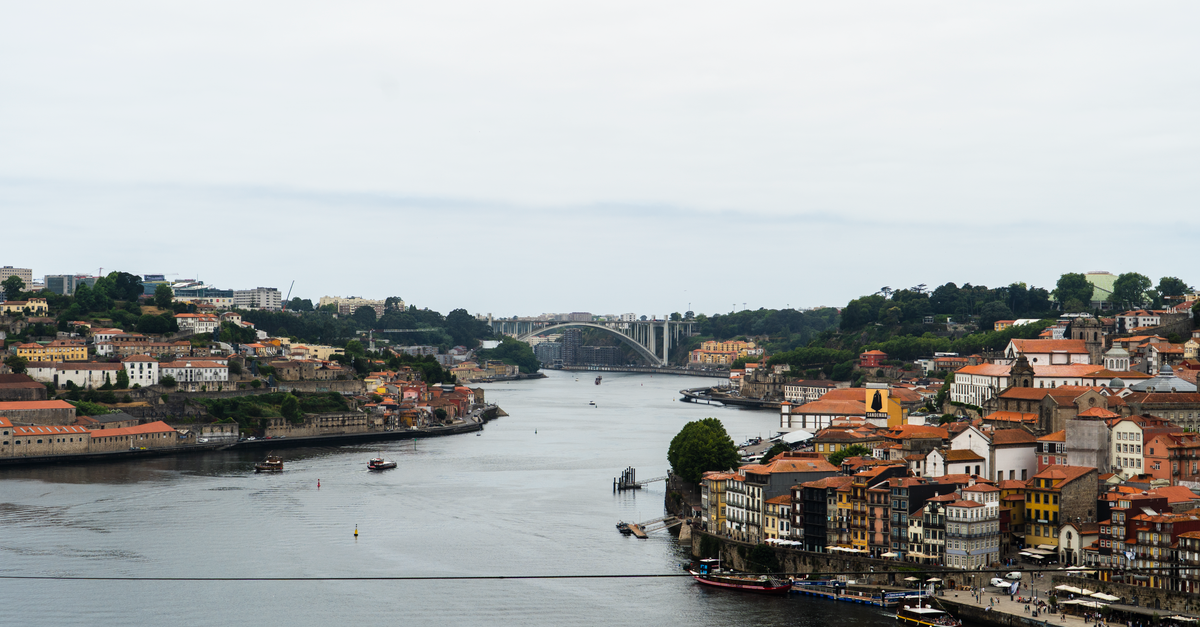
Photo · Mick Declercq · Pexels
Stay in Baixa or Aliados. It is the best-connected ground in Porto, it is the cheapest central mid-range in the city at roughly €85–130 a night, and — the part that matters — it sits at the top of the hill rather than the bottom, so you walk down to the river and ride back up rather than climbing home every evening.
Ribeira, which every guide leads with, is the view you came for and the worst place to keep a suitcase.
- First visit: Baixa / Aliados. Central, flat-ish, well connected, cheapest of the central options.
- Best value: Cedofeita. Around €70–110, noticeably flatter, quiet after dinner.
- Suitcase, pram or a bad knee: Bonfim. Unusually flat for central Porto.
- Port lodges and the skyline: Vila Nova de Gaia — but not to save money.
- Beach and five-plus nights: Foz do Douro.
- Two nights and a river view, travelling light: Ribeira, eyes open.
The slope is the whole decision
Porto's old town is a wall. Ribeira sits at water level on the Douro; Baixa and Aliados sit at the top of it. The lanes between are steep, cobbled and frequently stepped, and the climb back up from the river is about twenty minutes on foot.
Ribeira has no metro station. The nearest is São Bento — at the top of exactly the climb you were trying to avoid.
The thing that fixes this is the Funicular dos Guindais, which climbs from the riverside to Batalha in about three minutes — 281 metres of track, 61 metres of ascent, and a maximum gradient of 36%, which is the escarpment expressed as a number. It runs from 08:00, to 20:00 on winter weekdays, 22:00 in summer, and later at weekends. It is the single most useful piece of infrastructure in the old town and not one of the top-ranking guides to this question mentions it.
Fares we could not pin down: three otherwise reputable sources quote three different prices between €2.50 and €4 one way, and the operator's own fares page does not list it. Budget a few euros, carry an Andante card — it is accepted — and check the board at the bottom station. An honest gap beats a confident wrong number.
Do not confuse it with the Teleférico de Gaia, the cable car on the other bank. That is €7 single or €10 return booked online, shuts at 20:00, and is a tourist ride rather than transport — it goes from a viewpoint to a quayside, both of which you can walk between.
The metro, briefly
Six lines, all of them meeting at Trindade, which is one stop from Aliados and is the station to orient yourself around. The violet line E runs to the airport. The yellow line D is the one that crosses the Douro to Gaia, stopping at Jardim do Morro, General Torres and Câmara de Gaia.
The Luís I bridge carries the metro and pedestrians on its upper deck and road traffic and pedestrians on the lower — and the lower deck delivers you straight into Ribeira, which is the pleasant way to arrive.
The areas, and what they cost
Bands below are for a mid-range double, checked September 2026 and converted at €1 = A$1.63. Treat them as the shape of the market rather than a quote; Porto moves a long way between February and August.
| Area | Mid-range double | In AUD | On the metro? | The catch |
|---|---|---|---|---|
| Cedofeita | €70–110 | A$114–179 | Near Trindade | Quiet after dinner; thin hotel supply |
| Baixa / Aliados | €85–130 | A$139–212 | Yes, the best of it | Less atmospheric than the river |
| Ribeira | €100–150 | A$163–245 | No station | The climb, the noise, the premium |
| Foz do Douro | €100–140 | A$163–228 | No — tram 1 | 20–30 min out, not walkable to the sights |
| Boavista | €100–150 | A$163–245 | Yes, incl. line E | Not historic, 15–25 min from the sights |
| Gaia riverfront | €110–160 | A$179–261 | Yes, line D only | A bridge crossing on every outing |
Cedofeita is the value pick and it is not close. Guesthouses from about €70, noticeably flatter than the core, walkable to everything, and outside the rental-licence freeze so there is more legal apartment stock. It goes quiet in the evening, which is either restful or dull depending on you.
Baixa and Aliados is the sensible default: São Bento and Aliados on the yellow line, Bolhão and Trindade a short walk, the market, and the top of the hill. Weekend nights get rowdy around Galerias de Paris.
Bonfim deserves more attention than it gets. It is described by people who live there as unusually flat for central Porto, it is on the metro spine, it is 15–20 minutes' walk from the main sights and it is cheaper than downtown. If you are moving a large case or travelling with anyone who would rather not climb, this is the answer. We could not pin down a reliable price band for it, which is a gap rather than a warning.
Ribeira is beautiful and it is a hard place to sleep. Steep, stepped, noisy late, no metro, and a 20–30% tourist premium on the room. Two nights with a soft bag, yes. A week with a suitcase, no.
Foz do Douro is the Atlantic end of the city — beaches, better air, noticeably cooler, tram 1 along the river to get there. Good for five nights or more, or with children. Not walkable to anything historic, and dining thins out after 10pm.
Boavista is business Porto: chain hotels, easy parking, no charm, and one genuine advantage — Casa da Música is on line E, so it is a single train from the airport with no change at all.
Gaia is not the budget option
This is repeated everywhere and the numbers do not support it. Gaia's riverfront runs €110–160 against Baixa and Aliados at €85–130 — call it €25–30 a night more, for which you also add a bridge crossing to every single outing and restrict yourself to one metro line.
Gaia is a completely legitimate choice if the port lodges are the point of the trip, or if you want the photograph of Porto rather than to be standing in it. It is not a saving. Cedofeita is the saving.
Getting in from the airport
Metro line E from inside the terminal: Trindade in 27 minutes, Campanhã in 36, and Casa da Música directly on the way. A zone 4 ticket is €2.30 plus €0.60 for the Andante card, so under €3 to reach the middle of the city — and note that went up from €2.25 on 1 January 2026, so anything quoting the old fare is stale. Trains run every 20 minutes at peak and roughly 06:00 to midnight.
A taxi is €25–35 and takes 20–30 minutes; Uber or Bolt runs €15–22.
If you are staying in Boavista you do not change at all. Everyone else changes at Trindade, which is the interchange for all six lines and about as easy as these things get.
What the tax and the paperwork add
€3 per person per night, for guests aged 13 and over — children of twelve and under are free. It rose from €2 to €3 on 1 December 2024 and has not moved since, and it is capped at seven nights, so €21 per person is the most any single stay can attract.
The part nobody publishes: it is collected at the property, not by the booking site, and the accommodation has to register what it took on a municipal platform. So it is not in your prepaid rate, and two adults for four nights should expect €24 at the desk that nothing in the booking flow warned them about. There are exemptions for medical stays, for guests with a disability of 60% or more, and for pilgrims' first night.
And the same national rule applies: every foreign guest in paid accommodation must be registered with the immigration authority within three working days, so bring your passport to check-in, including at apartments.
A note on apartments
Porto has suspended new short-term rental licences for nearly all property types, with containment triggered where rentals pass 15% of a parish's homes. The restricted parishes are exactly the historic core — Vitória (60.5%), São Nicolau (48.3%), Sé (44.1%), Santo Ildefonso (38.3%) and Miragaia (21.8%).
Cedofeita (9.8%) and Bonfim (8.1%) are not restricted, which is part of why their prices sit below the core and why new legal apartments still appear there. As in Lisbon, check the listing shows a licence number.
Where not to stay
A Ribeira riverfront room, booked off the photograph. You are paying a 20–30% premium to sleep at the bottom of the steepest slope in the city, in the noisiest lanes, with no metro station and a twenty-minute climb home. Stay at the top and walk down — the view is free from the bridge and from Gaia's terraces, and you will be in Ribeira every evening anyway.
Gaia, chosen to save money. See above. It costs more.
So, where?
Baixa or Aliados on a first visit. Cedofeita if you would rather have the money for dinner, and Porto is a city where that is a real argument. Bonfim if anyone in the party would rather not climb. Gaia only if port is the purpose.
If you are doing both Portuguese cities — and you should, they are three hours apart by train and completely different — Lisbon has its own guide, and its logic is nearly the inverse of this one. The Porto city guide covers what is actually in each neighbourhood, the Portugal country guide handles the practicalities, and when to go is worth reading first, because Porto in August and Porto in May are different propositions at different prices. See our other where-to-stay guides for the rest of Europe, the port tours and day trips worth booking, or go straight to every Porto stay we can source.
Fares, taxes and prices checked September 2026 — here is how we research and re-check guides.