Where to stay in Lisbon, hill by hill
Which Lisbon neighbourhood suits your trip, what the tourist tax adds, and why the hills matter more in 2026 than any guide written before them says.
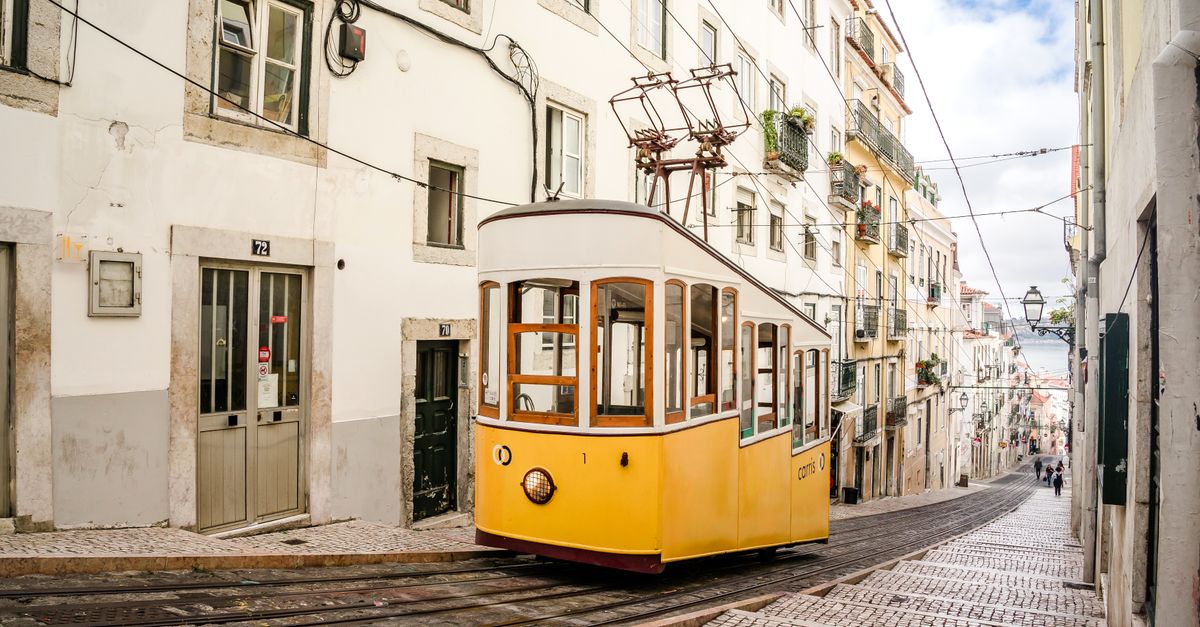
Photo · Leonhard Niederwimmer · Pexels
Stay in Baixa if it is your first visit and you have a suitcase. It is the flattest ground in central Lisbon, it sits on two metro lines, and everything else in the old town is literally uphill from it. Chiado for the same reasons with better shops and a higher bill. Príncipe Real or Graça if you have been before and want the city rather than the sights. And Alfama only once you have understood what its lanes are actually like.
That last point is the whole guide, and it changed in 2025.
- First visit, wheeled luggage: Baixa. Flat, connected, central.
- First visit, want it prettier: Chiado. Uphill from Baixa but not by much.
- Second visit: Príncipe Real for calm, Graça for the views.
- Nightlife: Bairro Alto — and read the noise warning below.
- Families or an early flight: Parque das Nações. Not old Lisbon, but easy.
- Atmosphere above all, travelling light: Alfama.
The hills, and the lifts that are not running
Lisbon is built on hills, and its historic answer to that was a set of funiculars. Most of them are currently out of service, which is the single biggest thing missing from every guide ranking for this question.
The Elevador da Glória, which carried people from Restauradores up to Bairro Alto, has been closed since 3 September 2025, when a derailment killed sixteen people. An inquiry found a cable that did not meet passenger-transport specification. Carris put redesign proposals forward on 31 August 2026; there is no reopening date. The Elevador da Bica, the other route up to Bairro Alto, closed the same day as a precaution and remains shut.
The Elevador de Santa Justa does still run, 07:00 to 22:45. Two things worth knowing: its rooftop viewing deck has been closed for renovation since 2025, and it costs €1.80 on a rechargeable Navegante card against €6.00 as a walk-up tourist ticket — more than three times the price for the same 90-second ride. Buy the card at any metro station on your first day. Carris runs the lifts and trams and publishes service updates; it is worth a look before you travel, because this situation is still moving.
What the metro actually reaches matters more here than in most cities. There are four lines: blue (Reboleira–Santa Apolónia), yellow (Rato–Odivelas), green (Cais do Sodré–Telheiras) and red (airport–São Sebastião). Between them they serve Baixa, Chiado, Avenida da Liberdade, Rato and Oriente.
They do not serve Alfama, Graça, Bairro Alto or Belém — which is four of the areas people most want, and three of them are the steep ones.
The areas
Baixa — the grid rebuilt flat after the 1755 earthquake, and the only genuinely level ground in the centre. Blue line at Terreiro do Paço and Restauradores, green at Rossio and Martim Moniz, and the two meet at Baixa-Chiado. You pay for that convenience, and it empties of locals after dinner. Still the right answer for a first trip.
Chiado — immediately uphill, and the pleasantest part of central Lisbon to walk around. Some guides claim it has no metro; it does, Baixa-Chiado exits directly into it, though the escalators from the blue line platforms are long enough to be a small journey of their own. Expensive.
Alfama — the one everybody photographs. It is a hillside of stairs and uneven cobble with no metro station; the nearest are Santa Apolónia or Martim Moniz, both at the bottom of a climb. Many doors cannot be reached by any vehicle at all — a taxi will stop somewhere near and you walk the rest. Rooms are moderately priced precisely because of that. Wonderful on a second visit with a rucksack.
Bairro Alto — the nightlife quarter, and the noise is structural rather than occasional: bars run past 2am in narrow stone canyons that hold sound. With both funiculars closed, the only ways up are the walk and the taxi. Book here if you intend to be part of the noise.
Príncipe Real — the reliable second-visit choice. Yellow line at Rato, handsome squares, good food, quiet after dark. It is on a hill, and Rato is a walk from the middle of it.
Avenida da Liberdade — a six-lane boulevard of flagship stores with the blue and yellow lines under it. Excellent for airport runs and business trips, short on evening life. It is an address, not a neighbourhood.
Graça — the highest of them, with the viewpoints to show for it and no metro at all. Everything is a climb, and the 28 tram arrives full.
Belém — six kilometres west, reached by tram 15E or the Cascais train. Fine if the monuments are the trip; otherwise you commute in for dinner and watch the clock for the last tram back.
Parque das Nações — one stop from the airport on the red line, modern, flat, family-friendly, and containing nothing of old Lisbon whatsoever. A sensible base for an early flight or a stay with small children.
What it costs
Lisbon is more seasonal than most European cities. A mid-range double runs about €80–120 (A$130–196) in January and February and €200–320 (A$326–522) in July and August — a spread of more than 80% for the same room. Shoulder season, April–May and late September into October, is where the value is, and it is also when the city is most pleasant to walk. Converted at €1 = A$1.63, the rate in late August 2026.
Relative positioning within the city is steadier than the absolute numbers: Príncipe Real and Chiado sit at the top, Baixa just below, Alfama and Graça noticeably cheaper because of the terrain, and Parque das Nações cheaper again.
Add the tourist tax: €4 per person per night, capped at seven nights so €28 maximum, with under-13s exempt. It doubled from €2 in September 2024 and has not moved since. It applies to hotels, hostels and licensed rentals alike, and on most hotel bookings it is collected at the property rather than shown in the rate you were quoted — so a family of two adults for five nights should expect €40 they were not expecting.
One more piece of admin: Portuguese law requires every foreign guest in paid accommodation to be registered with the immigration authority within three working days. In practice that means your passport is required at check-in, every time, including at an Airbnb.
Getting in from the airport
The metro red line starts inside the terminal. €1.90 plus €0.50 for the card, running 06:30 to 01:00.
The catch nobody mentions: the red line does not go to the old town. Saldanha, Areeiro and Roma are five to ten minutes away, direct. Baixa-Chiado is 20–25 minutes and needs a change to the green line at Alameda. If you have booked Alfama or Bairro Alto, that is two trains and then a climb on cobbles with your luggage.
A taxi is €10–18, Uber or Bolt €8–18, and for two people with cases into the old town that is the honest recommendation. The AeroBus was cancelled in 2022 and still appears in guides that have not been updated since.
Tram 28, and how to not queue for it
Tram 28 is a sightseeing ride that happens to be public transport. In summer the queue at the Martim Moniz terminus routinely passes an hour, and it is the city's most heavily worked pickpocket route — organised teams operate in the crush between Praça Luís de Camões and Martim Moniz.
Take the 12E instead. It runs the same heritage carriages around the best of the Alfama circuit — Portas do Sol, Santa Luzia, the cathedral — with a fraction of the crowd. This is the single most useful thing to know about Lisbon's trams and almost nobody publishes it.
A note on apartments
Lisbon tightened its short-term rental rules on 6 December 2025. New licences are now blocked outright in any parish where rentals already exceed 10% of homes — which covers Santa Maria Maior (66.9%), Misericórdia (43.8%), Santo António (25.1%), São Vicente (16.1%), Arroios (13.5%) and Estrela (10.8%). In plain terms: Baixa, Chiado, Bairro Alto, Alfama and Graça are all inside the restricted core.
For a visitor this means two things. Legal apartment supply in the historic centre is capped and will not grow, so hotel pricing there firms up. And you should check the listing displays its licence number — it is legally required, and its absence is the reliable tell for an unlicensed rental that can be closed down between your booking and your arrival.
Where not to stay
Alfama, on a first trip, because of the photographs. Nearly every guide ranks it top three and romanticises the lanes. Those lanes are stepped, the cobbles are uneven and slick in rain, there is no metro, and vehicle access stops short of many doors. It was a reasonable recommendation while the funiculars ran. Since September 2025 it is materially harder than any guide written before then describes, and none of them have been updated.
Anywhere chosen to be near the 28 tram. Martim Moniz is a mediocre place to sleep, and its main selling point is proximity to a queue you should be skipping anyway.
So, where?
Baixa for a first visit, and spend the difference you saved on not needing taxis. Chiado if you would rather be five minutes uphill and among nicer buildings. Príncipe Real the second time. And if Alfama is the Lisbon you came for, stay in Baixa and walk up into it every evening — you get the same city and none of the suitcase.
Then read when to go, because the difference between February and August here is 80% on the room rate and about fifteen degrees. The Lisbon city guide maps what is actually in each neighbourhood, the Portugal country guide covers the wider trip, and if you are pairing it with the north, Porto has its own guide — the two cities work very differently and the same instincts do not transfer. Our other where-to-stay guides cover the rest of Europe, the tours worth booking ahead are here, and every Lisbon stay we can source is here.
Fares, taxes and service closures checked September 2026. The funicular situation in particular is worth re-checking before you travel — here is how we research and re-check guides.