Where to stay in Budapest, and why you sleep in Pest
Buda is what you look at and Pest is where you stay. The districts by number, the 4% tax, and the one street you should not book a room above.
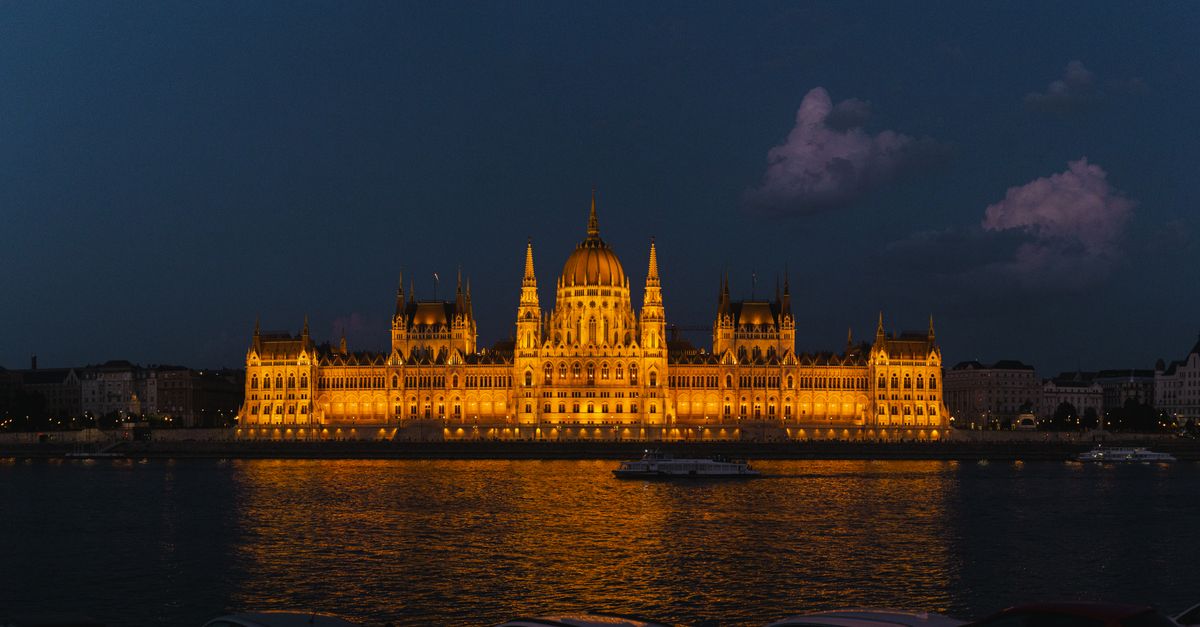
Photo · Matias Mango · Pexels
Budapest is two cities across a wide river, and the accommodation decision is mostly settled by that fact.
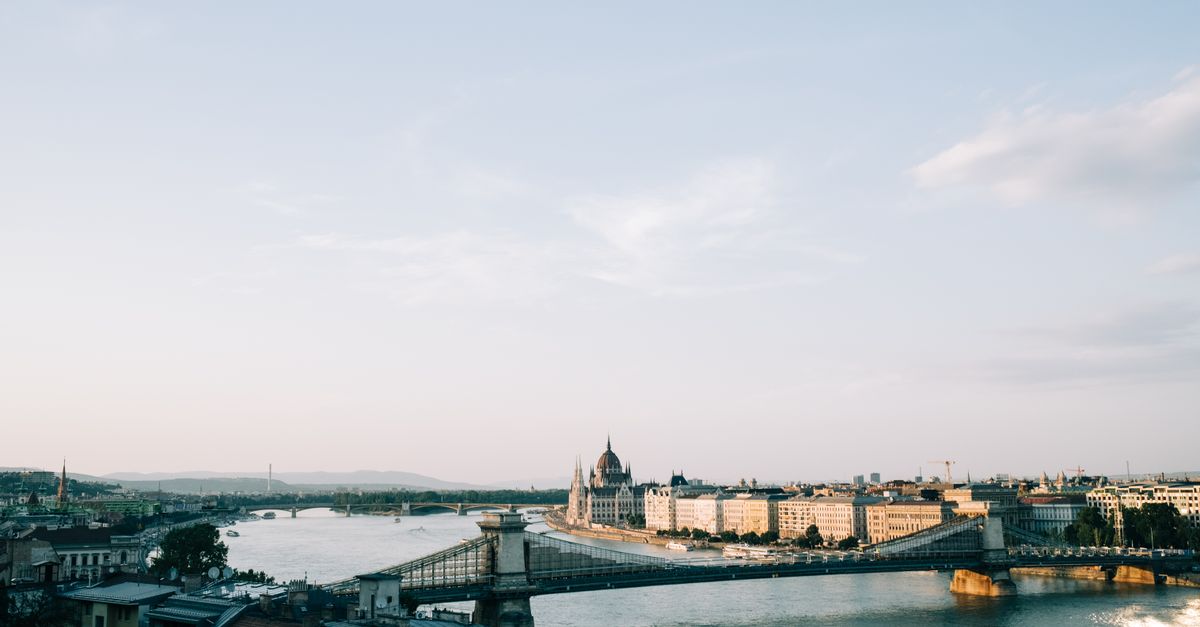
Buda is the hilly western side, with the castle, the Fisherman's Bastion and the panorama. Pest is the flat eastern side, with the Parliament, the baths, the ruin bars, the restaurants and most of the metro.
Buda is what you look at. Pest is where you stay.
Hungarian forint. Convert any figure on this page into your own currency at today's published rate.
Open the currency converter →The tax, in the middle of the European range
Budapest charges 4% of the net room price per night.
That is a percentage rather than a flat fee, so it scales with the room, and it sits comfortably below the cities it competes with: Amsterdam takes 12.5%, Berlin 7.5%, Vienna 5% and rising to 8% in 2027, while Prague charges a flat 50 CZK and London and Madrid charge nothing.
On a mid-range Budapest room, 4% is a couple of euro a night. It is one of the least consequential lines in a Budapest budget, which is worth knowing because Budapest is one of the cities where visitors most often assume they are being charged extra for something.
The districts, by number
Budapest numbers its districts and locals use the numbers rather than the names, so it is worth learning the handful that matter.
Pest, where you should be looking: V is the inner city, VI is around the Opera and Andrássy, VII is the Jewish Quarter and the ruin bars, VIII is mixed and improving, IX is Ferencváros and up-and-coming, XIII is Újlipótváros, residential and lovely.
Buda, for a specific reason only: I is the Castle District, II is green and residential, XI is Újbuda, which has the Gellért baths and a student population.
District V, Belváros, and this is the first-visit answer
The inner city, flat, on the river, and walking distance to the Parliament, St Stephen's Basilica, the Chain Bridge and the Danube promenade. Every metro line touches it.
Best for: a first visit of two to four nights, where you want everything on foot. The catch: it is the most expensive district in Budapest, which still makes it cheaper than most European city centres, and it is quiet in the evening compared with VI and VII.
District VI, Terézváros, for the balance
Around Andrássy út, the grand boulevard, and the Opera House. It has the M1 metro underneath it, which is the oldest underground line in continental Europe and a small pleasure in its own right, and it sits between the calm of V and the noise of VII.
Best for: most people, most trips. This is the value-to-quality sweet spot.
District VII, Erzsébetváros, the Jewish Quarter
The most interesting district in the city and the one to think hardest about.
It has the Dohány Street Synagogue, the largest in Europe, the best street food in Budapest, and the ruin bars that began as squats in derelict courtyards and are now a well-run industry.
The catch is specific and it is about the room, not the district: the inner streets around Kazinczy utca and Gozsdu Udvar are loud until four in the morning, every night in season. Book a few streets out, on the Király utca side or up toward the Basilica, and you get the neighbourhood without the noise.
District XIII, Újlipótváros, for the second visit
North of the Parliament along the river, residential, tree-lined, with Margaret Island at the end of it and the best everyday restaurants in Pest. Two metro stops from the middle and noticeably cheaper.
Best for: longer stays, families, anyone who has done the centre.
District I, the Castle District, for one specific reason
Stay here if you want the Castle Hill to yourself after the day visitors have gone, which is a genuine experience: the streets up there empty completely and the view over Pest at night is the best in the city.
The catch: you are up a hill, across a river, away from where you will eat, and it is a funicular or a bus every time you want to do anything.
Two things to know before you book anything
There is no Buda Castle ticket. The grounds, courtyards and streets are free and unticketed. Each museum inside sells its own admission, with the Hungarian National Gallery around 5,800 HUF and the Budapest History Museum around 3,800 HUF. People arrive looking for a ticket office for the castle and there is not one.
The baths are the reason to be here and they are a booking. A weekday ticket with a locker at Széchenyi runs about 13,200 HUF booked online, with fast-track morning or afternoon entry Monday to Thursday around 15,200 HUF. Gellért is the art nouveau one and is on the Buda side, which is one of the few good arguments for sleeping over there.
Transport
A 24-hour travel card is 2,500 HUF, 72 hours 5,500 HUF and seven days 6,300 HUF, covering the metro, trams and buses.
The seven-day card at 6,300 HUF is the outlier: it costs barely more than 72 hours, so any stay of four nights or more should buy it without thinking.
Where not to stay
Above a ruin bar, unless you are in one until it closes anyway.
The Castle District on a first visit. Beautiful, and the wrong side of the river for everything you will actually do.
Anywhere sold on being near Keleti or Nyugati station. Both are well connected and neither is a neighbourhood.
Currency exchange booths advertising "0% commission". As in Prague, they work by giving you a poor rate rather than charging a commission. Use a bank's ATM and decline the machine's own conversion offer.
When to go
April, May, September and October are the best months, and Budapest's shoulder is noticeably quieter than Prague's or Vienna's.
Winter is cold and it is when the baths make the most sense, because sitting in 38-degree water outdoors while it snows is the single most Budapest thing available.
July and August are hot, and the city empties in August the way Vienna's does.
The paperwork
We have not checked Hungary against the five passports yet. The tool reads the Wikipedia article for yours and shows its own sentence, with the date it was last edited.
Short tourist stays only. Checked 21 Aug 2026; rules change without notice and the government page is the source of truth.
Check your own passport →Checked 21 Aug 2026.
Everything we check for Hungary →Before you book
Prague or Budapest settles the choice between the two and names the constraint people miss from a map, which is that they are six to seven hours apart by train with Vienna sitting halfway. Where to stay in Prague and where to stay in Vienna complete the route, and the three cities have three entirely different tax systems, which is worth comparing before you decide where the extra night goes. The Budapest city guide and the Hungary country guide have the practicalities, and underrated European cities has the alternatives further east and south. More in the where to stay hub. Ready to look at rooms? Budapest stays are here, and the things to do shelf has the bookable half, including the baths.
Tax rate, transport fares and bath prices checked September 2026. Budapest's transport authority publishes the current travel card prices, and bath admission varies by day of the week and by whether you book online, so check before you turn up.