Budapest
Two cities either side of a river: Buda up the hill, Pest on the grid. The thermal baths are municipal rather than luxurious, and much better for it.
Budapest in eight slides
Wikipedia · 3 Sep 2026


Things to do in Budapest
Where to stay in Budapest
Budapest in a day, two days, three
- Day 14 stops
- Buda CastleUNESCO
- Fisherman's Bastion
- Heroes' SquareUNESCO
- Hungarian Parliament Building
- Day 24 stops
- Matthias Church
- St Stephen's Basilica
- Széchenyi Baths
- Széchenyi Chain Bridge
Landmarks in Budapest

Buda Castle, formerly also called the Royal Palace and the Royal Castle, is the historical castle and palace complex of the Hungarian kings in Budapest. First completed in 1265, the Baroque palace that occupies most of the site today was built between 1749 and 1769, severely damaged during the Siege of Budapest in World War II, and rebuilt in a simplified Baroque style during the state communist era.
Wikipedia · CC BY-SA 4.0 · 27 Jul 2026
Varius · CC BY-SA 3.0

The Halászbástya or Fisherman's Bastion is one of the best known historical monuments in Budapest, located near the Buda Castle, in the Várkerület. Since 1987, it has been designated a UNESCO World Heritage Site as part of the Várkerület District.
Wikipedia · CC BY-SA 4.0 · 18 Jul 2026
Brian Adamson · CC BY 2.0

The Heroes' Square is one of the major squares in Budapest, Hungary, noted for its iconic Millennium Monument with statues featuring the Seven chieftains of the Magyars and other important Hungarian monarchs and national leaders, as well as the Memorial Stone of Heroes, often erroneously referred as the Tomb of the Unknown Soldier.
Wikipedia · CC BY-SA 4.0 · 2 Sep 2026
Godot13 · Attribution

The Hungarian Parliament Building, also known as the Parliament of Budapest after its location, is the seat of the National Assembly of Hungary, a notable landmark of Hungary, and a popular tourist destination in Budapest. It is situated on Kossuth Square in the Pest side of the city, on the eastern bank of the Danube. It was designed by Hungarian architect Imre Steindl in neo-Gothic style and opened in 1902.
Wikipedia · CC BY-SA 4.0 · 11 Aug 2026
Kilyann Le Hen · CC BY 4.0

The Church of the Assumption of the Buda Castle, more commonly known as the Matthias Church and more rarely as the Coronation Church of Buda, is a Catholic church in Holy Trinity Square, Budapest, Hungary, in front of the Fisherman's Bastion at the heart of Buda's Castle District.
Wikipedia · CC BY-SA 4.0 · 24 Jul 2026
Thaler Tamas · CC BY-SA 4.0

St. Stephen's Basilica is a Roman Catholic basilica in Budapest, Hungary. It is named in honour of Stephen, the first King of Hungary, whose right hand is housed in the reliquary.
Wikipedia · CC BY-SA 4.0 · 13 Jul 2026
Marc Ryckaert (MJJR) · CC BY 3.0

The Széchenyi Medicinal Bath in Budapest is the largest medicinal bath in Europe. Its water is supplied by two thermal springs, one at 74 °C (165 °F) and the other at 77 °C (171 °F).
Wikipedia · CC BY-SA 4.0 · 23 Jul 2026
Marc Ryckaert (MJJR) · CC BY 3.0
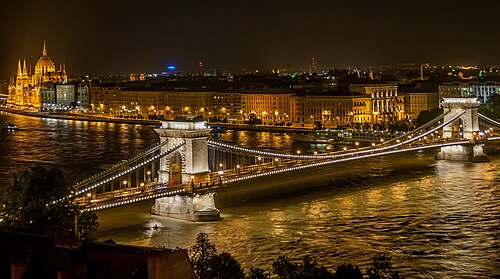
The Széchenyi Chain Bridge is a chain bridge that spans the River Danube between Buda and Pest, the western and eastern sides of Budapest, the capital of Hungary. Designed by English engineer William Tierney Clark and built by Scottish engineer Adam Clark, it was the first permanent bridge across the Danube in Hungary. It was opened in 1849.
Wikipedia · CC BY-SA 4.0 · 21 Aug 2026
Wilfredor · CC0
Buda Castle, formerly also called the Royal Palace and the Royal Castle, is the historical castle and palace complex of the Hungarian kings in Budapest. First completed in 1265, the Baroque palace that occupies most of the site today was built between 1749 and 1769, severely damaged during the Siege of Budapest in World War II, and rebuilt in a simplified Baroque style during the state communist era.
Wikipedia · CC BY-SA 4.0 · 27 Jul 2026
Varius · CC BY-SA 3.0
The Halászbástya or Fisherman's Bastion is one of the best known historical monuments in Budapest, located near the Buda Castle, in the Várkerület. Since 1987, it has been designated a UNESCO World Heritage Site as part of the Várkerület District.
Wikipedia · CC BY-SA 4.0 · 18 Jul 2026
Brian Adamson · CC BY 2.0
The Heroes' Square is one of the major squares in Budapest, Hungary, noted for its iconic Millennium Monument with statues featuring the Seven chieftains of the Magyars and other important Hungarian monarchs and national leaders, as well as the Memorial Stone of Heroes, often erroneously referred as the Tomb of the Unknown Soldier.
Wikipedia · CC BY-SA 4.0 · 2 Sep 2026
Godot13 · Attribution
The Hungarian Parliament Building, also known as the Parliament of Budapest after its location, is the seat of the National Assembly of Hungary, a notable landmark of Hungary, and a popular tourist destination in Budapest. It is situated on Kossuth Square in the Pest side of the city, on the eastern bank of the Danube. It was designed by Hungarian architect Imre Steindl in neo-Gothic style and opened in 1902.
Wikipedia · CC BY-SA 4.0 · 11 Aug 2026
Kilyann Le Hen · CC BY 4.0
The Church of the Assumption of the Buda Castle, more commonly known as the Matthias Church and more rarely as the Coronation Church of Buda, is a Catholic church in Holy Trinity Square, Budapest, Hungary, in front of the Fisherman's Bastion at the heart of Buda's Castle District.
Wikipedia · CC BY-SA 4.0 · 24 Jul 2026
Thaler Tamas · CC BY-SA 4.0
St. Stephen's Basilica is a Roman Catholic basilica in Budapest, Hungary. It is named in honour of Stephen, the first King of Hungary, whose right hand is housed in the reliquary.
Wikipedia · CC BY-SA 4.0 · 13 Jul 2026
Marc Ryckaert (MJJR) · CC BY 3.0
From the airport
When to go to Budapest: Apr or May or Sep or Oct
Guides about Budapest
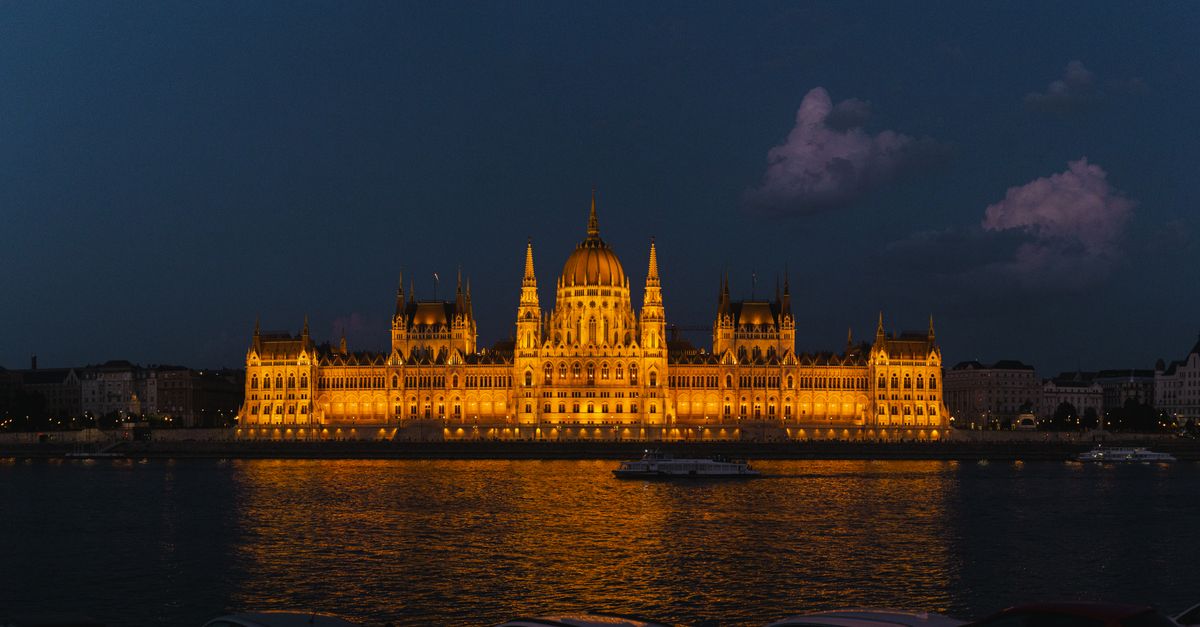
Three days across Buda and Pest with real bath prices, the weekday discount nobody mentions, and the famous spa that closed for renovation until 2028.
Josefin Bakke · 2 Sep 2026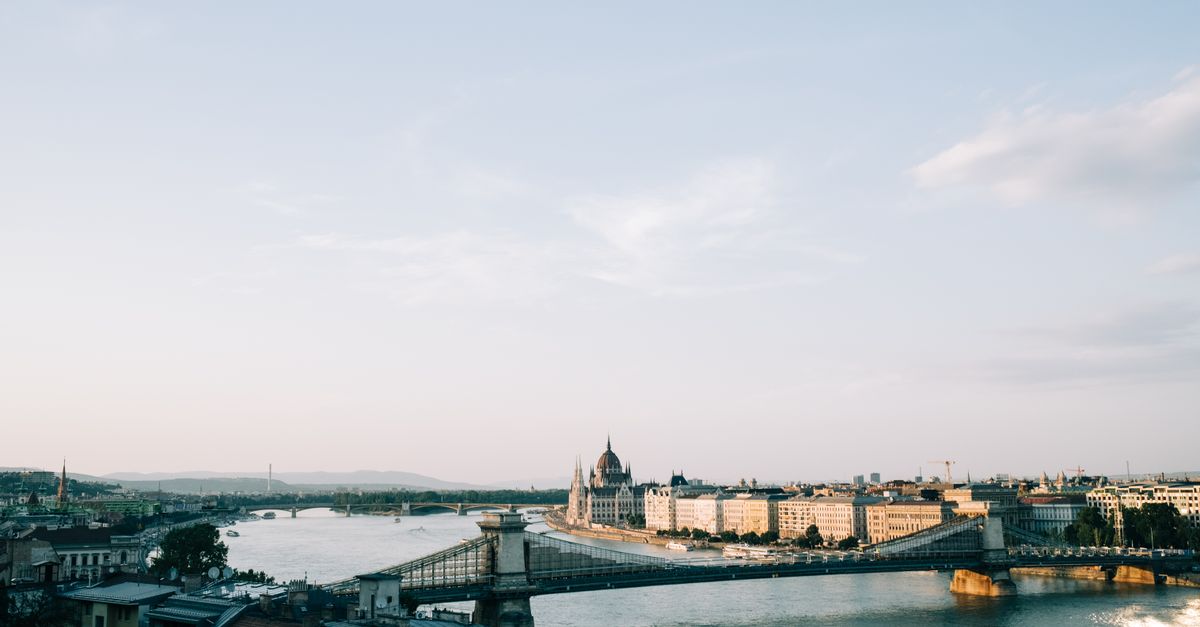
Buda is what you look at and Pest is where you stay. The districts by number, the 4% tax, and the one street you should not book a room above.
Josefin Bakke · 2 Sep 2026