Southeast Asia's wet season, explained properly
The wet season is not a washout and it is not one season either. What rain actually looks like by country, the months that are genuinely bad, and the savings.
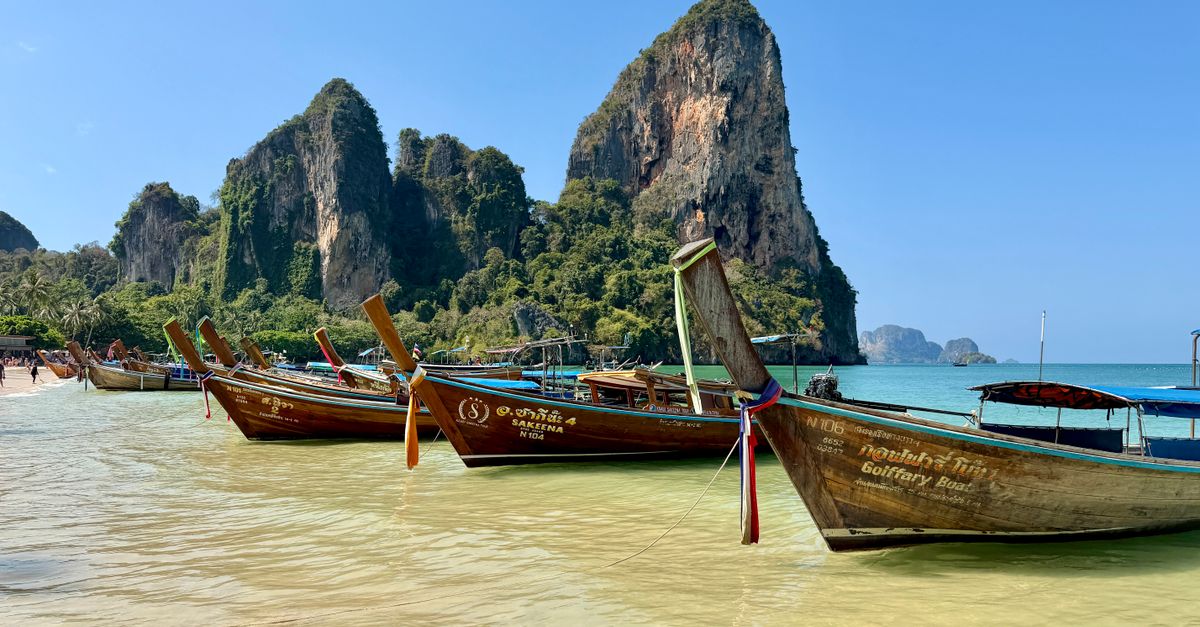
Photo · Andre Mouton · Pexels
"Wet season" is doing a lot of damage to a lot of trips, in both directions.
It makes people cancel months that are perfectly good, and it makes them book the two or three stretches that genuinely are not.
And it is not one season. Southeast Asia has several monsoons on different schedules, and in most months there is somewhere in the region at its best.
Prices in our regional guides are quoted in each country's own currency and the converter does the rest.
What a wet-season day actually looks like
In most of the region, most of the time: a clear morning, cloud building through the middle of the day, a heavy downpour lasting an hour or two in the mid to late afternoon, and a clear evening.
That is not a wet day. That is a wet hour and a half, and it is warm rain.
The practical response is scheduling, not avoidance. Put the outdoor part of the day before lunch, be somewhere with a roof at four, and carry on afterwards. It is what everyone who lives there does.
The country-by-country reality
Thailand. Two coasts on opposite schedules. The Andaman side, Phuket and Krabi, is wet from about May to October, with September normally the wettest month of the year. The Gulf side, Samui and Phangan, is wet from October to December. So there is nearly always a good coast, and the one awkward window is October into early November when the Gulf has turned and the Andaman has not finished drying. Our Thai calendar has the detail.
Vietnam. Three regions that never agree. The north is wet in summer and best in autumn and spring. The centre takes its heaviest rain and its typhoons from September to November, and Hoi An floods, sometimes to knee depth in the old town. The south runs a straightforward wet season from May to November with the afternoon-downpour pattern. The Vietnamese calendar sets out all three, and this is the country where getting it wrong costs the most.
Indonesia and Bali. Wet from about November to March, driest June to September. The wet season is genuinely workable, with the afternoon pattern, and it is much cheaper. Our Bali calendar has the regional detail.
Malaysia and Singapore. Rain in every month, and the east coast of peninsular Malaysia takes a genuine monsoon from November to February when some islands close entirely. The west coast and Singapore are wet year-round without a real off season.
Cambodia and Laos. Wet from May to October. The wet season is the good one for Angkor, because the moats and barays fill and the stone is not baked, and it is the difficult one for rural roads.
The Philippines. Typhoon risk from June to November, highest August to October, and this is a genuine planning constraint rather than a footnote because cancelled ferries strand people. The national weather bureau publishes live cyclone bulletins, which in those months is worth checking before every internal leg. Our islands guide covers it, and Siargao runs against the national pattern.
The three stretches to genuinely avoid
Central Vietnam, September to November. The one unambiguous no on this page.
Thailand's Gulf islands, October to December. Their heaviest rain, and the sea conditions matter as much as the rainfall because the swimming is what goes first.
The Philippines at the peak of typhoon season, if your itinerary has no flexibility in it.
Everywhere else in the region, in almost every month, is a scheduling question rather than a cancellation.
What the wet season buys you
Price. Island and resort rates fall substantially, sometimes by half or more. City rates barely move, because urban accommodation is not seasonal in the same way. The saving is largest exactly where the weather risk is largest.
Space. The famous places are genuinely quieter.
The landscape. Rice terraces are green rather than brown, waterfalls run, and Angkor's moats are full.
And in Bali specifically, the surf on one coast is better in the season that is worse on the other.
What it costs you
Sea conditions, which is the real one. A wet-season coast is rough as well as wet, and boat trips, diving and island transfers are the first things cancelled.
Some operators close for the season entirely, particularly the smaller island ones.
Humidity, which is worse in the wet season than the heat is in the dry one.
Packing for it, briefly
A cheap poncho bought locally, not a technical rain jacket. A breathable waterproof in 32 degrees and 90 per cent humidity makes you wetter from the inside than the rain does from the outside, and everybody learns that once.
Clothes that dry in an hour, which means cotton and linen rather than anything heavy.
A small dry bag for a phone, because boats and sudden downpours are both routine.
Our Southeast Asia packing list has the rest.
The one-line version
Pick the country by the month, not the month by the country. In any given month one part of the region is at its best and another is at its worst, and the region is large enough that you never have to take the bad one.
Before you book
The Thai calendar and the Vietnamese one are the two that matter most, because both countries have internal splits that catch people.
Vietnam or Thailand is the choice most people are making, and the Bali calendar covers the other big one.
The when to go hub collects the seasonal guides and the November month page rates the catalogue for the month the region's cool season opens.
Monsoon patterns and onset dates checked September 2026 against the Thai Meteorological Department and the Philippine weather bureau's tropical cyclone bulletins. Monsoon onset shifts by a couple of weeks year to year and typhoon tracks are not predictable more than a few days out.