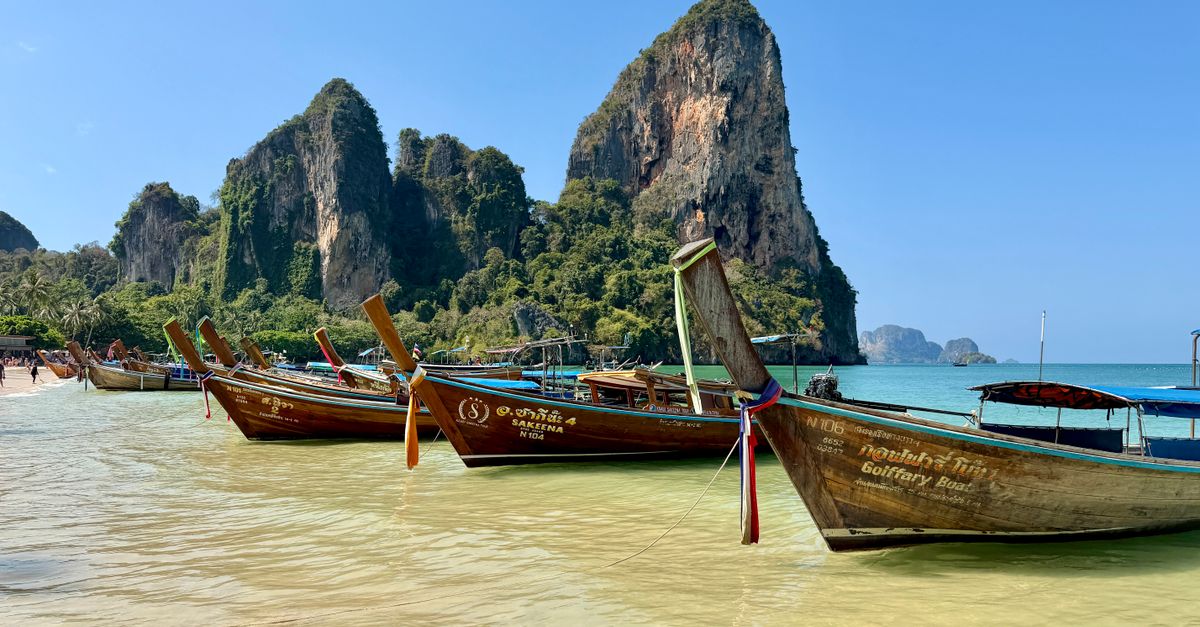
The best time to visit Thailand, which depends on which Thailand
The best time to visit Thailand by region, with the two coasts on opposite wet seasons, the smoke season in the north and the 2027 festival dates.
Photo · Holger Raukamp · Pexels
"When should I go to Thailand" has three answers, because Thailand has three travel climates and they are rarely all good at once.
Short version: November to mid-January is the only window where the north is clear and at least one coast is reliable. Everything after that is a trade.
Thai baht. Convert any figure on this page into your own currency at today's published rate.
Open the currency converter →The three systems
The Andaman coast (Phuket, Krabi, Koh Lanta, Koh Phi Phi) takes the south-west monsoon and is at its best from about mid-November to April.
The Gulf coast (Koh Samui, Koh Phangan, Koh Tao) sits in a rain shadow from that same monsoon and has its own wet season, roughly October to December, with November the wettest month of the Samui year. Its clearest, sunniest months are February and March.
The north (Chiang Mai, Chiang Rai, Pai) has a burning season from roughly February to April, when agricultural and forest fires across northern Thailand and its neighbours fill the valleys.
Put them together:
| Window | North | Andaman | Gulf | The call |
|---|---|---|---|---|
| Nov to mid-Jan | Clear | Good, improving | Wet | North + Andaman |
| Feb to Mar | Smoke | Very good | Best of the year | Either coast, shorten the north |
| April | Worst | Good, very hot | Good | Skip the north |
| May to Oct | Hot then wet | Monsoon | Variable, cheapest | Gulf, accept some rain |
There is no fortnight in the Thai year where all three are at their best.
The north, in numbers
This is the part most guides soften into "some haze in spring", and it deserves the actual figures.
In 2026, Chiang Mai province banned all open burning from 1 February to 31 May and still recorded:
- Over 2,090 fire hotspots between 1 January and 27 March.
- 158 separate wildfires on 24 March alone, across 15 districts.
- PM2.5 around 188 micrograms per cubic metre on the worst days.
- Several days ranked among the most polluted cities in the world.
March is the worst month. February is not safe by default, which matters because a great deal of published advice, ours included until recently, treats November to February as the clear season in the north. November to mid-January is the clear season.
Who should simply move the dates: anyone with asthma or a respiratory condition, anyone travelling with a child under about five, and anyone whose trip is built around trekking or the mountains. The Chiang Mai area guide has the mitigation if your dates are fixed, and IQAir publishes the live reading, which moves day to day rather than month to month.
Month by month
November. The best all-round month. The north is clear, the Andaman is opening up, the rain has finished across most of the country. The Gulf is at its wettest, so this is not a Samui month.
December. Excellent everywhere except the Gulf, and the busiest and dearest of the year over Christmas and New Year.
January. The peak of the dry season in the north and on the Andaman coast. Cool enough in Chiang Mai to want a jacket in the evening, which surprises people.
February. The Gulf's best month begins. The north's smoke begins. The fork in the year.
March. The Gulf and the Andaman are both excellent. The north is at its worst.
April. The hottest month in the country, frequently over 40 degrees in the central plains. Songkran falls in the middle of it. The north is still smoky.
May to July. The south-west monsoon arrives on the Andaman coast. The Gulf is variable and often fine. Prices fall substantially.
August to October. The wettest stretch on the Andaman side, and October is where the Gulf's own wet season begins. The cheapest travel of the year, green everywhere, and the highest chance of a cancelled boat.
The dates worth planning around
Songkran: 13 to 15 April, every year. The official dates do not move. The holiday is usually extended, so most offices and banks close somewhere in the 11 to 17 April range, and transport is full in both directions.
It is a nationwide water fight and it is genuinely joyful. It is also the hottest week of the year, and you will get soaked whether or not you want to be. Waterproof your phone, do not carry anything you mind getting wet, and expect almost nothing else to be open.
Loy Krathong and Yi Peng, the lantern festivals, follow the lunar calendar and move each year. In 2027, Loy Krathong is expected around 14 November with Yi Peng on 13 to 14 November, and the Chiang Mai sky lantern events are scheduled for 13 and 14 November 2027. Lunar dates from 2027 onward are estimates and are not confirmed until roughly a month beforehand, so book flexible accommodation if this is the reason you are going.
Buddhist holy days in 2027: Makha Bucha on 21 February, Visakha Bucha on 20 May, Asarnha Bucha on 18 July. Alcohol sales are restricted on these days, which catches people out on an island holiday.
What this means for an actual trip
If you can only go in the northern summer, which is most families with school-age children: go to the Gulf, accept afternoon rain, enjoy the prices, and either skip the north or keep it short.
If you can go in November or December: do the classic route, Bangkok, Chiang Mai, Andaman coast. Two weeks in Thailand is that route with the timings.
If you can go in February or March: the Gulf islands are at their absolute best, and this is the version of Thailand the photographs are of. Shorten or drop Chiang Mai.
If your dates are April: skip the north entirely, pick either coast, and decide whether Songkran is a reason to go or a reason to shift a week.
Visa-free · 60 days, on all five passports we check.
Short tourist stays only. Checked 21 Aug 2026; rules change without notice and the government page is the source of truth.
Check your own passport →Checked 21 Aug 2026.
Everything we check for Thailand →What to skip
Booking the Gulf islands in October or November. The wettest window of the Samui year and the least reliable for boats.
Chiang Mai in March.
Assuming "rainy season" means a ruined trip. Outside the worst months it means an afternoon shower and a third off the price.
Both coasts in one fortnight. They are on opposite sides of a peninsula and in opposite weather.
Trekking in the north between February and April.
Booking a lantern festival trip on an unconfirmed lunar date without flexible accommodation.
Before you book
Two weeks in Thailand turns all of this into an actual route, and the best islands in Thailand ranks the beaches by who each one suits. Where to stay in Chiang Mai and three days in Chiang Mai have the north, where to stay in Bangkok and three days in Bangkok have the capital, and Thailand with kids is the family version of this timing problem. Bali or Thailand is the comparison, and the best time to visit Bali is the other side of it.
The Bangkok city guide and the Thailand country guide carry the practicalities, and there is more in the when to go hub.
Air quality figures and festival dates checked September 2026. Lunar festival dates for 2027 are estimates until confirmed, and Thailand's tourism authority publishes the festival calendar as it firms up, which is the source to check rather than any guide, this one included.

