Vietnam for first-timers
Vietnam is 1,650km long with three climates that never agree, and most first itineraries ignore that. What to fix, what a day costs, and the road rule.
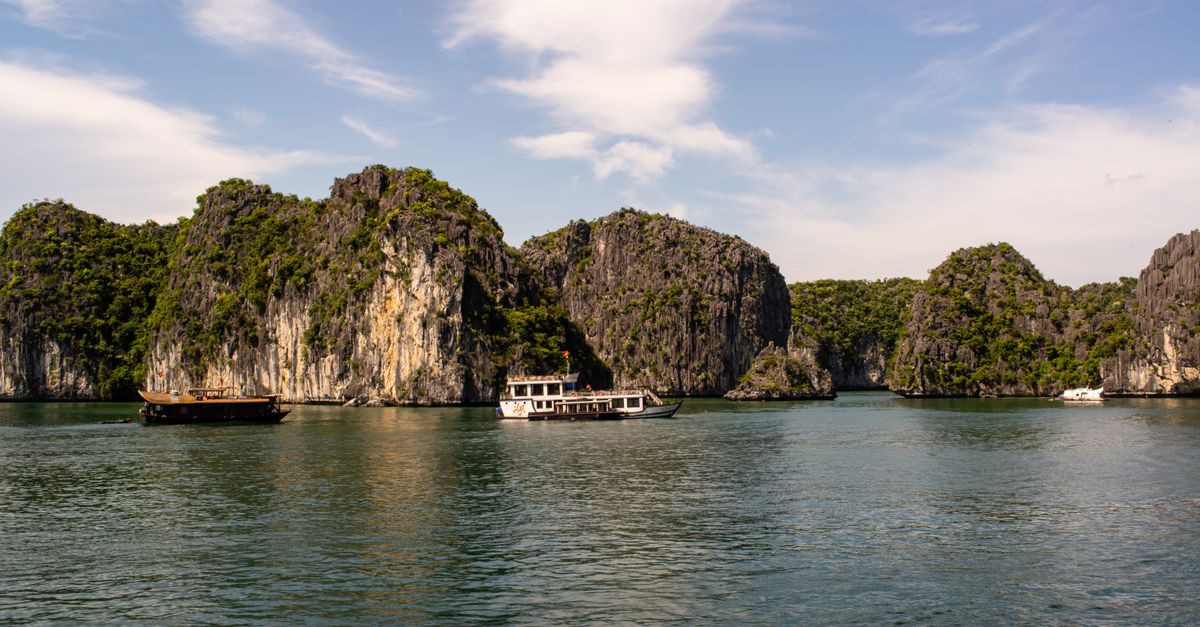
Photo · Sachith Ravishka Kodikara · Pexels
The single most common first-trip mistake in Vietnam is not about money or safety. It is treating the country as one climate.
Vietnam is 1,650km long with three regional seasons that frequently disagree. A fortnight booked for perfect weather in Hanoi can walk directly into flooding in Hoi An, and thousands of itineraries do exactly that every autumn.
Vietnamese dong. Convert any figure on this page into your own currency at today's published rate.
Open the currency converter →The three-region rule, which comes before everything else
The north, Hanoi, Sapa and Ha Long: a real winter, wet summers, and best in autumn and spring, roughly September to November and March to April.
The centre, Hue, Da Nang and Hoi An: at its worst from September to November, when it takes its heaviest rain and its typhoons, and Hoi An floods, sometimes to knee depth in the old town.
The south, Ho Chi Minh City and the Mekong: a simple wet and dry, dry from about December to April, and the wet season is afternoon downpours rather than wet days.
So there is no single best month. Our Vietnamese calendar has all three and it is the page to read before you fix dates, and our wet season guide puts it in regional context.
The practical version: check all three regions for your dates. If they disagree, cut a region rather than pushing through it.
How long, honestly
Two weeks for the classic north-to-south route, which our two-week itinerary sets out.
Ten days: cut one region. North and centre, or centre and south. This is a better trip than a compressed fortnight.
One week: pick one end. Hanoi and Ha Long, or Ho Chi Minh City and the Mekong. A week trying to do the whole country is four internal flights and three good afternoons.
What a day costs
In dong, checked September 2026, for one person travelling comfortably:
| Dong per day | |
|---|---|
| Mid-range room | 600,000 to 1,000,000 |
| Food, mixed street and restaurant | 200,000 to 350,000 |
| Transport, local | 100,000 to 200,000 |
| Comfortable total | 900,000 to 1,500,000 |
Street food is a fraction of that and the country rewards eating where the plastic stools are. Our Vietnam budget guide has the lower numbers.
The road rule, which matters more than anything else here
Do not hire a motorbike unless you already ride and hold the correct licence.
Vietnam requires an appropriate licence and a recognised international permit for anything above a small engine size, and travel insurance is routinely void without it. The claims that follow a crash on an unlicensed bike are the single most common serious problem foreign visitors have here.
If you want the experience, ride as a passenger on a Grab bike or a guided tour with a driver, which is how most of the country moves anyway.
Crossing the road is the other skill: walk out slowly, keep a constant speed, do not stop and do not run. The traffic flows around you. It works, and it is alarming for a day.
Getting around
Domestic flights for the long hops. Cheap, frequent, and Hanoi to Ho Chi Minh City is two hours against 35 on the train.
The night train for Hanoi to Hue or Da Nang, which is a genuine experience and books out. Soft sleeper, four berth.
Grab within cities, for cars and bikes, which removes the fare negotiation entirely.
The Reunification Express along the coast is one of the great train journeys, and the Hue to Da Nang leg over the Hai Van pass is the best three hours of it.
The visa
Most nationalities need one, and Vietnam runs an e-visa applied for online in advance which is straightforward.
Apply through the official government portal, at least a week ahead. There are a great many lookalike agent sites charging a substantial markup for the same form, and several rank above the real one.
Some nationalities have short visa-free entry, with the permitted length varying.
Short tourist stays only. Checked 21 Aug 2026; rules change without notice and the government page is the source of truth.
Check your own passport →What first-timers get wrong, beyond the weather
Booking Ha Long Bay on price. The cheap cruises are crowded, the food is poor and the routes are the busiest part of the bay. Bai Tu Long, the adjacent bay, has the same limestone and a fraction of the boats.
Underestimating Hanoi's noise. Our areas guide is blunt about this: the Old Quarter is loud rather than lively, and the French Quarter is ten minutes away and quiet.
Overbooking Hoi An. It is lovely and it is two days, not four, and the tailoring takes a day to turn around rather than an hour.
Missing the Mekong. Most people do a day trip from Ho Chi Minh City to My Tho, which is the tourist version. An overnight in Can Tho for the Cai Rang floating market at dawn is the real one.
And skipping the north-west. Ha Giang and the loop above Sapa are the best scenery in Vietnam and almost no first trip includes them.
Checked 21 Aug 2026.
Everything we check for Vietnam →The small practical things
Cash matters. Cards are accepted in cities and much of the country runs on cash, and the notes are confusingly similar in colour.
Tipping is not traditional and is increasingly expected in tourist-facing places.
Coffee is a serious matter. Ca phe sua da is the default and ca phe trung, egg coffee, is a Hanoi invention worth trying once.
Bargaining is expected in markets and not in shops or restaurants.
Before you book
The two-week route is the trip, and the Vietnamese calendar decides the dates, which here is the most important decision.
Where to stay in Hanoi and Ho Chi Minh City cover the two ends, and Vietnam or Thailand is the choice if the country is not fixed.
The first trips hub collects the rest and the Vietnam country page has the practical layer.
Entry requirements and regional seasons checked September 2026 against Vietnam's national e-visa portal and the national tourism administration. Apply for the e-visa through the government site rather than an agent, and monsoon onsets shift by a couple of weeks year to year.