Europe for first-timers, and the border rule that just changed
Biometric border checks went live across Schengen in April 2026 and ETIAS slipped out of 2026 entirely. What that means, plus how to plan a first trip.
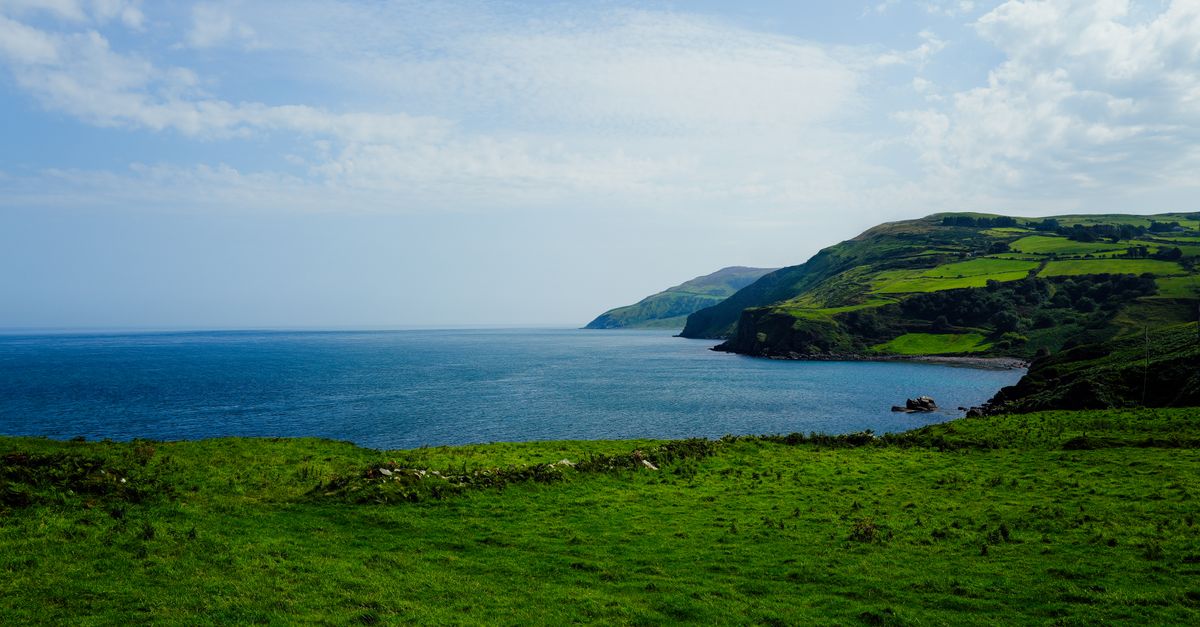
Photo · Ludovic Delot · Pexels
Two things about the European border changed recently, and most first-trip guides still have both of them wrong.
Biometric checks are live. The Entry/Exit System replaced passport stamping at Schengen external borders and has been running across all of them since 10 April 2026. A facial image and fingerprints, linked to a digital record of your entry and exit.
ETIAS is not live, and it is not coming this year. The Q4 2026 launch date was removed from the official EU site in mid-July 2026, and the system is now expected in 2027 with no confirmed date. Anyone charging you for an ETIAS today is charging you for nothing. The official EU page is the only thing worth believing on this, and it is worth checking again before you fly.
Everything else in this guide is the ordinary business of a good first trip.
What the biometric border actually means for you
Your first crossing takes longer. The registration happens at the booth: photograph, fingerprints, passport. Allow more time than you would have two years ago, particularly at a large hub in summer.
Your later crossings are faster, because the record already exists and the check is a match rather than an enrolment.
Overstaying is now very difficult to do by accident and very easy to get caught doing. The old system relied on a border officer reading ink stamps. The new one is a database.
The 90-day rule is worth understanding properly because the new system enforces it exactly. Short-stay visitors may generally spend 90 days in any rolling 180-day period across the Schengen area as a whole, not per country. Three weeks in France and three in Italy is six weeks of one allowance.
The detail depends entirely on the passport you hold, and it varies by destination country as well, which is why this guide does not print a single answer: Schengen is twenty-nine countries and Ireland, Britain and several others sit outside it with rules of their own. Check your own passport against the country you are going to, which is the only version of that answer worth having.
How many places, which is the question that actually ruins first trips
Two countries in two weeks. Three if one of them is a single city.
Here is the arithmetic that nobody does. A city change costs you checkout at eleven, a transfer, and check-in at three. Even a 90-minute train is most of a usable day once you add the ends.
Four cities in fourteen nights spends roughly three days moving. Five cities spends four, and you have paid for a fortnight to get ten days. The famous version of this trip, London, Paris, Amsterdam, Berlin, Prague and Rome in two weeks, is six airports and no country at all.
What to do instead: pick one country and one neighbour, or one country in depth. Our ten-day Italy route and ten-day Spain route are both built as one country done properly, and both are better first trips than a six-city dash.
Trains, and when they beat flying
The rule of thumb that holds across western Europe: under about four hours city centre to city centre, take the train. Over about six, fly. In between, work it out.
The train wins more often than the timetable suggests because you are comparing the wrong numbers. A 90-minute flight is really four hours: airport transfer, security, boarding, the flight, baggage, and the transfer at the other end. A four-hour train is four hours, from a station in the middle of one city to a station in the middle of another.
Paris to London, Paris to Amsterdam, Rome to Florence, Madrid to Barcelona, Berlin to Prague are all train journeys and should not be flights.
The money, briefly
Most of western Europe is on the euro, and several of the cheapest countries are not. Czechia has the koruna, Hungary the forint, Poland the zloty, and those three are where a first trip's budget stretches furthest without giving up anything.
Two habits worth forming on day one:
- Always decline "would you like to pay in your own currency?" at a card terminal or an ATM. That is dynamic currency conversion and the rate is always worse than your own bank's. Choose the local currency, every time.
- Expect a tourist tax at check-in. Almost every European city charges one per person per night, it is often not in the price you compared, and it is usually collected in cash or on a card at the desk.
Prices across this site are quoted in each destination's own currency and the converter puts them into yours at a published rate with the date on it.
Where to actually go first
If you have never been: Italy or Spain. Both have enough within a short train ride to fill two weeks, both are cheap to eat in, both have the weather, and neither requires you to like museums.
If you want cities rather than sights: Portugal, or Czechia and Hungary together. Our Prague or Budapest comparison picks between the two, and the underrated European cities list has the ones worth the second trip.
If the dates are fixed and awkward: read the month guides before you choose the country. In Europe the month decides more than the destination does, and our September guide explains why the second half of that month is the best value in the year, with May close behind.
Four things to skip
Skip the multi-city rail pass on a first trip. They pay off on long, frequent, flexible journeys. A first trip has three or four legs, and point-to- point tickets booked a few weeks out are usually cheaper, particularly in France and Spain where the fast trains price like airlines.
Skip the hop-on-hop-off bus. In almost every European old town it is slower than walking and it cannot enter the streets you came to see.
Skip the "skip the line" reseller when the venue sells timed entry itself. The Vatican, the Uffizi, the Alhambra and the Sagrada Familia all sell direct, and the reseller is often selling you the same slot with a fee attached.
Skip August in the south. Italy, Spain and Greece in August are hot, full, and partly closed, because the locals are also on holiday. The same trip in September is better in every measurable way.
Before you book
The when to go hub has the month-by-month, and the first decision is usually the month rather than the country.
Underrated European cities is where to look if the obvious list feels crowded, and the ten-day Portugal route is the cheapest of the three first-trip countries to run.
The first trips hub collects the rest.
Border system status checked September 2026 against the European Commission's own travel pages and the EU Entry/Exit System information. Launch dates for ETIAS have moved repeatedly and the official page is the only source worth acting on.