The family packing list, and the liquid rule that is no longer one rule
A family packing list built around what security actually allows in 2026, including the airports that now permit two litres and the baby exemptions everywhere.
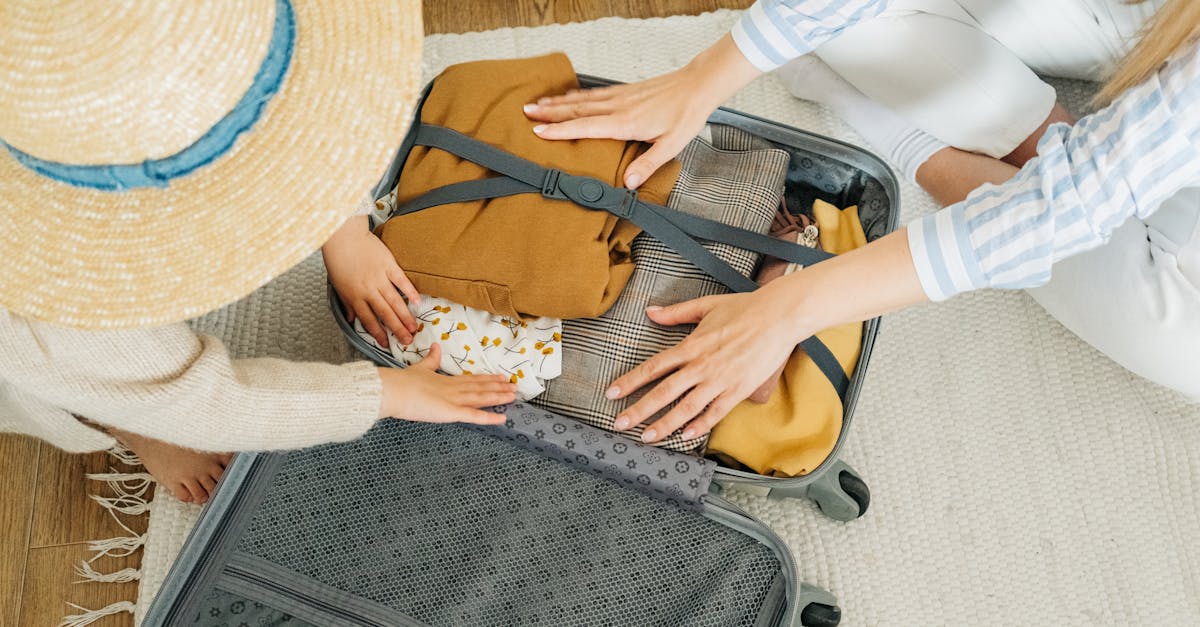
Photo · Vlada Karpovich · Pexels
Most family packing lists are the same list. This one is built around what airport security will actually let through in 2026, which has quietly stopped being a single rule, plus the things that genuinely matter with children.
The liquid rule, which is now several rules
The default worldwide is still 100ml per container, with everything fitting in one clear resealable bag of about a litre.
What has changed: airports fitted with the newer C3 scanners, also called EDSCB, can permit containers of up to two litres, unbagged. These scanners build a three-dimensional image of the bag, so staff can assess liquids and electronics without them being separated out.
The catch is that this is not consistent. It varies by airport, and within a single airport it can vary by terminal and by security lane, because installation has been staged.
So the safe assumption is still 100ml unless you have checked your specific departure airport, and the genuinely safe plan is to pack to the 100ml rule and enjoy it if the airport turns out to be more generous. Note also that your outbound and return airports may be running different rules, which is how people lose things on the way home. The UK government's guidance is the clearest published version of the exemptions, and most other regulators follow a similar structure.
The cabin bag, which is the only bag that matters
The rule: anything whose loss would ruin the first two days travels in the cabin. Hold bags go astray, and they go astray at exactly the wrong moment.
Non-negotiable:
- All medication, in original packaging, with a prescription photograph on your phone.
- A full change of clothes for every person, adults included. The adult spare is the one everyone leaves out and the one that gets used.
- More nappies than the flight length suggests, because the seatbelt sign goes on during ground delays.
- All milk, formula and food for the journey plus a margin.
- Chargers and a battery pack. A dead tablet at hour nine is a bad hour ten.
- The comfort item. The specific one. Not a substitute.
- Wipes, which solve more problems than any other single item.
- A large ziplock bag for whatever goes wrong.
Worth having: a small first aid kit with children's paracetamol or ibuprofen in a form your child will take, plasters, and rehydration sachets.
The clothes, where everyone over-packs
Pack for four or five days and wash. Almost everywhere you are going has laundry, and a week of outfits per child is a suitcase you then carry through three airports.
What actually earns its place:
- Layers over bulk. A long-sleeved top and a light jacket beat a jumper in almost every climate.
- Two pairs of shoes maximum per person: one worn, one packed. Sandals plus trainers covers most trips.
- Rash vests instead of relying on sunscreen in hot destinations. They stay on and they do not need reapplying.
- A sun hat that has survived a previous holiday. New hats get lost on day one.
- One smart-ish outfit each, if the trip has a dinner in it.
What does not: the fourth pair of shoes, the outfits for a version of the holiday you are not having, and anything that needs ironing.
The equipment question
Take: a pram or carrier, and a car seat if you will be in cars.
Prams and car seats normally travel free on top of the luggage allowance, and prams can usually be taken to the aircraft door. Where they are returned to you varies between the door and the baggage hall, so ask at check-in rather than at the gate.
A carrier beats a pram in old European cities, where cobbles, stairs and narrow pavements are the daily reality. Paris with kids has the numbers on why: roughly ninety per cent of that city's metro is not step-free.
Do not take: a travel cot, in most cases. Almost every hotel and rental has one, and they are heavy. Confirm at booking rather than carrying one across the world on the assumption.
On the aircraft, the only harness-type restraint approved for use in flight is CARES, for children aged one and over in roughly the 22 to 44 pound range. It weighs almost nothing and packs into a pouch, which is why it beats carrying a car seat through terminals. Flying with a toddler has the full detail.
What to buy there rather than carry
Nappies, wipes, formula, sunscreen and basic medicines are available almost everywhere you are likely to go, often more cheaply than at home.
Carry enough for the journey plus one day, and buy the rest on arrival. That single decision removes more weight than any packing cube.
The exceptions, which you should carry in full:
- Prescription medication, always, in the cabin.
- A specific formula a child will actually drink, if they are fussy or have an allergy. Brands differ between countries.
- Anything for a medical condition, including a spare.
- Sunscreen for very sensitive skin, because the local options may not match.
On small islands and in remote areas, availability thins fast. Stock up before a ferry rather than after it. Thailand with kids and Bali with kids both note where that bites.
The documents folder
In one place, on your phone and on paper:
- Passports, and check every child's expiry date now. A child's passport is valid five years and many countries want six months left on it, which makes the usable life shorter than the number implies. Long haul flights with kids has the whole trap.
- Entry permissions, which several countries now require for children individually including infants. Check the entry rules for your own passports.
- Insurance policy number and the emergency line.
- Vaccination records if the destination asks for them.
- A note of the local emergency number, which is not 999 or 911 everywhere. The essentials tool has it by country along with plugs and tap water.
- If one parent is travelling alone with a child, a letter of consent from the other. Several countries ask and it is a bad moment to be improvising.
What to skip
Packing a week of clothes per child.
A travel cot you have not checked whether you need.
Buying a nappy supply for the whole trip.
Putting medication in the hold.
Assuming your return airport runs the same liquid rule as your departure one.
New shoes, new toys and new snacks. A holiday is the worst time to discover that something does not work.
Before you book
Flying with a toddler and long haul flights with kids cover the journey itself, and how to plan a family trip is the method. Europe summer packing is the destination-specific version for a European trip, and there is more in the packing hub and the packing tool.
For where all this is going: Italy with kids, Singapore with kids and Dubai with kids are the easiest family destinations on this desk, and the with kids hub has the rest.
Security rules checked September 2026. Liquid rules now differ between airports and sometimes between terminals in the same airport, so your specific departure airport's own security page and the national regulator are the sources to check rather than any guide, this one included.