Europe's cheapest cities that are still worth it
Cheap is easy; cheap and worth the flight is not. Eight cities that are both, what a day costs in each local currency, and three that are cheap for a reason.
Photo · Piotr Kalinowski · Pexels
Cheap is easy to find in Europe. Cheap and worth the flight is a much shorter list, and it is the only version of this question worth answering.
Everything below is somewhere we would send a friend on its own merits, which rules out several cities that appear on cost-of-living lists purely because nothing happens in them.
A note on the money. Several of these are cheap partly because they are not on the euro, so the prices below are in each city's own currency and the converter will put them in yours.
The eight
1. Krakow, Poland
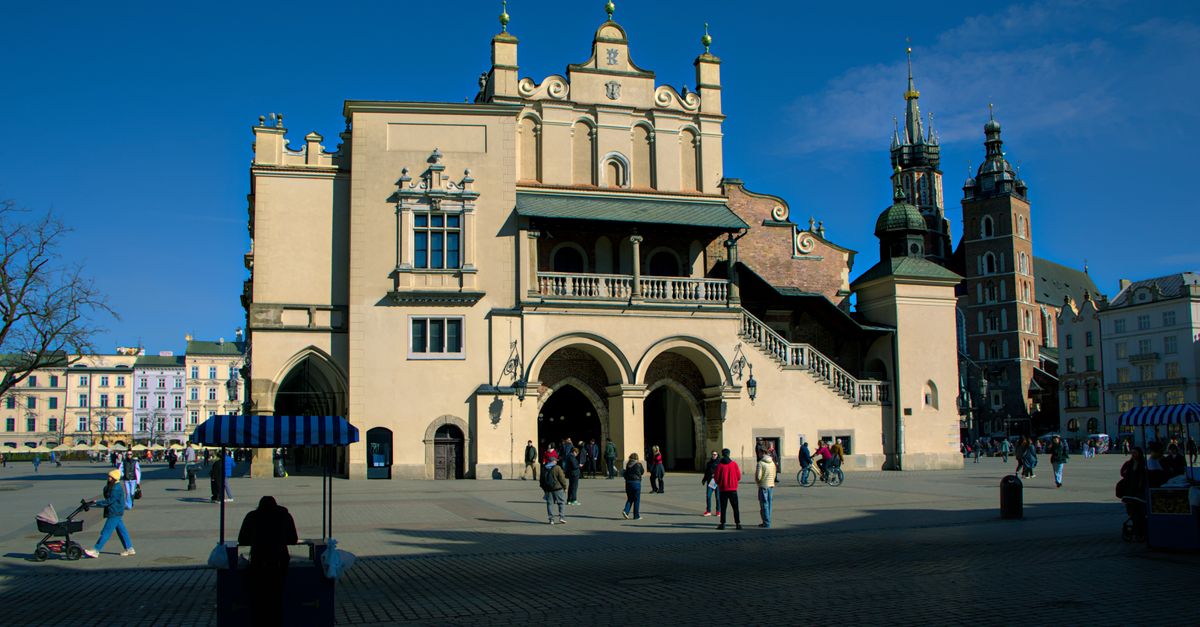
The best combination on this list of low prices and a city that would be worth the trip at twice the cost.
A compact medieval old town, the largest market square in Europe, the Wawel, the Jewish quarter at Kazimierz, and a food scene that has arrived properly in the last decade. Prices are in zloty and a good meal out costs a fraction of the western European equivalent.
And the thing to plan rather than discover: Auschwitz-Birkenau is ninety minutes away, entry to the memorial is free without a guide, and it books out weeks ahead in summer. It is a day, and it is not a sightseeing day.
2. Sarajevo, Bosnia and Herzegovina
The most affecting city in Europe for the money, and one of the cheapest capitals on the continent. Prices in convertible marks.
You can stand on one street and see an Ottoman bazaar, a Habsburg boulevard, a Yugoslav housing block and the marks of a three-year siege. The coffee culture is Turkish, the food is excellent and costs almost nothing, and the city is small enough to walk.
Our Balkans route puts it in context.
3. Tirana, Albania
The cheapest capital in Europe, and it has changed faster in the last five years than any city on this list. Prices in lek.
Bunk'Art 2 for the dictatorship history, the Blloku district for the eating and drinking, and a coast two hours away that is the best value in the Mediterranean. Our Albania guide has the country and the real numbers.
4. Riga, Latvia
The best of the three Baltic capitals for a short trip: the largest collection of art nouveau architecture in Europe, a central market in five zeppelin hangars, and a wooden suburb across the river that almost no visitor crosses to.
Euro prices, which makes it the most expensive on this list, and still well below western Europe.
Best in June, when the daylight runs to nineteen hours. Our June guide has the Midsummer week.
5. Belgrade, Serbia
The most underrated capital in Europe and a genuine city rather than an old town. Prices in dinar.
Brutalist New Belgrade on one bank and the Ottoman and Habsburg layers on the other, a food culture that is substantial rather than pretty, and a nightlife that goes very late on boats moored on the river.
6. Sofia, Bulgaria
Cheap, underrated, and with a mountain on its doorstep: Vitosha is a ski area and a hiking area inside the city's own transport network, which no other European capital manages.
Prices in lev, Roman ruins under the metro stations, and the best-value eating in the European Union.
7. Porto, Portugal
The western European entry, and it earns it. Cheaper than Lisbon, smaller, better for walking, and with the Douro across the river.
Euro prices and still one of the best value cities in western Europe. Our Lisbon or Porto comparison picks between the two and the areas guide has the neighbourhoods.
8. Naples, Italy
The cheapest major city in western Europe and the one people are most wrong about.
Pizza at prices that have not moved in years, the best archaeological museum in Italy, Pompeii and Herculaneum on the local train, and the Amalfi Coast an hour away. Our Amalfi towns guide covers the coast and our September guide has the month.
What a day costs
Roughly 45 to 70 euro a day per person across these cities, covering a decent room, eating out twice and local transport. In Tirana, Skopje and Sarajevo, less again.
Compare that with 90 to 140 for the same standard in western and northern Europe, which our Europe on a budget guide sets out in full and Eurostat's comparative price levels confirm at country level. That gap is the largest lever on a European trip and it is larger than any saving on how you travel.
And the charge that is not in the room rate: almost every European city charges a tourist tax per person per night, collected at check-in. In these cities it is small, and it is still not in the price you compared.
Three that are cheap for a reason
We are naming these because a list that only recommends is not much use.
Bucharest is cheap and the centre is a small, heavily commercialised old town surrounded by a city that takes real effort to like. Transylvania is the reason to go to Romania, and Brasov and Sibiu are both better short trips.
Chisinau is the cheapest capital in Europe by several measures and there is genuinely not very much in it. The Moldovan wine country outside it is the argument, and that is a different trip.
Skopje is very cheap and its centre was rebuilt in the 2010s with an enormous quantity of new neoclassical statuary that is divisive locally and strange to visit. Ohrid, three hours away, is the good part of North Macedonia.
When to go
Cheapest with usable weather: May and September. Most of these cities are inland and continental, which means genuinely cold winters and genuinely hot summers, and the shoulder months are the comfortable ones.
Cheapest outright: November excluding the last week, then January and February excluding the New Year. Our November guide covers what the last week changes, which is the Christmas markets.
Before you book
Europe on a budget has the four decisions that set the number, and the Balkans route strings several of these cities into one fortnight.
Underrated European cities covers the ones worth going to regardless of price, and solo travel in Europe has the version where the single supplement is the constraint.
The budget hub collects the rest.
Cost levels checked September 2026 against Eurostat's comparative price levels and national tourism boards including Poland's. Several of these countries are not on the euro, so the local exchange rate moves the comparison as much as local inflation does.