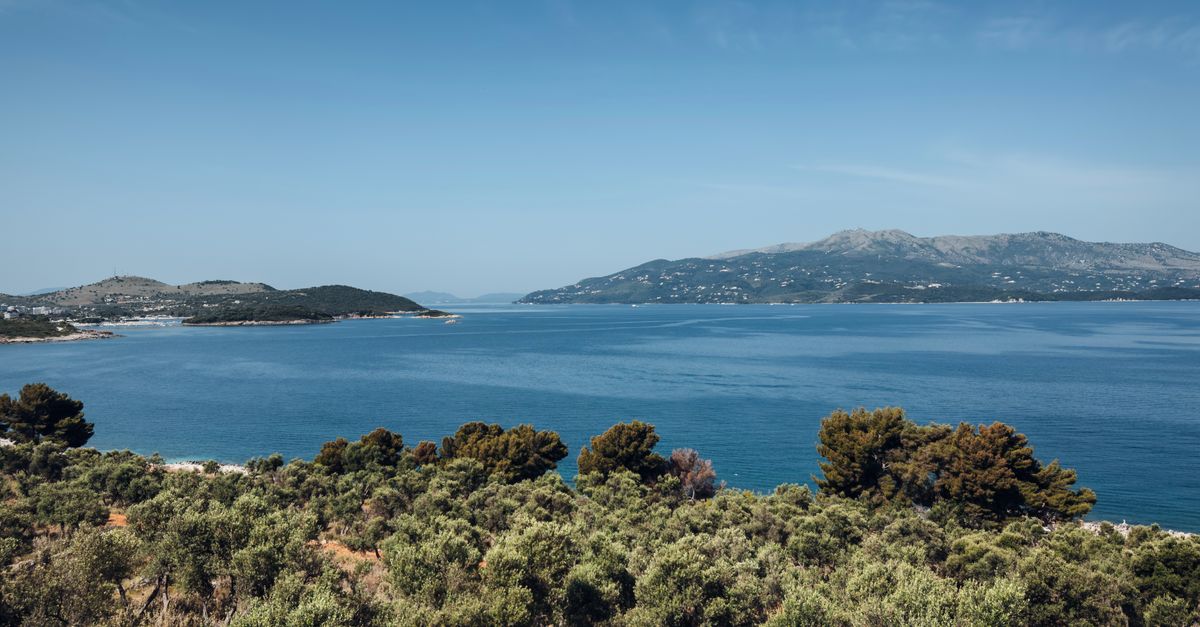
The Balkans, before the crowds finish arriving
Five currencies, three border regimes and one very good bus network. The two-week route, what each country costs, and why one converter cannot cover it.
Photo · Muhammed Fatih Beki · Pexels
The Balkans is the last part of Europe where a first-rate two-week trip costs less than a week in Italy, and that window is closing at a measurable rate.
The route below runs north to south, never doubles back, and every leg is a bus of under six hours. It is the shape the region rewards.
Before anything else, the money problem, because it decides how you carry cash.
Five currencies, and why we cannot convert them for you
Serbia uses the dinar. Bosnia and Herzegovina the convertible mark. North Macedonia the denar. Albania the lek. Montenegro, Kosovo, Croatia and Slovenia all use the euro, two of them without being in the eurozone.
The converter below is set to Serbian dinar, because this guide's home country is Serbia. It cannot cover the region, and we would rather say that plainly than let a single figure imply a single currency.
Serbian dinar. Convert any figure on this page into your own currency at today's published rate.
Open the currency converter →What to do practically:
- Take out cash per country and spend it before you leave. Leftover dinars and marks are hard to change once you have crossed a border, and worthless two borders on.
- Cards work in cities and not reliably in villages, on buses, or at the small family places that are the reason to be there.
- Decline the offer to pay in your own currency at every terminal and ATM. The rate is always worse, and independent ATMs at borders and bus stations are the worst offenders in the region.
The two-week route
Belgrade, three nights. The most underrated capital in Europe and a genuine city rather than an old town. Brutalist New Belgrade on one bank, the Ottoman and Habsburg layers on the other, and a food and bar culture that goes late.
Sarajevo, three nights. The single most affecting city on the route. You can stand on one street and see an Ottoman bazaar, a Habsburg boulevard, a Yugoslav block and the marks of a three-year siege, and understanding how those got there in that order is what the trip is for. The Tunnel of Hope and the 1984 Olympic bobsled track both belong in the three days.
Mostar, one night, not a day trip. The bridge is the photograph and the town after the day buses leave is the reason to stay. Almost everyone comes at eleven and goes at four, which is the worst four hours of its day.
Kotor and the bay, three nights. The best coastline in the Balkans and, in September, better value than anything comparable in Croatia. Walk the fortress early, before the cruise calls.
Then choose. South into Albania for the Riviera and Berat, which our Albania guide covers properly, or west to Dubrovnik and Split, which is a step up in price and a step down in surprise.
What we would leave out of a fortnight: Slovenia and Bulgaria. Both are excellent and both are far enough off this line that adding them turns a route into a transit exercise.
The buses, which are the actual transport network
The trains are a romantic idea and a poor plan. The network is patchy, slow, and in places barely operating. The Belgrade to Bar line is a genuinely spectacular exception and worth doing for its own sake rather than to get somewhere; Serbia's railway operator publishes the timetable and it is the only one on this route worth planning around.
The intercity buses are dense, cheap and reliable, and they are how the region moves. Practical rules:
- Book at the station the day before in July and August. Outside those months, turn up.
- Expect a small charge for a bag in the hold, usually paid in cash to the driver, and it is not a scam.
- Border crossings add time. Everyone gets off, or passports are collected on board, and a two-hour scheduled leg can take three.
- Allow a whole morning for any leg crossing two borders, which the Kotor to Dubrovnik run does.
What each country costs
The cheap ones are genuinely cheap. Serbia, Bosnia, North Macedonia and Albania are among the least expensive countries in Europe for eating and sleeping, and the quality does not track the price.
Croatia and Slovenia are not cheap, and the step is abrupt. Crossing from Bosnia into Croatia roughly doubles the cost of lunch, which is worth planning around rather than discovering.
Montenegro sits between the two, and its coast in August prices like Croatia's while its interior does not.
Our Croatia and Greece comparison has the Croatian numbers, including the sojourn tax, and it is a useful benchmark for how much the rest of the region undercuts them.
The borders, honestly
Three different regimes apply on this route and the detail depends on your passport rather than on ours, so this guide states the shape and hands the rest to the tool.
Croatia and Slovenia are in Schengen. Serbia, Bosnia, Montenegro, North Macedonia, Albania and Kosovo are not, and each maintains its own entry rules, several of which are generous.
One thing that is genuinely about the region rather than about you: an entry stamp from Kosovo can complicate a later Serbian land crossing, because Serbia does not treat Kosovo's border as an international one. If Kosovo is in the plan, research the specific crossing sequence rather than improvising it.
We have not checked Serbia against the five passports yet. The tool reads the Wikipedia article for yours and shows its own sentence, with the date it was last edited.
Short tourist stays only. Checked 21 Aug 2026; rules change without notice and the government page is the source of truth.
Check your own passport →Checked 21 Aug 2026.
Everything we check for Serbia →When to go
May, June and September, and September is the best of them: warm sea on the coast, thin crowds, everything still open, and the inland heat broken. Our September guide makes the wider case.
July and August are hot inland and busy on the Adriatic, and the Montenegrin coast in August is not the bargain the rest of the year suggests.
Outside summer, the mountain interior is genuinely cold and several coastal towns close down. Belgrade and Sarajevo are good winter cities; the coast is not.
What to skip
Skip the day trip to Mostar. Covered above, and it is the single most common mistake on this route.
Skip trying to add a seventh country. Two weeks holds four countries comfortably and five badly. The border time is the constraint, not the distance.
Skip the Adriatic coast in August if the budget was the reason you chose the Balkans. Go inland, where the prices have not moved and neither have the crowds.
Before you book
Albania is the country on this route changing fastest and the one to see soonest. Croatia or Greece covers the coast question if the Adriatic is what you actually want, and underrated European cities has the rest of the region's capitals.
The best of hub collects these and the Serbia country page has the practical layer for the starting point.
Currency, border and transport detail checked September 2026 against Serbia's national tourism organisation. Entry rules across the region differ by country and by passport and change without much notice, so check each border rather than the region.