Morocco for first-timers
Morocco has two good months and most first trips try to do too much of it. The route that works, what the desert actually costs in days, and the hassle rule.
Photo · Cornelis Johannes (Kees) van Leeuwen · Pexels
Two things decide a first Moroccan trip, and both get underestimated.
The month, because Morocco has two genuinely good ones.
And the distance to the desert, which is not a day trip and is sold as one.
Moroccan dirham. Convert any figure on this page into your own currency at today's published rate.
Open the currency converter →The two windows
April and October are the two months when the whole country works at once.
The Atlas passes are open, the Sahara is comfortable rather than punishing, and the inland cities are warm rather than unbearable.
Summer inland is genuinely difficult. Marrakech and Fez in July and August regularly pass 40 degrees and the streets empty between noon and five.
Winter is excellent in the cities and cold at night, and the riad courtyards are unheated in a way that surprises people. Our Moroccan calendar has the full year and our April guide explains why the windows are so narrow.
The coast runs its own calendar. Essaouira is windy and mild year-round and is the escape from the inland heat.
The Sahara, stated plainly
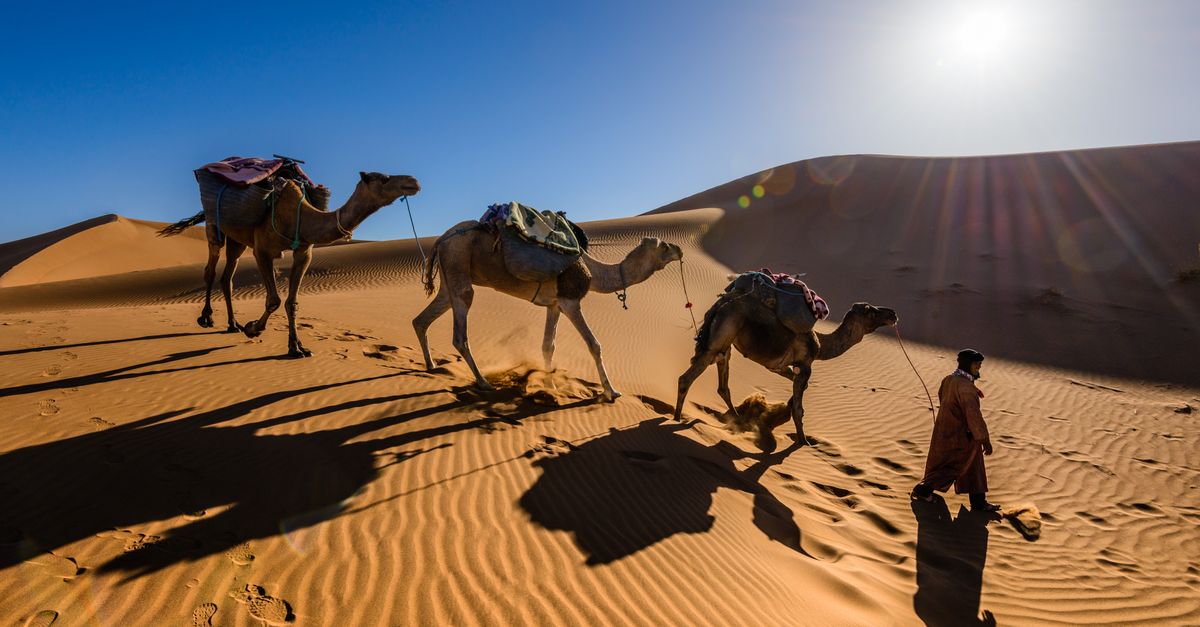
Merzouga and the Erg Chebbi dunes are nine to ten hours' drive from Marrakech.
That makes the real Sahara a three-day commitment, and it is worth those three days: the drive over the Tizi n'Tichka, Aït Benhaddou, the Dades and Todra gorges, a night in the dunes, and back.
What is sold as a "desert day trip" is the Agafay, forty-five minutes out, which is stony scrub rather than sand dunes. It is a pleasant evening and it is not the Sahara, and our Marrakech day trips guide is blunt about the difference.
Build the three days in, or skip the desert honestly. Both are fine. Pretending a day trip covers it is not.
The route that works
Ten days, and this is the standard shape for a reason:
Marrakech, three nights. The medina, the souks, Jemaa el-Fnaa, and a day for the Atlas. Our areas guide settles the riad question and the three-day route has the city.
The desert, three days. Over the Tizi n'Tichka, Aït Benhaddou, the gorges, Merzouga, and back or onward.
Fez, two nights. The oldest and most intact medina in the Arab world, and the one most people find more rewarding than Marrakech.
Chefchaouen or Essaouira, two nights. The blue town in the Rif, or the Atlantic port. Different trips and both good.
Our ten-day route sequences it properly.
A week: drop the desert. Marrakech, Essaouira and the Atlas is an excellent seven days and does not spend three of them driving.
The hassle, which is the other thing people underestimate
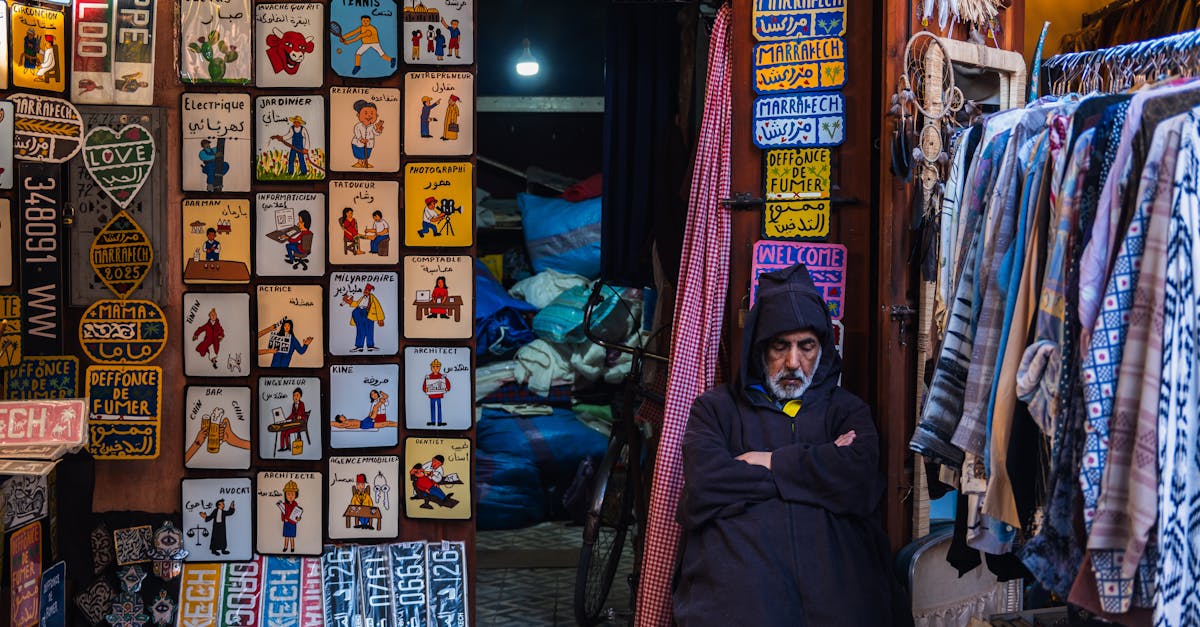
Marrakech's medina involves persistent commercial approaches, and the first day is a lot. It is wearing rather than dangerous, and our full answer on Marrakech safety names the specific scams rather than warning vaguely.
The short version: say no once, clearly, and keep walking. Politeness that reads as hesitation extends the conversation.
Fez is more intense than Marrakech in the medina and less touristed overall. Chefchaouen and Essaouira are noticeably relaxed by comparison.
Most people find day one overwhelming and day three fine. That progression is so consistent it is worth planning for: do not put your hardest day first.
Driving, and whether to
The motorways and main roads are good and driving them is straightforward.
The medinas are not driveable at all, and your riad will meet you at the nearest vehicle point.
Mountain roads are narrow with assertive overtaking, and the Tizi n'Tichka in particular is a long day of switchbacks.
A driver for the long legs is inexpensive shared between three or four, and for the desert route it is what most people do and it is the right call.
Money, and the thing to know
The dirham is a closed currency, which means you cannot buy it meaningfully before you arrive and you should not leave with much of it.
Cash matters far more than cards outside hotels and the newer parts of cities.
Bargaining is expected in the souks and not in shops with marked prices. The opening figure is an opening figure, and the useful technique is deciding what you would pay before you ask.
And agree taxi fares before you get in, or insist on the meter.
Checked 21 Aug 2026.
Everything we check for Morocco →Dress and conduct
Shoulders and knees covered for everyone is the sensible default. Morocco is relaxed by regional standards and covering up noticeably reduces attention.
Non-Muslims cannot enter most mosques, with the Hassan II in Casablanca the significant exception, and it runs guided visits that are worth the detour.
Alcohol is available in hotels, licensed restaurants and some shops, and is not part of ordinary street life.
During Ramadan, daytime eating and drinking in public is restricted for visitors too, hours shift, and the evenings are one of the better times to be there.
Visa-free · 90 days, on all five passports we check.
Short tourist stays only. Checked 21 Aug 2026; rules change without notice and the government page is the source of truth.
Check your own passport →What we would skip
Skip the day-trip Sahara. Covered above.
Skip Casablanca unless you are flying in and out of it or want the mosque. It is a working commercial city and it is not why people come.
Skip the tanneries hard sell in Fez. The tanneries are genuinely worth seeing, and the route to the viewing terrace goes through a leather shop and the mint sprig you are handed is the beginning of a sales process.
And skip trying to do the whole country in a week. Morocco is larger than it looks and the good bits are far apart.
Before you book
The ten-day route is the trip, and the Moroccan calendar decides the month.
Where to stay in Marrakech settles riad or new town, and is Marrakech safe answers the question most first-timers are actually asking.
The first trips hub collects the rest and the Morocco country page has the practical layer.
Regional and seasonal detail checked September 2026 against the Moroccan national tourist office and the UK Foreign Office travel advice for Morocco. Mountain passes can close with snow in winter and Ramadan dates move against the western calendar each year. Here is how we research and re-check guides.