Where to stay in Marrakech: riad or new town
The riad is the reason to come and it is not right for everyone. What a riad actually is, which medina quarter, and when Gueliz is the better answer.
Photo · Philippe Lasry · Pexels
The choice in Marrakech is not really between neighbourhoods. It is between two kinds of building, and they produce completely different trips.
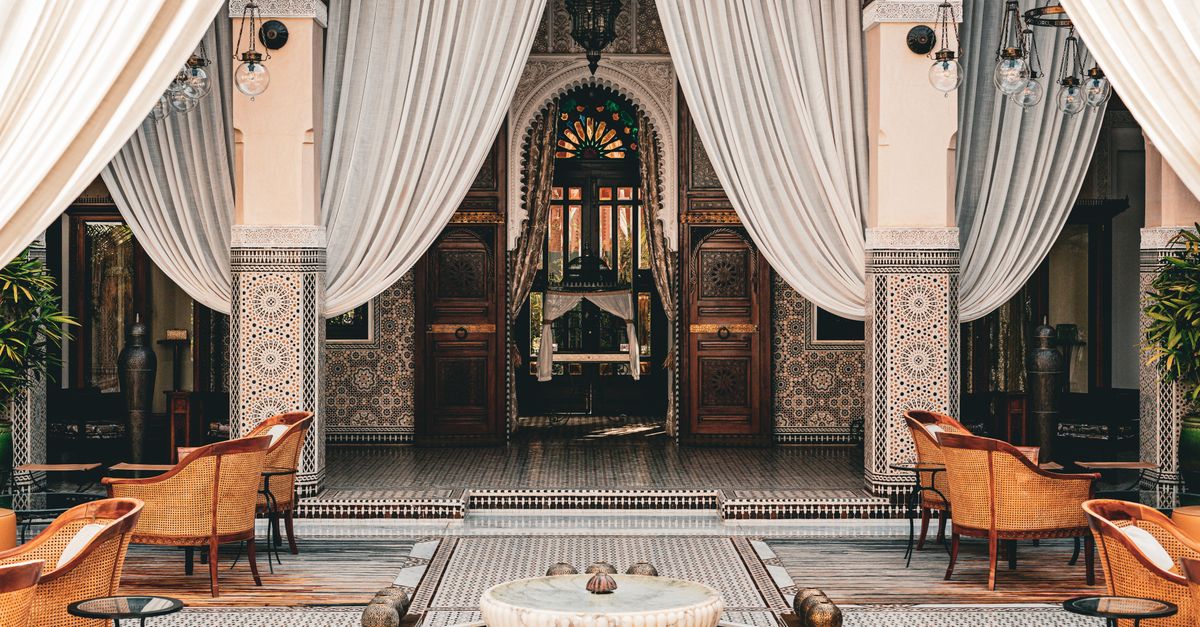
A riad is a traditional courtyard house in the medina: a handful of rooms around an open middle, a fountain, breakfast on the roof, and no windows facing outward at all. It is the most distinctive accommodation in Morocco and it is why most people come.
Gueliz, the new town, is the twentieth-century city: pavements, cars, supermarkets, bars, and hotels with pools you can swim lengths in.
Our answer for a first visit: a riad in the medina, and a night or two in Gueliz at the end if the trip is long.
Moroccan dirham. Convert any figure on this page into your own currency at today's published rate.
Open the currency converter →What a riad actually is, and who it does not suit
The good part is not negotiable. You step off a lane that is two metres wide, through a plain door, into a cool tiled courtyard with a fountain and orange trees. The temperature drops five degrees. It is one of the genuine pleasures of travel in Morocco.
Who it does not suit:
- Anyone with mobility difficulties. Riads are vertical, the stairs are steep and often uneven, and lifts are rare.
- Families needing connecting space. Rooms are individual and the layout rarely gives you two together.
- Anyone who wants to swim. A riad plunge pool is for standing in.
- Light sleepers in the wrong riad. Sound carries up an open courtyard, so a room off the middle hears everything. Ask for one off a corner.
And the thing nobody tells you: you will not find it on the first night. The lanes are unnamed, taxis cannot reach most doors, and phone navigation stops working inside the walls. Book the transfer through the riad. They will meet you at the nearest point a car can reach. This is worth the money for the first arrival alone.
Which part of the medina
Near Jemaa el-Fnaa, but not on it. The square is the reason to be in Marrakech and it is loud until well after midnight: drumming, generators, crowds. Five to ten minutes into the lanes gets you the same access and a silent courtyard.
The northern medina, around the Ben Youssef Madrasa and the Mouassine quarter, is the best of it: quieter, more residential, and closer to the souks without being inside the loudest part of them.
The Kasbah, in the south near the Saadian Tombs and the Badi Palace, is calmer again and further from the square, which suits a second visit.
The Mellah, the old Jewish quarter, is the least visited and has the spice market.
Gueliz and the new town
Who it suits: second visits, families, longer stays, anyone who wants a pool and a pavement.
What it costs: comparable to a mid-range riad, and the four-star hotels here are better value than a luxury riad.
Why it works: wide streets, the Jardin Majorelle and the Yves Saint Laurent museum, a genuine restaurant and bar scene, and shops that are not aimed at visitors. It is fifteen minutes from the medina by taxi.
The catch: it is an ordinary modern city. If the courtyard and the lanes were the point, this is not it.
Hivernage, next door, is the hotel and nightclub district: large resorts, big pools, and no relationship to Marrakech whatsoever beyond the postcode.
The Palmeraie question
The Palmeraie is the palm grove outside the city, full of large resorts with gardens and pools.
It is a good holiday and it is not a Marrakech trip. Every journey into the medina is twenty to thirty minutes each way by taxi, which in practice means you go in twice and spend the rest of the time by the pool.
Our call: if you want a resort, this is a good one. If you want Marrakech, stay in it.
Where not to stay
Not on Jemaa el-Fnaa itself. Covered above.
Not on the Route de Casablanca or the outer ring roads, where a listing will describe itself as "near the medina" and mean a twenty-minute drive.
And check the riad's actual location on a map rather than the description. "Five minutes from the square" is measured generously and frequently means fifteen through lanes you cannot navigate.
The taxi rule, which will save you an argument a day
Petits taxis are metered and the meter is frequently not used with visitors. Agree the fare before you get in, or insist on the meter, and know roughly what the trip should cost from your riad. Your host will tell you, and asking them on the first morning is the single most useful five minutes of the trip.
From the airport, it is a short ride and there is a fixed-price rank. The riad transfer is usually similar and includes someone finding you.
When to go
April and October are the two best months in the Moroccan year, and Marrakech in July and August is genuinely punishing inland heat.
Winter is excellent in the city and cold at night, and the riad courtyards are unheated in a way that surprises people. Ask about heating if you are coming between December and February.
Our Moroccan calendar has the detail and our April guide explains why that month is one of only two when the whole country works at once.
Checked 21 Aug 2026.
Everything we check for Morocco →Visa-free · 90 days, on all five passports we check.
Short tourist stays only. Checked 21 Aug 2026; rules change without notice and the government page is the source of truth.
Check your own passport →Before you book
Three days in Marrakech is the itinerary these areas serve, and the Morocco route shows where the city sits in a country trip.
The Moroccan calendar decides the month and our April guide makes the case for spring.
The where to stay hub collects the rest and the Morocco country page has the practical layer.
Accommodation classifications and the nightly tourist tax checked September 2026 against the Moroccan national tourist office and the Marrakech regional tourism council. The tax is set per person per night by accommodation category and is collected at the property, so ask for the all-in rate when booking.