Egypt in 10 days
The Grand Egyptian Museum opened in November 2025 and it changes the Cairo half. A ten-day route, what the museum costs, and the cruise question answered.
Photo · hayriyenur . · Pexels
Ten days covers the classic Egypt route comfortably: Cairo and Giza, the Nile between Luxor and Aswan, and one more thing.
And the Cairo half changed recently. The Grand Egyptian Museum opened fully on 4 November 2025, which reorders the first three days of every Egypt itinerary written before then.
Egyptian pound. Convert any figure on this page into your own currency at today's published rate.
Open the currency converter →The museum that changed the Cairo half
The Grand Egyptian Museum sits by the Giza plateau, and its full opening brought online the two parts everyone was waiting for: the Tutankhamun Galleries, showing all 5,398 objects from the tomb together for the first time across 7,500 square metres, and the Khufu solar boat.
Tickets, checked September 2026: EGP 1,450 for a foreign adult, EGP 730 for foreign students and children aged 6 to 12, EGP 200 for Egyptians, and free for under-sixes. The museum sells timed entry directly, which is worth using rather than a reseller.
Allow a full half day and book a timed slot. This is not a two-hour museum.
And the old Egyptian Museum on Tahrir Square is still open and still worth it. It keeps a large collection, it is a beautiful nineteenth-century building, and it is now much quieter. If you have the time, do both; if you have one morning, do the new one.
The ten days
Days 1 to 3: Cairo and Giza
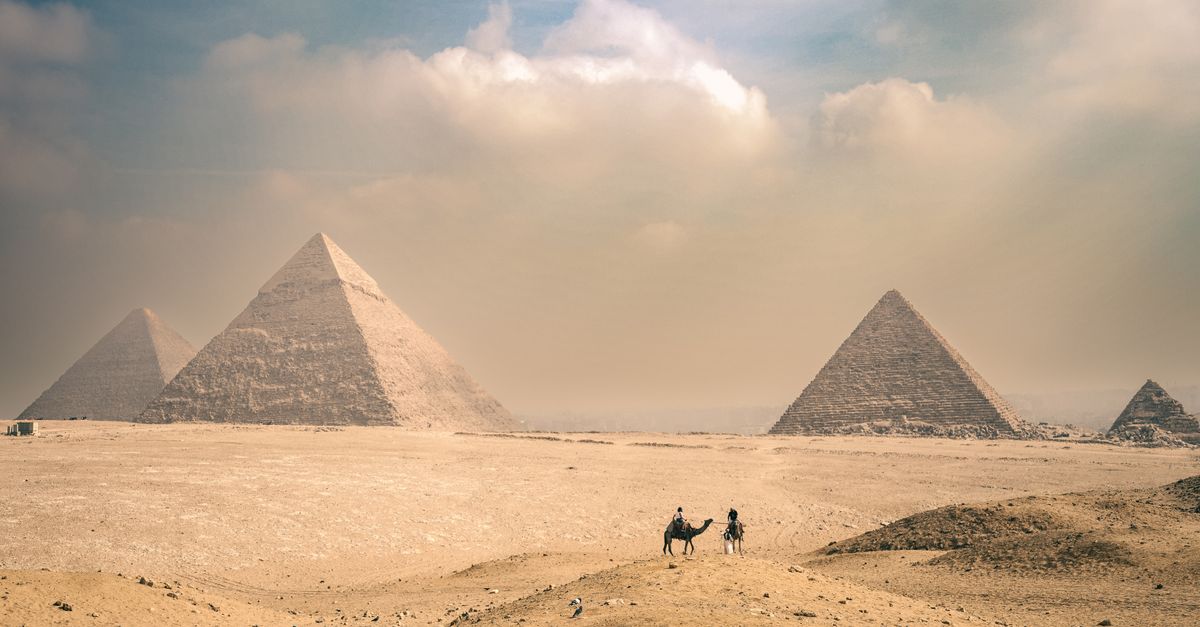
Day one: Giza. The pyramids and the Sphinx, and go at opening. The site is exposed, the middle of the day is hot in every month, and the camel and horse touts are considerably more relaxed at eight in the morning.
Day two: the Grand Egyptian Museum, half a day, then Coptic Cairo in the afternoon: the Hanging Church, Ben Ezra synagogue, and the Coptic Museum, all in one compact walled quarter.
Day three: Islamic Cairo. Al-Muizz street, the Khan el-Khalili bazaar, the Sultan Hassan and Al-Rifa'i mosques, and the Citadel for the view. This is the best day in Cairo and the one most itineraries shorten.
Days 4 to 8: Luxor, the Nile and Aswan
Fly to Luxor. It is an hour, it is cheap, and the alternative is ten hours on a train.
Luxor, two days. The East Bank for Karnak and Luxor temples, the West Bank for the Valley of the Kings, Hatshepsut's temple and the Ramesseum. Karnak at opening and the West Bank at opening are both non-negotiable in the heat.
Then the Nile, three or four nights, down to Aswan. This is where a cruise earns its place rather than being a package: the temples at Edfu and Kom Ombo sit on the river between the two cities and are genuinely awkward to reach any other way.
A dahabiya is the quieter version: a small sailing boat with a handful of cabins, slower, and it moors in places the big boats cannot.
Aswan at the end: the Nubian villages, Philae temple on its island, and the felucca at sunset around Elephantine, which is the loveliest hour in Egypt.
Days 9 and 10: Abu Simbel, or the sea
Abu Simbel is three hours south of Aswan by road, and the two temples moved stone by stone in the 1960s to escape the rising lake are the most impressive single sight in the country. It is a long day and it is worth it.
Or fly to the Red Sea for two days of diving or nothing, which is the sensible end to a trip that has been a lot of temples.
What we would skip
Skip the pyramid interior, unless claustrophobia is genuinely not a thing for you. It is a hot, steep, low, crowded climb up a wooden ramp to an empty stone room. The outside is the point.
Skip the sound and light show at Giza and Karnak. They are dated productions and the money is better spent on a guide who can tell you what you are looking at.
Skip the "papyrus institute" and the "perfume palace" that appear in most guided days. They are commission stops.
And skip trying to add Sinai. Dahab and St Catherine's are excellent and they are a separate trip. Ten days does not stretch to them without breaking everything else.
The practical layer
Guides. Egypt's major sites have almost no on-site interpretation, so a good Egyptologist changes the experience substantially. The usual shape is a guide for Giza, Luxor and Abu Simbel and independent time in Cairo.
Tipping. Baksheesh is a constant and it is a normal part of the economy rather than a scam. Carry a lot of small notes.
Photography. Many sites charge separately for a camera, and the Valley of the Kings has its own rules that change.
Dress. Modest dress is expected at religious sites and sensible everywhere. Shoulders and knees covered, and a scarf for mosques.
Checked 21 Aug 2026.
Everything we check for Egypt →When to go
October to April, with November to March the comfortable core.
Upper Egypt in summer regularly passes 40 degrees, which makes Luxor and Aswan genuinely difficult between eleven and four, and the Nile cruise season reflects that.
December and January are peak and priced for it. November and March are the best value with good weather, and our November guide covers the wider region.
Visa on arrival · 30 days, on all five passports we check.
Short tourist stays only. Checked 21 Aug 2026; rules change without notice and the government page is the source of truth.
Check your own passport →Before you book
The Morocco route is the closest comparison on this site for a ten-day North African trip, and the Turkey route covers the other end of the eastern Mediterranean.
Our November guide explains why that month opens the season here, and where to stay in Dubai covers the usual stopover.
The itineraries hub collects the rest and the Egypt country page has the practical layer.
Museum opening, galleries and ticket prices checked September 2026 against the Grand Egyptian Museum's visitor information and Egypt's official tourism site. Ticket prices in Egypt have risen repeatedly with inflation, so confirm before budgeting. Here is how we research and re-check guides.