Digital nomad Medellín, and the income rule that trips up freelancers
Medellin for remote workers, with the visa income test that cannot be averaged across months, the neighbourhoods that work and the honest local backlash.
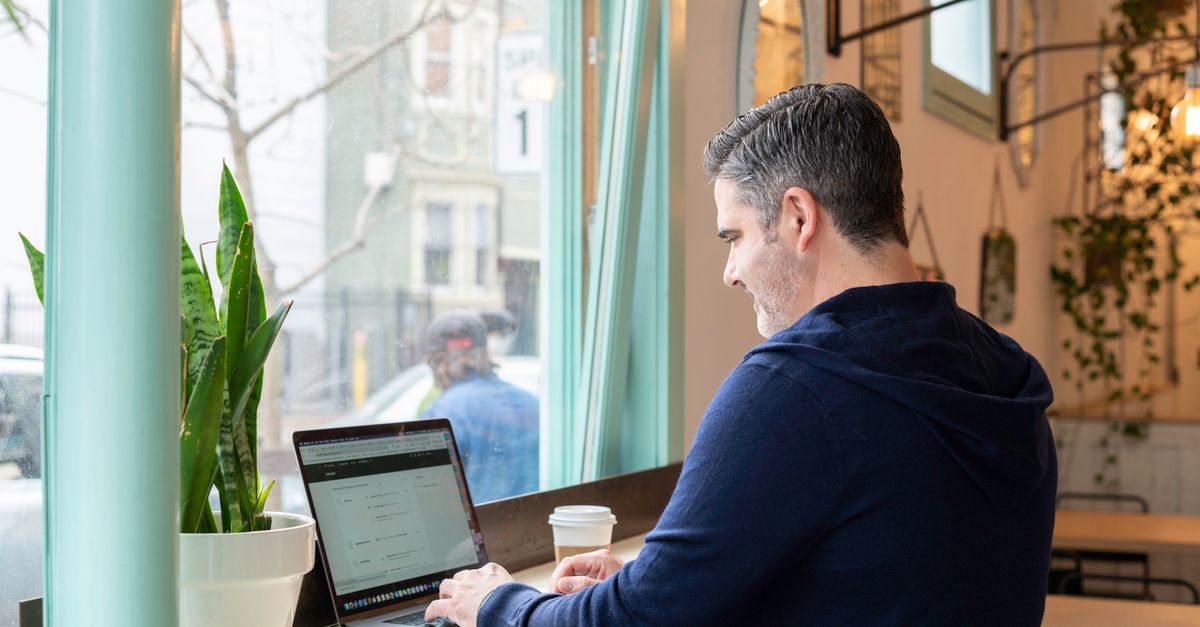
Photo · pierre matile · Pexels
Medellín became a default remote-work base for a reason that has little to do with cost: the time zone. Colombia overlaps a full working day with the United States east coast, which Southeast Asia simply cannot do without working nights.
Add a climate that barely moves, a metro that works, and a cost base far below any American city, and the appeal is obvious. So is the tension it has created, which this page does not skip.
Colombian peso. Convert any figure on this page into your own currency at today's published rate.
Open the currency converter →The visa, and the rule that catches freelancers
Colombia's V-Nómadas Digitales runs for up to two years and asks for income of at least three times the national minimum monthly wage.
The 2026 base minimum wage is COP 1,750,905, which puts the threshold at about COP 5,252,715 a month.
Here is the rule that catches people out, and it is not in most guides:
Each of the recent months of income statements must individually meet the threshold. Averaging is not accepted.
A freelancer with a strong month and a thin month that average comfortably above the line will be refused. If your income is lumpy, plan several consistent months before applying rather than assuming an annual figure will carry it.
The rest of the requirements:
- Proof of remote work or freelancing for at least six months.
- A passport with at least six months of validity remaining.
- Private health insurance valid in Colombia for the whole duration,
covering medical care, hospitalisation and emergencies. Ordinary travel insurance is usually not sufficient, because it covers trips rather than residence.
- Foreign income only. No Colombian employers and no local clients, which is
a real restriction if you were planning to pick up work locally.
Government fees run roughly 220 to 235 US dollars, plus the cédula and the document costs. Colombia's foreign ministry runs the visa portal itself, and applying direct is cheaper than through an agent.
Visa-free · 90 days, on all five passports we check.
Short tourist stays only. Checked 21 Aug 2026; rules change without notice and the government page is the source of truth.
Check your own passport →What it costs
The metro is the clearest local number: about COP 2,600 a ride, checked September 2026, on a system that is clean, safe and genuinely good.
On rent, an honest note about currency. The furnished, short-let, foreigner-facing market in El Poblado and Laureles quotes in US dollars, and the sources that publish Medellín's nomad rents publish them in dollars for that reason. That dollarisation is itself part of the story, because it separates the price a foreigner pays from the price the city pays.
What we can tell you plainly: a furnished one-bedroom in El Poblado or Laureles aimed at this market runs at a substantial multiple of an unfurnished long lease in the same building. A twelve-month contract in pesos, arranged locally, is a different transaction at a different price, and it is both cheaper and less corrosive.
Where the rest goes: eating at a menú del día, the set lunch, costs very little; a tienda is a fraction of a supermarket; coworking is inexpensive; and the two lines that surprise people are furnished short-let rent and imported anything.
The neighbourhoods
Laureles. Our pick for most people. Flat, gridded, walkable, genuinely residential, on the metro, with good food and the Ciclovía on Sundays. It has become the sensible alternative to Poblado and it is filling up fast for exactly that reason.
El Poblado. Where the nightlife, the short-lets and most of the foreign population are. Comfortable, hilly, well served, and the least Colombian part of the city. Parque Lleras is the epicentre of both the party and the problem.
Envigado. Further south, quieter, more local, a real town with its own centre. Where people move in year two, once the novelty of Poblado has worn off.
Sabaneta. Further again, cheaper, and increasingly the same story.
On the hills: Medellín sits in a valley and the gradients are steep. Laureles is flat and Poblado is not, and that decides how much you walk.
The working layer
The time zone is the whole argument. A full overlap with the US east coast and a workable morning with the west. For anyone with American clients this is the single best base in this price range, and it is why Medellín beat Chiang Mai for a large slice of the market. Digital nomad Chiang Mai has the other side of that trade, where the overlap is with Europe instead.
Coworking is plentiful and concentrated in Poblado and Laureles.
Internet is generally good in the modern buildings and variable in older ones. Test before you commit to a month, and carry an eSIM.
The climate genuinely does not change. Medellín sits at altitude near the equator, which produces a spring that lasts all year, and it is the reason the city is called what it is called. There is a wetter stretch around April and May and again in October and November, and it means afternoon rain rather than a season.
The honest part
Two things deserve saying plainly.
Safety has improved enormously and it is not uniform. The neighbourhoods this guide names are ordinary, busy and policed, and what they ask of you is ordinary urban care: a phone that is not out on the street, a registered ride-hail rather than a flagged cab, and attention late at night around Parque Lleras specifically. The local phrase is "no dar papaya", roughly, do not hand someone an opportunity. It is good advice and it is the whole framework, and Colombia's own tourism board keeps the current visitor guidance.
There is a real local backlash, and it is about housing and about who the city is being rebuilt for. Rents in Laureles and Poblado have risen sharply, the short-let market has taken housing stock out of long-term supply, and there has been sustained public concern about foreign visitors' behaviour in Poblado specifically.
The practical response is the same everywhere on this circuit: rent long and in pesos rather than short and in dollars, learn Spanish properly rather than functionally, spend in the neighbourhood, and behave in Parque Lleras the way you would behave at home.
Checked 21 Aug 2026.
Everything we check for Colombia →What to skip
Applying with lumpy income. Each month must clear the threshold on its own.
A furnished short-let in dollars for a six-month stay.
El Poblado as a default. Laureles is flatter, cheaper and more of a neighbourhood.
Ordinary travel insurance as your visa health cover.
Assuming the visa lets you take Colombian clients. It does not.
Treating "no dar papaya" as paranoia. It is the local operating instruction and it is sound.
Before you book
How to become a digital nomad covers the visa and tax layer under all of this, and the best digital nomad cities for 2027 ranks the alternatives on cost, internet and community. Digital nomad Chiang Mai is the Asian equivalent at a similar price with the opposite time zone, digital nomad Lisbon is the European one, and digital nomad Bali is the fourth. Mexico in two weeks and three days in Mexico City cover the other Latin American base people compare this with, and is Mexico City safe? answers the safety question in the same by-neighbourhood way.
The Medellín city guide and the Colombia country guide carry the practicalities, and there is more in the nomad life hub.
Thresholds and fees checked September 2026. The income requirement is pegged to Colombia's minimum wage and therefore changes every January, so the foreign ministry's own visa pages are the source to confirm the current figure rather than any guide, this one included. Here is how we research and re-check guides.