Digital nomad Lisbon, and the number the city is angry about
Lisbon for remote workers with real 2026 rents by neighbourhood, the D8 visa threshold, and the housing figure that explains why the welcome has cooled.
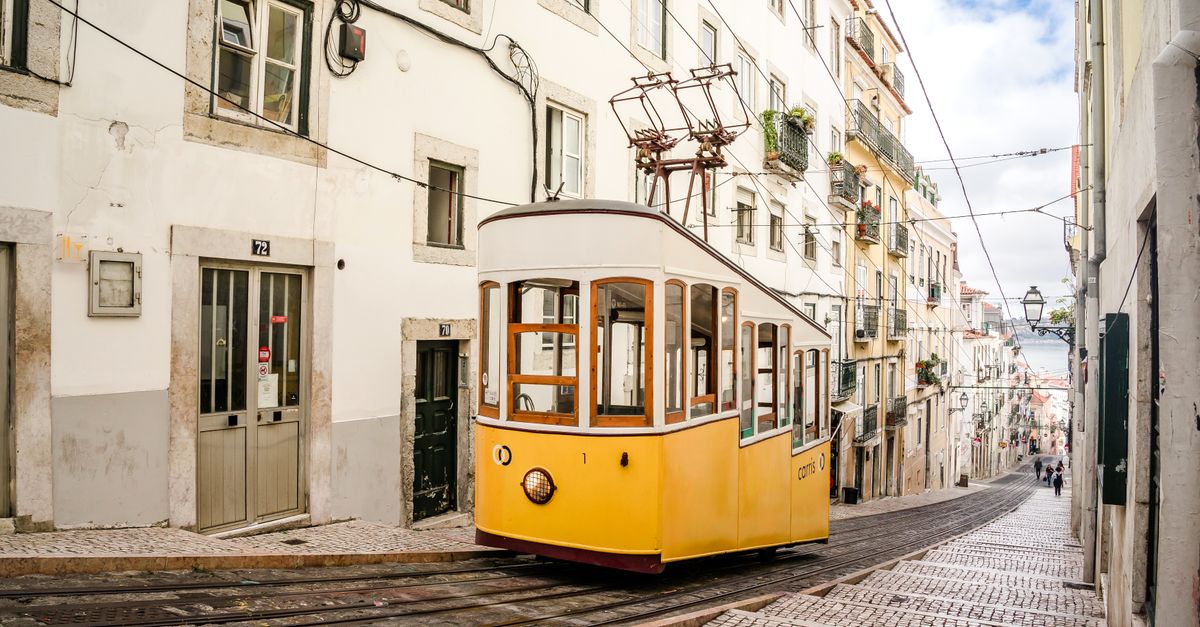
Photo · Leonhard Niederwimmer · Pexels
Lisbon has been the default European answer for remote workers for most of a decade, and the honest 2026 position is that it is still one of the best places in Europe to do this and it is no longer cheap.
Both halves of that matter, and so does a third thing: the city has developed a considered, specific objection to what people like us have done to its housing market, and it is worth knowing the number behind it.
Euro. Convert any figure on this page into your own currency at today's published rate.
Open the currency converter →The number the city is angry about
Average rents in Lisbon run above 167 per cent of the national minimum wage, which is the second-worst ratio of any capital in the European Union.
The minimum wage is €920 a month in 2026. Do that arithmetic and the shape of the problem is obvious: a Lisboeta on a normal Portuguese salary cannot rent an ordinary flat in their own capital.
Foreign remote workers are not the only cause and they are a visible part of it: tax arrangements favouring foreign income, short-term rental conversion and a housing supply that did not grow. Policies designed to attract people on foreign salaries into a market where local salaries are a fraction of them have done exactly what you would expect.
What that means practically for you:
- The welcome is cooler than it was, and it is cooler for reasoned
arguments rather than for bad temper.
- Rent long rather than short. A twelve-month lease at a Portuguese price is
a completely different transaction from a furnished short-let at a foreigner price, and the second is the one driving the problem.
- Spend in the neighbourhood, not only in the enclave.
- Learn some Portuguese. It is not a gesture; it changes every interaction
and it is the single clearest signal that you are living somewhere rather than consuming it.
What it actually costs
Budget €2,000 to €2,800 a month for a comfortable single person. Rent is the dominant line and everything else is modest by western European standards. Portugal's statistics institute publishes the official rent indices if you want the underlying numbers rather than a listings average.
One-bedroom apartments, monthly, checked September 2026:
| Neighbourhood | Typical range |
|---|---|
| Arroios | €700 – €1,200 |
| Alcântara | €900 – €1,400 |
| Campo de Ourique | €1,000 – €1,500 |
| Baixa and Chiado | €1,200 – €2,000+ |
| City-wide typical | €1,200 – €1,600 |
The spread is the story. The difference between Arroios and Chiado is a factor of two or more for a similar flat, and it is about twenty-five minutes on the metro.
Where the rest goes: groceries and eating out are genuinely good value, a prato do dia lunch is cheap, transport is inexpensive, and the two lines that surprise people are rent and anything imported.
The visa
Portugal's D8 requires about €3,680 a month in 2026, which is four times the national minimum wage of €920. It rises 50 per cent for a spouse and 30 per cent for each dependent child.
The structural point people miss: the D8 is a residence visa and it requires you to live in Portugal 183 days a year to keep the status.
That is the opposite of nomadic. If your plan is three months here and three months elsewhere, the D8 is the wrong instrument, and a short stay under whatever your passport allows is the right one. How to become a digital nomad has the comparison across schemes and the tax layer underneath them.
Short tourist stays only. Checked 21 Aug 2026; rules change without notice and the government page is the source of truth.
Check your own passport →The neighbourhoods, for working rather than visiting
Arroios. The best value in the city and the most genuinely mixed neighbourhood in it, with the best cheap food in Lisbon. Central, on the metro, unglamorous. Our pick for a first long stay.
Campo de Ourique. Residential, flat, gridded, full of families and a very good market. Quiet in the evening, which is either the point or the problem.
Alcântara and Marvila. The old industrial waterfront, converted. The best concentration of large coworking and studio space, more room for the money, and further from the centre.
Príncipe Real and Santos. Where the social layer is. Expensive, beautiful, and where a lot of the community events happen.
Not Baixa or Alfama, for a long stay. Baixa is priced for tourists and empty of residents. Alfama is stairs, comprehensively, and charming for a week and punishing with shopping.
On the hills, generally: Lisbon is built on seven of them and the gradients are real. Check the walk from the metro before you sign anything, in summer, carrying something.
The working layer
Coworking is plentiful, competitive and clustered in Marvila, Alcântara, Santos and around Avenida.
Cafés are workable but not universally welcoming. Portuguese café culture is built on a short coffee at a counter, not a four-hour laptop session, and the places that welcome the second are specific and known. Ask rather than assume, and buy something more than one espresso.
The time zone is Lisbon's quiet advantage and the reason it beat Barcelona and Berlin for a lot of people. It overlaps a full working day with London and most of Europe, and gives you a workable afternoon with the US east coast. For anyone with clients on both sides of the Atlantic there is no better European base.
Internet is fast and cheap, and fibre is widespread. Check the specific flat rather than the city average, because older buildings vary.
The rest of the life
The coast is thirty minutes away. Carcavelos and the Linha for the train and a swim after work; Costa da Caparica across the bridge for surf. This is the thing Lisbon has that Berlin, Prague and Budapest do not.
Winters are mild and wet, which is fine, and Portuguese buildings are poorly insulated and rarely heated, which is the genuine complaint. A flat that is lovely in June is cold and damp in January. Ask about heating before you sign a winter lease; it is the most common regret.
The community is large and organised, with regular events, and it is easy to plug into. It is also easy to spend a year speaking only English to other foreigners, which is the failure mode. The best digital nomad cities for 2027 has where Lisbon sits against the alternatives.
Checked 21 Aug 2026.
Everything we check for Portugal →What to skip
A furnished short-let for a six-month stay. It is the expensive option and it is the one contributing to the problem.
Baixa or Alfama as a base.
A winter lease without asking about heating.
Assuming the D8 lets you roam. It requires 183 days in the country.
The airport neighbourhood, for cheapness. It is cheap for a reason and the commute is not the issue; the neighbourhood is.
Treating the housing debate as noise. It is the most substantive thing anyone in this city will say to you about why you are there.
Before you book
How to become a digital nomad covers the visa and tax layer that sits under all of this, and Spain's digital nomad visa is the neighbouring scheme worked through in full. Digital nomad Chiang Mai and digital nomad Medellín are the two obvious alternatives at a different price point, and digital nomad Bali is the fourth. The best digital nomad cities for 2027 ranks them, and the best time to visit Portugal has the seasons if you are choosing when to arrive. Two days in Porto covers the other city people consider.
The Lisbon city guide and the Portugal country guide carry the practicalities, and there is more in the nomad life hub.
Rents and visa thresholds checked September 2026. The D8 income requirement is pegged to the national minimum wage and therefore moves each year, and Portugal's own immigration agency publishes the current rules, which is the source to check rather than any guide, this one included. Here is how we research and re-check guides.