What to wear in Japan, season by season
You will walk 12 to 15km a day and take your shoes off several times. What that means for footwear, plus the four seasons and the onsen tattoo rule.
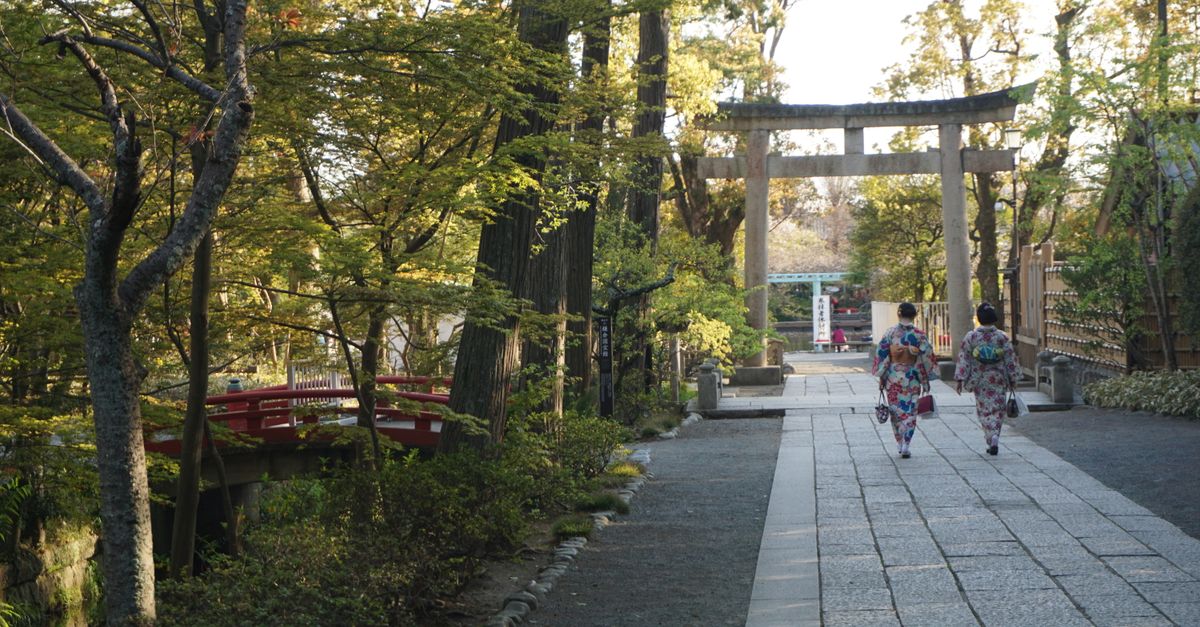
Photo · Chucky Chiang · Pexels
Two facts decide almost everything you pack for Japan, and neither is about the weather.
You will walk 12 to 15km on a normal sightseeing day. Japanese cities are covered on foot and by rail, and the rail involves long station walks and staircases. Whatever you bring has to survive that daily, for two weeks.
You will take your shoes off several times a day. Temples, ryokan, many restaurants, some shops, every home. Shoes that need sitting down and unlacing are a small tax you pay ten times a day, and socks are suddenly visible, which nobody warns you about.
Everything below follows from those two.
The footwear rule, first
Comfortable, closed, and removable in one motion. Slip-ons, or laced shoes you loosen once on day one and never tighten again.
Not brand-new shoes. Not sandals in temple season, because you will be on cold wooden floors and gravel. Not heels, anywhere, ever, on a trip involving this much walking and this many stairs.
Bring more socks than you think and check them for holes before you fly. This is the single most repeated piece of advice from anyone who has been, and it is because you will be standing in them, in public, on a tatami floor, several times a day.
The general register
Japan dresses tidy, plain and casual. Not formal, and not sloppy.
What reads as conspicuous: athletic wear worn as clothing, beachwear away from a beach, very short shorts in a temple, loud slogans, and visible underwear. None of this is enforced and all of it is noticed.
Shoulders are more sensitive than legs. A sleeveless top is more conspicuous in Japan than a knee-length skirt, which is the reverse of the norm in much of Europe.
Neat, layered, plain, covered is the whole of it, and it is also the most comfortable way to move through a country where the indoor and outdoor temperatures are frequently twenty degrees apart.
Season by season
Spring, March to May. The most changeable season and the one people underpack for. Warm afternoons and genuinely cold mornings and evenings, especially in Kyoto, which sits in a basin and holds the cold. Layers, a proper mid-layer, and a light waterproof. Late May is warm.
Summer, June to August. Hot and very humid, and the rainy season runs through June into mid-July on the main islands, with Hokkaido the exception that gets neither. Japan Guide has the regional rainy-season dates. Linen and cotton, loose cuts, nothing synthetic. A hand towel in your bag is the local habit and you will understand it within a day. A compact umbrella does duty for rain and for sun. Air conditioning indoors is aggressive, so carry a light layer even in August.
Autumn, September to November. The best season to dress for. September is still hot and is the peak typhoon month. October and November are the two best months of the Japanese year: mild days, cold evenings, and the same layering as spring. Our November guide covers the colour timing.
Winter, December to February. Tokyo and Kyoto are cold and mostly dry, and manageable with a good coat rather than expedition kit. The Sea of Japan side and Hokkaido are a different country: heavy snow, real cold, and proper boots with grip are not optional. Our Niseko and Hakuba comparison covers the ski end.
The full Japanese calendar has the month-by-month.
Temples, shrines and ryokan
Temples and shrines have no dress code, which surprises people expecting the opposite. Ordinary neat clothing is fine and shoulders and knees covered is a courtesy rather than a requirement.
Shoes off where there is a step up and a rack, and the floor level tells you before the sign does.
A ryokan supplies the clothes. The yukata in your room is what you wear to dinner, to the bath and around the building. Left side over right, always: the other way is how the dead are dressed, and it is the one mistake staff will quietly correct.
The onsen tattoo question
Many onsen still refuse visible tattoos. The rule is inconsistent, it is changing, and it is changing unevenly, so a confident blanket answer either way is wrong.
What reliably works:
- A private bath, kashikiri, booked by the hour. Almost every onsen town
has them and they solve the problem entirely.
- A tattoo-friendly onsen, of which there are now many and which publish
the fact.
- Cover-up patches for something small, which some places accept and others
do not.
- A room with its own bath at a ryokan, which is the expensive answer and
the simplest.
Ask when you book rather than at the door.
Checked 21 Aug 2026.
Everything we check for Japan →What to actually pack
- Two pairs of shoes, both broken in, one of them waterproof.
- More socks than days, all intact.
- A packable rain layer. Rain arrives quickly in most seasons and the
convenience-store umbrella is a good and cheap backup.
- A hand towel, for summer and for public toilets, which frequently have no
dryer.
- One layer more than the forecast suggests, because of the indoor and
outdoor gap in both directions.
- A small bag for rubbish. There are almost no public bins and you will
carry your own for hours. This catches everyone out on day one.
- Less than you brought. Coin lockers are everywhere and cheap, and
takkyubin luggage forwarding moves a suitcase between hotels overnight for a few thousand yen, which is how experienced travellers avoid dragging bags through Tokyo Station.
Japanese yen. Convert any figure on this page into your own currency at today's published rate.
Open the currency converter →Three things not to bother with
Skip the formal outfit. Unless you have booked one of a small number of high-end restaurants or hotel bars that state a code, and they tell you at booking, a collar and closed shoes covers everything.
Skip the heavy winter coat for a Tokyo and Kyoto trip. Both are cold and dry rather than severe, and you will be indoors or underground for much of the day. Layers beat bulk, and the bulk is what you have to carry.
Skip buying clothes for the trip before you go, if you are an average European or North American size. Japan's shops are extremely good and the winter inner layers in particular are better and cheaper than the equivalent at home. Larger sizes and larger shoe sizes are genuinely harder to find, which is the one case for packing properly.
Before you book
First time in Japan covers the country and Tokyo for first-timers covers the transport, which is the other thing to sort before you leave.
The Japanese calendar decides the season you are packing for, and what Japan costs has the budget.
The packing hub has the rest of the kit guides and the Japan country page has the practical layer.
Seasonal weather and rainy-season timings checked September 2026 against Japan Guide's regional data and the Japan National Tourism Organization. Onsen tattoo policy varies by property and is changing, so ask the specific place rather than relying on a general rule. Here is how we research and re-check guides.