Vietnam in two weeks, north to south
The fortnight that works, which legs to fly and which to take by rail, what it costs in dollars, and the licence rule that voids Australian travel insurance.
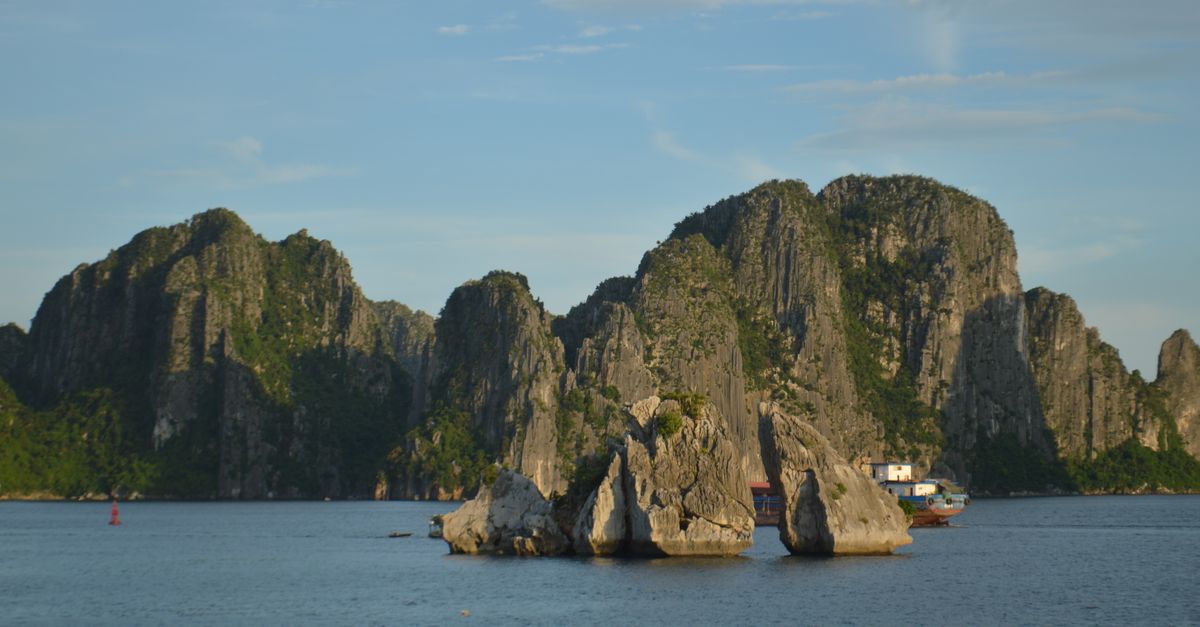
Photo · Valeria Drozdova · Pexels
Two weeks in Vietnam is thirteen nights, and four of your days are travel days whatever you do — the country is 1,650 kilometres long. That makes five stops the honest ceiling, and the route that uses them best runs Hanoi, Ninh Binh, a night on the water at Lan Ha, Hue, Hoi An and Ho Chi Minh City.
| Days | Where | Nights | Getting there |
|---|---|---|---|
| 1–3 | Hanoi | 3 | Write off day one after the overnight flight |
| 4 | Ninh Binh | 1 | 1h30–2h30 by road |
| 5–6 | Lan Ha Bay | 1 afloat | ~3h30 transfer including the ferry |
| 7 | Hue | 1 | Overnight sleeper train from Hanoi |
| 8–10 | Hoi An | 3 | Private car over the Hai Van Pass |
| 11–13 | Ho Chi Minh City + Mekong | 3 | Fly from Da Nang |
| 14 | Fly home | — | Out of Saigon, not back to Hanoi |
Book it as an open-jaw — in to Hanoi, out of Saigon. Flying back up the country to where you started is a wasted day and an unnecessary fare.
Three things every other guide gets wrong
Hue gets too many nights and Hoi An too few. Most itineraries give Hue two or three. One is right. Hue's best asset is not Hue — it is the road out of it: the Hai Van Pass down to Hoi An is the finest drive in the country, about four hours with stops. Book that leg in the Hue-to-Hoi-An direction and take the coast road, not the tunnel.
Ninh Binh and Ha Long are not an either/or. They are different landscapes — dry karst rising out of rice paddies versus the same limestone standing in the sea — and Ninh Binh is only 93 kilometres from Hanoi. A night in each beats a day trip to either. Ninh Binh as a day trip from Hanoi is twelve hours door to door and it is punishing.
Two airlines that appear in current guides no longer fly here. Bamboo Airways stopped selling scheduled domestic tickets in August 2026 with its fleet down to three aircraft, and Jetstar Pacific has not existed under that name for years. Vietnam's domestic market is now Vietnam Airlines and VietJet, with Vietravel a distant third. Any 2026 itinerary still routing you onto Bamboo is not a 2026 itinerary.
The one train segment worth taking, and the one that is a trap
The Reunification Express runs the length of the country and it is on every bucket list. Take two and a half hours of it.
Hue to Da Nang is world-class: cliffs, jungle, the Hai Van Pass and Lang Co Bay, from 83,000 dong — about A$4.40. If you are not doing the pass by car, this is how you see it.
Hanoi to Hue as an overnight sleeper is also worth it. It converts a travel day into a night's sleep and saves you a hotel. Book a four-berth air-conditioned soft sleeper and take a lower berth; the six-berth hard sleepers are cheaper and much worse. Around 1,218,000 dong, roughly A$65.
Hanoi to Saigon end to end is the trap. It is close to thirty hours — more than nine per cent of your entire holiday in one carriage — and the middle of it is unremarkable coastal scrub. You get all of the famous view in the 2h30 Hue–Da Nang leg and none of the tedium.
Bookings open sixty days out and the soft sleepers on the Hanoi–Hue leg go early. Seat 61 keeps the timetables honest.
For everything else, fly. Hanoi to Da Nang is 1h20 and Da Nang to Saigon about the same. Budget 1.2–2.5 million dong, A$65–135, per sector including a checked bag — VietJet's headline fare excludes luggage and that is where the cheap disappears.
The cruise question, and a safety note that belongs in it
Book Lan Ha Bay, not Ha Long proper. Same limestone, same water, and around 80 to 100 boats against Ha Long's 200 to 250. Bai Tu Long is quieter still. Reckon on USD 120–195 a head for an overnight.
Two things to plan around. In July 2025 a tourist boat capsized in a sudden storm in Ha Long Bay and 39 people died — the country's worst maritime accident in more than two decades. More oversight has followed, but the underlying weather risk has not changed: June to August is when Gulf of Tonkin thunderstorms build fastest, and the port authority suspends sailings without notice. Do not book a cruise for the night before an international flight, and leave a spare day in the region if you can.
And book through an operator with recent, verifiable reviews rather than a street agent. The boat that turns up not matching the boat in the photographs is the most common complaint in the bay.
The licence rule that voids your insurance
This is the most important paragraph on this page for an Australian reader, and no competing guide carries it.
An Australian International Driving Permit is not valid in Vietnam. Vietnam recognises the 1968 Vienna Convention on road traffic. Australia is a party to the 1949 Geneva Convention, and that is the permit our auto clubs issue. Vietnamese police treat it as no licence at all.
The consequence is not the fine. It is that riding without a recognised licence voids your travel and health insurance regardless of who caused the accident, and you cannot buy valid local cover as a tourist either. An accident on a hired scooter becomes a self-funded medical evacuation. Licence conversion needs a residence permit or a three-month visa, so it is not open to you.
Rental shops will hand you a bike without asking for anything. That is their business model, not permission.
What to do instead: for the Hai Van Pass, hire an Easy Rider and travel pillion with a licensed driver, or take a private car. In Hoi An and Ninh Binh, use a bicycle — both are flat and small. Everywhere else, Grab.
Visas, and a new form for 2026
Australians need a visa and cannot get one on arrival. Apply directly at evisa.gov.vn — the search results are full of agents charging three to five times the same fee for the same document.
- USD 25 single entry, USD 50 multiple, valid up to 90 days
- Officially about three working days; **allow a week and apply three to four
weeks out**
- Print a paper copy of the approval. Airline check-in staff cannot always
verify an e-visa electronically, and that is where people get stopped
- Check the exit date stamped in your passport on arrival — it can differ
from the date on the visa, and overstaying means fines at departure
New since April 2026: arrivals at Ho Chi Minh City's Tan Son Nhat must also submit a free Digital Arrival Card online within 72 hours of landing. It is separate from the visa. On a north-to-south route you leave through Saigon rather than arriving there, so check whether it applies to you — Smartraveller carries the current advice.
What a fortnight costs
Per person, excluding international flights. Converted at A$1 = 18,684 dong, checked 1 September 2026.
| Backpacking | Mid-range | Mid-range in AUD | |
|---|---|---|---|
| 13 nights' accommodation | 2.6–5.2M | 10.4–16.9M | A$555–905 |
| Food and drink | 2.1–3.5M | 4.2–7.0M | A$225–375 |
| Two domestic flights | 1.6–2.4M | 2.4–5.0M | A$130–270 |
| Overnight sleeper | 0.9M | 1.22M | A$65 |
| Lan Ha overnight cruise | 1.9–2.7M | 3.2–5.1M | A$170–275 |
| Tours and entries | 2.0M | 4.0M | A$215 |
| Local transport, SIM | 0.95M | 1.7M | A$91 |
| Total | 12–17M | 27–41M | A$1,450–2,200 |
Backpacking that comes to roughly A$640–910. Worth saying plainly for an Australian audience: a comfortable fortnight in Vietnam costs about what a week in Queensland does.
Street food runs 25,000–100,000 dong, or A$1.30–5.35. A sit-down restaurant meal is A$7–20. Carry 500,000 to 1,000,000 dong a day in cash — Vietnam is still a cash economy at street level, and the 20,000 and 500,000 notes are confusingly similar colours.
For a SIM, Viettel has materially better coverage than the others, which matters in Ninh Binh and on Cat Ba. A tourist SIM is A$3–11 for a month; an eSIM costs a little more and is live the moment you land.
When to go, and the month to avoid
Vietnam does not have one climate, and no month is good everywhere. That is the fact most guides skip.
| Region | Good | Avoid |
|---|---|---|
| North — Hanoi, the bays | Oct–Dec, Mar–Apr | Jan–Feb grey drizzle; Jun–Aug storms |
| Centre — Hue, Hoi An | Feb–Aug | Sep–Nov, typhoons and flooding |
| South — Saigon, Mekong | Dec–Apr | May–Nov wet, but rarely trip-ruining |
Late February to April is the only window where all three work at once, and March is the single best month. October is superb in the north and a gamble in the centre — Hoi An's old town genuinely floods.
Avoid Tet. Lunar New Year's Day 2027 falls on Saturday 6 February, with the public holiday running roughly 4–10 February and the country effectively slowing from the first of the month to the thirteenth. Flights and trains sell out weeks ahead, hotels add surcharges, and a great many restaurants, museums and tour operators simply close. It is the worst possible fortnight to be moving through the country — though the two weeks straight after it are excellent.
The two mistakes
Adding Sapa or Ha Giang. Both appear in most two-week itineraries and both are a different trip. Ha Giang is six hours each way from Hanoi and needs four days to ride properly — and see the licence section above. Sapa is five to six hours each way and entirely weather-dependent: arrive in cloud and you have spent two travel days to look at fog. Bolting either on means cutting the centre to one night. If you want dramatic limestone inside a fortnight, Ninh Binh and Cat Ba give you it for a fraction of the travel.
Riding the train the whole way. Covered above, and worth repeating because it is such a seductive idea. Thirty hours. Take the good two and a half.
Before you book
The Vietnam country guide covers the practicalities, and Hanoi, Hue, Da Nang and Ho Chi Minh City all have city guides. Hoi An sits half an hour south of Da Nang, so use that one for the area. If you are weighing Vietnam against elsewhere in the region, our other itineraries and when-to-go guides will help — timing matters more here than almost anywhere. Ready to look at rooms? Hanoi stays are here, and Da Nang's here for the Hoi An end.
Fares, visa rules and costs checked September 2026. Vietnam's domestic airline market changed in August 2026 and the arrival-card rules changed in April, so this is a page worth re-checking before you book — here is how we research and re-check guides.