Three days in Taipei
Taipei rewards a slow visit. Three days built around the night markets and the hot springs, the Jiufen timing that matters, and the tower to skip.
Photo · Jimmy Liao · Pexels
Taipei is a city of neighbourhoods, night markets and hot springs rather than a checklist of sights, which means it rewards a slower three days than most capitals.
The shape that works: the old city and one night market on day one, the museum and the mountain on day two, and either hot springs or a day trip on day three.
New Taiwan dollar. Convert any figure on this page into your own currency at today's published rate.
Open the currency converter →Before you start: the card, not the pass
Get an EasyCard, NT$100 for the card, then top it up. It covers the MRT, the buses, the YouBike bikes and the convenience stores.
Do not default to the unlimited pass. The one-day Taipei Pass is NT$180 and needs roughly six to nine MRT rides to break even, and a normal day here is four or five. Our areas guide has the full arithmetic and the airport transfer options.
Day one: the old city, and Raohe
Morning: Longshan Temple, and go early. It is the oldest and busiest temple in Taipei, and at eight in the morning it is full of people actually praying rather than photographing. The Bopiliao historic block is a five-minute walk and is a preserved Qing-era street.
Late morning: Ximending. The pedestrianised blocks are quiet before noon, which is a better time to walk them than the evening crush.
Lunch: a beef noodle shop, which is Taipei's signature dish and is done best in unglamorous rooms with four tables.
Afternoon: Dadaocheng and Dihua Street. The old tea and medicine trading street, now a mix of original shophouses, dried-goods merchants and new cafes. This is the most pleasant walk in the city and the one most itineraries leave out.
Evening: Raohe night market, at Songshan on the green line. This is the best of the markets and it is compact enough to do properly in an hour. Start at the temple end with the black pepper buns, which have a queue and deserve it.
Day two: the museum, the mountain and the tower you should skip
Morning: the National Palace Museum. One of the great collections in the world, carrying most of the imperial Chinese collection. Go at opening, go straight to the jade and the bronzes, and accept that you are seeing a fraction of it.
It is out to the north and takes about 40 minutes from the centre. Half a day minimum, and the museum publishes which galleries are open, which matters because it renovates in rotation and the famous objects move.
Afternoon: Da'an. Come back into the city and walk Yongkang Street for the food, Da'an Forest Park for an hour, and the bookshops and coffee around it.
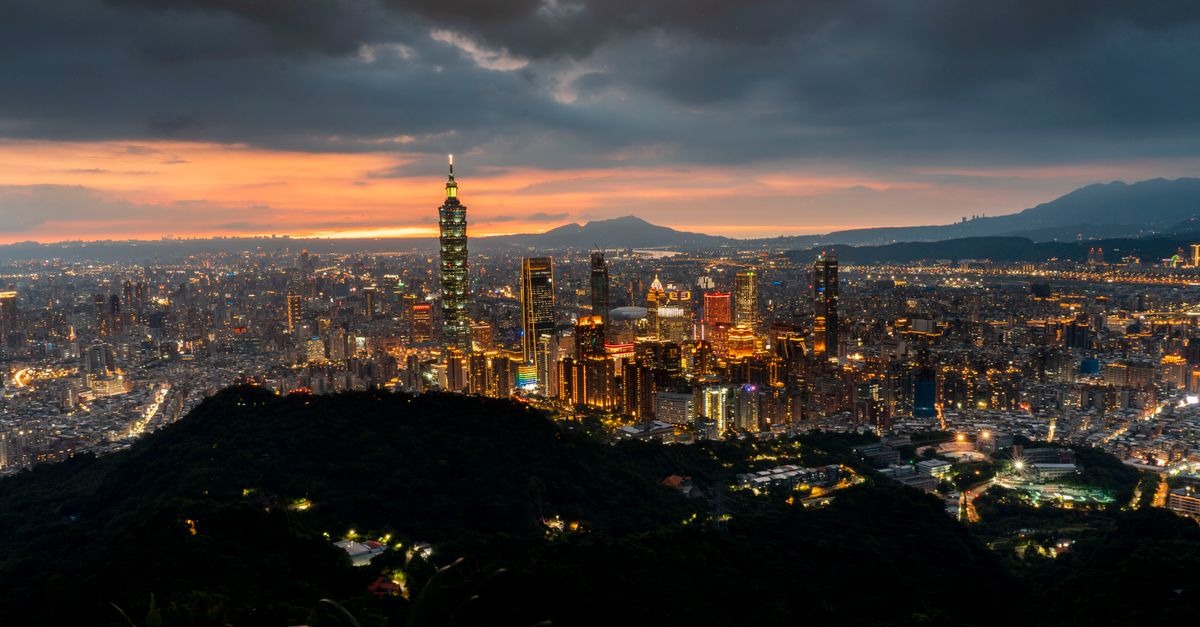
Late afternoon: Elephant Mountain. Twenty minutes of steps from Xiangshan MRT, and the view back over the city with Taipei 101 in the middle of it.
Go about an hour before sunset and stay for the lights. It is free, it is busy at the first viewing platform and much quieter at the second and third, which are five and ten minutes further up.
Evening: Tonghua night market, quiet and local, or back into Da'an.
Day three, option one: Beitou and the hot springs
Thirty minutes north on the red line, and Taipei has a hot-spring district on its own metro branch.
Thermal Valley for the steam, the Beitou Hot Spring Museum for the Japanese-era bathhouse, and then a bath: the public open-air baths are inexpensive and require a swimming costume, and the private rooms at the hotels are booked by the hour.
Book a private room ahead at the weekend. It is the one thing in Taipei that genuinely sells out.
Then Tamsui in the late afternoon, at the end of the same line, for the river sunset and the old street.
Day three, option two: Jiufen and the north coast
The timing is the whole thing. Jiufen is a former gold-mining town of stepped lanes and tea houses hung with red lanterns, and the lanterns need dusk.
Most tour buses arrive at midday and leave before the light is any good, which is exactly backwards. Go in the late afternoon and stay into the evening, and go on a weekday if you possibly can, because the lanes are narrow and the weekend crowd is genuinely uncomfortable.
Pair it with Shifen for the waterfall, or with the north coast at Yehliu for the eroded rock formations.
Getting there: bus or train plus bus, about 90 minutes, or a half-day car hire if there are three or four of you.
The one to skip
Skip going up Taipei 101 unless you specifically want to see the tuned mass damper, the enormous gold pendulum that stabilises the tower in typhoons, which is genuinely worth seeing and is the best thing on the observatory floor.
For the view, Elephant Mountain is better, because it is free, it takes twenty minutes, and it has Taipei 101 in the photograph rather than beneath your feet.
Also skip Shilin night market if you are only doing one. It is the biggest and the most visited and the food is the weakest of the four. Raohe or Ningxia instead.
When to go
April is the best month, after the winter damp and before the plum rains, which our April guide makes the case for at length. October and November are the other good window, after the typhoon season.
Taipei is wet in most months, and the covered arcades along the main streets mean that matters less than the forecast suggests.
Typhoon season runs roughly July to October and a direct hit closes the city for a day, which is worth a flexible day in a three-day trip if you are travelling then.
Checked 21 Aug 2026.
Everything we check for Taiwan →We have not checked Taiwan against the five passports yet. The tool reads the Wikipedia article for yours and shows its own sentence, with the date it was last edited.
Short tourist stays only. Checked 21 Aug 2026; rules change without notice and the government page is the source of truth.
Check your own passport →Before you book
Where to stay in Taipei has the areas, the airport transfer and which night market each district owns.
Our April guide argues Taiwan is the most under-rated destination of that month, and solo travel destinations explains why Taipei is among the easiest cities in Asia to visit alone.
The itineraries hub collects the rest and the Taiwan country page has the practical layer.
Transport fares and opening arrangements checked September 2026 against Taiwan's official tourism site and the Taipei Pass fare table. The National Palace Museum has run phased renovations with galleries closing in rotation, so check which wings are open before you build a morning around a specific object. Here is how we research and re-check guides.