Italy in 10 days, three cities not five
Ten days is nine nights and every city change costs half a day. The route that works, what the fast trains really cost, and the Venice fee that lapsed.
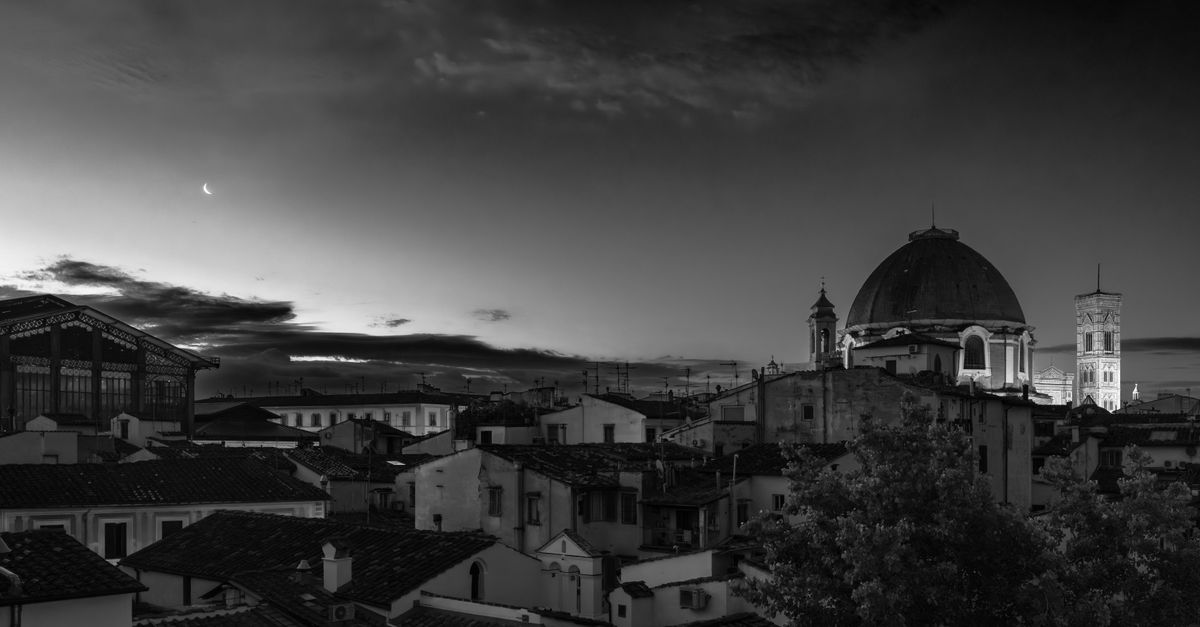
Photo · Phil Evenden · Pexels
Ten days in Italy is nine nights, and every city change costs two and a half to four hours of daylight once you have checked out, reached the station, travelled, and found the next hotel. That arithmetic is the whole guide. Three stops is the ceiling. Four is a transit schedule.
The route that works is Rome for four nights, Florence for three, Venice for two — two moves, about six and a half hours of travel across ten days, and an open-jaw flight in to Rome and out of Venice so you never double back.
And the option almost nobody writes down: two bases, no third hotel. Rome for five nights and Florence for four, day-tripping from both. That is under three hours of transit for the entire trip and one hotel change, and it has the best ratio of experience to travel time of any ten-day shape.
Why not five stops
The page currently ranking first for this question recommends Rome, Florence, Venice, Cinque Terre and Siena in ten days. That is four hotel changes and twelve to fourteen hours in transit — a third of your waking holiday spent moving, and about a day and a half in each place.
Another page in the top three tells you the Florence to Naples train takes five hours. It takes under three. It also routes you Rome, then north to Florence, then back south past Rome to the coast, which re-crosses 400 kilometres you have already covered.
Both errors point the same way: plan by geography and by nights, not by sights.
The four routes
1. Rome 4 / Florence 3 / Venice 2 — the classic, and it earns it. Rome to Florence is 1h30, Florence to Venice about 2h05. You get the Colosseum, the Vatican, the Pantheon and Trastevere; the Duomo, the Uffizi, the Accademia and the Oltrarno; then St Mark's, the Doge's Palace and one lagoon island. No countryside, and Venice at two nights is really a day and a half.
2. Rome 4 / Florence 3 / Tuscany 2. Same start, then a car out of Florence for Siena, Pienza, Montepulciano and the Val d'Orcia at dawn. No Venice. Requires driving, with all the caveats below.
3. Rome + the Amalfi Coast + Florence — but reversed. If the coast is non-negotiable, fly into Naples, do Amalfi first, then Rome, then Florence. Written the usual way round it is the worst route in this guide; written backwards it is perfectly good.
4. Two bases, no third hotel. Rome 5 and Florence 4, with day trips: Orvieto and Pompeii from Rome, and Bologna from Florence in 37 minutes, plus Siena and Lucca. Under three hours of transit for the whole trip, and your bags stay in the room. Best option for families, for August heat, and for anyone who has been burned by a four-city week.
The trains, and the one booking fact that saves the most money
| Route | Fastest | Booked ahead | Walk-up |
|---|---|---|---|
| Rome – Florence | 1h17 | €19.90 | ~€55 |
| Florence – Venice | 2h01 | €19–19.90 | ~€57 |
| Rome – Naples | 1h10 | from ~€15 | ~€45–50 |
| Florence – Bologna | 37 min | from €9.90 | ~€25 |
Tickets go on sale about 120 days ahead, and the cheap fares are released in small batches that sell out first. Book sixty to ninety days out and you pay roughly a third of the walk-up price. Turn up on the day and you are paying two and a half to three times more for the same seat.
Three things worth knowing. Advance high-speed tickets are tied to a specific train — you cannot hop the next one. Seat reservations are compulsory and already included on the fast trains, so there is no separate step. And on regional trains, which have no reservation, you must validate the ticket before boarding or you are travelling without one as far as the inspector is concerned. Seat 61 keeps the detail current.
Two station traps: Venezia Mestre is not the island, and some cheap Rome–Florence fares quietly depart from Roma Tiburtina rather than Termini.
The Venice fee that is not currently being charged
Venice's day-tripper access fee has been widely written up as a fixed cost. As of September 2026 it is not in force. The 2026 trial ran from April to 27 July 2026 and has ended, with no decision announced for 2027. You can currently walk into Venice without paying or registering.
When it does run, the shape is: €5 a person if you register more than four days ahead and €10 inside that, on selected days between 08:30 and 16:00, with a fine up to €300 for turning up without a QR code. Overnight guests are exempt — including people staying in Mestre — as are under-14s, though exempt visitors still have to register.
The city's own portal is the only place to check, and it is worth checking, because this may well return in 2027.
There is an editorial point buried in that exemption: the fee is the best financial argument for sleeping in Venice rather than day-tripping it. An overnight guest pays nothing and gets the city at dawn and after dark, when the day boats have gone.
What ten days costs
Per person, twin share, nine nights, the classic route. Converted at €1 = A$1.62, checked September 2026.
| EUR | In AUD | |
|---|---|---|
| Accommodation | €810 | A$1,310 |
| City tourist taxes | €40–55 | A$65–90 |
| Food | €550–750 | A$890–1,215 |
| Intercity rail, booked ahead | €40–80 | A$65–130 |
| Local transport | €80–90 | A$130–146 |
| Entry fees | €150–200 | A$245–325 |
| Lean mid-range total | ≈€1,770 | ≈A$2,870 |
| Comfortable | ≈€2,300 | ≈A$3,725 |
Budget travellers doing hostels and osterie manage about €1,150, or A$1,865.
City taxes are cash at checkout and never in your booking total. Florence runs €3.50–8 a person a night with mid-range stays standardised at €6, under-12s exempt and a seven-night cap. Venice is €1–5. Rome runs €4–10 by star rating.
The entry fees worth planning around: the Colosseum is €18, the Accademia €16 at the door or €20 online, and the Doge's Palace €35, or €30 if you book thirty days ahead. And a genuinely useful saving nobody publishes: the Uffizi drops from €25 to €16 if you go after 16:00.
Cinque Terre and Amalfi: what actually fits
Cinque Terre is 2h07 from Florence at best and about four and a half hours from Rome, which makes it a six-hour round trip and not a day trip from there. From Florence it works as a long day — out at seven, back by nine — or as two nights slotted between Florence and the north. It does not work as a stop-off with bags: the village stations are tiny, with long staircases and no lifts.
Two things to know if you go. The Via dell'Amore has reopened and is now included in the standard park card, but it runs one way only from Riomaggiore to Manarola, with timed entry and compulsory advance booking. And the park fines walkers up to €2,500 for inadequate footwear — flip-flops on the trails are taken seriously and the rule is enforced.
The Amalfi Coast is four to five hours door to door from Rome, not the three that most pages claim, and four and a half to five and a half from Florence. It is not a day trip from anywhere. On ten days it works only with three or more nights, as one of three stops, and only if you fly into or out of Naples.
If you drive it, know that half of all number plates are banned from the coast road on any given day — odd plates on odd dates, even on even, between 10:00 and 18:00, across sixty kilometres of the SS163, with fines from €87 to €344. The restriction runs daily through most of spring and from August to the end of September. Motorcycles are exempt; hotel guests only for arrival and departure.
The honest advice: do not hire a car for the Amalfi Coast on a ten-day trip. Use the ferries and the SITA buses.
Do not hire a car at all, in fact
Recommended constantly for "flexibility", and on a three-city trip it costs money, time and — months later — fines.
Limited traffic zones are camera-enforced in Rome, Florence, Siena, San Gimignano, Bologna and effectively every historic centre worth visiting. Fines run €80–120 per pass, arrive six to twelve months later, and the rental company adds €30–50 per notice to hand over your details. Several passes in one day means several fines.
Add €25–35 a day to park in Florence, the fact that Venice has no roads, and that Rome to Florence takes over three hours by car against 1h30 on a train, and the case collapses. Trains between cities, feet within them, and a car collected only on the way out of Florence if the countryside is genuinely the point.
The same goes for rail passes. Point-to-point advance fares beat any pass on a three-city trip, and Italian high-speed trains charge pass holders a compulsory reservation supplement anyway.
When to go in 2027
Mid-September to mid-October is the single best window — sea still warm, the Tuscan harvest on, crowds gone, and hotel rates 20–40% below August. Early to mid May is the other one.
Avoid outright:
- 1 to 20 August. Rome, Florence and Venice sit above 30°C all day and
family-run restaurants close for the month.
- Sunday 15 August 2027, Ferragosto. A national shutdown, and because it
falls on a Sunday the dead zone runs from the 14th to the 16th. The worst single date in the Italian calendar to be moving between cities.
- Easter, Sunday 28 March 2027, and Easter Monday the 29th. Rome at its
absolute peak.
And three local holidays that catch people out: Venice on 25 April, which is San Marco and Liberation Day; Florence on 24 June; and Rome on 29 June, which is a city public holiday with widespread closures. Our when-to-go guides go month by month.
Before you book
The Italy country guide covers the practicalities, and Rome, Florence and Naples have their own city guides. Rome has a where-to-stay guide of its own, and it matters more than usual there — the metro barely serves the historic centre. If you are weighing Italy against the rest of southern Europe, Portugal in ten days is the other route worth comparing, and our other itineraries cover the trips that need longer. Ready to look at rooms? Rome stays are here and Florence's are here.
Fares, taxes and entry prices checked September 2026. The Venice access fee is lapsed rather than abolished and the Amalfi driving restrictions are reset annually, so both are worth re-checking before you book — here is how we research and re-check guides.