The ring road in nine days
Nine days does not mean less driving than seven — it buys a weather day. The honest route, the insurance that matters, and Iceland's new per-kilometre tax.
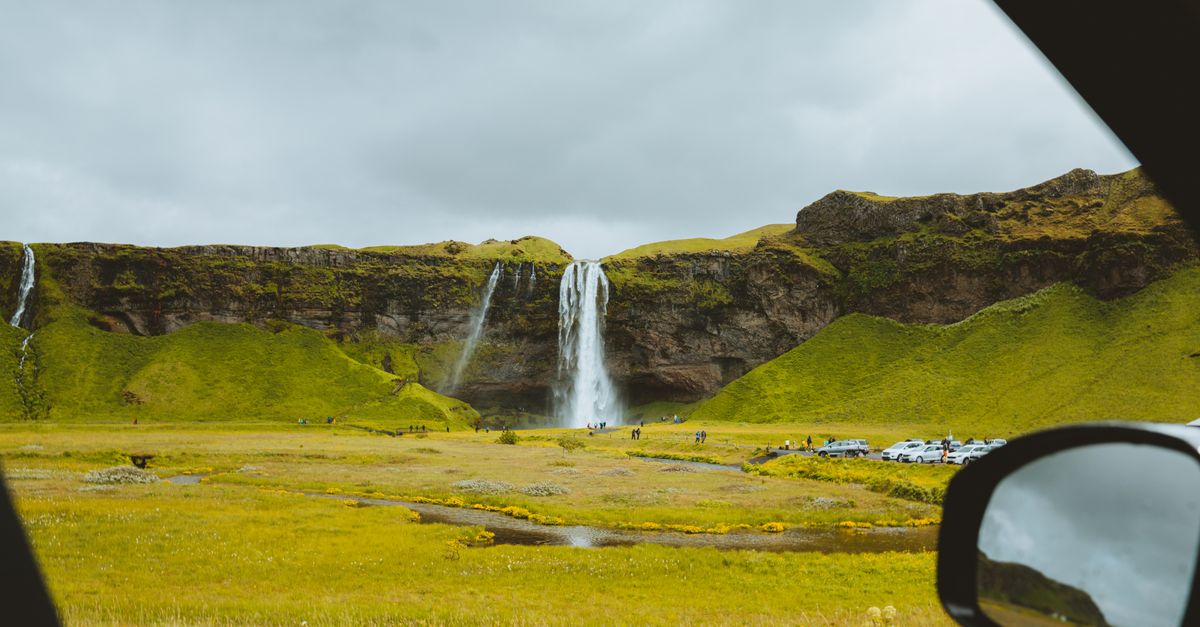
Photo · Matt Hardy · Pexels
Route 1 is 1,332 kilometres and about seventeen hours of driving, which divides out to almost nothing and is why people book a week. Here is the arithmetic nobody shows you, because nobody drives only Route 1.
| Real distance | Driving | Per day | Buffer days | |
|---|---|---|---|---|
| 7 days | ~1,750 km | ~24 h | 4.5–5 h | 0 |
| 9 days | ~2,100 km | ~28 h | ~4 h | 1 |
| 12 days | ~2,600 km | ~34 h | ~3.5 h | 2 |
And the counter-intuitive finding worth being honest about: going from seven days to nine barely reduces your daily driving. The two extra days get spent on the Snæfellsnes peninsula, which adds about 350 kilometres. What nine days actually buys is one weather day and two unhurried ones — not less time at the wheel.
If your goal is genuinely less driving, you have to go to twelve and refuse to add Snæfellsnes.
Nine days is the right answer for most people, on one condition: you designate one day as a zero-driving day and protect it. Seven days is a transit — you see Iceland through a windscreen.
Anticlockwise, and why
South coast first. Four reasons, in order of weight.
The best one is loss protection. The south coast and Jökulsárlón are the trip's finest assets. If weather eats a day — and across nine days it might — you want them already banked. Go clockwise and a storm on day seven costs you the waterfalls; go anticlockwise and it costs you the east fjords.
You are also freshest for the densest section, accommodation books in a logical sequence, and in winter the south is the best-ploughed stretch, so you can turn back with something still to do.
The one argument the other way, which is the connoisseur's choice: reach the south coast on day seven or eight going clockwise and you can photograph Seljalandsfoss and Reynisfjara at seven in the morning, long before the Reykjavík day coaches arrive between ten and four.
The nine days
Driving times are GPS only. Add fifty to a hundred per cent for stops.
| Day | Leg | km | Driving |
|---|---|---|---|
| 1 | Keflavík → Reykjavík | 50 | 0:45 |
| 2 | Golden Circle → Hvolsvöllur | 250 | 3:15 |
| 3 | South coast waterfalls → Vík | 90 | 1:15 |
| 4 | Vík → Skaftafell → Jökulsárlón → Höfn | 275 | 3:30 |
| 5 | East fjords → Egilsstaðir | 265 | 3:45 |
| 6 | → Dettifoss → Mývatn | 200 | 2:45 |
| 7 | Mývatn → Goðafoss → Akureyri | 100 | 1:15 |
| 8 | Akureyri → Snæfellsnes | 390 | 4:45 |
| 9 | Snæfellsnes loop → Reykjavík | 300 | 4:00 |
Day three is the shortest drive and the most stops — Seljalandsfoss, Gljúfrabúi, Skógafoss, Dyrhólaey, Reynisfjara. It is also the day seven-day itineraries destroy by merging it with the Golden Circle.
Day seven is your buffer. If weather has cost you time, this is where you claw it back.
Day eight is the long dull one — four and three-quarter hours of empty upland with almost nothing to stop for. Break it at Hvítserkur or the Grábrók crater, or resent it.
Two other legs to brace for. The east fjords are beautiful but slow: Route 1 winds into every inlet and you will average 50–55 km/h even on a clear day, so people budget three hours for a four-hour drive. And Möðrudalsöræfi, between Egilsstaðir and Mývatn, is the highest and bleakest part of the whole road and the first to close.
Do not take the Öxi shortcut on Route 939 to save an hour between Höfn and Egilsstaðir. It is a steep, narrow mountain pass, impassable in bad weather, and many rental contracts bar it outright.
The insurance, which is where the money actually goes
Standard cover leaves you a USD 2,000–3,000 excess. Three add-ons matter in Iceland, and only one of them is commonly included.
Gravel protection covers windscreen and paint chips from flying stones. A windscreen is 70,000–200,000 ISK. Some companies include it; many do not. Check, do not assume.
Sand and ash protection is the one people decline and the one that ruins trips. Wind-blown volcanic sand strips paint and pits glass, mainly on the south coast between Vík and Skaftafell — exactly the stretch this itinerary drives on day four. It is almost never included as standard, and uninsured claims run 500,000 to 1,500,000 ISK.
And the exclusion nobody warns about: wind damage to doors. A gust catches an open door, bends it back and wrecks the hinge. It is excluded from most standard packages and some insurers treat it as negligence. Park nose into the wind, and hold the door with both hands. Every time.
Budget 4,500–6,000 ISK a day, about A$52–69, for gravel plus sand-and-ash plus a zero excess. This is not the line to economise on.
Fuel is cheaper than every guide says, and there is a new tax
Petrol was 220.29 ISK a litre in late August 2026 — about A$2.53. That is down 26.7% on a year earlier, because Iceland cut fuel excise on 1 January 2026 and replaced it with a per-kilometre road charge.
Any guide quoting 290–340 ISK a litre is describing 2025.
The kilometre road tax is about 6.95 ISK per kilometre and applies to rentals. Companies pass it on either per kilometre with a margin, or as a flat daily charge of around 1,390–1,550 ISK. Watch for it appearing as an unquoted desk charge on broker bookings.
For the 2,100km loop: about 44,700 ISK (A$514) in a small petrol car or 53,900 ISK (A$620) in a compact SUV, fuel and kilometre tax together.
What nine days costs
Two people, nine days, September shoulder season, excluding flights. Converted at 1 ISK = A$0.0115.
| ISK | In AUD | |
|---|---|---|
| Car hire, mid-size 2WD | 117,000 | A$1,346 |
| Insurance bundle | 48,000 | A$552 |
| Fuel and kilometre tax | 48,000 | A$552 |
| 8 nights' accommodation | 230,400 | A$2,650 |
| Food | 135,000 | A$1,553 |
| Activities, three each | 80,000 | A$920 |
| Parking and entry | 12,000 | A$138 |
| Total, two people | 670,400 | ≈A$7,710 |
| Per person | ≈A$3,855 |
Campervan and self-catering brings that to about A$2,240 each; hotels, a 4x4 and five activities pushes it past A$6,100.
Two charges that are new enough to catch people. Accommodation tax is 800 ISK per room per night — per unit, not per person, so it is the same for a couple as for one — and 400 ISK at campsites. And parking is now 1,000 ISK a vehicle at Þingvellir, Geysir, Seljalandsfoss, Skógafoss, Reynisfjara, Fjaðrárgljúfur, Skaftafell, Jökulsárlón and Kirkjufell. Kerið is the odd one out at 600 ISK per person. Doing Skaftafell and Jökulsárlón on the same day gets you 50% off the second. Budget 10,000–15,000 ISK (A$115–170) across the trip.
Season, which decides everything
Daylight swings by about seventeen hours. Around 21 June you get roughly 21 hours in Reykjavík and nearly 24 in Akureyri. Around 21 December you get four hours and seven minutes — sunrise at 11:20, sunset at 15:30.
A nine-day winter ring road is a bad idea for a first-timer, and it is worth saying plainly. Route 1 is ploughed and full closures are rarer than people think — but four hours of light means you cannot drive 250 kilometres and sightsee in the same day, individual sections close regularly on wind, and one storm destroys a plan with no slack in it. Wind, not snow, is the primary hazard.
The winter alternatives that do work: a south coast out-and-back from Reykjavík over four or five nights, which has the best light-to-driving ratio and all the icons; or flying to Akureyri for the north instead of driving to it. If you insist on the loop in winter, allow twelve to fourteen days and plan to abandon it partway.
Northern lights and the midnight sun are mutually exclusive. From mid-May to early August there is no aurora because the sky never darkens. The overlap windows are late August to early October and March into early April — enough light to drive, enough darkness to see something.
The best single month for this trip is late September. All roads open, prices well off peak, twelve to fourteen hours of daylight, and aurora active from about the second week. Hotels in July and August run 40–60% above the same rooms in May or September.
Three sites to check every morning
Not the night before. Conditions change in hours.
- umferdin.is — live road conditions and closures.
- safetravel.is — alerts, travel plans, the 112 app.
- vedur.is — weather, and specifically the wind
warnings, which are the ones that matter.
Volcanoes, and what they actually affect
As of late August 2026 there is no eruption underway on the Reykjanes peninsula. The last ran from mid-July to early August 2025 — the ninth in a series that began in December 2023 — and this is the longest quiet spell since it started. Magma continues to accumulate beneath Svartsengi and the meteorological office expects another intrusion at some point.
None of it has ever closed the ring road. Across all nine eruptions there was no flight disruption, no effect on Reykjavík, and no road closure outside a small zone near Grindavík. Keflavík has operated normally throughout.
What it does affect is the Blue Lagoon, which has closed at short notice repeatedly, usually on gas-pollution forecasts. Which brings us to the second mistake.
The two mistakes
Renting a 4x4 for the ring road. Covered above, and it is the most expensive misdirection in Iceland travel advice.
Booking the Blue Lagoon straight from the airport on arrival day. It is on nearly every Iceland list and it is now the worst-value booking in the itinerary. It is the single most disruption-exposed thing you will book — 20 kilometres from Grindavík, inside the active volcanic zone, closed repeatedly at hours of notice. And it is the wrong day: you are spending 12,990–16,990 ISK (A$150–195) per person on your most jet-lagged day after a thirty-hour flight from Australia, in the most crowded slot, because everyone else read the same advice.
Better: Mývatn Nature Baths on day six, which is on the route, cheaper and geothermally more interesting. Or GeoSea at Húsavík, or Sky Lagoon in Reykjavík. If the Blue Lagoon is non-negotiable, book it on the way out with a refundable ticket — and never on the morning of your flight home.
One safety note that belongs in every Iceland guide
Reynisfjara's sneaker waves have killed six people in twenty years, most recently a nine-year-old in August 2025, with at least a dozen more near-misses needing rescue. The waves arrive without pattern and drag people off a steeply shelving black beach into water nobody survives long in.
Never turn your back on that sea, and do not walk down to the waterline for a photograph. It is the most dangerous place on this entire itinerary and it looks like a beach.
Before you book
The Iceland country guide covers the practicalities and the Reykjavík city guide covers your first and last nights. When to go matters more here than anywhere else on this site — the difference between June and December is not a matter of degree. If you are comparing European road trips, Italy in ten days and Portugal in ten days are the rail-based alternatives, and our other itineraries cover the rest. Ready to book a base? Reykjavík stays are here.
Fuel prices, the kilometre tax, parking fees and volcanic status all checked September 2026. The volcanic picture in particular can change within weeks — check vedur.is and safetravel.is before you travel. Here is how we research and re-check guides.