Where to stay in Madrid, the big Spanish city that charges you nothing
Madrid charges no tourist tax while Barcelona now takes up to €12 a person a night. The barrios around Sol, which one suits you, and what that saving buys.
Photo · Miguel Cuenca · Pexels
Madrid does something no other major Spanish city does, and almost nobody mentions it in a where-to-stay guide.
It charges no tourist tax.
Barcelona's rose on 1 April 2026 to as much as €12 per person per night. Amsterdam takes 12.5% of the room price. Berlin takes 7.5% with no cap on nights. Madrid takes nothing, and the rate you are quoted is the rate you pay.
For a family of four over five nights, that is a difference of well over €200 against a Barcelona stay, before a single euro of the room-rate difference.
Euro. Convert any figure on this page into your own currency at today's published rate.
Open the currency converter →How the city is laid out
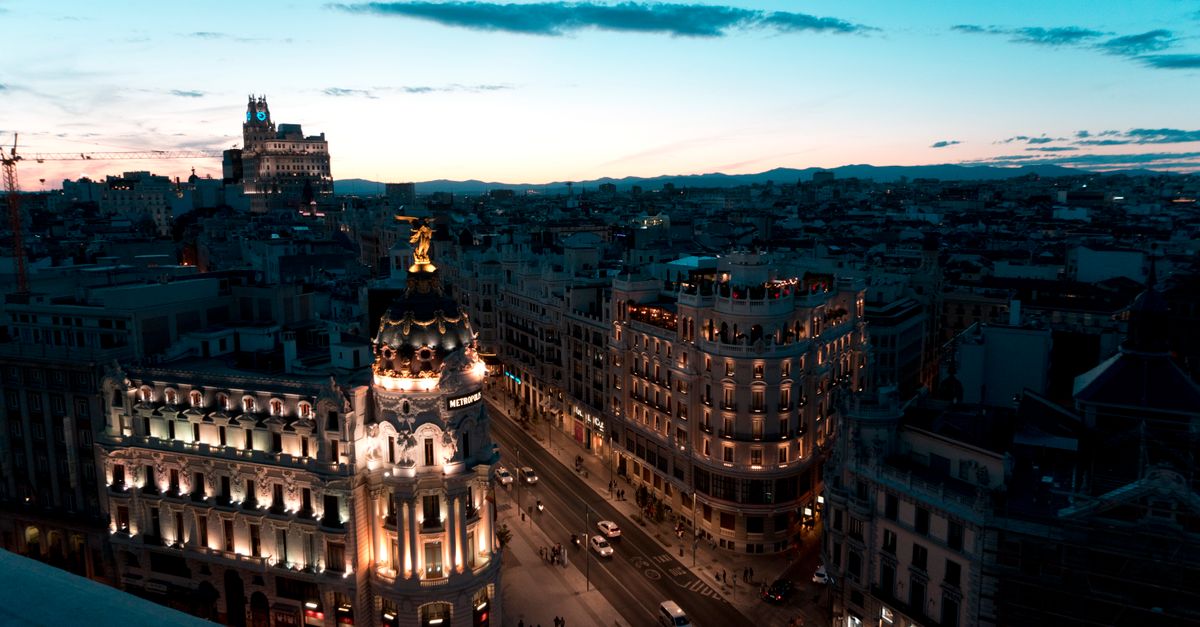
Madrid is a wheel. Puerta del Sol is the hub, literally: the kilometre zero marker for Spain's road network is set in the pavement there.
Around it sit the barrios, each about ten minutes' walk from the next: La Latina to the south-west, Lavapiés below it, Huertas and the museums to the east, Malasaña and Chueca to the north, and the grander Salamanca and Chamberí beyond those.
Everything a first-time visitor wants is inside that ring, and the metro, which is among the best in Europe, makes being two stops out almost costless in time.
The barrios
Sol and Centro, for a first visit
You are at the hub. The Plaza Mayor, the Royal Palace, the Prado and the Reina Sofía are all a walk, every metro line passes through, and the airport train and the Atocha and Chamartín stations are all easy from here.
The catch: the immediate streets around Sol are the busiest in Madrid, the retail is chain-heavy, and it is loud. Book a street or two off the square and you get the connectivity without the noise.
Malasaña, for a city with its own life
North of Gran Vía, and the district that turned Madrid's post-Franco cultural explosion into a permanent condition. Independent shops, vintage, small bars, the best coffee in the city, and a young population that has not been priced out yet.
Best for: second visits, anyone under about forty, anyone who wants to be somewhere rather than near something. The catch: weekend nights are loud until very late, which in Madrid means genuinely very late.
Chueca, next door and calmer than its reputation
Madrid's gay quarter and one of its best-kept and most sociable neighbourhoods, with excellent restaurants, the Mercado de San Antón, and a daytime character that is considerably gentler than the nightlife suggests.
Best for: almost everybody, and it is under-recommended for couples and older visitors who assume it is not for them.
La Latina, for the food
South-west of Sol, the oldest part of the city, and the reason people talk about Madrid's tapas. Cava Baja is a single street with more good bars on it than most cities manage in total, and El Rastro, the Sunday flea market, runs through the neighbourhood.
Best for: eating, and a Sunday. The catch: Sunday is chaos, in the good sense, and the streets are medieval and narrow.
Salamanca and Chamberí, for quiet
North and east, grid-planned, handsome, residential and expensive. Salamanca is the smart shopping district and has the highest-end restaurants. Chamberí is the one we would actually pick: quieter, cheaper, genuinely residential, with the best neighbourhood eating in Madrid and a metro ride of about ten minutes into the centre.
Best for: families, longer stays, anyone who wants to sleep.
Huertas and Barrio de las Letras, for the museums
Between Sol and the Prado, the old literary quarter, with Cervantes and Lope de Vega's streets and a dense run of bars. Ten minutes from the Golden Triangle of museums.
The catch: Calle Huertas itself is a nightlife street.
One honest note on prices: we could not verify current Madrid area-average room rates from a source we trust, so we have not printed bands we have not checked. The shelf above is live. What we can say from the Spanish market generally is that Madrid runs below Barcelona for equivalent quality, and that the no-tax position widens that gap further.
Where not to stay
On Gran Vía itself. It is Madrid's Oxford Street: six lanes, chain shops and traffic noise, with far better streets one block either side.
Around Atocha or Chamartín stations purely for the connection. Both are on the metro from anywhere central.
Outside the M-30 on a short trip. The metro is good and the centre is small, so there is no need.
Anywhere chosen for a rooftop pool in November. Madrid's altitude means real winters, and the famous rooftops close.
The thing that catches everyone
Madrid eats late, and later than you think. Lunch runs from about two, and dinner does not start until nine and is normal at ten. A restaurant that is empty at eight in the evening is not bad, it is early.
Plan around it rather than fighting it: a late breakfast, a proper lunch, a drink and a pincho at seven, dinner at half past nine. Trying to eat at seven puts you in the places that cater to people who do not know.
When to go
April, May, September and October are the best months, and Madrid's autumn is especially good.
July and August are genuinely brutal. Madrid sits at 650 metres on a plateau and summer regularly passes 38 degrees, with no coast to soften it. The city empties in August and a good share of the restaurants close.
November to March is cold, bright and cheap, and Madrid in winter has the clearest light of any European capital.
The paperwork
Short tourist stays only. Checked 21 Aug 2026; rules change without notice and the government page is the source of truth.
Check your own passport →Checked 21 Aug 2026.
Everything we check for Spain →Before you book
Where to stay in Barcelona is the direct comparison and the sharpest contrast, because its tourist tax doubled on 1 April 2026 and Madrid still has none. Staying longer than a holiday? Spain's digital nomad visa explains why applying from inside the country gets you a three-year permit rather than one, and the best digital nomad cities for 2027 puts Madrid against Athens and Lisbon on the gap between visa threshold and rent. For the same decision in Portugal, Lisbon or Porto resolves to a day count. The Madrid city guide and the Spain country guide have the practicalities, and there is more in the where to stay hub. Ready to look at rooms? Madrid stays are here, and the things to do shelf has the bookable half.
The tax position was checked September 2026. Spain devolves accommodation taxes to its regions and the Community of Madrid had not introduced one at the time of writing, which is what makes the comparison with Catalonia so stark. Where we could not verify a current room band we have said so rather than printing one.