Is Mexico City safe, and the three risks that are not crime
Yes, with the care any large city needs. The neighbourhoods and the hours, the two scams that matter, and the altitude, water and earthquake facts nobody lists.
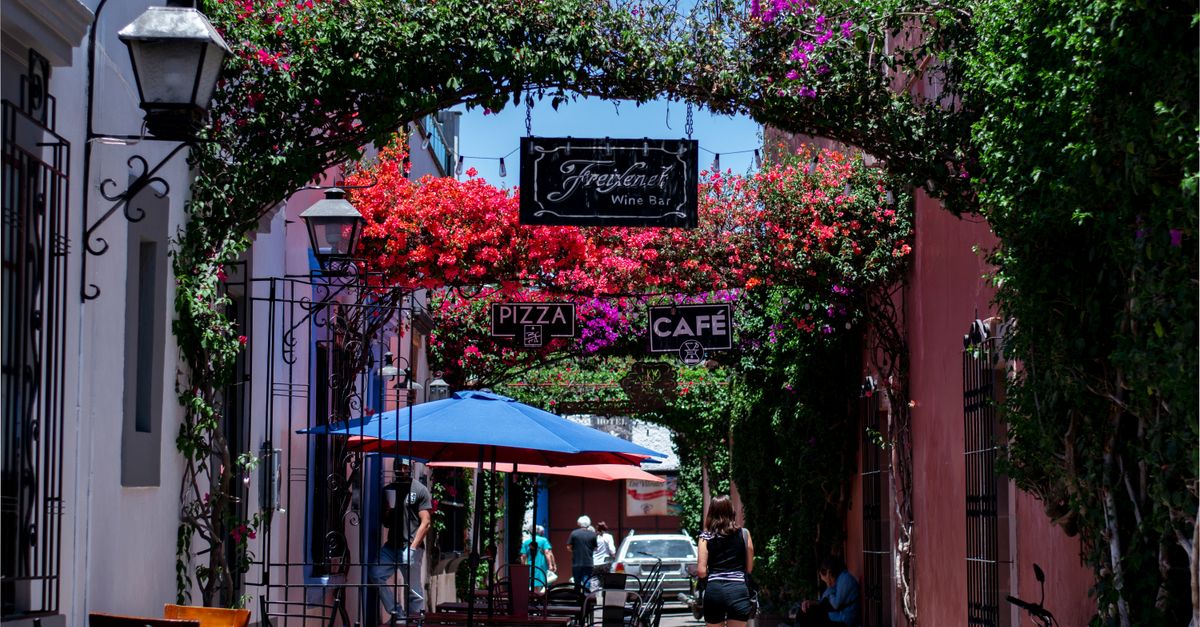
Photo · Gibrán Riojas · Pexels
Yes, with the care any large city asks for.
The single most useful piece of context is one nobody puts in the answer: the United States rates Mexico City at Level 2, exercise increased caution, which is the same level it gives France and the United Kingdom. That is not a statement that nothing happens in Mexico City. It is a statement about proportion, and the question is usually asked without any.
The rest of this page is the specific version: which neighbourhoods, which hours, which two scams, and the three risks most likely to affect you, none of which are crime.
Mexican peso. Convert any figure on this page into your own currency at today's published rate.
Open the currency converter →By neighbourhood, and by hour
| Area | By day | After dark | Notes |
|---|---|---|---|
| Roma Norte | Fine | Fine | Where most visitors stay, and rightly |
| Condesa | Fine | Fine | Leafy, residential, busy in the evening |
| Polanco | Fine | Fine | The most heavily policed part of the city |
| Coyoacán | Fine | Fine in the centre | Quieter, ends earlier |
| San Ángel | Fine | Quiet | Weekend market is the reason to go |
| Centro Histórico | Excellent | Thins out fast | The hour rule matters most here |
| Doctores | Mixed | Avoid parts | Borders Roma and is not Roma |
| Tepito | No | No | No visitor reason to go |
| Iztapalapa | Mixed | Avoid parts | Large, peripheral, mostly residential |
Crime rates in Roma Norte, Condesa and Polanco run well below the city-wide figures, which is what you would expect from blocks with private security, steady police presence and a great deal of foot traffic.
The two scams that actually matter
Street taxis. This is the one with real consequences. Hailing a taxi off the street in Mexico City is how the occasional secuestro exprés, an express kidnapping in which someone is driven between cash machines, happens. It is rare and it is almost entirely avoidable.
Use Uber or Didi. Both work everywhere a visitor goes, both are cheap, and both give you a named driver and a tracked route. Authorised taxi ranks at the airport and at official sitios are also fine. The rule is simply: do not put your hand out at the kerb.
Pickpocketing on the metro. The metro is cheap, extensive and used by millions of people a day, and it is also where almost all opportunistic theft against visitors happens. Nothing in a back pocket, bag in front at rush hour, phone out of sight on a crowded platform. There are women-only carriages at the front of most trains if you want them.
Neither of these is exotic. They are the same two rules that apply in Barcelona and Rome, stated plainly.
The three risks that are not crime
Here is the part missing from every page that answers this question, and it is the part most likely to affect your trip.
1. The altitude
Mexico City sits at 2,240 metres, which makes it one of the highest capital cities in the world, and the air holds about 25% less oxygen than at sea level.
Most travellers need 24 to 72 hours to adjust. What that feels like: a headache, breathlessness on stairs, poor sleep the first night, and a significantly lower tolerance for alcohol. That last one catches people out on their first evening, because a couple of mezcals at 2,240 metres does not behave like a couple of mezcals at sea level.
What to do: land, drink water, eat, and do almost nothing on day one. Save Teotihuacán and any long walking day for day three.
2. The water
Tap water in Mexico City is not considered safe to drink. The system is under genuine strain from ageing infrastructure and supply problems, and this applies to residents as much as visitors, which is why every household has a garrafón.
Drink bottled or garrafón water, including for brushing your teeth. If you are boiling water, the altitude changes the rule: a rolling boil for three minutes rather than one, because water boils at a lower temperature up here.
Ice in established restaurants and hotels is made from treated water and is fine. Street ice is a different question.
3. The earthquakes, and the alarm
Mexico City sits on a former lake bed in a seismically active country, and it has built one of the world's most impressive responses to that.
SASMEX, the seismic alert system, works by detecting a quake at its source and sending a radio signal faster than the shaking travels. If at least two sensors register a tremor above magnitude 5.5 within 350 kilometres, the alarm sounds across Mexico City at least 50 seconds before the shaking arrives.
You will hear it. It is a loud, unmistakable klaxon followed by a voice. There is also a 12 September national drill each year, and the alarm is tested regularly, so hearing it does not automatically mean an earthquake.
What to do: in a low-rise building, the standard local practice is to leave calmly and get to open ground during those fifty seconds. In a high-rise, you stay put, away from windows, and shelter. Ask at your hotel on arrival where their assembly point is. It takes thirty seconds and it is the single most useful safety question you can ask in this city.
Solo, and as a woman
Mexico City is a normal large Latin American capital in this respect, and the practical advice is the same as it would be in Madrid or São Paulo, with two local additions.
The women-only metro carriages and buses exist and are well used. They are at the front of the train and the front of the platform, and using them is unremarkable.
Street harassment is more common than in northern Europe and less common than its reputation. It is overwhelmingly verbal.
The neighbourhood and hour table above applies unchanged, and Roma, Condesa and Coyoacán are all comfortable to walk in the evening.
One thing to be aware of, stated carefully
Mexico City has seen genuine local frustration about the effect of foreign remote workers and short-term rentals on rents in Roma and Condesa, and that frustration has occasionally reached the streets in the form of protests.
This is not a safety warning. It has not been directed at ordinary visitors and you are very unlikely to encounter it. It is worth knowing because it explains why those two neighbourhoods can feel more contested than their leafy streets suggest, and because the considerate response is straightforward: spend money locally, do not treat a residential colonia as a resort, and learn some Spanish. That is a good idea in any case.
What to skip
Street taxis. Covered above and worth its own line.
Wearing anything you would mind losing. Not because it will be taken, but because it changes how you carry yourself, and the visitors who look nervous and expensive are the ones who get approached.
Teotihuacán on your first morning. It is superb, it is a long day, and it is at even higher altitude than the city.
The metro after about ten at night. Use an app. It costs almost nothing.
Deciding from the country-level headlines. Mexico is a very large country and its security picture varies enormously by state. Reading a cartel story from another region as a description of Roma Norte is the same error as reading a London stabbing as a description of Edinburgh.
The practical layer
Visa-free · 180 days, on all five passports we check.
Short tourist stays only. Checked 21 Aug 2026; rules change without notice and the government page is the source of truth.
Check your own passport →Checked 21 Aug 2026.
Everything we check for Mexico →Before you book
Mexico City rewards more days than people give it, and the Mexico City guide and the Mexico country guide have the neighbourhoods and the practicalities. If you are considering a longer stay, the best digital nomad cities for 2027 covers Mexico City honestly, including the housing pressure above, and digital nomad visa countries has the legal routes. For timing, the when to go hub and where to travel in January both cover the dry season, which runs roughly November to April here. Travelling as a family? How to plan a family trip sets out the order to make the decisions in. More in the first trips hub. Ready to look at rooms? Mexico City stays are here, and the things to do shelf has the bookable half.
Advisory levels, neighbourhood guidance, altitude and water facts checked September 2026 against the US State Department's country information and published material on the Mexican seismic alert system. Advisory levels change; the government page is always the current source.