 Common · +100 XP
Best time to visit: Nov–Mar
Daily spend ~$80
Common · +100 XP
Best time to visit: Nov–Mar
Daily spend ~$80
Mexico
Ruins, reefs and one of the great food cultures, spread over a country most people only see the edge of.
Mexico in ten slides
Wikipedia · 3 Sep 2026


Best time to visit Mexico: Nov–Mar
Dry, warm, and the hurricane season is over.
Where people go in Mexico
- Mexico City5 days is about right
- Guadalajara3 days is about right
- Monterrey2 days is about right
- Puebla2 days is about right
- Tijuana2 days is about right
- Toluca2 days is about right
- Torreón1 days is about right
- Ciudad Juárez
- San Luis Potosí
- León
What people go to see in Mexico

The National Museum of Anthropology is a national museum of Mexico. It is the largest and most visited museum in Mexico. Located in the area between Paseo de la Reforma and Mahatma Gandhi Street within Chapultepec Park in Mexico City, which is a wide-open natural park and has a great history, because it was the place where Aztec emperors spent time.
Wikipedia · CC BY-SA 4.0 · 8 Jul 2026
kornemuz · CC BY-SA 3.0

The Palacio de Bellas Artes is a prominent cultural center in Mexico City. It hosts performing arts events, literature events and plastic arts galleries and exhibitions. "Bellas Artes" for short, has been called the "art cathedral of Mexico", and is located on the western side of the historic center of Mexico City which is close to the Alameda Central park.
Wikipedia · CC BY-SA 4.0 · 26 Feb 2026
Xavier Quetzalcoatl Contreras Castillo · CC BY-SA 3.0

Chapultepec, more commonly called the "Bosque de Chapultepec" in Mexico City, is one of the largest city parks in Mexico, measuring in total just over 866 hectares. Centered on a rock formation called Chapultepec Hill, one of the park's main functions is as an ecological space in Greater Mexico City. It is considered the first and most important of Mexico City's "lungs".
Wikipedia · CC BY-SA 4.0 · 31 May 2026
EneasMx · CC BY-SA 4.0

The Frida Kahlo Museum, also known as The Blue House for the structure's cobalt-blue walls, is a historic house museum and art museum dedicated to the life and work of Mexican artist Frida Kahlo. It is in the Colonia del Carmen neighborhood of Coyoacán in Mexico City.
Wikipedia · CC BY-SA 4.0 · 22 Jun 2026
No machine-readable author provided. Nachtwächter assumed (based on copyright claims). · CC BY-SA 3.0

The Templo Mayor was the main temple of the Mexica people in their capital city of Tenōchtitlan, which is now Mexico City. Its architectural style belongs to the late Postclassic period of Mesoamerica. The temple was called Huēyi Teōcalli in the Nahuatl language, meaning 'great church' or 'great house of god'.
Wikipedia · CC BY-SA 4.0 · 5 Aug 2026
GAED · CC BY-SA 3.0

Lake Xochimilco is an ancient endorheic lake, located in the present-day Borough of Xochimilco in southern Mexico City. It is the last remaining habitat of the axolotl.
Wikipedia · CC BY-SA 4.0 · 27 Jul 2026
Originally uploaded by Madman2001; transferred to Commons by Kierano. · Public domain

Zócalo is the common name of the main square in central Mexico City. Prior to the conquest by Spain, it was the main ceremonial center in the Aztec city of Tenochtitlan. The plaza used to be known simply as the Plaza Mayor or Plaza de Armas, and today its formal name is Plaza de la Constitución.
Wikipedia · CC BY-SA 4.0 · 5 Aug 2026
Comisión Mexicana de Filmaciones from México D. F., México · CC BY-SA 2.0

Calixtlahuaca is a Postclassic period Mesoamerican archaeological site, located near the present-day city of Toluca in the State of Mexico. Known originally as Pintanbati and later "Matlatzinco", this urban settlement was a powerful capital whose kings controlled a large territory in the Toluca Valley.
Wikipedia · CC BY-SA 4.0 · 31 Aug 2026
Arian Zwegers from Brussels, Belgium · CC BY 2.0

Toluca, officially Toluca de Lerdo, is the state capital of the State of Mexico as well as the seat of the Municipality of Toluca. Toluca has a population of 223,876 as of the 2020 census. The city forms the core of the Greater Toluca metropolitan area, which with a combined population of 2,347,692 forms the fifth most populous metropolitan area in the country.
Wikipedia · CC BY-SA 4.0 · 30 Jul 2026
HernanLuna · CC BY-SA 3.0
Toluca, officially Toluca de Lerdo, is the state capital of the State of Mexico as well as the seat of the Municipality of Toluca. Toluca has a population of 223,876 as of the 2020 census. The city forms the core of the Greater Toluca metropolitan area, which with a combined population of 2,347,692 forms the fifth most populous metropolitan area in the country.
Wikipedia · CC BY-SA 4.0 · 30 Jul 2026
HernanLuna · CC BY-SA 3.0

The Fine Arts Museum of Toluca is a museum located in Toluca, Mexico. It is considered one of the most important museums in the State of Mexico for its architectural heritage. It is also one of the oldest museums in the city of Toluca.
Wikipedia · CC BY-SA 4.0 · 26 Aug 2025
Octavio Alonso Maya … · CC BY-SA 3.0
Toluca, officially Toluca de Lerdo, is the state capital of the State of Mexico as well as the seat of the Municipality of Toluca. Toluca has a population of 223,876 as of the 2020 census. The city forms the core of the Greater Toluca metropolitan area, which with a combined population of 2,347,692 forms the fifth most populous metropolitan area in the country.
Wikipedia · CC BY-SA 4.0 · 30 Jul 2026
HernanLuna · CC BY-SA 3.0
Toluca, officially Toluca de Lerdo, is the state capital of the State of Mexico as well as the seat of the Municipality of Toluca. Toluca has a population of 223,876 as of the 2020 census. The city forms the core of the Greater Toluca metropolitan area, which with a combined population of 2,347,692 forms the fifth most populous metropolitan area in the country.
Wikipedia · CC BY-SA 4.0 · 30 Jul 2026
HernanLuna · CC BY-SA 3.0
Club Deportivo Guadalajara S.A de C.V., simplified as CD Guadalajara, and also known as Chivas de Guadalajara, is a Mexican professional football club based in the Guadalajara metropolitan area, Jalisco. The club competes in Liga MX, the top division of Mexican football, and plays its home matches at Estadio Akron.
Wikipedia · CC BY-SA 4.0 · 29 Aug 2026

The Hospicio Cabañas or Cabañas Museum in Guadalajara, Jalisco was one of the oldest and largest orphanage and hospital complexes in the Americas. Now turned into a museum, the main hall hosts the magnum opus frescoes of muralist painter José Clemente Orozco. The place was designated a UNESCO World Heritage Site in 1997.
Wikipedia · CC BY-SA 4.0 · 22 Jan 2026
ProtoplasmaKid · CC BY-SA 4.0

Plaza de Armas is an urban square in Centro, Guadalajara, in the Mexican state of Jalisco.
Wikipedia · CC BY-SA 4.0 · 9 Aug 2026
Another Believer · CC BY-SA 4.0

Mercado Libertad, better known as Mercado San Juan de Dios is located in the city of Guadalajara, Jalisco, Mexico. It is the largest indoor market in Latin America with an area of 40,000 m2 (430,000 ft2).
Wikipedia · CC BY-SA 4.0 · 18 Jul 2026
Luke Bales Stodola · CC BY-SA 3.0

Teatro Degollado is a neoclassical Mexican theater known for its diverse performances and artistic design. It is located in the central plaza of Guadalajara, Jalisco, Mexico on Belen Street between Hidalgo Avenue and Morelos Avenue. Many performances from cultural Mexican dances to international operas take place in this building.
Wikipedia · CC BY-SA 4.0 · 31 Aug 2024
Adrián Cerón · CC BY-SA 4.0

Tlaquepaque, officially San Pedro Tlaquepaque, is a city and the surrounding municipality in the Mexican state of Jalisco.
Wikipedia · CC BY-SA 4.0 · 30 Aug 2026
Antonio Renteria Navarro · CC BY-SA 3.0
The Cerro del Obispado is a famous landmark in the city of Monterrey, Mexico, named after the building constructed in the middle of the slope by the end of the 18th century.
Wikipedia · CC BY-SA 4.0 · 1 Jul 2025

Monterrey is the capital and largest city of the northeastern Mexican state of Nuevo León. The city anchors the Monterrey metropolitan area, Mexico's second largest metropolitan area with a population of 5,347,000 as of 2026, and is often considered the richest city in Latin America. According to the 2020 census, Monterrey proper has a population of 1,142,194.
Wikipedia · CC BY-SA 4.0 · 2 Sep 2026
Rick González · CC BY 2.0

Museo de Arte Contemporáneo de Monterrey, abbreviated as MARCO, is a major contemporary art museum, located in the city of Monterrey, in Nuevo León state of northeastern Mexico.
Wikipedia · CC BY-SA 4.0 · 10 Jul 2026
Limbo@MX C · CC BY 2.5

Pabellón M also known as the InverCap Tower is a mixed-use skyscraper in Monterrey, Nuevo León. Built between 2010 and 2015, the tower stands at 207.6 m (681 ft) tall with 47 floors and is the current 10th tallest building in Mexico. It was the tallest building in Monterrey between 2015 and 2017.
Wikipedia · CC BY-SA 4.0 · 1 Sep 2026
Andrés Agustín I · CC BY-SA 4.0
Monterrey is the capital and largest city of the northeastern Mexican state of Nuevo León. The city anchors the Monterrey metropolitan area, Mexico's second largest metropolitan area with a population of 5,347,000 as of 2026, and is often considered the richest city in Latin America. According to the 2020 census, Monterrey proper has a population of 1,142,194.
Wikipedia · CC BY-SA 4.0 · 2 Sep 2026
Rick González · CC BY 2.0

The Palacio del Obispado, Spanish for Bishop's Palace, also known as El Obispado or the Bishop's Museum, originally called Palacio de Nuestra Señora de Guadalupe, is an 18th-century colonial building, located in Monterrey, Nuevo León state, Northeastern Mexico. It was constructed between 1787 and 1788 due to the initiative of Rafael José Verger, the second bishop of the Linares Diocese.
Wikipedia · CC BY-SA 4.0 · 21 Aug 2026
Brendablue77 · CC BY-SA 3.0
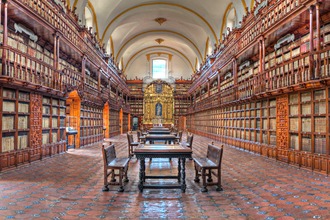
The Biblioteca Palafoxiana is a library in Puebla City's historic centre, in the Mexican state of Puebla. Founded in 1646, it is recognized by the UNESCO for being the first and oldest public library in the Americas, It has more than 45,000 books and manuscripts, ranging from the 15th to the 20th century. In 2005, it was listed on UNESCO's Memory of the World Register.
Wikipedia · CC BY-SA 4.0 · 14 Jul 2026
José P. Torrealba · CC BY 3.0

Puebla de Zaragoza, formally Heroica Puebla de Zaragoza, formerly Puebla de los Ángeles during colonial times, or known simply as Puebla, is the seat of Puebla Municipality. It is the capital and largest city of the state of Puebla, and the fourth-largest city in Mexico, after Mexico City, Monterrey, and Guadalajara.
Wikipedia · CC BY-SA 4.0 · 30 Jul 2026
Diego Delso · CC BY-SA 3.0

Cholula, is a city and district located in the metropolitan area of Puebla, Mexico. Cholula is best known for its Great Pyramid, with the Iglesia de Nuestra Señora de los Remedios sanctuary on top, as well as its numerous churches.
Wikipedia · CC BY-SA 4.0 · 10 Jun 2026
AlejandroLinaresGarcia · CC BY-SA 4.0

The Museo Amparo, located in the historic center of Puebla City, is one of the most important historical museums in Mexico. It was inaugurated in 1991 and sponsored by the Amparo Foundation, which was founded in 1979 by Manuel Espinoza Yglesias in honor of his wife.
Wikipedia · CC BY-SA 4.0 · 24 Jul 2026
No machine-readable author provided. Sachavir assumed (based on copyright claims). · CC BY-SA 2.5

Puebla, officially the Free and Sovereign State of Puebla, is one of the 31 states that, along with Mexico City, comprise the Federal Entities of Mexico. It is divided into 217 municipalities and its capital is Puebla City. Part of east-central Mexico, it is bordered by the states of Veracruz to the north and east, Hidalgo, México, Tlaxcala and Morelos to the west, and Guerrero and Oaxaca to the south.
Wikipedia · CC BY-SA 4.0 · 23 Aug 2026
Jakub Hejtmánek · CC BY-SA 3.0
Zócalo is the common name of the main square in central Mexico City. Prior to the conquest by Spain, it was the main ceremonial center in the Aztec city of Tenochtitlan. The plaza used to be known simply as the Plaza Mayor or Plaza de Armas, and today its formal name is Plaza de la Constitución.
Wikipedia · CC BY-SA 4.0 · 5 Aug 2026
Comisión Mexicana de Filmaciones from México D. F., México · CC BY-SA 2.0

Avenida Revolución is the tourist center in Tijuana, Baja California, México. It is a main thoroughfare of the historic downtown Tijuana, officially called Zona Centro, which forms part of the Delegación Centro or Central Borough of Tijuana.
Wikipedia · CC BY-SA 4.0 · 10 Dec 2025
Johntex · CC BY 2.5

The Plaza Monumental de Tijuana, and popularly known in English as the Bullring by the Sea, is a bullring in Tijuana, Baja California, Mexico. Its opening was held on June 26, 1960. The stadium holds 21,621 people.
Wikipedia · CC BY-SA 4.0 · 29 Jan 2026
Phil Konstantin (Philkon) · CC BY-SA 3.0


Tijuana is the most populous city of the Mexican state of Baja California, located on the northwestern Pacific Coast of Mexico. It is the municipal seat of the Tijuana Municipality, the hub of the Tijuana metropolitan area and the most populous city in northern Mexico. Tijuana is just south of California and is adjacent to the Mexico–United States border which is part of the San Diego–Tijuana metro area.
Wikipedia · CC BY-SA 4.0 · 2 Sep 2026
Isai Armenta · CC BY 4.0

Tijuana Municipality is a municipality in the Mexican state of Baja California. Its municipal seat is located in the city of Tijuana. According to the 2020 census, the municipality had a population of 1,922,523, making it the most populous municipality in the country.
Wikipedia · CC BY-SA 4.0 · 7 Jul 2026
Battroid · Public domain
The Auditorio Municipal de Torreón is an arena in Torreón, Coahuila, Mexico. The arena was opened on 1969. The arena is the home venue of the Toros Laguna of the CIBACOPA.
Wikipedia · CC BY-SA 4.0 · 30 Aug 2026

The Coliseo Centenario de Torreón, officially named "Centro de Espectaculos Coliseo Centenario" is a multi-purpose complex in Torreón, in the state of Coahuila, Mexico. The complex can seat up to 10,000 people. It can also accommodate and services concerts, theater, sports venue, exhibitions and conventions it also has restaurants, a bullfighting museum, and offices.
Wikipedia · CC BY-SA 4.0 · 30 Aug 2026
Alx 91 · CC BY-SA 3.0

El Cristo de las Noas, located on the Cerro de las Noas hill, in the Mexican city of Torreón, Coahuila, is a large sculpture by Vladimir Alvarado, portraying Jesus Christ. It was built between 1973 and 2000.
Wikipedia · CC BY-SA 4.0 · 2 Aug 2026
ProtoplasmaKid · CC BY 4.0

The Estadio Corona is a stadium in Torreón, Coahuila, Mexico, and the home stadium of Santos Laguna of Liga MX.
Wikipedia · CC BY-SA 4.0 · 30 Aug 2026
Gera vzqz92 · CC BY-SA 3.0

The Suraya Mosque is a Shia mosque located in Torreón, Coahuila, Mexico. The mosque was completed in 1989 and was the first purpose-built mosque constructed in Mexico.
Wikipedia · CC BY-SA 4.0 · 30 Jul 2026
Alkubra dsigns · CC BY-SA 3.0
Sourced stays
Sourced experiences
Fly to Mexico
The facts you look up on the plane
Guides about Mexico
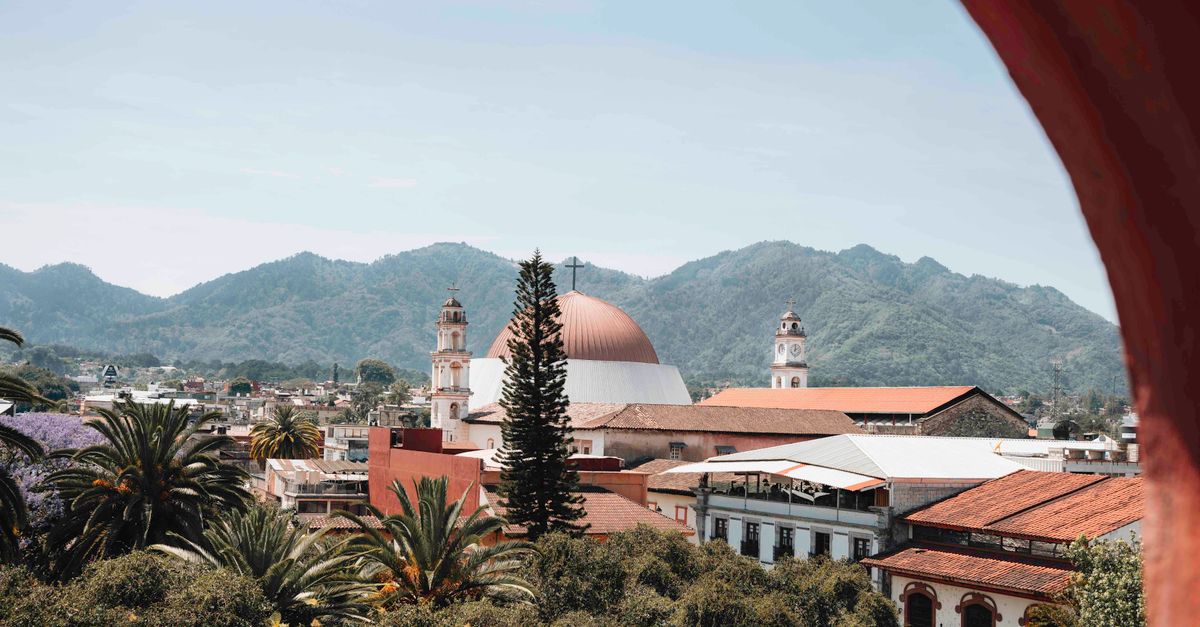
The best time to visit Mexico by region, with the sargassum season forecast as the worst on record, the monarch window and the hurricane months.
Camila Duarte · 4 Sep 2026
The Riviera Maya and the rest of Mexico are priced like different countries. The daily number for each, the four decisions, and where the money leaks.
Hannah Weiss · 2 Sep 2026
Mexico City for remote workers, with the residency threshold that varies by consulate, real Roma and Condesa rents, and the gentrification protests of 2025.
Tobi Adeyemi · 4 Sep 2026Not going yet? Pin it.
One tap puts it on your map and in your pins, for when you are ready.