 Common · +100 XP
Best time to visit: Mar–Apr · Oct–Nov
Daily spend ~$120
Common · +100 XP
Best time to visit: Mar–Apr · Oct–Nov
Daily spend ~$120
Japan
Precise and chaotic in the same block. Trains that apologise for twenty-second delays, and an alley of six-seat bars behind the station.
Japan in ten slides
Wikipedia · 3 Sep 2026


Best time to visit Japan: Mar–Apr · Oct–Nov
The heat breaks and the gardens turn — the best light of the year.
Where people go in Japan
What people go to see in Japan


Fukuoka Castle is a Japanese castle located in Chūō-ku, Fukuoka, Japan. It is also known as Maizuru Castle or Seki Castle. Completed in the early Edo period for tozama daimyō Kuroda Nagamasa, it has been designated a National Historic Site of Japan in 1957.
Wikipedia · CC BY-SA 4.0 · 19 Jul 2026
Mukai · CC BY-SA 3.0

Fukuoka Tower is a 234-metre (768 ft) tall tower located in the Momochihama area of Fukuoka, Japan. It is the tallest seaside tower in Japan. The highest observation deck at 123 metres has a 360° view of the surrounding area, being most visited at sunset.
Wikipedia · CC BY-SA 4.0 · 28 May 2026
Steffen Flor · CC BY-SA 4.0

Kushida-jinja (櫛田神社) is a Shinto shrine located in Hakata-ku, Fukuoka, Japan. Dedicated to Amaterasu and Susanoo, it is said to have been founded in 757. The Hakata Gion Yamakasa festival is centred on the shrine.
Wikipedia · CC BY-SA 4.0 · 30 Jul 2026
Pontafon · CC BY-SA 3.0

Ōhori Park is a park in Chūō-ku, Fukuoka, Japan and a registered Place of Scenic Beauty.
Wikipedia · CC BY-SA 4.0 · 8 Jan 2025
Tzuhsun Hsu from Taipei, Taiwan · CC BY-SA 2.0


Kawachi Wisteria Garden is a private garden located in Kitakyushu founded by Higuchi Masao. The garden contains over 20 kinds of wisterias in a 10,000m2 area. CNN listed the garden among Japan's 31 most beautiful places, and this greatly increased its visitors; access is now limited to timed, advance-purchase tickets.
Wikipedia · CC BY-SA 4.0 · 27 Apr 2026
そらみみ (Soramimi) · CC BY-SA 4.0


The Kitakyushu Municipal Museum of Art is located in Tobata-ku, Kitakyushu, Fukuoka Prefecture, Japan. Designed by Arata Isozaki, it sits on a hill straddling the three wards of Kokura Kita, Tobata, and Yahata Higashi. The museum houses more than 6,000 pieces of art, as well as offering various exhibitions throughout the year.
Wikipedia · CC BY-SA 4.0 · 8 May 2026
STA3816 · CC BY-SA 4.0


The Wakato Bridge , is a suspension bridge in Kitakyūshū, Fukuoka, Japan. The bridge opened on September 26, 1962, and it spans a length of two kilometers and has a main span of 367 meters. The name of the bridge comes from the characters of the Kitakyūshū wards of Wakamatsu (若松) and Tobata (戸畑) that the bridge connects across Dōkai Bay.
Wikipedia · CC BY-SA 4.0 · 8 May 2026
にしだ たかよし from 北九州市, 日本 · CC BY-SA 2.0

Arashiyama is a district on the western outskirts of Kyoto, Japan. It also refers to the mountain across the Ōi River, which forms a backdrop to the district. Arashiyama is a nationally designated historic site and place of scenic beauty.
Wikipedia · CC BY-SA 4.0 · 22 Jul 2026
lumoplank · CC0

Fushimi Inari-taisha is the head shrine of the kami Inari, located in Fushimi-ku, Kyoto, Japan. The shrine sits at the base of a mountain, also named Inari, which is 233 metres (764 ft) above sea level, and includes trails up the mountain to many smaller shrines which span 4 kilometres (2.5 mi) and take approximately 2 hours to walk up.
Wikipedia · CC BY-SA 4.0 · 30 Jul 2026
Basile Morin · CC BY-SA 4.0

Gion (祇園) is a district of Higashiyama-ku, Kyoto, Japan, originating as an entertainment district in the Sengoku period, in front of Yasaka Shrine. The district was built to accommodate the needs of travellers and visitors to the shrine. It eventually evolved to become one of the most exclusive and well-known geisha districts in all of Japan.
Wikipedia · CC BY-SA 4.0 · 14 Jul 2026
663highland · CC BY 2.5

Kinkaku-ji , officially named Rokuon-ji , is a Zen Buddhist temple in Kyoto, Japan and a tourist attraction. It is designated as a World Heritage Site, a National Special Historic Site, a National Special Landscape, and one of the 17 Historic Monuments of Ancient Kyoto. The temple is nicknamed after its reliquary (shariden), the Golden Pavilion , whose top two floors are coated in 0.5 μm gold leaf.
Wikipedia · CC BY-SA 4.0 · 1 Aug 2026
Nacaru · CC BY-SA 4.0

Kiyomizu-dera is a Buddhist temple located in eastern Kyoto, Japan. It belongs to the Kita-Hosso sect of Japanese Buddhism and its honzon is a hibutsu statue of Jūichimen Kannon. The temple's full name is Otowa-san Kiyomizu-dera.
Wikipedia · CC BY-SA 4.0 · 30 Jul 2026
Jordy Meow · CC BY-SA 3.0

Nijō Castle is a flatland castle in Kyoto, Japan. The castle consists of two concentric rings (Kuruwa) of fortifications, the Ninomaru Palace, the ruins of the Honmaru Palace, various support buildings and several gardens. The surface area of the castle is 275,000 square metres, of which 8,000 square metres (86,000 sq ft) is occupied by buildings.
Wikipedia · CC BY-SA 4.0 · 19 Jul 2026
Unknown · Public domain

Atsuta Shrine is a Shinto shrine, home to the sacred sword Kusanagi no Tsurugi, one of the three Imperial Regalia of Japan—traditionally believed to have been established during the reign of Emperor Keikō. It is located in Atsuta-ku, Nagoya, Aichi Prefecture in Japan. The shrine is familiarly known as Atsuta-Sama or simply as Miya.
Wikipedia · CC BY-SA 4.0 · 26 Jul 2026
Bariston · CC BY-SA 4.0

Nagoya Grampus, formerly known as Nagoya Grampus Eight, is a Japanese association football club based in Nagoya, Aichi. The club plays in the J1 League, and has been in the league for all but one season since the league's inauguration, following promotion from the J2 League in 2017.
Wikipedia · CC BY-SA 4.0 · 1 Sep 2026

Ōsu Kannon (大須観音) is a Buddhist temple of the Shingon sect located in Ōsu, in central Nagoya, Japan. It belongs to the Owari Thirty-three Kannon. Its address is 愛知県名古屋市中区大須2-21-47.
Wikipedia · CC BY-SA 4.0 · 16 Jul 2026
Asturio Cantabrio · CC BY-SA 4.0

The Tokugawa Art Museum is a private art museum, located on the former Ōzone Shimoyashiki compound in Nagoya, central Japan. Its collection contains more than 12,000 items, including swords, armor, Noh costumes and masks, lacquer furniture, Chinese and Japanese ceramics, calligraphy, and paintings from the Chinese Song and Yuan dynasties (960–1368).
Wikipedia · CC BY-SA 4.0 · 12 Aug 2026
Tomio344456 · CC BY-SA 4.0

The Toyota Commemorative Museum of Industry and Technology , also known as Toyota Tecno Museum, is a technology museum located in Nishi-ku in the city of Nagoya, central Japan.
Wikipedia · CC BY-SA 4.0 · 2 Sep 2026
Bariston · CC BY-SA 4.0

Dōtonbori or Dōtombori is a district in Osaka, Japan. Known as one of Osaka's principal tourist and nightlife areas, the area runs along the Dōtonbori canal from Dōtonboribashi Bridge to Nipponbashi Bridge in the Namba district of the city's Chūō ward. Historically a theater district, it is now a popular nightlife and entertainment area characterized by its eccentric atmosphere and large illuminated signboards.
Wikipedia · CC BY-SA 4.0 · 1 Sep 2026
Type specimen · CC BY-SA 3.0

Osaka Castle is a Japanese castle in Chūō-ku, Osaka, Japan. The castle is one of Japan's most famous landmarks and played a major role in the unification of Japan during the sixteenth century of the Azuchi–Momoyama period.
Wikipedia · CC BY-SA 4.0 · 19 Jul 2026
663highland · CC BY 2.5

Shinsekai is a neighbourhood located next to south Osaka City's downtown "Minami" area. The neighbourhood was created in 1912 with New York as a model for its southern half and Paris for its northern half. At this location, a Luna Park amusement park operated from 1912 until it closed in 1923.
Wikipedia · CC BY-SA 4.0 · 12 Aug 2026
Dick Thomas Johnson from Tokyo, Japan · CC BY 2.0

Sumiyoshi-taisha (住吉大社), also known as Sumiyoshi Grand Shrine, is a Shinto shrine in Sumiyoshi-ku, Osaka, Osaka Prefecture, Japan. It is the main shrine of all the Sumiyoshi shrines. It gives its name to a style of shrine architecture known as Sumiyoshi-zukuri.
Wikipedia · CC BY-SA 4.0 · 30 Jul 2026
Saigen Jiro · CC0

The Umeda Sky Building is a two-tower mixed-use skyscraper in Osaka, Japan. Located on the outskirts of the Umeda business district in Kita-ku, Osaka, the Umeda Sky Building consists of two 40-story towers interconnected at their two uppermost stories via glass bridges with escalators and elevators that cross an open atrium space. It is currently the fifteenth-tallest building in the prefecture.
Wikipedia · CC BY-SA 4.0 · 17 Jul 2026
Kakidai · CC BY-SA 4.0

Akiu Great Falls is a waterfall located in Taihaku-ku, Sendai, Miyagi Prefecture, Japan. It is a nationally designated Place of Scenic Beauty. It is one of "Japan’s Top 100 Waterfalls", in a listing published by the Japanese Ministry of the Environment in 1990.
Wikipedia · CC BY-SA 4.0 · 15 Jul 2026
Crown of Lenten rose · CC BY 3.0


Aoba Castle is a Japanese castle located in Sendai, Miyagi Prefecture. Throughout the Edo period, Aoba Castle was home to the Date clan, daimyō of Sendai Domain. The castle was also known as Sendai-jō (仙台城) or as Gojō-rō (五城楼).
Wikipedia · CC BY-SA 4.0 · 16 Jul 2026
掬茶 · CC BY-SA 4.0

Sendai Daikannon , officially known as the Sendai Tendou Byakue Daikannon (仙台天道白衣大観音), is a large statue located in Sendai, Japan. It portrays a woman, the bodhisattva Byakue Kannon holding the cintamani gem in her hand.
Wikipedia · CC BY-SA 4.0 · 2 Jul 2026
Hideyuki KAMON from Takarazuka / 宝塚市, Hyogo / 兵庫県, Japan / 日本 · CC BY-SA 2.0

Sendai Mediatheque is a library in Sendai, Miyagi Prefecture, Japan. It was designed by Toyo Ito in 1995 and completed in 2001.
Wikipedia · CC BY-SA 4.0 · 24 Mar 2026
scarletgreen from Japan · CC BY 2.0

Zuihōden (瑞鳳殿) in Sendai, Miyagi Prefecture, Japan is the mausoleum complex of Date Masamune and his heirs, daimyō of the Sendai Domain.
Wikipedia · CC BY-SA 4.0 · 30 Jul 2026
663highland · CC BY 2.5

Meiji Shrine is a Shinto shrine in Shibuya, Tokyo, that is dedicated to the deified spirits of Emperor Meiji and his wife, Empress Shōken. The shrine does not contain the emperor's grave, which is located at Fushimi-momoyama, south of Kyoto.
Wikipedia · CC BY-SA 4.0 · 30 Jul 2026
Akonnchiroll · CC BY-SA 4.0

Sensō-ji , is an ancient Buddhist temple in Asakusa, Tokyo, Japan. It is Tokyo's oldest-established temple, and one of its most significant. It is dedicated to Kannon, the bodhisattva of compassion.
Wikipedia · CC BY-SA 4.0 · 21 Aug 2026
Akonnchiroll · CC0

Shibuya Scramble Crossing , commonly known as Shibuya Crossing, is a scramble crossing in Shibuya, Tokyo, Japan. It is located near Shibuya Station in Shibuya, a major commercial and entertainment district in Tokyo. It has been described as the world's busiest pedestrian crossing, with as many as 3,000 people crossing during a single green light cycle.
Wikipedia · CC BY-SA 4.0 · 31 Aug 2026
David Kernan · CC BY 4.0
teamLab Planets TOKYO DMM.com is an art museum that utilizes digital technology and was established by teamLab and DMM.com. It is located in 6-chome, Toyosu, Koto-ku, Tokyo.
Wikipedia · CC BY-SA 4.0 · 27 May 2026

Tokyo Skytree , a.k.a Tokyo Sky Tree, is a broadcasting and observation tower, located in Sumida, Tokyo, Japan. It has been the tallest tower in Japan since opening in 2012, and reached its full height of 634 metres in early 2011, making it the tallest tower in the world, displacing the Canton Tower, and the third tallest structure in the world behind Merdeka 118 and Burj Khalifa.
Wikipedia · CC BY-SA 4.0 · 9 Aug 2026
Kakidai · CC BY-SA 3.0

Tsukiji Market is a former seafood market and major tourist attraction in Tokyo. Located in Tsukiji in central Tokyo between the Sumida River and the upmarket Ginza shopping district, the area contains retail markets, restaurants, and associated restaurant supply stores. Before 2018, it was the largest wholesale fish and seafood market in the world.
Wikipedia · CC BY-SA 4.0 · 22 Jul 2026
Kakidai · CC BY-SA 4.0

Act City Hamamatsu (アクトシティ浜松) is a facility consisting of four buildings in Hamamatsu, Shizuoka Prefecture, Japan. Act Tower, located in Zone B, is 213 metres (699 ft) tall and has 45 floors, making it the tallest building in Shizuoka Prefecture.
Wikipedia · CC BY-SA 4.0 · 6 May 2026
Ichitaro · CC BY-SA 3.0

Hamamatsu Castle is a hirayama-style Japanese castle ruin, with some replica castle buildings. It was the seat of various fudai daimyō who ruled over Hamamatsu Domain, Tōtōmi Province, in what is now central Hamamatsu, Shizuoka Prefecture, Japan under the Edo period Tokugawa shogunate. It is also called Shusse Castle .
Wikipedia · CC BY-SA 4.0 · 19 Jul 2026
Akonnchiroll · CC BY-SA 4.0

Motoshirochō Tōshō-gū is a Shinto shrine in Chūō-ku, Hamamatsu, Shizuoka Prefecture, Japan. It was established in 1886, and its main festival is held annually on October 10. It is also sometimes known as the Hamamatsu Tōshō-gū
Wikipedia · CC BY-SA 4.0 · 30 Jul 2026
ヒラタイプ · CC BY-SA 4.0

The Hamamatsu Museum of Musical Instruments is a museum in Hamamatsu, Japan. It is the first public museum about musical instruments in Japan. The museum contains collections of different types of instruments from various parts of the world.
Wikipedia · CC BY-SA 4.0 · 6 May 2026
Lombroso · Public domain

Nakatajima Sand Dunes are located at the southern part of Hamamatsu, Shizuoka Prefecture at the Pacific Ocean coast of Japan. The sand dune area measures approximately 0.6 km from north to south and 4.0 km from east to west. It is considered one of Japan's three largest sand dune areas along with the Tottori Sand Dunes in Tottori Prefecture and Kujyūkurihama in Chiba Prefecture.
Wikipedia · CC BY-SA 4.0 · 27 Dec 2025
Japanexperterna.se · CC BY-SA 3.0

The Hiroshima Peace Memorial , originally the Hiroshima Prefectural Industrial Promotion Hall, and now commonly called the Genbaku Dome, Atomic Bomb Dome or A-Bomb Dome , is part of Hiroshima Peace Memorial Park in Hiroshima, Japan, and was designated a UNESCO World Heritage Site in 1996.
Wikipedia · CC BY-SA 4.0 · 13 Aug 2026
Oilstreet · CC BY 2.5

On 6 and 9 August 1945, the United States detonated two atomic bombs over the Japanese cities of Hiroshima and Nagasaki, respectively, during the final days of World War II. The aerial bombings killed 150,000 to 246,000 people, most of whom were civilians, and remain the first and only uses of nuclear weapons in an armed conflict.
Wikipedia · CC BY-SA 4.0 · 20 Aug 2026
George R. Caron / Charles Levy · Public domain

Itsukushima Shrine is a Shinto shrine on the island of Itsukushima, best known for its "floating" torii. It is in the city of Hatsukaichi, in Hiroshima Prefecture in Japan, accessible from the mainland by ferry at Miyajimaguchi Station. The shrine complex is listed as a UNESCO World Heritage Site, and the Japanese government has designated several buildings and possessions as National Treasures.
Wikipedia · CC BY-SA 4.0 · 26 Jul 2026
redlegsfan21 · CC BY-SA 2.0
The Hiroshima Peace Memorial , originally the Hiroshima Prefectural Industrial Promotion Hall, and now commonly called the Genbaku Dome, Atomic Bomb Dome or A-Bomb Dome , is part of Hiroshima Peace Memorial Park in Hiroshima, Japan, and was designated a UNESCO World Heritage Site in 1996.
Wikipedia · CC BY-SA 4.0 · 13 Aug 2026
Oilstreet · CC BY 2.5

Shukkei-en (縮景園) is a historic Japanese garden in the city of Hiroshima, Japan. The Hiroshima Prefectural Art Museum is located adjacent to the garden.
Wikipedia · CC BY-SA 4.0 · 5 Jul 2026
No machine-readable author provided. Fg2 assumed (based on copyright claims). · Public domain

The Hokkaidō Shrine , named the Sapporo Shrine until 1964, is a Shinto shrine located in Sapporo, Hokkaido, Japan. Sited in Maruyama Park, Chūō-ku, Sapporo, Hokkaido, the Hokkaido Shrine enshrines four kami including the soul of the Emperor Meiji. A number of early explorers of Hokkaidō such as Mamiya Rinzō are also enshrined.
Wikipedia · CC BY-SA 4.0 · 23 Aug 2026
S5A-0043 · CC BY 4.0

Mount Moiwa is a mountain located about 5 km (3 mi) southwest of the center of Sapporo, Hokkaido and 6 km (4 mi) southwest of Sapporo Station. A ropeway and a motorway pass through Mt. Moiwa, and an observatory and a ski resort in winter make it a resort for Sapporo citizens and tourists.
Wikipedia · CC BY-SA 4.0 · 15 Aug 2026
Nikm · Public domain

Odori Park is a park located in the heart of Sapporo, Hokkaido, Japan. Ōdōri (大通) means "large street" in Japanese. It stretches east to west through Nishi 1 chōme, Ōdōri to Nishi 12 chōme, Ōdōri, and divides the city into north and south sections. Odori Park spans about 1.5 km and covers 78,901 m².
Wikipedia · CC BY-SA 4.0 · 20 Jul 2026
Nkns · CC BY-SA 3.0

Sapporo Breweries Limited is a Japanese beer brewing company founded in 1876. Sapporo, the oldest brand of beer in Japan, was first brewed in Sapporo, Hokkaido, in 1876 by Seibei Nakagawa. The world headquarters of Sapporo Breweries is in Ebisu, Shibuya, Tokyo.
Wikipedia · CC BY-SA 4.0 · 15 Jun 2026
Sapporo Holdings Limited · Public domain

Sapporo Station is a major railway station in Kita-ku, Sapporo, Hokkaido, Japan. It is served by Hakodate Main Line and other lines of Hokkaido Railway Company, and is also connected to the Subway Sapporo Station.
Wikipedia · CC BY-SA 4.0 · 23 Aug 2026
663highland · CC BY 2.5
Sourced stays
Sourced experiences
Fly to Japan
The facts you look up on the plane
Guides about Japan

Japan's cherry blossom in 2027, with the expected peak dates, when the forecasts are actually published and how to book flights around a seven day window.
Rina Matsuda · 4 Sep 2026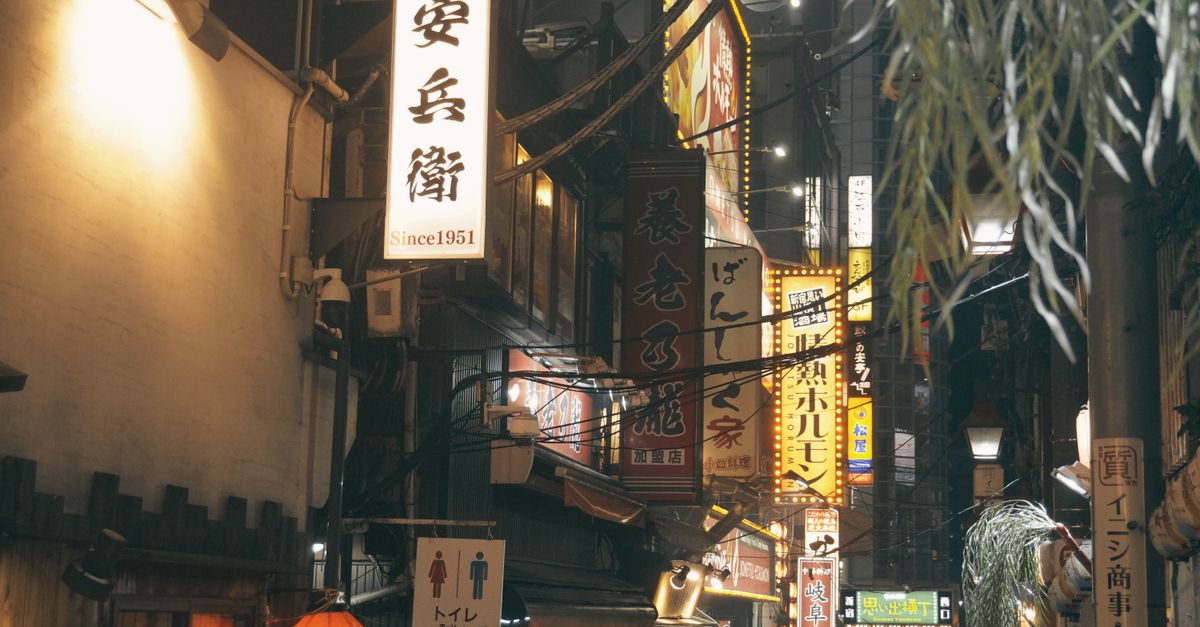
Japan's digital nomad visa in 2026: the ten million yen income test, the matching insurance requirement, and the six months that do not renew.
Tobi Adeyemi · 4 Sep 2026
For 74 nationalities, no, and 90 days is the standard. JESTA is coming but not until 2028, which a lot of coverage has got wrong. The rules that matter.
Rina Matsuda · 2 Sep 2026Not going yet? Pin it.
One tap puts it on your map and in your pins, for when you are ready.