 Common · +100 XP
Best time to visit: Nov–Feb
Daily spend ~$45
Common · +100 XP
Best time to visit: Nov–Feb
Daily spend ~$45
India
Not one trip — a dozen countries sharing a passport. Pick one region and stay in it.
India in ten slides
Wikipedia · 3 Sep 2026


Best time to visit India: Nov–Feb
Cool and dry across the north.
Where people go in India
What people go to see in India

Chandni Chowk is a street market square located in Old Delhi, India. One of the oldest and busiest markets in Delhi, the Mughal-era Red Fort straddles the eastern fringes of Chandni Chowk. It was built in 1650 by the Mughal Emperor, Shah Jahan, and designed by his daughter, Jahanara.
Wikipedia · CC BY-SA 4.0 · 9 Aug 2026
Goutam1962 · CC BY-SA 4.0

Humayun's tomb is the tomb of the Mughal Emperor Humayun located in Delhi, India. The tomb was commissioned by Humayun's first wife and chief consort, Empress Bega Begum, under her patronage in 1558, and designed by Persian architects Mirak Mirza Ghiyas and his son, Sayyid Muhammad, whom she personally chose.
Wikipedia · CC BY-SA 4.0 · 30 Aug 2026
Muhammad Mahdi Karim · GFDL 1.2

The India Gate is a war memorial located near the Rajpath on the eastern edge of the "ceremonial axis" of New Delhi. It stands as a memorial to 74,187 soldiers of the Indian Army who died between 1914 and 1921 in the First World War, in France, Flanders, Mesopotamia, Persia, East Africa, Gallipoli and elsewhere in the Near and the Far East, and the Third Anglo-Afghan War.
Wikipedia · CC BY-SA 4.0 · 20 Aug 2026
Incredible India Portal · CC0

The Masjid-i-Jehan-Numa, commonly known as the Jama Masjid, in Old Delhi area of Delhi, is one of the largest mosques in India. Its builder was the Mughal emperor Shah Jahan, between 1644 and 1656, and it was inaugurated by its first Imam, Syed Abdul Ghafoor Shah Bukhari. Situated in the Mughal capital of Shahjahanabad, it served as the imperial mosque of the Mughal emperors until the demise of the empire in 1857.
Wikipedia · CC BY-SA 4.0 · 24 Aug 2026
Bikashrd · CC BY-SA 4.0

Lodi Gardens is a city park situated in New Delhi. Spread over 90 acres (360,000 m2), it contains Muhammad Shah's tomb, the tomb of Sikandar Lodi, the Shisha Gumbad and the Bara Gumbad. These monuments date from the late Delhi Sultanate, during the Sayyid dynasty and Lodi dynasty.
Wikipedia · CC BY-SA 4.0 · 5 Jul 2026
Amaninder · CC BY-SA 3.0

The Qutb Minar, also spelled Qutub Minar and Qutab Minar, is a minaret and victory tower, built during the Delhi sultanate, and comprising the Qutb complex, a UNESCO World Heritage Site in Mehrauli, South Delhi, India. It was mostly built between 1199 and 1220, contains 399 steps, and is one of the most frequented heritage spots in the city.
Wikipedia · CC BY-SA 4.0 · 31 Aug 2026
Wasir kasab · CC BY 4.0

The Red Fort is a historic Mughal fort located in the Old Delhi area of Delhi, India. Serving as the main residence of the Mughal emperors, it was commissioned by Emperor Shah Jahan on the 12th of May 1639; the fort was constructed following his decision to shift the Mughal capital from Agra to Delhi.
Wikipedia · CC BY-SA 4.0 · 22 Jul 2026
PerSona77 · CC BY-SA 3.0
Jajmau formerly known as Jajesmow during British Era, is a suburb of Kanpur, India. It is situated on the banks of the Ganges River, and is an industrial suburb. It has the population of about 652,831 according to the census of 2011.
Wikipedia · CC BY-SA 4.0 · 17 Jul 2026

JK Temple is a Hindu temple in the Indian city of Kanpur, Uttar Pradesh, India. It is considered to be a unique blend of ancient and modern architecture. The mandapa of the temple has been constructed with high roof for adequate ventilation of light and air.
Wikipedia · CC BY-SA 4.0 · 1 Aug 2026
Sunshineroshan · CC BY-SA 3.0

Kanpur Sangrahalaya, also known as Kanpur Museum, is the official museum in Kanpur, the industrial hub of Uttar Pradesh, India. It was built by the British as King Edward Memorial Hall in honour of Edward VII. It is a storehouse of artifacts and exhibits that tell the story of the events and people who have influenced the making of Kanpur city, and tell many interesting details about the historical past of the city.
Wikipedia · CC BY-SA 4.0 · 9 Jul 2026
Sunshineroshan · CC BY-SA 3.0
Moti Jheel is a lake and drinking water reservoir in the Benajhabar area of Kanpur, which together with its adjoining gardens and children's park is an important tourist attraction. Built during the British Raj, today along with Kamala Retreat and Moti Park, it is an important recreational place in the bustling industrial city of Kanpur, once known as the "Manchester of the East".
Wikipedia · CC BY-SA 4.0 · 28 Jul 2026
Nana Rao Park / Company Bagh is a public city park in Kanpur, the industrial hub of Uttar Pradesh, India, built after Indian independence in honor of Nana Sahib. Prior to Indian Independence the location was known as Memorial Well and commemorated the massacre of British women and children during the Indian Rebellion of 1857.
Wikipedia · CC BY-SA 4.0 · 20 May 2026
Ganesh Shankar Vidyarthi Udyan / Phool Bagh, earlier Queen's Park, is an urban city park in Kanpur, the industrial hub of Uttar Pradesh in North India. It has been the location for many public meetings and political rallies in Kanpur from the early twentieth century.
Wikipedia · CC BY-SA 4.0 · 21 May 2026
Sunshineroshan · CC BY-SA 3.0

Ramakrishna Mission Ashrama is the Kanpur branch of the Ramakrishna Mission. The Ashram runs a charitable hospital, a senior secondary boys' high school and a library beside other charitable works.
Wikipedia · CC BY-SA 4.0 · 18 Apr 2026
Ramakrishna Mission This PNG graphic was created with GIMP. · Public domain

The Jama Masjid, also known as Jumah Mosque or Jami' Masjid, is a Friday mosque located in Ahmedabad, Gujarat, India. It was built in 1424 during the reign of Ahmad Shah I. The inscription on the central mihrab commemorates the inauguration of the mosque in 827 AH (1423/1424 CE), on the 1st Sarar, or January 4, by Sultan Ahmad Shah I.
Wikipedia · CC BY-SA 4.0 · 30 Jul 2026
Bernard Gagnon · CC BY-SA 3.0

Bhadra Fort is situated in the walled city area of Ahmedabad, India. It was built by Ahmad Shah I in 1411. With its well-carved royal palaces, mosques, gates and open spaces, it was renovated in 2014 by the Amdavad Municipal Corporation (AMC) and the Archaeological Survey of India (ASI) as a cultural centre for the city.
Wikipedia · CC BY-SA 4.0 · 18 Aug 2026
Unknown author · Public domain

Mill Owner's Building, also known as Mill Owner's Association or Ahmedabad Textile Mills Association (ATMA), is a modern architecture building in Ahmedabad, India designed by Swiss-French architect Le Corbusier.
Wikipedia · CC BY-SA 4.0 · 17 Jul 2026
Sanyam Bahga · CC BY-SA 3.0

Rani Rupamati's Mosque, also known as Rani Rupavati's Mosque or Mirzapur Queen's Mosque, is a Sufi mosque and dargah complex in the Mirzapur area of Ahmedabad, in the state of Gujarat, India. The structure is a Monument of National Importance.
Wikipedia · CC BY-SA 4.0 · 10 Aug 2026
Bernard Gagnon · CC BY-SA 3.0

The Sidi Saiyyed Mosque, popularly known locally as Sidi Saiyyed ni Jali, is a Sunni mosque located in Ahmedabad, in the state of Gujarat, India. The mosque was built by Sidi Sayyad, a Habshi nobleman, in 980 AH (1572/1573 CE). The structure is designated as a Monument of National Importance.
Wikipedia · CC BY-SA 4.0 · 30 Jul 2026
Bernard Gagnon · CC BY-SA 3.0


Bengaluru Palace is a 19th-century royal palace located in Bengaluru, Karnataka, India. It was commissioned by the Maharaja of Mysore, and was completed in 1874. The palace is open for public viewing, and in the recent years, the palace grounds have been to host various events and fairs, and is home to an amusement park.
Wikipedia · CC BY-SA 4.0 · 15 Apr 2026
Chuggingtrails · CC BY-SA 4.0

Dodda Basavana Gudi is situated in Bull Temple Road, Basavanagudi, area of South Bengaluru, part of the largest city of the Indian state of Karnataka. The Hindu temple is inside a park called Bugle Rock.
Wikipedia · CC BY-SA 4.0 · 13 Jul 2026
Rkrish67 at en.wikipedia · Public domain

Cubbon Park, officially Sri Chamarajendra Park, is a landmark park in Bengaluru, located in the heart of the city in the Central Business District. Originally created in 1870 under Major General Richard Sankey, then British Chief Engineer of Mysore State, it covered an area of 100 acres (0.40 km2). Subsequent expansion has since taken place and the park's area is now reported to be 300 acres (1.2 km2).
Wikipedia · CC BY-SA 4.0 · 15 Jul 2026
Augustus Binu/ facebook · CC BY-SA 3.0

Lalbagh Botanical Garden or simply Lalbagh, is a botanical garden in Bengaluru, India. It was originally built by Hyder Ali in 1760, during the Sultanate of Mysore. The garden was later managed under numerous British superintendents before Indian Independence.
Wikipedia · CC BY-SA 4.0 · 14 Aug 2025
Muhammad Mahdi Karim · GFDL 1.2

Tipu Sultan's Summer Palace, in Bangalore, India, is an example of Indo-Islamic architecture and was the summer residence of the Mysorean ruler Tipu Sultan. Hyder Ali commenced its construction within the walls of the Bangalore Fort in 1781, and it was completed during the reign of Tipu Sultan 10 years later in 1791.
Wikipedia · CC BY-SA 4.0 · 26 Mar 2026
Shrishailctalukar · CC BY-SA 4.0

Vidhana Soudha is a building in Bangalore, India. It serves as the seat of bicameral legislature comprising the Karnataka Legislative Assembly and the Karnataka Legislative Council. It is constructed in Neo-Dravidian style and was completed in 1956.
Wikipedia · CC BY-SA 4.0 · 10 Aug 2026
Muhammad Mahdi Karim www.micro2macro.net and Mydreamsparrow · GFDL 1.2

Fort St. George is a fortress at the coastal city of Chennai, India. Founded in 1639, it was the first English fortress in India. The construction of the fort provided the impetus for further settlements and trading activity, in what was originally an uninhabited land.
Wikipedia · CC BY-SA 4.0 · 19 Jul 2026
L.vivian.richard at English Wikipedia · Public domain

The Government Museum, Chennai, or the Madras Museum, is a museum of human history and culture located in the Government Museum Complex in the neighbourhood of Egmore in Chennai, India. Started in 1851, it is the second oldest museum in India after the Indian Museum in Kolkata. It has among the largest collections of Roman currency outside Europe.
Wikipedia · CC BY-SA 4.0 · 29 Jul 2026
L.vivian.richard at English Wikipedia · Public domain

The Kapaleeshwarar Temple is a Hindu temple dedicated to the god Shiva. It is located in Mylapore, Chennai in the Indian state of Tamil Nadu. The temple was built around the 7th century A.D. and is an example of South Indian Architecture.
Wikipedia · CC BY-SA 4.0 · 9 Aug 2026
Mohan Krishnan (en:User talk:Nsmohan · CC BY-SA 3.0

Marina Beach, or simply the Marina, is a natural urban beach in Chennai, Tamil Nadu, India, along the Bay of Bengal. The beach runs from near Fort St. George in the north to Foreshore Estate in the south, a distance of 6.0 km (3.7 mi), It is a prominent landmark in Chennai.
Wikipedia · CC BY-SA 4.0 · 21 Aug 2026
SlowPhoton · CC BY-SA 4.0

Mylapore, or Thirumayilai, is a neighbourhood in the central part of the city of Chennai, India. It is one of the oldest residential parts of the city. The locality is claimed to be the birthplace of the celebrated Tamil philosopher Valluvar, and the Hindu saint and philosopher, Peyalvar.
Wikipedia · CC BY-SA 4.0 · 16 Jun 2026
Ashok Arunagiri · CC BY-SA 4.0

San Thome Church, officially known as the National Shrine of St. Thomas Cathedral Basilica, is a church of the Catholic Church in India, at the Santhome neighbourhood of Chennai, in Tamil Nadu. It is the cathedral of the Archdiocese of Madras-Mylapore, and a minor basilica dedicated to Saint Thomas the Apostle. The present structure dates back to 1523 AD, when it was built by the Portuguese over the tomb of Thomas.
Wikipedia · CC BY-SA 4.0 · 28 May 2026
w:user:PlaneMad · CC BY-SA 2.5
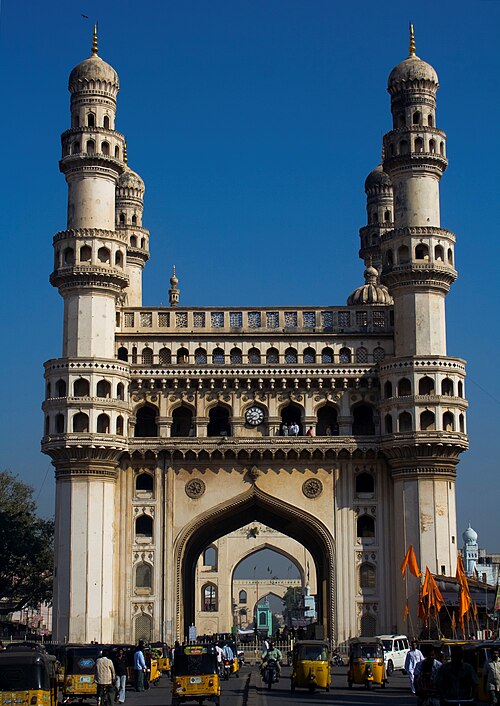
The Charminar is a monument located in Hyderabad, Telangana, India. Constructed in 1591, the landmark is a symbol of Hyderabad and officially incorporated in the emblem of Telangana. It remained the tallest structure in Hyderabad for 396 years until 1987.
Wikipedia · CC BY-SA 4.0 · 20 Aug 2026
DidierTais · CC BY-SA 3.0

Chowmahalla Palace or Chowmahallat is the palace of the Nizams of Hyderabad State located in Hyderabad, Telangana, India. It was the seat of power of the Asaf Jahi dynasty (1720-1948) and was the official residence of the Nizams during their reign. The palace has been converted into a museum and the ownership still lies with the family.
Wikipedia · CC BY-SA 4.0 · 18 Aug 2026
Bernard Gagnon · CC BY-SA 3.0

Golconda is a fortified citadel and ruined city located on the western outskirts of Hyderabad, Telangana, India. The fort was built by Kakatiya ruler Pratāparudra in the 11th century out of mud walls. It was ceded to the Bahmani Kings from Musunuri Nayakas during the reign of Bahmani Sultan Mohammed Shah I, during the first Bahmani–Vijayanagara War.
Wikipedia · CC BY-SA 4.0 · 9 Aug 2026
Bernard Gagnon · CC BY-SA 3.0

Hussain Sagar is a heart-shaped lake in Hyderabad, Telangana, India, built by Ibrahim Quli Qutb Shah in 1562. It is spread across an area of 5.7 square kilometres (2.2 sq mi) and is fed by the River Musi. A large monolithic statue of the Gautama Buddha, erected in 1992, stands on Gibraltar Rock in the middle of the lake.
Wikipedia · CC BY-SA 4.0 · 26 Aug 2026
Asimali2003 · CC BY-SA 4.0

The Qutub Shahi tombs are a series of Islamic tombs and mosques built by the various kings of the Qutub Shahi dynasty, located in the Ibrahim Bagh, close to the famous Golconda Fort in Hyderabad, in the Hyderabad district of the state of Telangana, India.
Wikipedia · CC BY-SA 4.0 · 21 Aug 2026
Alaka123 · CC BY-SA 4.0

The Salar Jung Museum is an art museum located at Dar-ul-Shifa, on the southern bank of the Musi River in the city of Hyderabad, Telangana, India. It is one of the notable National Museums of India. Originally a private art collection of the Salar Jung family, it was endowed to the nation after the death of Salar Jung III.
Wikipedia · CC BY-SA 4.0 · 29 Aug 2026
Omer123hussain · CC BY-SA 4.0

Dakshineswar Kali Temple is a Hindu navaratna style temple in Dakshineswar, Kolkata, West Bengal, India, on the eastern bank of the Hooghly River. The presiding deity of the temple is Bhavatarini (Kali), a form of Mahadevi or Parashakti Adya Kali, otherwise known as Adishakti Kalika. The temple was built in 1855 by Rani Rashmoni, a zamindar, and a devotee of Kali.
Wikipedia · CC BY-SA 4.0 · 9 Aug 2026
Knath · CC BY-SA 3.0

The Howrah Bridge is a balanced steel bridge over the Hooghly River in West Bengal, India. Commissioned in 1943, the bridge was originally named the New Howrah Bridge, because it replaced a pontoon bridge at the same location linking both sides of Kolkata. Burrabazar is connected with Howrah rail terminal because of this bridge.
Wikipedia · CC BY-SA 4.0 · 17 Aug 2026
Apoorva Karlekar · CC BY-SA 4.0

The Indian Museum is a grand museum in Central Kolkata, West Bengal, India. It is the ninth oldest museum in the world and the oldest, as well as the largest museum in Asia, by size of collection. It has rare collections of antiques, armour and ornaments, fossils, skeletons, mummies and Mughal paintings.
Wikipedia · CC BY-SA 4.0 · 14 Aug 2026
Vyacheslav Argenberg · CC BY 4.0

Kalighat Kali Temple is a Hindu temple in Kalighat, Kolkata, West Bengal, India, dedicated to the Hindu goddess Kali, one of the 10 Mahavidyas in the Hindu tantric tradition and the supreme deity in the Kalikula worship tradition. The temple is one of the 51 Shakti Pithas in India.
Wikipedia · CC BY-SA 4.0 · 1 Aug 2026
Ku423winz1 · CC BY-SA 4.0

South Park Street Cemetery, formerly known as the 'Great Christian Burial Ground', was one of the earliest non-church cemeteries in the world. The cemetery houses numerous graves and monuments belonging to British soldiers, administrators, and their families. It is also the final resting place of several prominent personalities, including Henry Louis Vivian Derozio and Sir William Jones.
Wikipedia · CC BY-SA 4.0 · 23 Jul 2026
Billjones94 · CC BY-SA 4.0

The Victoria Memorial is a large marble monument in the Maidan in Central Kolkata (Calcutta), having its entrance on the Queen's Way. It was built between 1906 and 1921 by the British Raj. It is dedicated to the memory of Queen Victoria, the Empress of India from 1876 to 1901.
Wikipedia · CC BY-SA 4.0 · 1 Aug 2026
Subhrajyoti07 · CC BY-SA 4.0

Chhatrapati Shivaji Terminus (CST), officially Chhatrapati Shivaji Maharaj Terminus (CSMT), and also known as Victoria Terminus (VT), its official name until 1996, is a historic railway terminus and UNESCO World Heritage Site in Mumbai (Bombay), Maharashtra, India.
Wikipedia · CC BY-SA 4.0 · 31 Aug 2026
Sailko · CC BY 3.0

The Elephanta Caves form a collection of cave temples predominantly dedicated to the Hindu god Shiva; UNESCO has designated them as a World Heritage Site. They are located on Elephanta Island, or Gharapuri, in Mumbai Harbour, 10 kilometres (6.2 mi) east of Mumbai in the Indian state of Maharashtra.
Wikipedia · CC BY-SA 4.0 · 24 Jul 2026
Christian Haugen · CC BY 2.0
The Gateway of India is an arch-monument, completed in 1924, on the waterfront of Mumbai, Maharashtra, India. It was erected to commemorate the landing of King George V of the United Kingdom for his coronation as the Emperor of India in December 1911 at Strand Road near Wellington Fountain. He was the first British monarch to visit India.
Wikipedia · CC BY-SA 4.0 · 27 Aug 2026
The Haji Ali Dargah is a Sufi shrine and the monument of Pir Haji Ali Shah Bukhari, Which is located on an islet off the coast of Worli in southern Mumbai, in the state of Maharashtra, India.
Wikipedia · CC BY-SA 4.0 · 30 Jul 2026
Marine Drive, often referred to as the Queen's Necklace, is a 3-kilometre-long promenade along the Netaji Subhash Chandra Bose Road in Mumbai (Bombay), India. The road and promenade were constructed by Pallonji Mistry in 1940. It is a banana-shaped, six-lane concrete road along the coast of a natural bay.
Wikipedia · CC BY-SA 4.0 · 9 Feb 2026

Chhatrapati Shivaji Maharaj Vastu Sangrahalaya, (CSMVS) formerly named the Prince of Wales Museum of Western India, is a museum in Mumbai (Bombay) which documents the history of India from prehistoric to modern times.
Wikipedia · CC BY-SA 4.0 · 1 Sep 2026
Anoop Ravi · CC BY-SA 3.0

The Dagadusheth Halwai Ganapati Temple is a Hindu temple dedicated to the Hindu god Ganesha (Ganapati) in the city of Pune, India. The temple is visited by over one hundred thousand devotees every year. A large number of devotees visit the temple during the annual ten-day public Ganeshotsav festival.
Wikipedia · CC BY-SA 4.0 · 19 Aug 2026
Universalashic · CC BY-SA 3.0

The Kasba Ganapati refers to both a particular murti of the god Ganapati in Pune, India, as well as to the temple built around the murti. The Kasba Ganapati is the presiding deity (gramadevata) of Pune. Kasba Ganpati is considered the first Manacha Ganpati, or most revered Ganpati, in Pune, Maharashtra.
Wikipedia · CC BY-SA 4.0 · 1 Aug 2026
Khanruhi · CC BY-SA 3.0

Mahatma Phule Mandai is the biggest retail vegetable market in the city of Pune, India. The market is housed in an iconic building from the British colonial era in the Shukrawar Peth locality in the center of the city.
Wikipedia · CC BY-SA 4.0 · 27 Mar 2026
Rohanpawar1812 · CC BY-SA 4.0

The Raja Dinkar Kelkar Museum is in Pune, Maharashtra, India. It contains the collection of Dr. Dinkar G. Kelkar (1896–1990), dedicated to the memory of his only son, Raja.
Wikipedia · CC BY-SA 4.0 · 25 May 2026
DesiBoy101 · CC BY 4.0

Shaniwar Wada is a historical fortification in the city of Pune, India. Built in 1732, it was the seat of the Peshwas of the Maratha Confederacy until 1818. The fort itself was largely destroyed in 1828 by an unexplained fire, but the surviving structures are now maintained as a tourist site.
Wikipedia · CC BY-SA 4.0 · 30 Aug 2026
DesiBoy101 · CC BY 4.0

Vishrambaag Wada, a mansion situated at central Pune's Thorale Bajirao Road, was the residence of Peshwa Baji Rao II, the last Peshwa of Maratha confederacy, in early 19th century. The 20,000 sq.ft. wada presently houses a post office on its ground floor, a few other offices of the municipal corporation and a small museum of Maratha artifacts put together by noted Maratha historian, Babasaheb Purandare.
Wikipedia · CC BY-SA 4.0 · 13 Aug 2026
Niraj.12 · CC BY-SA 3.0

British Cemetery of Surat also known as the English Cemetery, located at Katargam Darwaja in Surat, walking distance from the Dutch Cemetery, Surat. The British Cemetery was established around 1651, and contains graves of former governors of Bombay Presidency and a number of officials of East India Company.
Wikipedia · CC BY-SA 4.0 · 20 Jul 2026
YashIsIn · CC BY-SA 4.0

Cable Bridge, Surat or Pandit Dindayal Upadhyay Bridge is a cable-stayed bridge over the Tapti River that connects the Athwa and Adajan areas of Surat, Gujarat, India. The bridge is named after Indian politician and thinker Deendayal Upadhyaya. A connected 3-way interchange flyover bridge was constructed on the Athwalines side to facilitate easy flow of the traffic.
Wikipedia · CC BY-SA 4.0 · 2 Dec 2025
Pravega · CC0

Gopi Talav or Gopi Lake is a lake in the Gopipura locality in the city of Surat in Gujarat state of India. It was built circa 1510 CE by Malik Gopi, who was an affluent merchant and governor of Surat during the Gujarat Sultanate. In 2012, the lake was renovated by Surat Municipal Corporation and the area surrounding was redeveloped as a recreational facility.
Wikipedia · CC BY-SA 4.0 · 25 Jul 2026
बृहस्पति · CC BY-SA 4.0
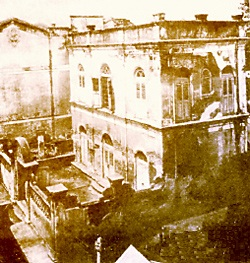
Saraswati Mandir, also known as Sarika Sadan or Narmad House, is a writer's house museum in Surat, Gujarat, India. It was built by Gujarati poet Narmad in 1866. In 2015, the house was renovated and converted into museum and memorial house dedicated to Narmad.
Wikipedia · CC BY-SA 4.0 · 10 Jul 2026
Kavi Narmad Yugavart Trust · Public domain
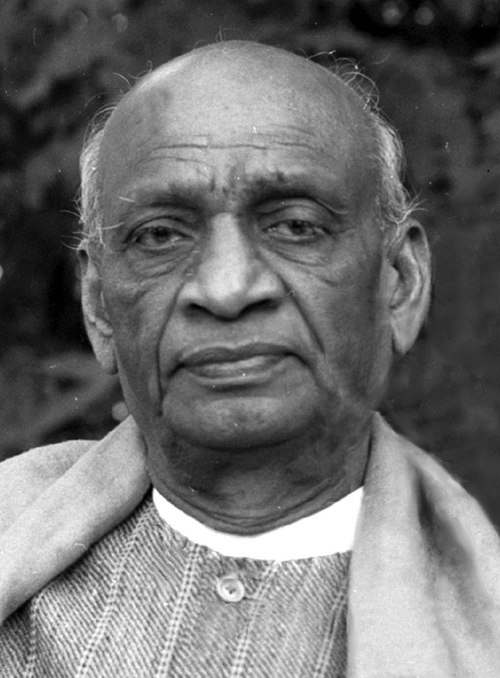
Vallabhbhai Patel, commonly known as Sardar Patel, was a Gandhian Indian independence activist, lawyer and statesman who served as the first Deputy Prime Minister and Home Minister of India from 1947 to 1950. He was a senior leader of the Indian National Congress, who played a significant role in the Indian independence movement and India's political integration.
Wikipedia · CC BY-SA 4.0 · 21 Aug 2026
Government of India work · Public domain
Sourced stays
Sourced experiences
Fly to India
The facts you look up on the plane
Guides about India
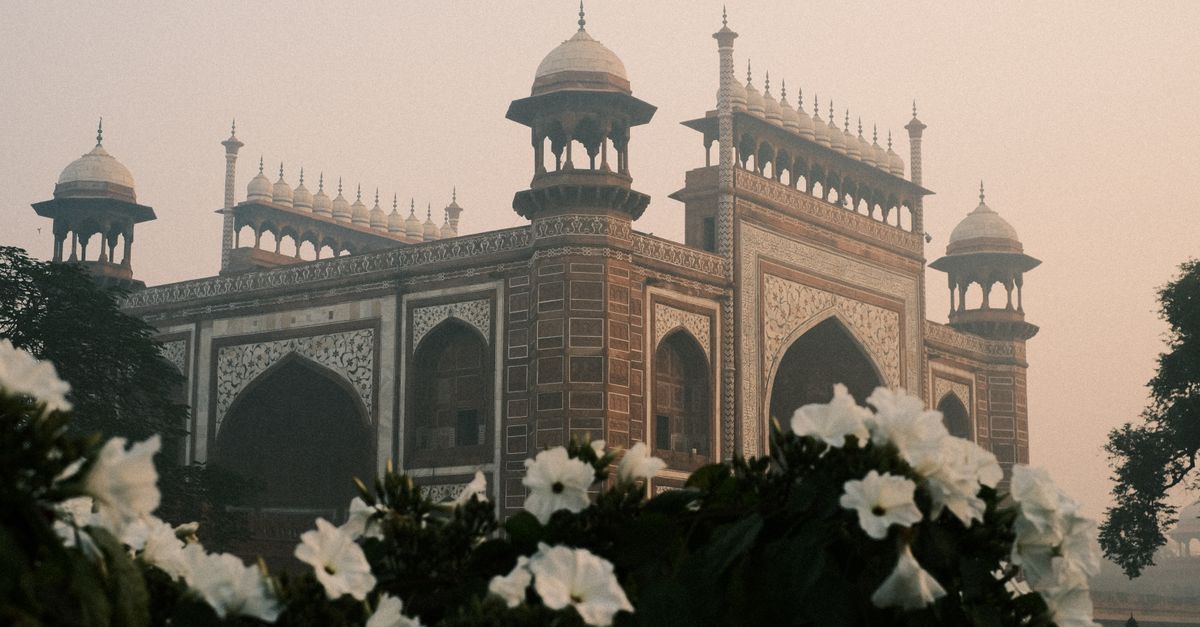
October to March is the standard answer and it hides a real problem. The monsoon by region, the Delhi air months, and a month table for many climates.
Arif Rahman · 2 Sep 2026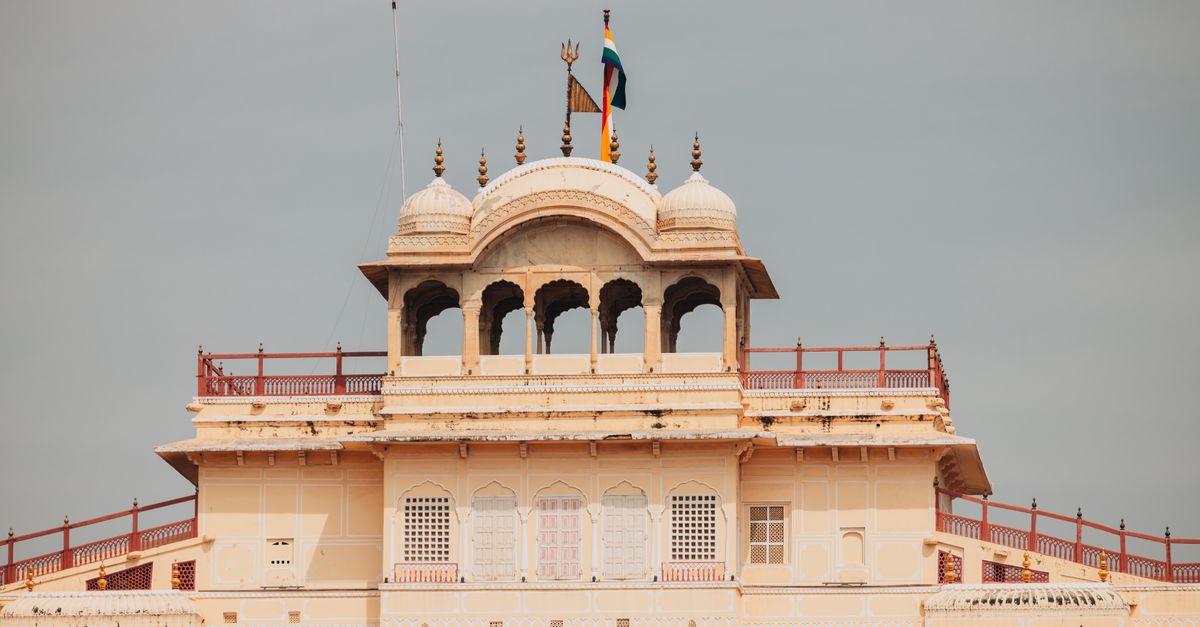
The first-trip mistake is covering too much ground in too little time. One region done properly, the air months nobody warns about, and what a day costs.
Arif Rahman · 2 Sep 2026Not going yet? Pin it.
One tap puts it on your map and in your pins, for when you are ready.