Where to stay in Paris, the arrondissement answer
Which Paris arrondissement suits your trip, what a night costs in each, and the tourist tax that adds €125 to a week for two and appears in no guide.
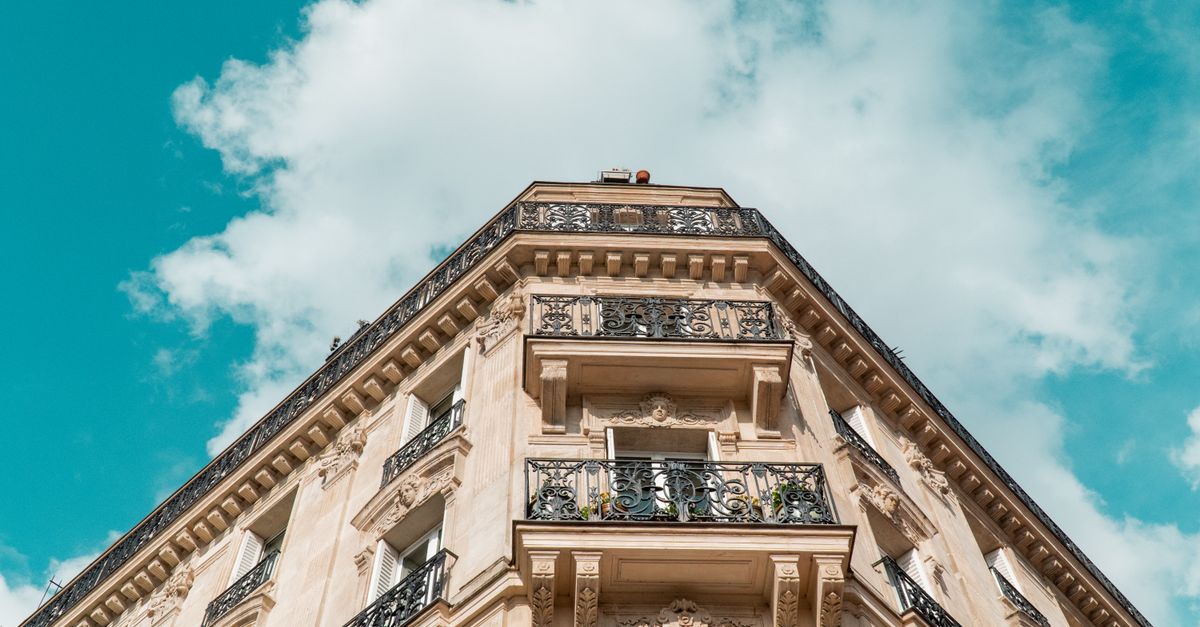
Photo · MuffinLand · Pexels
For a first visit, stay in the 4th — the Marais and Île Saint-Louis — or the 5th, the Latin Quarter, which does almost the same walking radius for €30–40 a night less. If you would rather have a neighbourhood than a postcard, the 11th is the best eating in Paris at two-thirds the price. And the 7th, by the Eiffel Tower, is the most commonly recommended mistake in this city.
The rule underneath all of it: stay within five minutes of a métro station on line 1, 4 or 14. Those three cross Paris. Most of the others do not.
First, the two numbers nobody publishes
Every guide ranking for this question misses both of these, and together they are worth a few hundred euros.
The métro fare went up on 1 January 2026. A single is €2.55 for métro, RER or train anywhere in Île-de-France, and €2.05 on a bus or tram. The best of the competing pages still quotes €2.50 and €2.00, which were the 2025 fares. Zones stopped applying to single tickets in January 2025, the carnet of ten has been abolished, and paper magnetic tickets are being withdrawn through 2026 — buy a Navigo Easy card for €2 and load journeys onto it, or tap your phone.
The tourist tax is now substantial. Charged per person, per night, on top of the room rate:
| Hotel category | Per person per night | In AUD |
|---|---|---|
| 2-star | €3.25 | A$5.26 |
| 3-star | €5.53 | A$8.95 |
| 4-star | €8.45 | A$13.68 |
| 5-star | €11.70 | A$18.94 |
| Palace | €15.93 | A$25.79 |
| Unclassified (most Airbnb) | 16.25% of the rate, capped at €15.93 | — |
The reason it is so high is that three surcharges stack on the base rate — a departmental 10%, a Grand Paris 15%, and an Île-de-France Mobilités addition of 200%, introduced in 2025, which alone triples the bill. The multiplier is 3.25.
Two adults, seven nights, 3-star: €77.42 — about A$125 — that nothing in your booking flow mentioned. In a 4-star it is €118.30. Under-18s are exempt, which matters to families and which nobody says.
Converted at €1 = A$1.6191, the European Central Bank reference rate for 31 August 2026.
The arrondissements, grouped by what you actually want
Bands below are estimates for a mid-range double in shoulder season — March–April or October — built from an aggregator scrape of 1,199 Paris hotels in July 2026 and the sourced observation that the eastern arrondissements run €40–80 a night below the central-west ones. There is no official per-district rate data in Paris; anyone presenting one to the euro is inventing it. Add 15–30% for May, June, September and December; take off 10–30% for January, February and August.
If you want to walk out of the door into Paris
4th — Marais, Île Saint-Louis, €190–280 (A$308–453). Lines 1, 11, 7, 4 and 5 all within a few minutes. Notre-Dame reopened in December 2024 and is a walk away. The catch is that this is the busiest walking district in the city at weekends, the buildings are old enough that lifts are small or absent, and narrow lanes carry noise.
3rd — Upper Marais, €180–260 (A$291–421). The same quality with fewer coach groups, and the Marché des Enfants Rouges. Quieter also means further: the northern end is a 15–20 minute walk from the river and the métro thins in the middle.
1st — Louvre and Châtelet, €200–300 (A$324–486). The best-connected postcode in France — lines 1, 4, 7, 11, 14 and all three central RER lines. Book it for a short trip or a Versailles day. It empties at night, though: much of it is offices, the Louvre and ministries, so dinner is thin and priced for tourists.
If you want cafés and a Left Bank evening
5th — Latin Quarter, €160–240 (A$259–389). The best value of the central arrondissements, and RER B at Luxembourg is a direct run to Charles de Gaulle. Avoid the few streets immediately behind Saint-Michel, which are a tourist-trap strip of cheap set menus and touts.
6th — Saint-Germain, €210–320 (A$340–518). The most expensive band here, and genuinely lovely. But the 5th next door delivers most of the same walking radius for €50–80 less, and you are largely paying for the address.
If you want a neighbourhood and will take a métro ride
11th — Bastille and Oberkampf, €120–190 (A$194–308). The best food per euro in Paris and quietly excellent métro density — lines 1, 5, 8, 9, 3, 2 and 11 all touch it. The noise is real: rue Oberkampf runs until 2am Thursday to Saturday, so check which street your room faces rather than just the address.
10th — Canal Saint-Martin, €120–180 (A$194–291). Good for Eurostar arrivals and for RER B to the airport. It has two personalities, though, and they are about 600 metres apart: the canal is lovely, and the blocks right around Gare du Nord are grim after dark and the most-reported pickpocket zone in the city.
9th — Opéra and South Pigalle, €150–220 (A$243–356). SoPi, the streets south of Pigalle around rue des Martyrs, is one of the best bistro-and-cocktail pockets in Paris and the answer for anyone who wants Montmartre's texture without the hill. The southern half around Haussmann is a department-store district that dies at night.
20th — Belleville, €90–150 (A$146–243). The cheapest band and a genuinely untouristed Paris. Hotel stock is thin and unremarkable; the value here is in apartments.
18th — Montmartre, €110–180 (A$178–291). See below.
If you have a specific reason, and mostly you don't
8th — Champs-Élysées, €200–300 (A$324–486). A wide commercial boulevard of flagship stores and car showrooms. Top-tier rates for an address most repeat visitors avoid sleeping in.
2nd — Sentier and Montorgueil, €170–250 (A$275–405). The sleeper pick: as central as the 1st, cheaper, and rue Montorgueil is a market street locals actually use. It is a working district, so expect delivery vans, and the eastern edge by rue Saint-Denis is still the historic red-light strip.
Which lines actually cross Paris
Use these: Line 1 is the east–west spine, automated and frequent, running La Défense–Étoile–Louvre–Châtelet–Bastille–Nation. Line 4 is the north–south one, Gare du Nord–Châtelet–Saint-Michel–Odéon–Montparnasse. Line 14 is the fast one — driverless, few stops, and since June 2024 the longest line in the network at 27.8km, running all the way to Orly.
Do not trust these: Line 10 is the slowest in Paris and runs a one-way loop in its eastern half, so eastbound and westbound trains use different streets and you cannot fix a mistake by crossing the platform. Line 13 branches into two northern arms and is the most overcrowded line in the network. Line 7 also branches, in the south. And Châtelet–Les Halles shows on the map as one dot: it is Europe's largest underground station and some connections are a ten to fifteen minute walk. Never plan a tight change there.
If you have heard about the Grand Paris Express, it is not relevant to your trip: nothing opens inside Paris in 2026. The one section due this year, in November, is a commuter link out at Saclay.
Getting in from the airports
From Charles de Gaulle, the RER B is the default at €14 and about 35 minutes to Gare du Nord. Buses 350 and 351 are genuinely cheap at €2.05 and genuinely slow at 70–80 minutes. A taxi is a regulated flat fare — €56 to the Right Bank, €65 to the Left — and you should insist on it rather than a meter.
The CDG Express is not open. It is scheduled for 28 March 2027, its fourth date after missing January 2024, the Olympics and early 2026. Several guides write about it as though you could use it.
From Orly, take Line 14, which since June 2024 runs from the airport to Châtelet in about 25 minutes for €14. This is the genuinely new fact that should change where some people stay: Orly is now the better airport if you are based in the 1st, 2nd, 8th, 9th or 12th, because it is one train with no change. No competing guide connects those two things. The budget alternative is bus 183 plus a transfer, at €4.60 all in.
Orlybus has been discontinued. So, reportedly, has the Roissybus from CDG — we could not confirm that from the operator, so check before you rely on either.
Tickets: what to actually buy
| Ticket | 2026 price | Worth it? |
|---|---|---|
| Single métro / RER | €2.55 | The default |
| Single bus / tram | €2.05 | — |
| Navigo Easy card | €2.00 once | Buy this |
| Navigo Semaine, all zones | €32.40 | Only if you arrive Monday |
| Paris Visite, 1 day | €30.60 | Almost never |
| Paris Région–Aéroports | €14.00 | Required for CDG and Orly |
The trap worth knowing: Navigo Semaine runs Monday to Sunday on a fixed calendar week, whatever day you buy it. Arrive on a Thursday and you have paid €32.40 for four days. And Paris Visite at €30.60 needs roughly twelve métro rides in a day to beat singles, which nobody does.
The two mistakes
Staying by the Eiffel Tower. This is the most common bad advice in Paris. You cannot see the tower from inside a €200 room in the 7th — the rooms with the view are the €600 ones, and everyone else gets a courtyard and walks to it like all the other visitors, from a base with worse transport. The 7th is served by lines 8, 13, 12, 10 and RER C, and not one of lines 1, 4 or 14. Line 13 is the most overcrowded in the network. Around 48,000 people live across a large arrondissement that is mostly ministries, embassies and museums, so after 9pm it is very quiet and rue Cler is essentially the only real street. You pay Marais money for less to do and more changes.
It is a good choice on a second trip, for quiet, and genuinely good for anyone with mobility needs — wide flat pavements and few stairs, unlike the Marais or Montmartre. The mistake is recommending it to first-timers because of the tower.
Montmartre, for convenience. It is a lovely place to stay and it is not a convenient one. Abbesses station is 36 metres underground — until 2025 the deepest in Paris — and when the lift is out you take the spiral staircase with your luggage. Only lines 12 and 2 really serve the hill, neither of them crosses the city, and the Marais or the Latin Quarter is 30–40 minutes with a change every single day. And "Montmartre, 18th" on a booking site does not tell you which side of Barbès you are on, which matters after dark. The cheap rate is buying you the commute.
If you want Montmartre's feeling with a working métro, South Pigalle in the 9th is the answer.
So, where?
4th for a first visit if the budget allows, 5th if it does not, 11th if you would rather eat well than sightsee efficiently, 2nd if you want central and slightly cheaper, and 9th if you want a village that is still on six métro lines.
The Paris city guide covers what is in each neighbourhood, the France country guide handles the wider trip, and when to go is worth reading first because the difference between February and June here is 30% on the room and a different city outside it. See our other where-to-stay guides for the rest of Europe, what is worth booking ahead, and where else is good in October if your dates are flexible. Or go straight to every Paris stay we can source.
Fares and taxes checked September 2026, and both changed in January — this is a page worth re-checking before you book. Here is how we research and re-check guides.