Where to stay in Ubud, where four hundred metres decides your trip
Penestanan, Nyuh Kuning, Sayan or central Ubud. Which streets stay quiet, which gridlock from 10am, and the entry fees that went up in 2026.
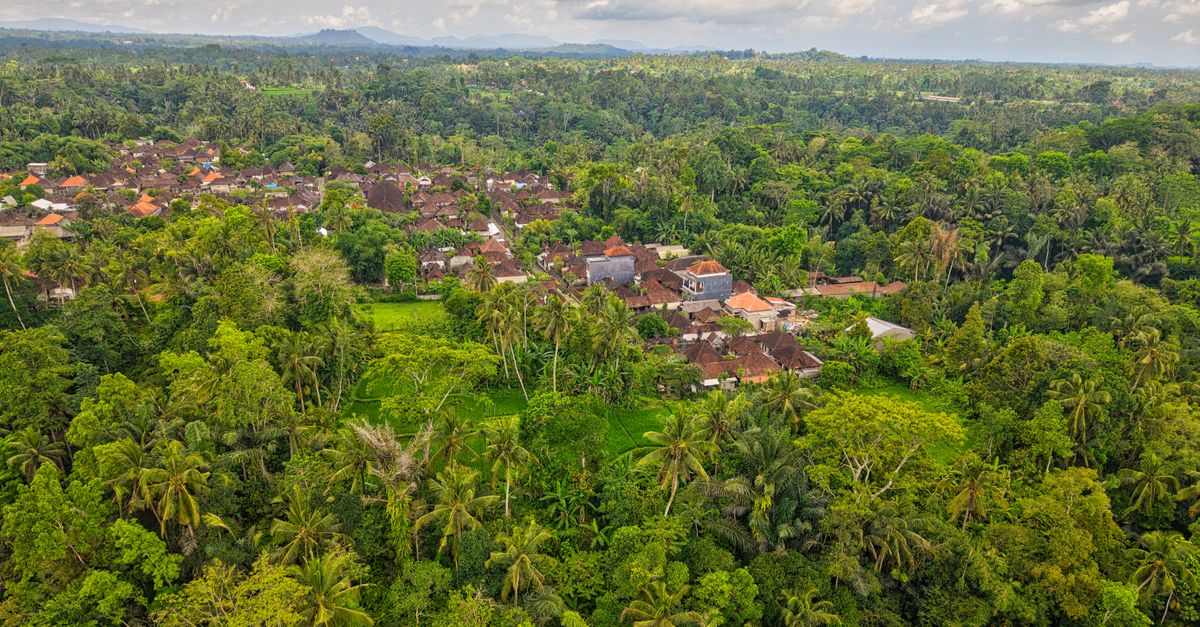
Photo · Tom Fisk · Pexels
The difference between a good Ubud stay and a frustrating one is about four hundred metres. Nyuh Kuning or Penestanan for most trips: both are ten to fifteen minutes on foot from the centre, both are quiet, and neither is on the road. Central Ubud only if you want to walk out into the middle of it and will accept the noise and the traffic. Sayan and Kedewatan for the river valley, if you have the budget and do not mind needing a scooter for coffee.
The rule underneath all of that: Jalan Raya Ubud, the main street, is gridlocked from roughly 10am to 9pm. Everything else follows from it.
Indonesian rupiah. Convert any figure on this page into your own currency at today's published rate.
Open the currency converter →The traffic rule, and what it does to your booking
Ubud is a small town carrying the day-trip traffic of a large one. The coaches arrive late morning and leave late afternoon, and between those two waves the main street does not move.
The consequence is counter-intuitive. An address that is a ten minute walk from the centre is genuinely better connected than one that is a ten minute drive, because the walk takes ten minutes at 2pm and the drive takes twenty-five.
So the question is not how far out you are. It is whether you can walk in. That single test sorts Ubud's neighbourhoods better than anything else.
The areas
Nyuh Kuning, the answer for most trips
A village immediately south of the Monkey Forest, and the best-kept part of Ubud for people who want to be near everything without being in it. Woodcarvers, a village football pitch, warungs with local prices, and a path through the Monkey Forest that puts you in the centre in ten to fifteen minutes.
Who it is for: almost anyone on a three or four night stay. Couples, families, solo travellers, second visits.
The catch: the forest path closes at night, so after hours it is a longer way round on the road. And the monkeys are genuinely everywhere.
Penestanan, for the view and the steps
West of the centre, up a flight of concrete steps from the Campuhan bridge. Rice fields, artists' studios, a long-standing expat and yoga community, and views back over the valley that central Ubud does not have.
Who it is for: longer stays, remote workers, anyone here for the yoga scene. The Bali nomad guide covers the internet and the coworking picture.
The catch is literal. The steps. There are a lot of them, they are steep, and some Penestanan addresses have no road access at all, which is exactly why it is quiet. Do not book it with a large suitcase and a bad knee.
Central Ubud, for convenience and nothing else
The blocks around Jalan Raya, the Ubud Palace, the market and Monkey Forest Road. Everything is at the door: restaurants, the market at dawn, the dance performances at the palace in the evening.
Who it is for: a short stay of one or two nights, or anyone who wants to walk out of the door into activity.
The catch: it is the noisiest and most congested part of town, and the restaurants on the main streets are the ones priced for people passing through. Walk two streets back and prices halve.
Sayan and Kedewatan, for the river valley
North-west, above the Ayung river gorge. This is where Ubud's famous infinity-pool photographs are taken, and where the serious resorts sit, on a ridge with the jungle falling away below.
Who it is for: honeymoons, a splurge, anyone whose priority is the property rather than the town.
The catch: you are committed to transport for everything. A coffee is a drive. It is beautiful and it is not walkable, and people book it on the view and then spend the week arranging cars.
North of Ubud, towards Tegallalang
The lanes running north through the rice terraces. Quieter again, greener again, cheaper again, and further from everything again. Fine on a second visit with a scooter. A mistake on a first visit without one.
The entry fees, and one number nobody agrees on
The Monkey Forest put its prices up in 2026. Checked September 2026:
| International | Indonesian, with KTP | |
|---|---|---|
| Adult | IDR 130,000 | IDR 90,000 |
| Child | IDR 100,000 | IDR 60,000 |
Go at opening. By mid-morning it is the busiest thing in central Bali and the road outside has stopped. The sanctuary publishes its own hours, and they are the ones to trust.
The Campuhan Ridge Walk is free, has no gate and no ticket, and is the single best hour in Ubud. Start it at first light: it is an exposed ridge with no shade and by 9am it is hot and full.
Tegallalang is the number we cannot give you cleanly. The sources we checked disagree, and they disagree by a lot. One set says the official entrance fee is IDR 15,000. Another reports IDR 20,000. Another reports IDR 25,000 in cash. On top of that, several report individual farmers asking for informal donations of IDR 5,000 to 10,000 to cross particular paths further into the terraces, which is not a scam so much as an unofficial and inconsistent system.
We are not going to average three contradictory figures and print the result as a fact. Carry small cash, expect to pay somewhere in that band, and expect to pay more than once if you walk deep. That is the honest version, and it is more use than a confident single number that half of readers will find wrong at the gate.
When Ubud is expensive
Ubud's rates move on other countries' calendars. The northern hemisphere summer lifts them, Christmas and New Year lift them hard, and the Australian school holiday weeks move Bali's prices more than most first-time visitors expect, because Australia is the island's largest single visitor market and its holidays do not line up with Europe's.
Nyepi is the other date to know. Bali's day of silence shuts the entire island for 24 hours: no flights in or out, nobody on the streets, lights down after dark, and hotels operating on minimum service with guests confined to the property. It is extraordinary if you have chosen it and a ruined day if you have not. The best time to visit Bali has the dates and the wet season month by month.
Visa on arrival · 30 days, on all five passports we check.
Short tourist stays only. Checked 21 Aug 2026; rules change without notice and the government page is the source of truth.
Check your own passport →Checked 21 Aug 2026.
Everything we check for Indonesia →What to skip
Booking on the phrase "near Ubud". It can mean a four minute walk or a twenty-five minute drive in traffic. Check the actual route to Jalan Raya before you pay.
The Monkey Forest at 11am. Same ticket, four times the people, and the road outside will cost you longer than the visit.
Tegallalang mid-morning. The terraces are on every day-trip itinerary in south Bali and they all arrive together. Dawn, or skip it and walk the ridge instead.
A car for anything inside Ubud. Walk, or take a scooter if you already ride one. A driver here is for day trips out of town, not for getting to dinner.
Five or more nights in Ubud alone. Ubud is half a Bali trip. Pair it with the coast. The area guide to the rest of the island does the drive-time arithmetic on why two bases beat one.
Before you book
Where to stay in Bali is the island-wide version of this decision, including the levy you pay on arrival and the drive times that should shape it. The 7 day Bali itinerary puts Ubud and a beach base into an actual route, Bali on a budget builds to a daily number, and Bali with kids plus things to do in Bali with kids cover the family version. If the trip is turning into months rather than nights, the Bali nomad guide is the one.
The Ubud city guide and the Indonesia country guide carry the practicalities, and there is more in the where to stay hub. Ubud rooms are here and the bookable half is here.
Entry fees and traffic patterns checked September 2026. The Tegallalang fee is recorded above as a range precisely because we could not verify a single figure, and the Bali tourism levy is paid separately on the provincial government's Love Bali portal.


