Sri Lanka in two weeks
Two monsoons hit opposite coasts, so the route depends on the month. Both versions of a fortnight, the train seat that matters, and the ETA rule.
Photo · Thilina Alagiyawanna · Pexels
Sri Lanka is a small island with two monsoons on opposite coasts, which means there is no single two-week route. There are two, and the month picks for you.
December to March: the cultural triangle, the hill country, and finish on the south and west coasts.
May to September: the same interior, and finish on the east coast at Arugam Bay or Trincomalee.
April and October are the inter-monsoons, unsettled on both sides, and are the two months to be careful with.
Getting this backwards is the single most common Sri Lanka planning mistake, and almost every itinerary online is written for the winter version without saying so.
Sri Lankan rupee. Convert any figure on this page into your own currency at today's published rate.
Open the currency converter →Before you go: the ETA is free now, and still required
From 25 May 2026, nationals of 40 countries can get Sri Lanka's tourist ETA free of charge for stays of up to 30 days.
The fee is gone. The application is not. You still have to apply before you travel, and this is exactly the sort of change that gets reported as "visa free" and leaves people at the airport without one. Sri Lanka's immigration department publishes the current position.
The detail depends on your passport, and the tool below reads the one you have chosen.
We have not checked Sri Lanka against the five passports yet. The tool reads the Wikipedia article for yours and shows its own sentence, with the date it was last edited.
Short tourist stays only. Checked 21 Aug 2026; rules change without notice and the government page is the source of truth.
Check your own passport →The fortnight, winter version
Days 1 to 2: Negombo, not Colombo
Land and stay near the airport at Negombo, which is twenty minutes away rather than an hour into Colombo traffic. A beach, a fish market and a decent first night.
Skip Colombo at the start. It is a working capital rather than a sight, and it is a better last night than a first one.
Days 3 to 6: the cultural triangle
Sigiriya, the rock fortress, climbed at opening or not at all because the steps are exposed and it is 1,200 of them. Pidurangala, the rock opposite, is a fraction of the price and has the better view, which is of Sigiriya.
Polonnaruwa, the medieval capital, best done by bicycle in the early morning.
Dambulla's cave temples, and Anuradhapura if you want the older capital and have the day.
Base in Sigiriya or Habarana and drive out, rather than moving every night.
Days 7 to 9: Kandy and the hill country
Kandy for the Temple of the Tooth and the botanical gardens at Peradeniya, which are genuinely excellent and are underrated.
Then the train to Ella, and this is the part to get right.
Sit on the right-hand side going up. Book second class with a reserved seat: it has windows that open, a fan, and none of the unreserved scrum. Tickets for the reserved carriages go on sale about 30 days out and the good legs sell out.
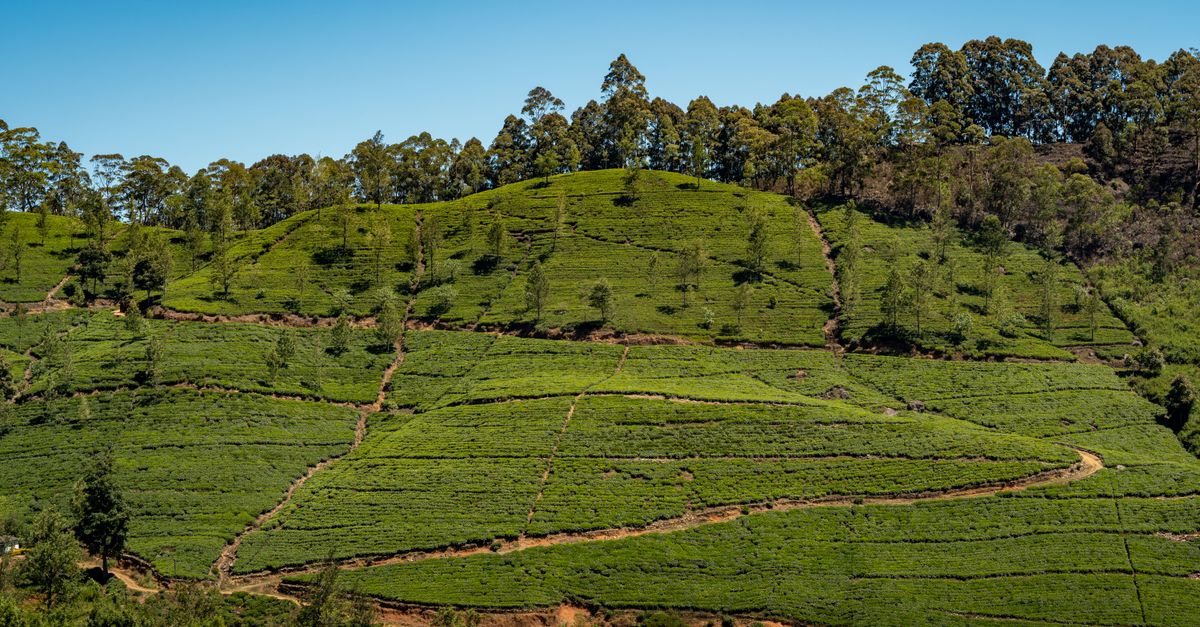
Nuwara Eliya on the way for the tea estates and a factory tour, and Ella for Little Adam's Peak and the Nine Arch Bridge.
Horton Plains and World's End is a 5am start and worth it: the cloud closes in by about nine and the view disappears.
Days 10 to 14: the south coast
Down to the coast at Mirissa, Weligama, Unawatuna or Tangalle.
Galle Fort for a night: a Dutch walled town on a promontory, best at dusk when the day visitors have gone.
Whale watching from Mirissa is genuinely good between December and April, and the operator matters enormously. Choose one that keeps distance and does not chase.
Yala or Udawalawe for the leopards and the elephants. Udawalawe is the better call for most people: the elephant sightings are close to guaranteed and the vehicle density is far lower than Yala's, which has become a queue of jeeps.
The summer version, in one paragraph
Same first nine days, then east instead of south. Arugam Bay for surf from May to September, Trincomalee and Nilaveli for the beaches and the diving at Pigeon Island, and Batticaloa in between. The east coast in these months is what the south coast is in the winter, and it is much less visited.
Getting around
A car and driver for most of it. This is the normal way to travel in Sri Lanka, it is inexpensive by international standards, and it is hired by the day with the driver's accommodation included in the rate. It removes the single biggest friction from a two-week route.
The train for two legs: Kandy to Ella, and the southern coastal run from Galle towards Colombo, which runs beside the sea.
Not self-driving. The roads are busy, the overtaking conventions are assertive, and the saving is small.
What we would skip
Skip riding elephants, anywhere, and be careful with "orphanages" and "sanctuaries", several of which offer riding and bathing. Udawalawe's Elephant Transit Home is the one with a genuine release programme, and you watch a feeding from a platform rather than touching anything.
Skip Adam's Peak unless you are doing it properly, which means a 2am start in season and a serious climb.
Skip Yala's peak-season block one if you can, for the jeep density. Udawalawe or Wilpattu instead.
And skip trying to add the north. Jaffna is genuinely interesting and it is another four days.
Checked 21 Aug 2026.
Everything we check for Sri Lanka →When to go
December to March for the west, the south and the interior. This is the main season and it is priced accordingly.
May to September for the east.
April and October are the inter-monsoons: unsettled on both coasts and the two months where a fixed itinerary can go wrong. Our April guide and May guide cover the turn, and May is the month the east opens.
Before you book
Our May guide explains the coastal flip, and the April guide covers the other side of it.
Vietnam or Thailand is the regional comparison if the country is not fixed, and the Southeast Asia packing list has the kit for this climate.
The itineraries hub collects the rest and the Sri Lanka country page has the practical layer.
Entry requirements and the ETA change checked September 2026 against Sri Lanka's Department of Immigration and Emigration and Sri Lanka Tourism. The free-ETA list covers 40 nationalities and does not cover everyone, so check your own passport rather than the headline.