Three days in Hanoi, and the street that is open but not really
Three days in Hanoi and one trip out, with the Train Street access rules as they actually stand and why Ninh Binh beats Ha Long on a short trip.
Photo · Valeria Drozdova · Pexels
Three days in Hanoi is two days in the city and one out of it. The Old Quarter is compact and the museums cluster, so the city itself does not need three days. What the third day should be is the decision that actually shapes the trip, and most itineraries get it wrong.
The other thing worth settling before you arrive is Train Street, because "is it open" has had four different answers in as many years.
Vietnamese dong. Convert any figure on this page into your own currency at today's published rate.
Open the currency converter →Train Street, as it actually stands
The short answer: open, restricted, and not the way it is photographed.
Hanoi's railway runs through a residential alley barely wider than the train. After a period of full closure, access has come back, and it comes back with conditions:
- Access depends on the section. Different stretches have had different rules at different times.
- Group tours are banned.
- Only certain cafes are officially permitted to host visitors. The practical route in is a licensed cafe: you buy a drink, you sit where they put you, and they know the timetable.
- The rules change at short notice, and have repeatedly.
What that means for you: do not plan a morning around it, do not follow someone who offers to sneak you in past a barrier, and do not treat a photograph from 2019 as a description of the current arrangement. Go through a cafe, or skip it. There is a great deal else in this city.
Day 1: the Old Quarter and the lake
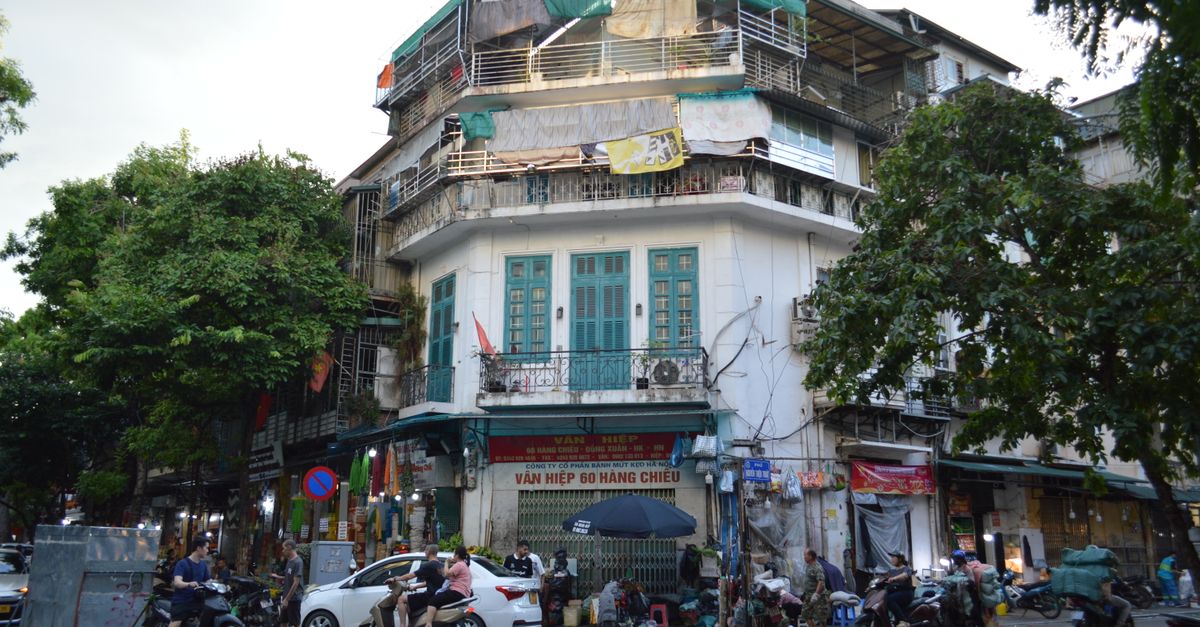
Morning: walk, without a plan. The Old Quarter is 36 streets historically named for the trade practised on them, and several still are: tin, silk, bamboo, votive paper. It is dense, loud, and the best way to understand the city is to be lost in it for two hours.
Late morning: Hoan Kiem Lake and Ngoc Son Temple on its island, reached by the red bridge.
Afternoon: the Temple of Literature, Vietnam's first university, founded in 1070, which is the one quiet formal space in central Hanoi.
Late afternoon: egg coffee. Condensed milk, egg yolk and coffee whipped into something between a drink and a dessert, invented here during a milk shortage in the 1940s. Go to a place up a staircase rather than one with a sign in English.
Evening: Ta Hien, the beer junction, for bia hoi: fresh draught brewed that morning, no preservatives, drunk on a plastic stool for a few thousand dong. The weekend street closure turns the whole area around Hoan Kiem into a pedestrian zone from Friday evening to Sunday night, which is when the city is at its best.
Day 2: the museums, the quarter, and the water
Morning: the Ho Chi Minh Mausoleum complex. The mausoleum has short and strict opening hours, a dress code and a no-bag rule, and it closes for several weeks a year for maintenance. Check before you go rather than at the gate. Around it: the One Pillar Pagoda, the Presidential Palace grounds and Ho Chi Minh's stilt house.
Late morning: the Vietnam Museum of Ethnology, which is a taxi ride out and is the best museum in the country. The outdoor section has full-size houses from different highland groups, rebuilt by people from those communities.
Afternoon: the French Quarter. The Opera House, the wide boulevards, and Hoa Lo Prison, which the American prisoners of war ironically nicknamed the Hanoi Hilton. The exhibition is emphatically told from one side, which is itself worth seeing.
Evening: water puppetry at the Thang Long theatre by the lake, which is a genuinely Vietnamese art form performed in a pool, and which is 50 minutes long, which is the correct length.
Or: West Lake and Tay Ho, north of the centre, where Hanoi's expatriates and its young middle class eat, and where the lakeside at sunset is the best evening in the city.
Day 3: out of the city, and pick right
Ninh Binh, about two hours south each way.
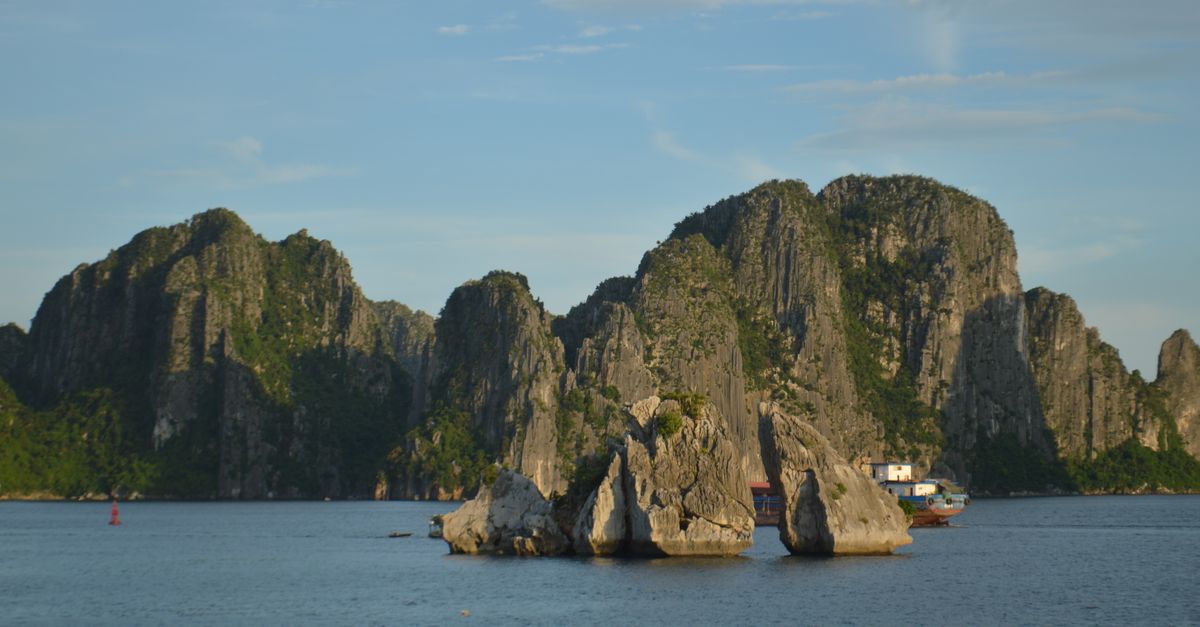
Limestone karsts rising out of flooded rice paddies, with a rowing boat through caves at Tam Coc or Trang An, the temples at Hoa Lu, which was Vietnam's capital before Hanoi, and the climb up Hang Mua for the view that sells the region.
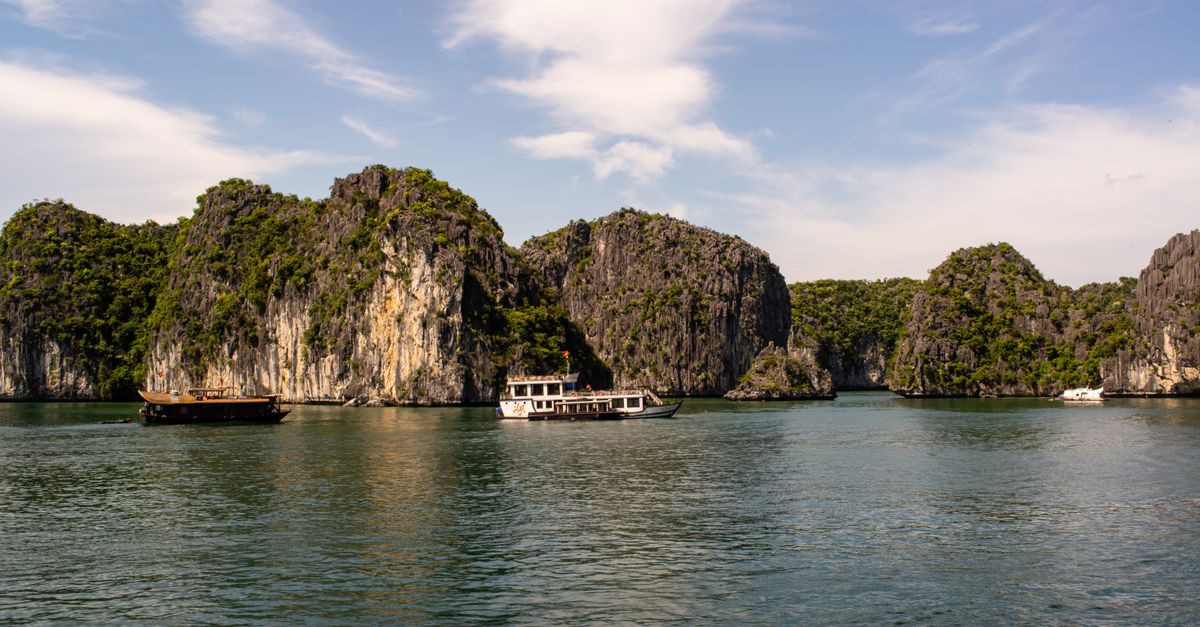
Ha Long Bay, three to four hours each way.
The honest comparison: the geology is the same. Ninh Binh is often called the inland Ha Long and the description is accurate. Ha Long is bigger, at sea, and genuinely spectacular, and the good version of Ha Long is an overnight on a boat, not a day trip. A Ha Long day trip is six to eight hours in a coach wrapped around about two hours on the water.
So: Ninh Binh for a three day trip. Ha Long if you can give it two days and a night on a boat. Two weeks in Vietnam has the version where both fit.
Vietnam runs an electronic visa that a large number of nationalities can use for stays of up to 90 days, and there is exactly one official site for it. Apply on the immigration department's own portal, because the lookalike sites charging a markup are numerous and convincing.
Short tourist stays only. Checked 21 Aug 2026; rules change without notice and the government page is the source of truth.
Check your own passport →Checked 21 Aug 2026.
Everything we check for Vietnam →The weather, briefly
Hanoi has a real winter, which surprises people who have filed Vietnam under tropical. December to February is cool and often grey, with drizzle that the locals call mua phun and temperatures that can sit in the low teens.
March to April and October to November are the good windows. May to September is hot and wet, and the north's rain is heavier than the south's. The best time to visit Vietnam has the month table and the regional splits, which matter here because the country is 1,650 km long and its three regions are rarely in season together.
What to skip
A Ha Long day trip. The whole of day 3 above.
Being taken to Train Street by someone who is not a licensed cafe.
A cyclo tour of the Old Quarter. Agree a price and a route in writing before you get in, or walk, which is better anyway and free.
The Hanoi Hilton gift shop reading of the war. Go to the Ethnology museum instead if you want the country rather than the conflict.
Booking the mausoleum into a tight morning. Short hours, strict rules, and a long annual closure.
Two nights only. The city needs two full days and the trip out needs a third, and arriving late on day one eats one of them.
Before you book
Two weeks in Vietnam is the full route north to south, and the best time to visit Vietnam has the regional weather split that decides when to do it. Two weeks in Thailand and three days in Bangkok are the obvious neighbours, Bali or Thailand is the comparison people make before choosing Southeast Asia at all, and where to stay in Singapore covers a common stopover on the way.
The Hanoi city guide and the Vietnam country guide carry the practicalities, and there is more in the itineraries hub. When you are ready, Hanoi rooms are here and the bookable half is here.
Access rules and transport status checked September 2026. Train Street's rules have changed repeatedly and at short notice, and Vietnam's national tourism administration is a better source for the current position than any guide, this one included.