 Common · +100 XP
Best time to visit: May–Jun · Sep–Oct
Daily spend ~$130
Common · +100 XP
Best time to visit: May–Jun · Sep–Oct
Daily spend ~$130
France
The obvious sights are obvious for a reason, and the country underneath them is quieter and better than its reputation.
France in ten slides
Wikipedia · 3 Sep 2026


Best time to visit France: May–Jun · Sep–Oct
Where people go in France
What people go to see in France

Bordeaux Cathedral, officially known as the Primatial Cathedral of St Andrew of Bordeaux, is a Catholic church dedicated to Saint Andrew and located in Bordeaux, France. It is the seat of the Archbishop of Bordeaux.
Wikipedia · CC BY-SA 4.0 · 30 Jul 2026
Chabe01 · CC BY-SA 4.0

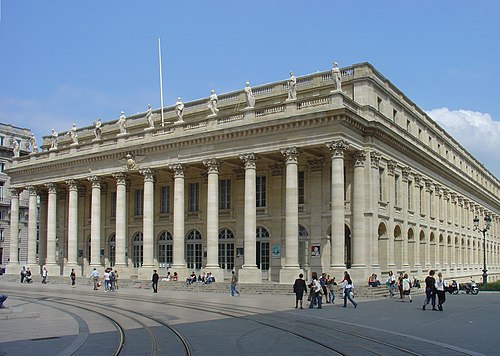
The Grand Théâtre de Bordeaux is an opera house in Bordeaux, France, first inaugurated on 17 April 1780. It was in this theatre that the ballet La fille mal gardée premiered in 1789, and where a young Marius Petipa staged some of his first ballets.
Wikipedia · CC BY-SA 4.0 · 30 Aug 2026
Unknown · CC BY-SA 3.0

The Miroir d'eau in Bordeaux, France is a reflecting pool covering 3,450 square metres (37,100 sq ft). Located on the quay of the Garonne in front of the Place de la Bourse, it was built in 2006.
Wikipedia · CC BY-SA 4.0 · 23 Jun 2026
Olivier Aumage · CC BY-SA 2.5

The Place de la Bourse is a square in Bordeaux, France, and one of the city's most recognisable sights. Built from 1730 to 1775 along the river Garonne, it was a multi-building development designed by the architect Jacques Gabriel and his son Ange-Jacques Gabriel.
Wikipedia · CC BY-SA 4.0 · 5 Apr 2026
Phillip Maiwald (Nikopol) · CC BY-SA 3.0


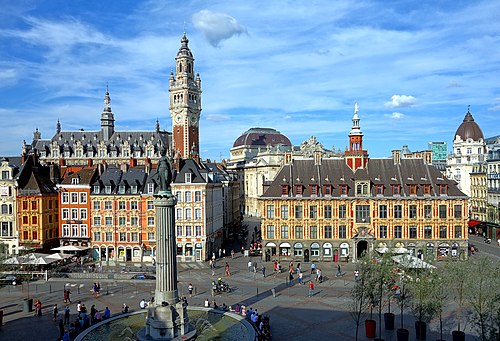
The Place du Général-de-Gaulle is an urban public space situated in the commune of Lille, Hauts-de-France region. It is the town's historic main square. It has a grand-place style, which is typical of many cities in the former Netherlands.
Wikipedia · CC BY-SA 4.0 · 1 Aug 2026
Velvet · CC BY-SA 3.0

Lille Cathedral, the Basilica of Notre Dame de la Treille, is a Roman Catholic church and basilica in Lille, France, and the cathedral of the Archdiocese of Lille. An example of Gothic Revival architecture, the cathedral is considered a national monument.
Wikipedia · CC BY-SA 4.0 · 1 Aug 2026
Christophe.Finot · CC BY-SA 2.5

The Vieille Bourse in Lille is the former building of the Lille Chamber of Commerce and Industry. It is located between the Place du Général-de-Gaulle and the Place du Théâtre and is considered to be one of the landmarks of the city centre.
Wikipedia · CC BY-SA 4.0 · 24 Aug 2026
Velvet · CC BY-SA 3.0

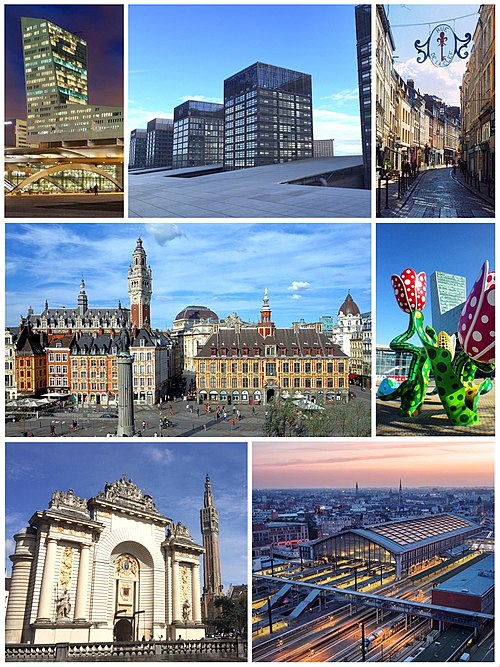
Lille is a city in the northern part of France, within French Flanders. Positioned along the Deûle river, near France's border with Belgium, it is the capital of the Hauts-de-France region, the prefecture of the Nord department, and the main city of the European Metropolis of Lille.
Wikipedia · CC BY-SA 4.0 · 22 Aug 2026
Cereol89, Velvet · CC BY-SA 4.0

Lyon Cathedral or the Cathedral of Saint John the Baptist of Lyon is a Roman Catholic church located on Place Saint-Jean in central Lyon, France. The cathedral is dedicated to Saint John the Baptist, and is the seat of the Archbishop of Lyon. Begun in 1180 on the ruins of a 6th-century church, it was completed in 1476.
Wikipedia · CC BY-SA 4.0 · 1 Aug 2026
Otourly · CC BY-SA 3.0

The Musée des Confluences is a science centre and anthropology museum which opened on 20 December 2014, in the 2nd arrondissement of Lyon (Rhône), France.
Wikipedia · CC BY-SA 4.0 · 1 Sep 2026
Original work: Coop Himmelb(l)au Depiction: SashiRolls · CC-BY-SA-4.0

The Basilica of Notre-Dame de Fourvière is a minor basilica in Lyon, France. It was built with private funds between 1872 and 1896 in a dominant position overlooking the city. The site it occupies was once the Roman forum of Trajan, the forum vetus, thus its name.
Wikipedia · CC BY-SA 4.0 · 22 Aug 2026
Elwood j blues · CC BY-SA 3.0

The Parc de la Tête d'or is the largest urban park in Lyon, France, with an area of approximately 117 hectares. Located in the northern part of its 6th arrondissement, it features the Jardin botanique de Lyon, as well as a lake on which boating takes place during the summer months.
Wikipedia · CC BY-SA 4.0 · 20 May 2026
Phinou · CC BY-SA 3.0

The Place Bellecour is a large square in the centre of Lyon, France, to the north of the Ainay district. Measuring 312 m by 200 m, it is one of the largest open squares in Europe, and the third biggest square in France, behind the Place des Quinconces in Bordeaux (12.6 ha) and the Place de la Concorde in Paris (8.6 ha).
Wikipedia · CC BY-SA 4.0 · 14 Apr 2026
Corentin Eustacchi · CC BY-SA 4.0

Lyon is a city in France. It is located at the confluence of the rivers Rhône and Saône, to the northwest of the French Alps, 391 km (243 mi) southeast of Paris, 278 km (173 mi) north of Marseille, and 113 km (70 mi) southwest of Geneva, Switzerland.
Wikipedia · CC BY-SA 4.0 · 30 Aug 2026
Aldg692VX · CC BY-SA 4.0

The Château des ducs de Bretagne is a large castle located in the city of Nantes in the Loire-Atlantique département of France; it served as the centre of the historical province of Brittany until its separation in 1956. It is located on the right bank of the Loire, which formerly fed its ditches.
Wikipedia · CC BY-SA 4.0 · 1 Sep 2026
Jibi44, avec l'aimable autorisation de LP de Nantes · CC BY-SA 3.0

The île de Nantes is an island located in the centre of the city of Nantes, France, surrounded by two branches of the river Loire: the "bras de la Madeleine" to the north, and the "bras de Pirmil" to the south. It is one of the eleven neighbourhoods of Nantes.
Wikipedia · CC BY-SA 4.0 · 26 Jul 2026
Jibi44 · CC BY-SA 3.0

The Jardin des plantes de Nantes (Breton: Liorzh louzawouriezh Naoned) is a municipal botanical garden located on Rue Stanislas Baudry, Nantes, Loire-Atlantique, Pays de la Loire, France. It is open daily without charge, but a fee is charged for the greenhouses.
Wikipedia · CC BY-SA 4.0 · 30 Jul 2026
rosier · CC BY-SA 3.0
The Machines of the Isle is an artistic, tourist and cultural project based in Nantes, France. The project is based in the old covered buildings of the former shipyards in Nantes that were at one time used for ship construction, and later used as business sites.
Wikipedia · CC BY-SA 4.0 · 26 Jul 2026

Nantes Cathedral, or the Cathedral of St. Peter and St. Paul of Nantes, is a Roman Catholic Gothic cathedral located in Nantes, Pays de la Loire, France. Construction began in 1434, on the site of a Romanesque cathedral, and took 457 years to finish in 1891. It has been listed since 1862 as a monument historique by the French Ministry of Culture.
Wikipedia · CC BY-SA 4.0 · 20 Aug 2026
Eusebius · Public domain

The Passage Pommeraye is a small shopping arcade in central Nantes, France, named after its property developer, Louis Pommeraye. Construction started at the end of 1840 and was completed on 4 July 1843. The Passage Pommeraye is a passage between two streets, the rue Santeuil and rue de la Fosse, with one 9.40 m higher than the other.
Wikipedia · CC BY-SA 4.0 · 26 Jul 2026
Velvet · Public domain
The Eiffel Tower is a lattice tower on the Champ de Mars in Paris, France. It is named after the engineer Gustave Eiffel, whose company designed and built the tower from 1887 to 1889.
Wikipedia · CC BY-SA 4.0 · 6 Aug 2026

The Louvre is a national art museum in Paris, France. It is located on the Right Bank of the Seine in the city's 1st arrondissement (district) and home to some of the most canonical works of Western art, including the Mona Lisa, Venus de Milo, and Winged Victory. The museum is housed in the Louvre Palace, originally built in the late 12th to 13th century under Philip II.
Wikipedia · CC BY-SA 4.0 · 27 Aug 2026
Benh LIEU SONG (Flickr) · CC BY-SA 3.0

The Jardin du Luxembourg, known in English as the Luxembourg Garden, colloquially referred to as the Jardin du Sénat, is located in the 6th arrondissement of Paris, France. The creation of the garden began in 1612 when Marie de' Medici, the widow of King Henry IV, constructed the Luxembourg Palace as her new residence. The garden today is owned by the French Senate, which meets in the palace.
Wikipedia · CC BY-SA 4.0 · 19 Aug 2026
Kirua · Public domain

Notre-Dame de Paris, often referred to simply as Notre-Dame, is a medieval Catholic cathedral on the Île de la Cité, in the 4th arrondissement of Paris, France. It is the cathedral church of the Roman Catholic Archdiocese of Paris.
Wikipedia · CC BY-SA 4.0 · 6 Aug 2026
Ali Sabbagh · CC0
The Musée d'Orsay is a museum in Paris, France, on the Left Bank of the Seine. It is housed in the former Gare d'Orsay, a Beaux-Arts railway station built from 1898 to 1900. The museum holds mainly French art dating from 1848 to 1914, including paintings, sculptures, furniture, and photography.
Wikipedia · CC BY-SA 4.0 · 3 Aug 2026


The Church of Saint Joan of Arc is a Catholic church in the city centre of Rouen, northern France.
Wikipedia · CC BY-SA 4.0 · 12 Jul 2026
Herbert Frank from Wien (Vienna), AT · CC BY 2.0


The Musée des Beaux-Arts de Rouen is an art museum in Rouen, in Normandy in north-western France. It was established by Napoléon Bonaparte in 1801, and is housed in a building designed by Louis Sauvageot and built between 1877, and 1888. Its collections include paintings, sculptures, drawings and objets d'art.
Wikipedia · CC BY-SA 4.0 · 9 Jul 2026
Velvet · CC BY-SA 4.0


The Church of Saint-Maclou, is a Roman Catholic church in Rouen, France, named after the Saint Malo, which is considered one of the best examples of the Flamboyant style of Gothic architecture in France. Saint-Maclou, along with Rouen Cathedral, the Palais de Justice, and the Church of St. Ouen, form a famous ensemble of significant Gothic buildings in Rouen. Its spire reaches a height of 83 meters.
Wikipedia · CC BY-SA 4.0 · 2 Aug 2026
Alphaclem · CC BY-SA 3.0

Saint-Ouen Abbey, is a large Gothic Catholic church and former Benedictine monastic church in Rouen. It is named for Audoin, 7th-century bishop of Rouen in modern Normandy, France. The church's name is sometimes anglicized as St Owen's.
Wikipedia · CC BY-SA 4.0 · 12 Jul 2026
Bert in England · CC BY-SA 4.0

The city of Strasbourg in France is the official seat of the European Parliament. The institution is legally bound by the decision of Edinburgh European Council of 11 and 12 December 1992 and Article 341 of the TFEU to meet there twelve times a year for a session, each of which usually takes about four days. The majority of work, however, takes place in Brussels, and some other work is undertaken in Luxembourg City.
Wikipedia · CC BY-SA 4.0 · 1 Jun 2026
https://www.flickr.com/photos/cmoi/ · CC BY-SA 2.0

The Petite France, in Alsatian dialect: Französel; "Little France"), also known as the Quartier des Tanneurs is the south-western part of the Grande Île of Strasbourg, France, the most central and characteristic island of the city that forms the historic centre.
Wikipedia · CC BY-SA 4.0 · 12 Jan 2026
Photo Claude TRUONG-NGOC · CC BY-SA 3.0

The Palais Rohan in Strasbourg is the former residence of the prince-bishops and cardinals of the House of Rohan, an ancient French noble family originally from Brittany. It is a major architectural, historical, and cultural landmark in the city. It was built next to Strasbourg Cathedral in the 1730s, from designs by Robert de Cotte, and is considered a masterpiece of French Baroque architecture.
Wikipedia · CC BY-SA 4.0 · 17 Jul 2026
Radek Kucharski · CC BY 2.0

The Place Kléber is the central square of Strasbourg, France. As the largest square at the centre of Strasbourg, in the heart of the city's commercial area, it was named after French revolutionary general Jean-Baptiste Kléber, born in Strasbourg in 1753. In the square is a statue of Kléber, under which is a vault containing his remains.
Wikipedia · CC BY-SA 4.0 · 9 Feb 2026
Jonathan M · CC BY-SA 3.0
The Ponts Couverts are a set of three bridges and four towers that make up a defensive work erected in the 13th century on the River Ill in Strasbourg, France. The three bridges cross the four river channels of the Ill that flow through Strasbourg's historic Petite France quarter. The Ponts Couverts have been classified as a Monument historique since 1928.
Wikipedia · CC BY-SA 4.0 · 12 Jan 2026

Strasbourg Cathedral or the Cathedral of Our Lady of Strasbourg, also known as Strasbourg Minster, is a Catholic cathedral in Strasbourg, Alsace, France. Although considerable parts of it are still in Romanesque architecture, it is widely considered to be among the finest examples of Rayonnant Gothic architecture.
Wikipedia · CC BY-SA 4.0 · 1 Aug 2026
Diliff · CC BY-SA 3.0

The Basilica of Saint-Sernin is a church in Toulouse, France, the former abbey church of the Abbey of Saint-Sernin or St Saturnin. Apart from the church, none of the abbey buildings remain. The current church is located on the site of a previous basilica of the 4th century which contained the body of Saint Saturnin or Sernin, the first bishop of Toulouse in c. 250.
Wikipedia · CC BY-SA 4.0 · 1 Aug 2026
Didier Descouens · CC BY-SA 4.0

The Canal du Midi is a 240 km (150 mi) long canal in Southern France. Originally named the Canal Royal en Languedoc and renamed by French revolutionaries to Canal du Midi in 1789, the canal is considered one of the greatest construction works of the 17th century.
Wikipedia · CC BY-SA 4.0 · 24 Jul 2026
Tournasol7 · CC BY-SA 3.0

Toulouse Capitole University is a public university in Toulouse, France. It is one of the three universities of the city of Toulouse, in southwestern France. The university, presided by Hugues Kenfack, focuses on social sciences, law, political science, economics and administration.
Wikipedia · CC BY-SA 4.0 · 2 Sep 2026
Aidrissi · CC BY-SA 4.0

The Cité de l'espace is a scientific discovery centre in France focused on spaceflight. It was opened in June 1997, and is located on the eastern outskirts of Toulouse.
Wikipedia · CC BY-SA 4.0 · 16 Jul 2026
Emeraude 22:10, 16 October 2006 (UTC) · Public domain

The Musée des Augustins de Toulouse is a fine arts museum in Toulouse, France which conserves a collection of sculpture and paintings from the Middle Ages to the early 20th century. The paintings are from throughout France, the sculptures representing Occitan culture of the region with a particularly rich assemblage of Romanesque sculpture.
Wikipedia · CC BY-SA 4.0 · 9 Jul 2026
Didier Descouens · CC BY-SA 4.0

The Pont Neuf, French for "New Bridge", is a bridge from the 16th and 17th centuries in Toulouse, in the South of France.
Wikipedia · CC BY-SA 4.0 · 8 Sep 2025
Didier Descouens · CC BY-SA 4.0


The Château d'If is a fortress located on the Île d'If, the smallest island in the Frioul archipelago, situated about 1.5 kilometres off Marseille in southeastern France. Built in the 16th century, it later served as a prison until the end of the 19th century. The fortress was demilitarized and opened to the public in 1890.
Wikipedia · CC BY-SA 4.0 · 23 May 2026
Marian78ro · CC BY-SA 4.0

The Museum of European and Mediterranean Civilizations is a national museum located in Marseille, France. It was inaugurated on 7 June 2013 as part of Marseille-Provence 2013, a year when Marseille was designated as the European Capital of Culture. In 2015, it won the Council of Europe Museum Prize.
Wikipedia · CC BY-SA 4.0 · 9 Jul 2026
Holger Uwe Schmitt · CC BY-SA 4.0

Notre-Dame de la Garde, known to local citizens as la Bonne Mère, is a Catholic basilica in Marseille, France, and the city's best-known symbol. The site of a popular Assumption Day pilgrimage, it is the most visited site in Marseille. It was built on the foundations of an ancient fort at the highest natural point in the city, a 149 m (489 ft) limestone outcropping on the south side of the Old Port of Marseille.
Wikipedia · CC BY-SA 4.0 · 25 Aug 2026
Earth777 · CC BY-SA 4.0
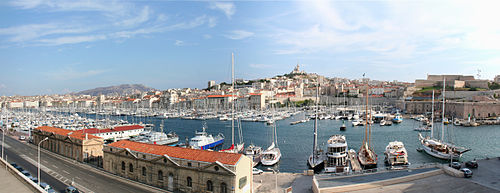
The Old Port of Marseille is at the end of the Canebière, the major street of Marseille. It has been the natural harbour of the city since antiquity and is now the main popular place in Marseille. It became mainly pedestrian in 2013.
Wikipedia · CC BY-SA 4.0 · 8 Dec 2025
Ingo Mehling · CC BY-SA 3.0
The Castle of Nice or Colline du Château was a military citadel. Built at the top of a hill, it stood overlooking the bay of Nice from the 11th century to the 18th century. It was besieged several times, especially in 1543 and in 1691, before it was taken by French troops in 1705 and finally destroyed in 1706 by command of Louis XIV.
Wikipedia · CC BY-SA 4.0 · 20 Apr 2026


The Musée Matisse in Nice is a municipal museum devoted to the work of French painter Henri Matisse. It gathers one of the world's largest collections of his works, tracing his artistic beginnings and his evolution through his last works. The museum, which opened in 1963, is located in the Villa des Arènes, a seventeenth-century villa in the neighborhood of Cimiez.
Wikipedia · CC BY-SA 4.0 · 9 Jul 2026
Tubantia · CC BY-SA 3.0

The Place Masséna is a historic square in Nice, Alpes-Maritimes, France. It was named for André Masséna. Its layout was designed by Joseph Vernier in 1843-1844.
Wikipedia · CC BY-SA 4.0 · 14 Feb 2026
Magali M from Nice, France · CC BY-SA 2.0

Promenade des Anglais is a promenade along the Mediterranean coast of Nice, France. It extends from Nice Côte d'Azur Airport on the west to the Quai des États-Unis on the east, for a distance of approximately 7 kilometres (4.3 mi). It forms part of Route nationale 98, which runs between Toulon and Menton.
Wikipedia · CC BY-SA 4.0 · 24 Aug 2026
3602kiva · CC0
Sourced stays
Sourced experiences
Fly to France
The facts you look up on the plane
Guides about France
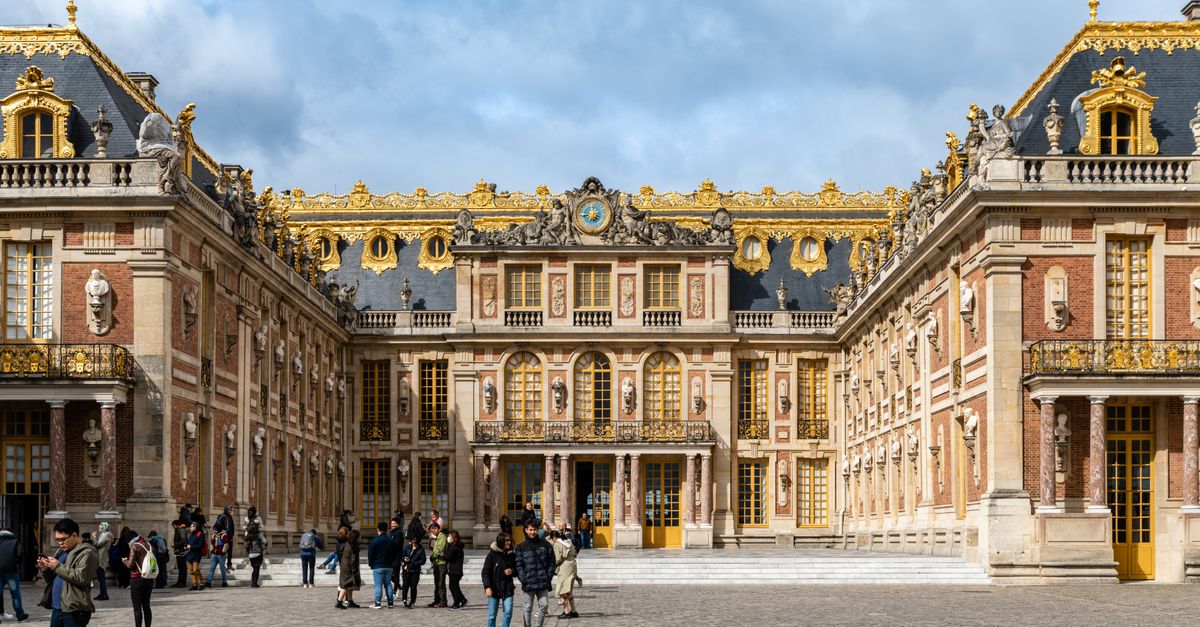
Seven day trips from Paris with real train times and 2026 prices, including the Versailles slot even free visitors must book and Giverny's closed season.
Callum Doherty · 3 Sep 2026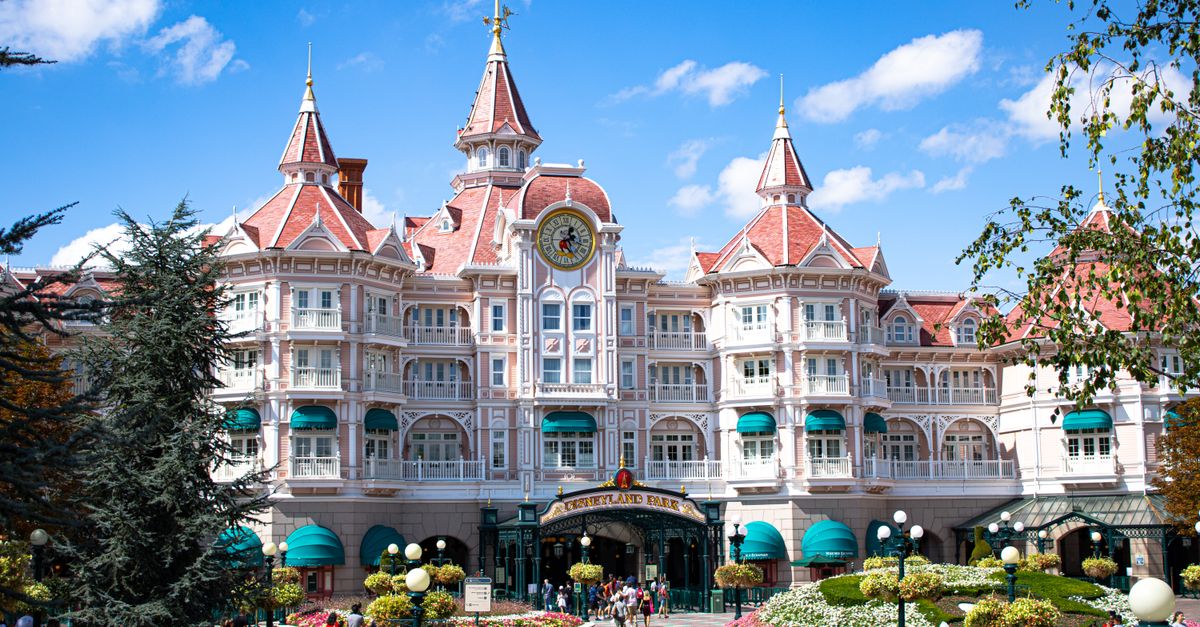
Disneyland Paris tips with the 2026 Premier Access prices, the break-even on the all-day pass, and the half hour that is worth more than any of it.
Priya Nair · 3 Sep 2026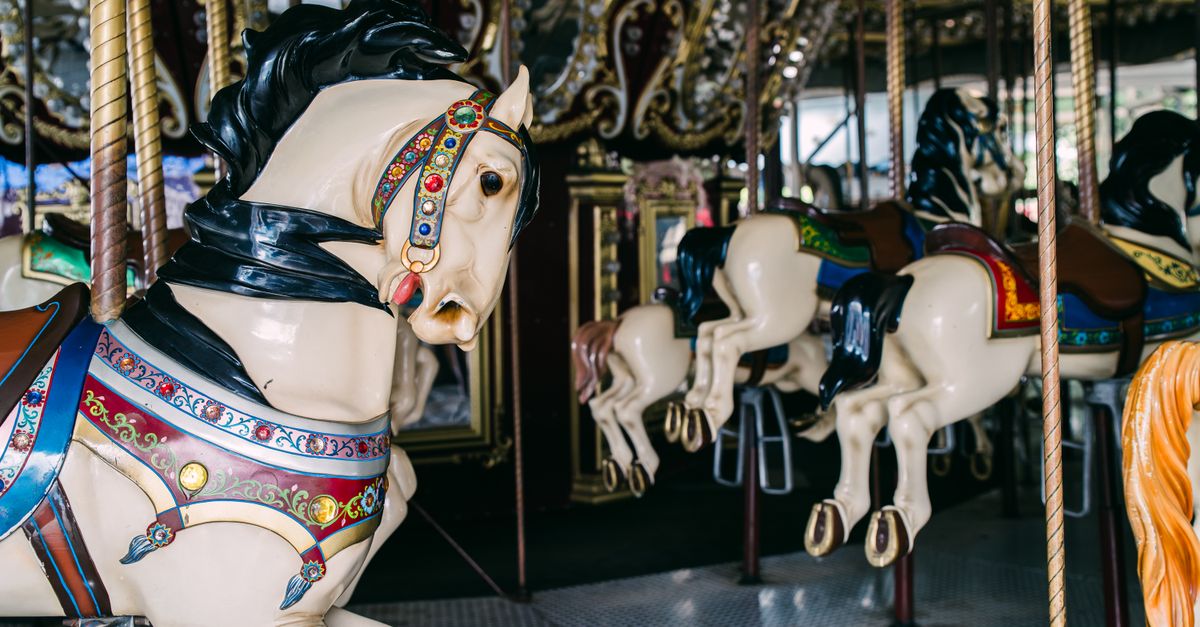
Paris with kids from age three, planned around the metro step-free gaps, the parks that save an afternoon and the sights a five-year-old will not survive.
Priya Nair · 3 Sep 2026Not going yet? Pin it.
One tap puts it on your map and in your pins, for when you are ready.