Dubrovnik
A walled city on a rock, and the walls are the walk. Come off-season or come early — the cruise ships set the pace here.
Dubrovnik in eight slides
Wikipedia · 3 Sep 2026


Things to do in Dubrovnik
Where to stay in Dubrovnik
Dubrovnik in a day, two days, three
Landmarks in Dubrovnik

The Walls of Dubrovnik are a series of defensive stone walls surrounding the city of Dubrovnik in southern Croatia. Ramparts were built in the outlying areas of the city, including the mountain slopes as part of a set of statutes from 1272. The existing city walls were constructed mainly during the 13th–17th centuries.
Wikipedia · CC BY-SA 4.0 · 26 Aug 2026
Miroslav.vajdic · CC BY-SA 4.0

Lokrum is an island in the Adriatic Sea 600 metres from the city of Dubrovnik, Croatia. It stretches from northwest to southeast and receives regular ferry service from the Old City port.
Wikipedia · CC BY-SA 4.0 · 23 Aug 2026
Diego Delso · CC BY-SA 3.0

Fort Lovrijenac or St. Lawrence Fortress, Italian Fortezza di San Lorenzo, often called "Dubrovnik's Gibraltar", is a fortress and theater outside the western wall of the city of Dubrovnik in Croatia, 37 metres (121 ft) above sea level. Famous for its plays and importance in resisting Venetian rule, it overshadows the two entrances to the city, from the sea, and by land.
Wikipedia · CC BY-SA 4.0 · 19 Jul 2026
Raki_Man · CC BY 3.0

Dubrovnik, historically also known as Ragusa, is a city in southern Dalmatia, Croatia, by the Adriatic Sea. It is one of the most prominent tourist destinations in the Mediterranean, a seaport and the centre of the Dubrovnik-Neretva County. In 2021, its total population was 41,562.
Wikipedia · CC BY-SA 4.0 · 26 Aug 2026
Zysko serhii · CC BY-SA 4.0

Srđ is a low mountain just behind the walled city of Dubrovnik in Dalmatia, Croatia. The mountain, part of the Dinaric Alps, has a height of 412 metres (1,352 ft). At its top is a large white stone cross and Fort Imperial, a defensive structure built by the French in 1810 during the Napoleonic Wars.
Wikipedia · CC BY-SA 4.0 · 23 Aug 2026
Richard Mortel from Riyadh, Saudi Arabia · CC BY 2.0

Stradun or Placa, whose name derives from Venetian, and means "large road" or "wide road", is the main street of Dubrovnik, Croatia. The limestone-paved pedestrian street runs some 300 metres through the Old Town, the historic part of the city surrounded by the Walls of Dubrovnik.
Wikipedia · CC BY-SA 4.0 · 23 Aug 2026
dronepicr · CC BY 2.0
The Walls of Dubrovnik are a series of defensive stone walls surrounding the city of Dubrovnik in southern Croatia. Ramparts were built in the outlying areas of the city, including the mountain slopes as part of a set of statutes from 1272. The existing city walls were constructed mainly during the 13th–17th centuries.
Wikipedia · CC BY-SA 4.0 · 26 Aug 2026
Miroslav.vajdic · CC BY-SA 4.0
Lokrum is an island in the Adriatic Sea 600 metres from the city of Dubrovnik, Croatia. It stretches from northwest to southeast and receives regular ferry service from the Old City port.
Wikipedia · CC BY-SA 4.0 · 23 Aug 2026
Diego Delso · CC BY-SA 3.0
Fort Lovrijenac or St. Lawrence Fortress, Italian Fortezza di San Lorenzo, often called "Dubrovnik's Gibraltar", is a fortress and theater outside the western wall of the city of Dubrovnik in Croatia, 37 metres (121 ft) above sea level. Famous for its plays and importance in resisting Venetian rule, it overshadows the two entrances to the city, from the sea, and by land.
Wikipedia · CC BY-SA 4.0 · 19 Jul 2026
Raki_Man · CC BY 3.0
Dubrovnik, historically also known as Ragusa, is a city in southern Dalmatia, Croatia, by the Adriatic Sea. It is one of the most prominent tourist destinations in the Mediterranean, a seaport and the centre of the Dubrovnik-Neretva County. In 2021, its total population was 41,562.
Wikipedia · CC BY-SA 4.0 · 26 Aug 2026
Zysko serhii · CC BY-SA 4.0
Srđ is a low mountain just behind the walled city of Dubrovnik in Dalmatia, Croatia. The mountain, part of the Dinaric Alps, has a height of 412 metres (1,352 ft). At its top is a large white stone cross and Fort Imperial, a defensive structure built by the French in 1810 during the Napoleonic Wars.
Wikipedia · CC BY-SA 4.0 · 23 Aug 2026
Richard Mortel from Riyadh, Saudi Arabia · CC BY 2.0
Stradun or Placa, whose name derives from Venetian, and means "large road" or "wide road", is the main street of Dubrovnik, Croatia. The limestone-paved pedestrian street runs some 300 metres through the Old Town, the historic part of the city surrounded by the Walls of Dubrovnik.
Wikipedia · CC BY-SA 4.0 · 23 Aug 2026
dronepicr · CC BY 2.0
From the airport
When to go to Dubrovnik: May or Jun or Sep
Guides about Dubrovnik
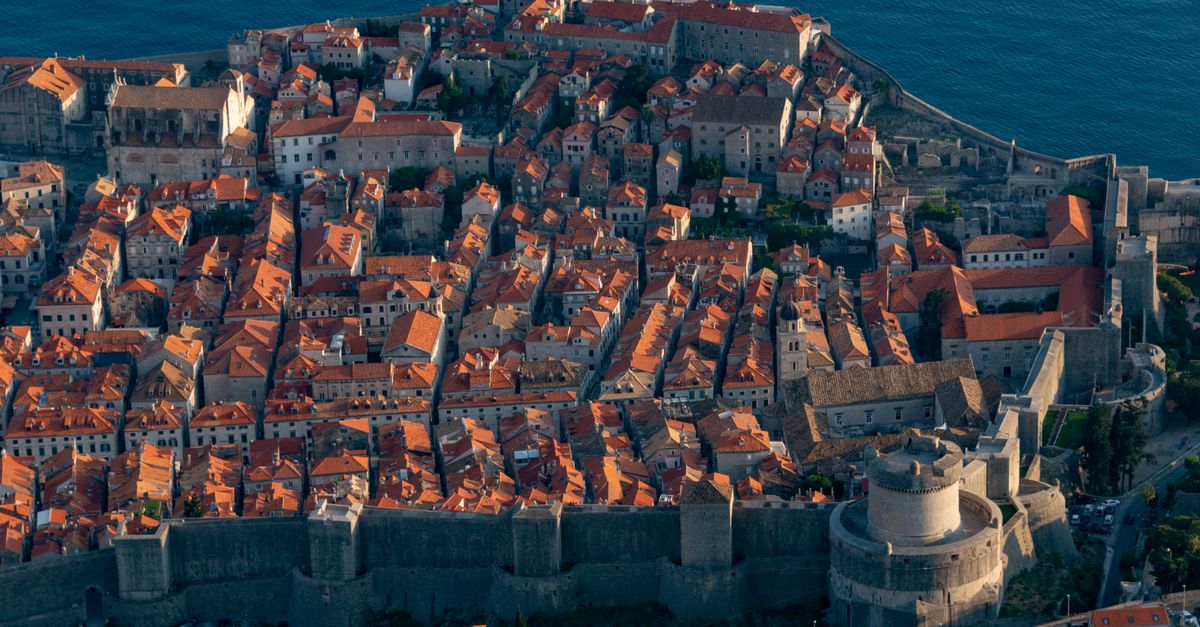
The walls now cost 40 euro and two cruise ships a day set the crowd. Two days timed around both, when to walk them, and the cable car call.
Josefin Bakke · 2 Sep 2026
The best time to visit Croatia by month, with the coastal catamaran season that runs April to October and the park pricing that quadruples in summer.
Josefin Bakke · 4 Sep 2026
The threshold is EUR 3,622.50 a month in 2026 and it is recalculated every year, which no other guide explains. The steps, the tax rule, and the catch.
Tobi Adeyemi · 2 Sep 2026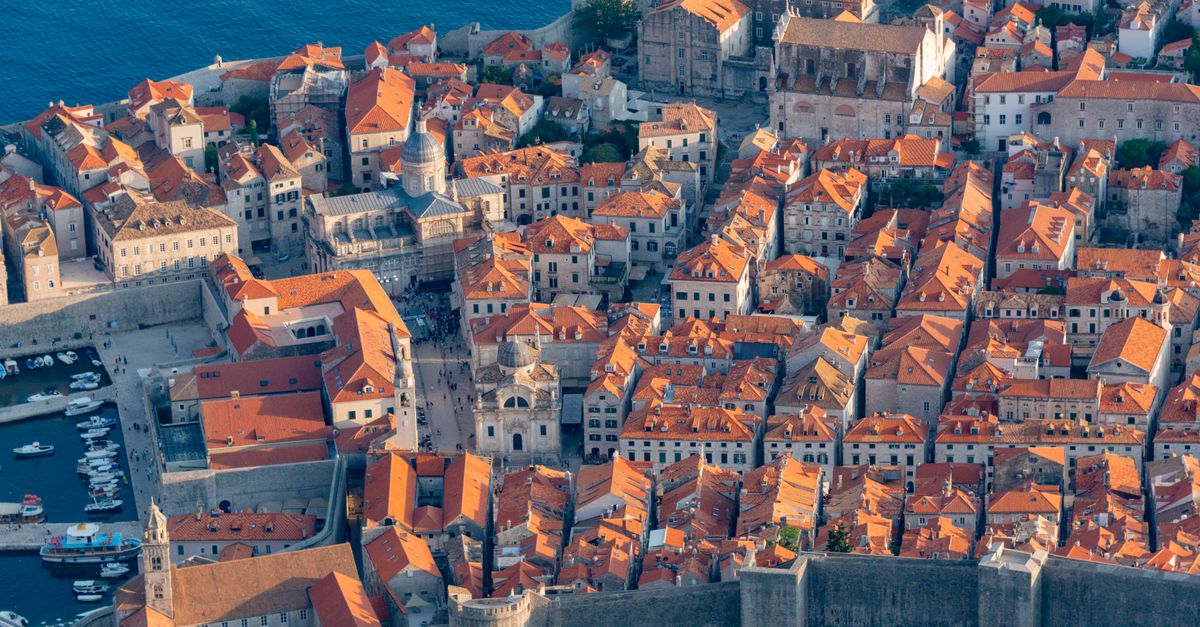
Zagreb, Plitvice, Split and Dubrovnik in a week. The catamaran that stops in October, the hourly cap at Plitvice, and the bridge that removed a border.
Josefin Bakke · 2 Sep 2026